Miscarriage Symptoms and Why Bleeding Is Not Always One

You notice some spotting, or a cramp that feels stronger than usual — and your mind immediately goes to the worst place. Take a breath. Bleeding in pregnancy does not always mean a miscarriage.
The most common miscarriage symptoms are vaginal bleeding, lower abdominal cramping, and passing tissue or fluid. But some of these can overlap with normal early pregnancy changes. That is why a prompt medical assessment matters: it confirms what is actually happening and guides safe care.
Overview: what miscarriage symptoms usually mean
Miscarriage symptoms are the physical signs that can happen when a pregnancy ends on its own before 20 weeks. The most common symptoms are vaginal bleeding, lower abdominal or pelvic cramping, and passing tissue or clots. Some people also notice a sudden decrease in pregnancy symptoms such as breast tenderness or nausea, although this alone is not enough to diagnose a miscarriage.
Not all bleeding in early pregnancy means pregnancy loss. Light spotting can happen for several reasons — cervical irritation, implantation-related bleeding, or a subchorionic bleed. And the reverse is also true: some miscarriages are found on ultrasound before any clear symptoms develop.
The same symptom can have very different causes, so doctors look at the whole picture rather than one sign alone. A careful evaluation also helps rule out other urgent conditions — especially ectopic pregnancy, which can cause bleeding and pain but needs different treatment.
Common symptoms and how they can feel
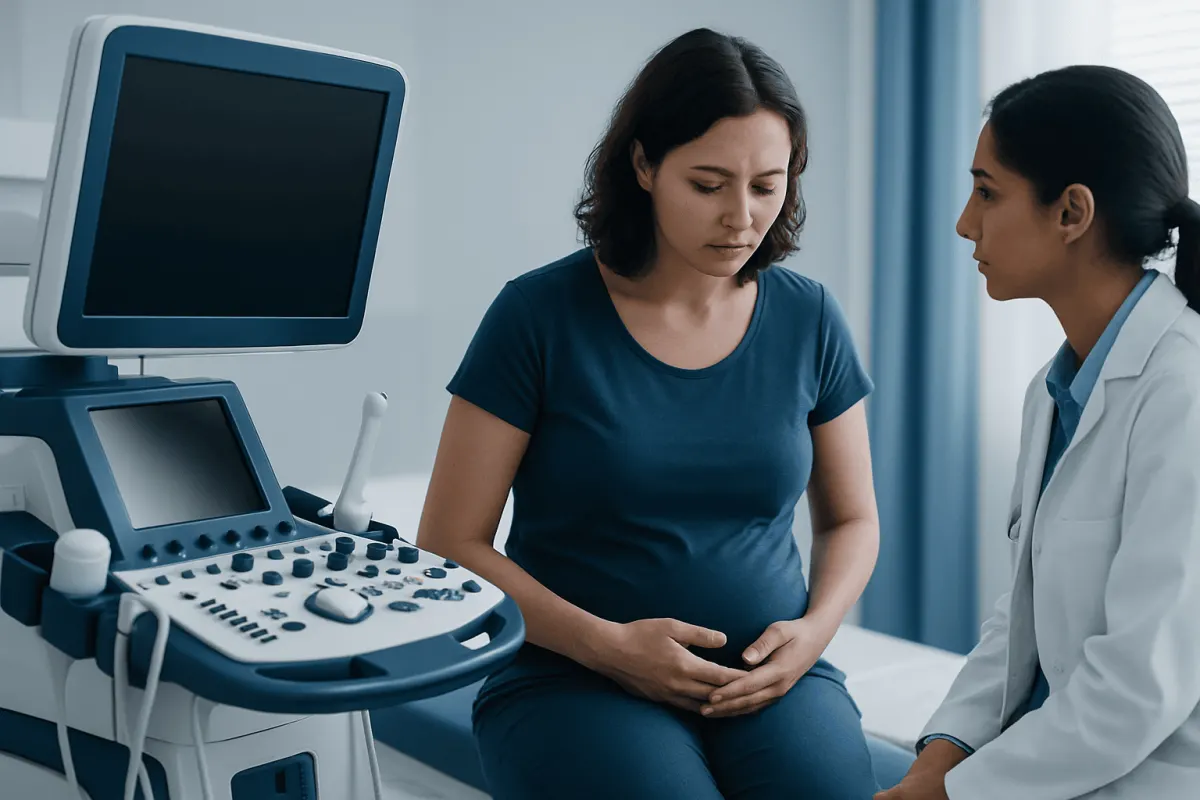
Vaginal bleeding is often the first symptom people notice. It may begin as light spotting and remain mild, or it may become heavier over hours or days. The color can range from pink or brown to bright red, and some people pass small or large clots.
Cramping is another common sign. It may feel like menstrual cramps or more intense pain in the lower abdomen, pelvis, or lower back. Some describe waves of pain that come and go, especially if the body is passing pregnancy tissue.
Other possible miscarriage symptoms include:
- Passage of grayish or pink tissue
- Fluid leaking from the vagina
- A noticeable decrease in pregnancy symptoms
- Pelvic pressure
- Back pain accompanying bleeding or cramps
Symptoms can build gradually or start suddenly. Sometimes there are none at all: a missed miscarriage may cause no obvious bleeding or pain at first, and the loss is only discovered during a routine scan when no heartbeat or growth is seen.
What can trigger miscarriage symptoms

In many early miscarriages, the most likely cause is a chromosomal problem in the embryo that prevents normal development. This usually happens by chance. It is not something you did or failed to do — everyday activities like walking, working, sex, or mild exercise do not usually cause miscarriage.
Other causes and contributing factors can include hormonal problems, certain infections, uncontrolled diabetes, thyroid disease, autoimmune conditions, blood-clotting disorders, and structural differences in the uterus or cervix. In later first-trimester or second-trimester losses, cervical weakness or uterine abnormalities may be considered.
Some risk factors make miscarriage more likely, although they do not mean it will happen. These include increasing maternal age, smoking, heavy alcohol use, use of certain substances, severe malnutrition, and a history of repeated pregnancy loss. Evaluation for recurrent pregnancy loss may be appropriate when miscarriages happen more than once.
When bleeding and pain may have another cause
Bleeding and cramping in pregnancy do not always point to miscarriage. A person may have spotting from a sensitive cervix, a small collection of blood near the pregnancy sac, or changes in the uterus that occur as pregnancy progresses. Mild discomfort can also happen with normal stretching of the uterus.
Doctors also consider other important causes. Ectopic pregnancy can cause one-sided pelvic pain, shoulder tip pain, dizziness, and vaginal bleeding. Infection, cervical polyps, or less commonly molar pregnancy can also lead to unusual symptoms.
This is why you cannot reliably diagnose the cause yourself. If symptoms appear, a clinician may use ultrasound and blood tests to check where the pregnancy is and how it is developing — and to see whether the symptoms fit miscarriage, threatened miscarriage, or another condition that needs prompt attention.
How doctors diagnose a miscarriage
Diagnosis begins with a conversation about symptoms, timing, and the amount of bleeding or pain. A doctor may ask when the last menstrual period was, whether tissue has passed, and whether there are symptoms such as fever, dizziness, or shoulder pain. A pelvic exam may be recommended to assess bleeding and check whether the cervix is open.
Ultrasound is one of the main tools used to confirm what is happening. It can show whether a pregnancy is inside the uterus, whether there is a gestational sac or embryo, and whether cardiac activity is present when expected. Sometimes a repeat scan after a short interval is needed if the findings are not yet clear.
Blood tests can also help, especially serial human chorionic gonadotropin (hCG) levels and sometimes progesterone. Falling or abnormally rising hCG values may suggest a nonviable pregnancy, but they are interpreted alongside ultrasound rather than alone. If tissue has passed, a doctor may sometimes send it for analysis, especially after repeated losses.
When pregnancy loss is confirmed, the care team may discuss whether additional assessment is needed. This can include imaging of the uterus or further fertility-focused evaluation, and in selected cases support through IVF assessment and fertility care may later be relevant for future pregnancy planning.
Treatment options after miscarriage symptoms appear
Treatment depends on whether the pregnancy is continuing, whether the miscarriage is complete or incomplete, and how the person is feeling physically and emotionally. If bleeding is mild and the cervix remains closed, the doctor may recommend observation with follow-up testing. This is sometimes called a threatened miscarriage, meaning symptoms are present but the pregnancy may still continue.
When miscarriage has occurred, there are generally three management approaches: expectant, medical, or procedural. Expectant management allows the body to pass the pregnancy tissue naturally over time. Medical management uses prescribed medication to help the uterus empty. Procedural treatment may be advised if there is heavy bleeding, infection, retained tissue, or a personal preference for faster completion; this may involve dilation and curettage in appropriate cases.
Whichever approach is used, pain relief, hydration, and emotional support matter just as much. Doctors may also check blood type and discuss whether Rh immunoglobulin is needed for some Rh-negative patients. Afterwards, follow-up confirms that the uterus has emptied completely and that symptoms are improving.
If pregnancy tissue remains or bleeding continues, further evaluation may be needed to rule out retained products, infection, or another cause. In specialist centers, obstetrics and gynecology care can help guide both urgent management and planning for future pregnancies.
Self-care, recovery, and future pregnancy planning
Physical recovery after a miscarriage varies, but many people have bleeding similar to a menstrual period for several days to two weeks. Rest, fluids, and using pads rather than tampons during active bleeding are commonly advised. A doctor should guide when normal activities, sex, and exercise can be resumed.
Emotional recovery often takes longer than physical healing. Sadness, numbness, guilt, anger, anxiety — all of these are common, and none of them mean something is wrong with you. And to say it plainly: in most cases, miscarriage is not caused by routine activity, everyday stress, or a single food choice.
For future pregnancy planning, a doctor may recommend waiting until bleeding stops and the person feels physically and emotionally ready. Preconception care can help optimize health by reviewing medications, managing conditions such as diabetes or thyroid disease, and starting folic acid if appropriate. If there have been repeated losses or difficulty becoming pregnant, referral for fertility evaluation and treatment may be helpful.
When to seek medical care
If you bleed at all during pregnancy, tell a healthcare professional — even if it seems light. Do not wait if the bleeding increases, the cramping gets stronger, or you are unsure how far along you are. Early evaluation can clarify the cause and support safe monitoring.
Urgent medical care is needed for red-flag symptoms such as soaking through pads rapidly, severe or one-sided pelvic pain, fainting, dizziness, shoulder pain, fever, chills, or foul-smelling vaginal discharge. These symptoms can suggest heavy blood loss, infection, or ectopic pregnancy and should not be ignored.
People who have passed tissue should contact a doctor and, if possible, bring the tissue in a clean container if instructed to do so. Near the end of care planning, some patients may also seek specialist support in centers such as Acıbadem Health Point, where multidisciplinary teams in JCI-accredited hospitals diagnose and treat pregnancy-related conditions for international patients.
Frequently asked questions
01Can miscarriage symptoms start as light spotting?
Yes. Miscarriage symptoms can begin with light spotting and then either stop, stay mild, or become heavier over time. Because light bleeding can also happen in a normal pregnancy, a medical review is the safest way to understand the cause.
02Does cramping always mean a miscarriage is happening?
No. Mild cramping can happen in early pregnancy as the uterus changes and stretches. Cramping becomes more concerning when it is strong, persistent, one-sided, or linked with heavier bleeding, dizziness, or passing tissue.
03Can pregnancy symptoms disappear before a miscarriage is confirmed?
A sudden decrease in nausea or breast tenderness can happen before or during a miscarriage, but it is not a reliable sign on its own. Pregnancy symptoms may also naturally change from day to day. Ultrasound and blood tests are usually needed for confirmation.
04How do doctors tell the difference between miscarriage and ectopic pregnancy?
Doctors use symptoms, pelvic examination, ultrasound, and blood tests to look at where the pregnancy is located and how it is developing. Ectopic pregnancy often causes pain and bleeding too, but the pregnancy is outside the uterus and needs urgent medical attention.
05Is heavy bleeding always part of a miscarriage?
Not always. Some miscarriages involve heavy bleeding with clots, while others cause only light bleeding or are found on ultrasound before significant symptoms appear. However, very heavy bleeding should be treated as urgent and checked right away.
06What should a person do at home if miscarriage symptoms begin?
They should contact a healthcare professional promptly, monitor the amount of bleeding, and use pads rather than tampons so blood loss is easier to track. Emergency care is needed for severe pain, fainting, fever, shoulder pain, or very heavy bleeding.
This article is for general information only and is not a substitute for professional medical advice. Please consult a qualified doctor about your individual situation.
Persistent digestive symptoms? Get evaluated in Turkey
JCI-accredited · board-certified surgeons · reply within 24h
Add us as a Preferred Source to see more of our trusted health content across Google Search, AI Overviews and Discover.