Mini Facelift in Turkey: Method, Cost and Who It Suits

Key Takeaways
- A mini facelift addresses early sagging of the lower face and jawline through shorter incisions than a full facelift; suitability is decided by a qualified surgeon, not by an online quote.
- A typical mini facelift turkey pathway begins with photographs and a video consultation, followed by an in-person assessment on arrival and surgery within the first day or two.
- Packages commonly bundle surgeon and hospital fees, anaesthesia, standard pre-operative tests, accommodation, airport transfers and interpreting; flights and revision surgery are usually excluded.
- Costs are best treated as planning bands rather than fixed prices, because facility type, anaesthesia, surgeon experience and any combined procedures all change the total.
- Most patients are advised to stay in Turkey for roughly 7-10 days so that dressings, sutures and early swelling can be reviewed before flying.
- Confirm hospital accreditation (such as JCI), surgeon specialist registration and a written aftercare plan before committing to any date.
A mini facelift is a shorter-scar lifting procedure aimed at mild to moderate laxity of the lower face and jawline, and many UK patients explore having it in Turkey as a coordinated medical trip. This guide explains how the pathway is usually planned, what packages tend to include, how to think about cost bands, and what aftercare looks like once you fly home.
Mini Facelift Turkey: What the Pathway Usually Involves
For UK patients researching a mini facelift turkey option, the pathway is generally straightforward to map out: an initial remote assessment with photographs and a video consultation, a face-to-face review with the surgeon and anaesthetist on arrival, surgery lasting roughly one to two hours under local anaesthesia with sedation or general anaesthesia, a short stay of about seven to ten days in Turkey for dressing changes and suture removal, and then structured follow-up by video once home. A mini facelift is designed for early or moderate laxity of the lower face and jawline rather than extensive ageing changes across the whole face and neck.
The procedure uses shorter incisions than a traditional facelift, typically placed around the ear and within the hairline, allowing the surgeon to reposition the underlying tissues and remove a modest amount of loose skin. Because the dissection is more limited, downtime is often shorter than after a full facelift — but it is still surgery, with anaesthesia, bruising, swelling and a genuine healing period. Any description of technique found online is general: only an examining surgeon can say whether a mini lift, a full facelift, a neck procedure or a non-surgical approach is the right match for a particular face.
From a medical travel perspective, the key point is that the operation itself is only one part of the journey. Planning, documentation, accommodation, interpreting, discharge instructions and remote aftercare all need to be arranged in advance so that the trip is predictable rather than improvised.
Who a Mini Facelift Tends to Suit
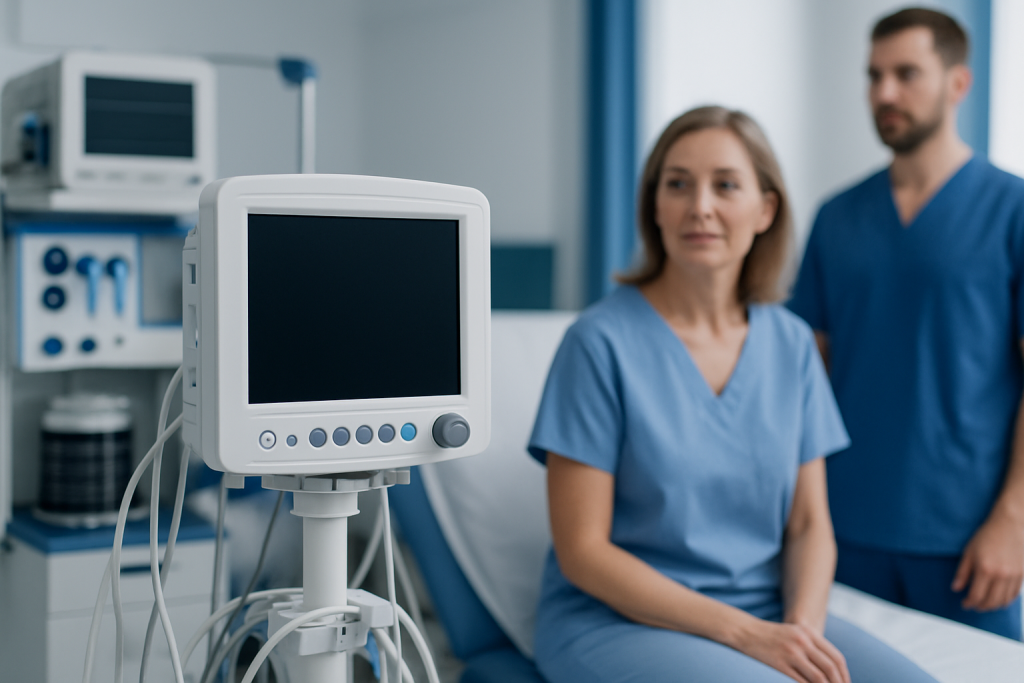
Mini facelift techniques are most often discussed with people in their forties to early sixties who notice softening of the jawline, early jowling or mild sagging in the cheek and upper neck area, but who still have reasonable skin quality and elasticity. Patients whose main concern is heavy neck banding, deep skin folds or advanced laxity may be advised that a more extensive procedure would give a more balanced result, while those with predominantly volume loss or fine lines may be better served by non-surgical options.
Fitness for anaesthesia matters as much as facial anatomy. Surgeons routinely review blood pressure, cardiac and respiratory history, diabetes control, medication and supplement use, clotting tendencies and previous surgery. Smoking is a particularly important factor, as it affects skin healing around incisions; most teams ask patients to stop well before and after surgery. Anyone taking blood-thinning medication needs a clear, doctor-led plan agreed in advance rather than a last-minute decision.
Expectations are the third pillar of suitability. A mini facelift can refresh contour and definition, but it does not stop ageing, change skin texture or replace lost facial volume. Honest pre-operative discussion — including what the procedure cannot do — is one of the strongest indicators of a well-run service.
- Best suited to mild-to-moderate lower face and jawline laxity with good skin quality.
- Less suitable where there is significant neck laxity or extensive skin excess.
- Requires medical fitness for anaesthesia and a realistic understanding of outcomes.
- Often discussed alongside, or instead of, eyelid surgery, fat transfer or skin treatments.
Starting Remotely: Video Consultation and Second Opinion

Most international pathways begin before travel. Patients are usually asked to send standardised photographs (front, both profiles and three-quarter views, without make-up), a summary of medical history and medication, and a note of what bothers them most about the lower face. This allows the surgical team to give an early, non-binding opinion about whether a mini facelift is likely to be appropriate or whether a different plan would suit better.
A video consultation with the surgeon is the point at which technique, anaesthesia, scar placement, expected downtime and realistic outcomes should be discussed directly. It is reasonable to ask how many similar procedures the surgeon performs, what happens if healing is slower than expected, and how complications would be managed. Interpreting support is normally available if English is not the surgeon’s first language, and written summaries of the discussion should be provided.
Second opinions are entirely appropriate in aesthetic surgery. Some patients obtain an assessment from their UK doctor or another specialist before committing, particularly if they have chronic health conditions. A trustworthy international service will not discourage this, and will happily supply the plan in writing so it can be reviewed independently.
What Treatment Packages Typically Include
Turkish hospitals and coordination services commonly present mini facelift care as a package, which helps with budgeting but makes it essential to read the inclusions line by line. Bundles frequently cover the surgeon’s fee, hospital or surgical facility charges, anaesthesia, routine pre-operative blood tests and ECG where indicated, the operation itself, dressings, an overnight stay or day-case discharge as appropriate, follow-up visits during the stay, airport and hospital transfers, hotel accommodation for a defined number of nights, and interpreter support.
Items that are often not included deserve equal attention: international flights, travel insurance, extended hotel nights if recovery takes longer, companion costs, prescription medicines beyond the discharge pack, compression garments or specialist scar products, unplanned investigations, treatment of complications, and any future revision surgery. Policies on revision vary widely between providers and should be confirmed in writing before a deposit is paid.
Good packages also specify the practical details that shape the experience: how many nights in hospital, who accompanies the patient to appointments, whether a companion can stay in the room, how medication instructions are translated, and what documentation (operation note, discharge summary, medication list) is provided in English for the patient’s GP.
Cost Planning: Realistic Bands, Not Fixed Quotes
Published prices for facial surgery abroad should always be treated as indicative bands. In broad terms, a mini facelift performed in a private Turkish hospital is usually quoted in a lower band than a full facelift, and often at a noticeably lower level than equivalent private surgery in the United Kingdom — but the range within Turkey itself is wide, and the cheapest quote is rarely the most informative one. A personalised figure can only be given after clinical assessment.
Several variables move the total: whether local anaesthesia with sedation or general anaesthesia is used, the length of theatre time, the seniority and specialisation of the surgeon, whether the procedure takes place in a full-service accredited hospital or a smaller clinic, the number of hospital nights, and whether additional procedures such as eyelid surgery, fat grafting or neck refinement are combined in the same session. Combined operations increase both cost and recovery time.
When comparing quotes, patients are advised to ask three questions: what exactly is included, what is explicitly excluded, and what happens financially if a complication or a longer stay occurs. Budgeting an additional contingency for extra hotel nights, a changed flight and travel insurance with cover appropriate to planned surgery is prudent. Insurance for elective cosmetic surgery abroad is specialised, and standard holiday policies frequently exclude it.
Choosing a Hospital and Surgeon: Accreditation and Credentials
Accreditation is one of the few objective markers available to patients from a distance. Joint Commission International (JCI) accreditation indicates that a hospital has been independently assessed against international standards for patient safety, infection control, medication management and clinical governance. In Turkey, hospitals are also licensed and inspected by the Ministry of Health, and international health tourism authorisation is required for facilities treating overseas patients.
Surgeon credentials matter just as much as the building. Patients can ask whether the operating surgeon is a specialist registered in plastic, reconstructive and aesthetic surgery, how long they have practised, whether they belong to recognised national or international professional societies, and who will actually perform the procedure — this should be confirmed, in writing, as the same surgeon seen in consultation. Clear answers about anaesthetist involvement, intensive care availability on site and out-of-hours cover are further signs of a well-structured service.
Photographic galleries can be useful but have limits: images should be consistent in lighting and angle, and results shown for patients with comparable starting anatomy. Any provider that promises a specific outcome, guarantees a fixed recovery timetable or pressures a patient to book quickly is not offering a medically sound conversation. Reliable services encourage questions, provide written consent documentation in English and allow time for reflection.
Recovery, Travel Timing and Flying Home
Most surgical teams ask mini facelift patients to remain in Turkey for approximately seven to ten days. This allows for the first dressing change, review of the incisions, removal of sutures where appropriate, and assessment of swelling and bruising before flying. Swelling and bruising around the jaw, cheeks and ears are expected in the first week or two; tightness, numbness near the incisions and mild discomfort managed with prescribed pain relief are also common early experiences.
Air travel after surgery carries general considerations such as immobility, dehydration and cabin pressure changes, so the surgical team’s clearance before the return flight is important. Patients are usually advised to arrange an aisle seat, move the legs regularly, stay well hydrated, avoid alcohol and allow extra time and assistance at the airport. Sleeping with the head slightly elevated, avoiding strenuous activity, heavy lifting and hot environments, and protecting incisions from direct sun are typical early instructions, though exact guidance varies by surgeon.
Returning to desk-based work often takes around two weeks, with visible bruising settling over several weeks and the final contour continuing to refine over months. These are general patterns rather than promises; healing is individual, and anyone with a fixed social or professional deadline should build in generous margin.
Aftercare at Home and When to Contact a Patient Coordinator
Aftercare should be planned before departure, not improvised afterwards. Patients should leave Turkey with an English-language operation note and discharge summary, a medication list, wound and scar care instructions, warning signs to watch for, scheduled remote follow-up dates and a direct contact route for questions. Sharing these documents with a UK GP is sensible, so that local support is available if wound review, dressing changes or antibiotics are needed.
Urgent medical advice should be sought locally — through a GP, NHS 111 or emergency services as appropriate — for symptoms such as rapidly increasing swelling or asymmetry, spreading redness, discharge from an incision, fever, severe or worsening pain, breathing difficulty, or calf pain and swelling after flying. Contacting the operating team in parallel is useful, but immediate assessment should never be delayed while waiting for an international reply.
A patient coordinator is worth involving early rather than late: when comparing whether a mini or full lift is being proposed, when clarifying package inclusions and exclusions, when arranging visas, accommodation, interpreting or a companion’s stay, when a second opinion is wanted, and when follow-up photographs or documents need to be exchanged after returning home. Acibadem Health Point coordinates this pathway for international patients, arranging assessment and treatment with multidisciplinary specialists in JCI-accredited Acıbadem hospitals and supporting the practical side of the journey from first enquiry to remote follow-up.
Whatever route is chosen, the decision should rest on a documented clinical assessment, transparent costs and a clear aftercare plan — and any individual medical question belongs with a qualified doctor who has examined the patient.
Frequently asked questions
01How long should UK patients stay in Turkey for a mini facelift?
Most surgical teams recommend a stay of roughly seven to ten days. This covers the pre-operative assessment, surgery, the first dressing change and suture care, plus a final review before flying. The exact length depends on the technique used, whether other procedures are combined and how healing progresses, so the surgeon's clearance should always guide the return date.
02Is a mini facelift cheaper in Turkey than in the UK?
Quoted totals in Turkey are often lower than equivalent private surgery in the United Kingdom, but figures vary considerably between providers and cannot be treated as fixed. Anaesthesia type, theatre time, surgeon experience, hospital setting and any combined procedures all affect the price. Patients should ask for written inclusions and exclusions and budget a contingency for extra nights, changed flights and appropriate insurance.
03What is usually included in a mini facelift package?
Packages commonly cover the surgeon and hospital fees, anaesthesia, routine pre-operative tests, the operation, dressings, in-country follow-up visits, transfers, hotel nights and interpreting support. Flights, travel insurance, extended accommodation, treatment of complications and revision surgery are frequently excluded. Every inclusion should be confirmed in writing before a deposit is paid.
04How can patients check that a Turkish hospital is safe and accredited?
Look for Joint Commission International accreditation, Ministry of Health licensing and international health tourism authorisation. Also confirm that the operating surgeon is a registered specialist in plastic, reconstructive and aesthetic surgery, that they will personally perform the procedure, and that anaesthetic and emergency cover are available on site.
05When is it safe to fly home after a mini facelift?
Flying is usually considered once the surgical team has reviewed the incisions and confirmed that early healing is progressing normally, commonly around a week after surgery. General flight precautions apply, including hydration, regular movement and avoiding alcohol. Clearance should come from the operating surgeon rather than from a pre-set schedule.
06Who provides aftercare once the patient returns to the UK?
Follow-up is usually shared: the operating team offers remote reviews by video and photograph, while a UK GP or local practice nurse can help with wound checks or dressing changes if needed. Patients should travel home with an English-language operation note, discharge summary and medication list so local clinicians have full information.
07When should someone speak to a patient coordinator?
Early in the process — ideally before booking flights. Coordinators can arrange the video consultation and second opinion, clarify what a package includes, and organise visas, accommodation, transfers and interpreting. They are also the point of contact for exchanging follow-up photographs and documents after returning home, although urgent symptoms should always be assessed by a local doctor first.
This article is for general information only and is not a substitute for professional medical advice. Please consult a qualified doctor about your individual situation.
Hair transplant in Turkey — costs, graft counts & a free assessment
JCI-accredited · board-certified surgeons · reply within 24h
Add us as a Preferred Source to see more of our trusted health content across Google Search, AI Overviews and Discover.