Menopause Test Kits: Can They Confirm Menopause?
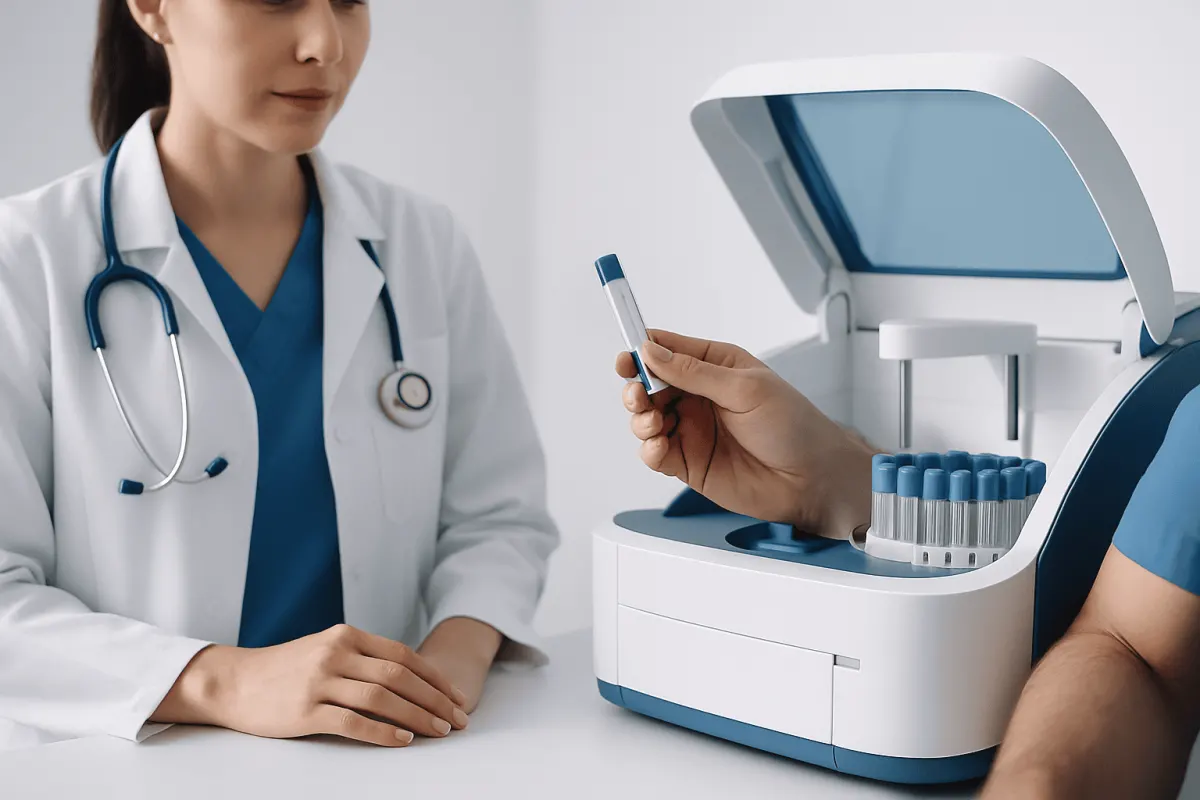
The best menopause test kit is one that is used as a limited screening tool, not as a stand-alone diagnosis. For many people over 45 with typical symptoms and changing periods, a clinician can diagnose perimenopause or menopause from medical history and symptoms without testing.
Overview: Choosing a Menopause Test Kit Safely
The best menopause test kit is not necessarily the one that reports the most hormones. A well-designed home kit can provide a simple indication of follicle-stimulating hormone (FSH), but it cannot confirm menopause on its own. FSH changes from day to day and throughout the menstrual cycle, particularly during perimenopause, the transition before periods stop permanently.
For people aged 45 or older with typical symptoms such as hot flushes, sleep disruption, vaginal dryness, mood changes, and increasingly irregular periods, healthcare professionals often make the diagnosis from symptoms and menstrual history. Menopause is generally confirmed retrospectively after 12 months without a period, provided there is no other explanation such as pregnancy, hormonal medication, or a medical condition.
Home testing can be useful when it encourages informed discussion with a clinician, but it should not replace medical care. This is particularly important when symptoms begin at a younger age, periods stop suddenly, bleeding is unusual, or a person uses hormones that affect menstrual patterns.
What Is the Best At-Home Menopause Test Kit?
There is no single best at-home menopause test kit for everyone. The most appropriate option is usually a clearly labelled, regulated test from a reputable manufacturer that explains exactly what it measures, how to collect the sample, what may affect the result, and when to seek medical advice. Most home menopause tests measure FSH in urine; some mail-in services measure FSH and other hormones from a finger-prick blood sample.
When comparing the best menopause home test options, it is sensible to check whether the product includes understandable instructions, an expiry date, appropriate storage guidance, customer support, and a clear explanation that the result is not diagnostic. A test should also state whether medicines, hormonal contraception, hormone therapy, pregnancy, breastfeeding, or recent changes in menstrual cycles can affect interpretation.
A person may prefer a clinician-ordered laboratory test when there are complex symptoms or medical questions. Tests marketed as broad hormone panels may look comprehensive, but measuring many hormones does not always provide a clearer answer. The result is most useful when a qualified clinician interprets it alongside age, symptoms, cycle history, medicines, and overall health.
How Menopause and Perimenopause Are Identified

Perimenopause is the stage in which ovarian hormone production becomes more variable and menstrual periods may become irregular. Symptoms can begin years before the final period. Menopause is reached after 12 consecutive months without menstruation, while postmenopause refers to the years afterward.
Common symptoms include hot flushes, night sweats, sleep problems, changes in mood or concentration, joint aches, vaginal dryness, discomfort during sex, and urinary symptoms. Symptoms vary greatly: some people have few symptoms, while others experience symptoms that affect daily life. Not every change in bleeding, mood, or sleep is caused by menopause, so an individualized assessment remains important.
Other conditions can overlap with menopause symptoms. Thyroid disorders, anemia, pregnancy, medication effects, anxiety, depression, infections, and sleep disorders may need consideration. Menstrual changes should not automatically be attributed to menopause, especially if they are heavy, prolonged, very frequent, or occur after periods have stopped.
What Is the Most Accurate Lab Test for Diagnosing Menopause?
There is no single laboratory test that diagnoses menopause with complete accuracy in every person. For most people aged 45 or older with typical symptoms, menstrual history is more informative than hormone testing. A healthcare professional may diagnose perimenopause clinically without ordering an FSH test.
When testing is appropriate, a laboratory blood test for FSH is generally more analytically reliable than a urine home test because it is performed under standardized laboratory processes. However, a precise measurement is not the same as a definitive diagnosis. During perimenopause, FSH can rise and fall, so one blood result may not reflect the overall hormonal transition.
Clinicians may consider FSH testing in people under 45 with possible early menopause, those under 40 with suspected primary ovarian insufficiency, or people whose menstrual history cannot be used to assess menopause. Additional tests may be selected to rule out other causes of absent periods or symptoms. Evaluation may also include discussion of thyroid disease when symptoms or clinical findings suggest it.
How Accurate Are Menopause Home Test Kits?
Menopause home test kits can be reasonably accurate at detecting whether FSH is above the test’s stated threshold when they are used correctly. However, their clinical usefulness is limited because an elevated FSH level does not by itself prove that a person is in menopause. FSH may be elevated at some points in perimenopause and lower at others.
A negative or low result also does not rule out perimenopause. People can have bothersome menopausal symptoms while hormone levels are still fluctuating, and timing within the menstrual cycle can influence results. Urine concentration, incorrect sampling, expired tests, and difficulty reading visual test lines may also affect home-test reliability.
Hormonal contraception, menopausal hormone therapy, pregnancy, breastfeeding, and some medical treatments can make FSH-based results difficult to interpret. Therefore, even among the best menopause tests, a result should be viewed as one piece of information rather than a diagnosis or a reason to start, stop, or change medication without professional advice.
What Is a Normal FSH Level for a 50 Year Old?
There is no single normal FSH level for a 50-year-old because FSH varies widely according to menstrual status, laboratory method, timing of testing, medicines, and individual biology. In people who are still having periods, values may change considerably across the cycle and may fluctuate even more during perimenopause.
FSH levels often become higher after menopause because the ovaries produce less estrogen and inhibin, hormones that normally help regulate FSH. Laboratories use different testing methods and reference ranges, so a result should always be interpreted against the range printed on that laboratory report rather than compared with a universal number found online.
An isolated high FSH result may support a clinician’s assessment in the right context, but it cannot date the final menstrual period or predict exactly when menopause will occur. Repeating a test is sometimes considered in younger people or when the diagnosis is uncertain, but repeated testing is not routinely needed for typical menopause symptoms after age 45.
Using Results Wisely: Symptom Care and Next Steps
A useful next step after any home result is to keep a brief record of periods, symptoms, sleep, medications, and relevant health changes. This can help a clinician distinguish perimenopause from other causes and discuss care options. Supportive measures may include regular movement, sufficient sleep, a balanced diet, limiting smoking and excess alcohol, and practical cooling strategies for hot flushes.
Treatment should be individualized. Depending on symptoms, medical history, and personal preferences, a clinician may discuss non-hormonal options, vaginal treatments for genitourinary symptoms, or menopausal hormone therapy. Hormone therapy is not suitable for everyone, so its potential benefits and risks should be reviewed carefully with a qualified professional.
For people who need specialist evaluation, Acıbadem Health Point’s multidisciplinary specialists and JCI-accredited hospitals assess and treat menopause-related concerns for Myomectomy Recovery for International Patients: The Usual Travel Timeline" class="ahp-ilk">international patients. A medical consultation is more informative than relying on a best menopause hormone test alone, particularly when symptoms are severe, atypical, or affecting quality of life.
When to Seek Medical Care
Medical advice is recommended for symptoms that are troubling, unclear, or interfering with work, relationships, sleep, or daily activities. A clinician should also assess menopause-like symptoms before age 45, and particularly before age 40, because early loss of ovarian function may need specific evaluation and longer-term health planning.
Prompt assessment is important for very heavy bleeding, bleeding between periods, bleeding after sex, pelvic pain, dizziness, or bleeding after 12 months without periods. These symptoms often have treatable causes, but they should not be self-diagnosed with a hormone kit. Anyone who could be pregnant should take an appropriate pregnancy test and seek advice if there is pain or bleeding.
Urgent care is appropriate for severe chest pain, shortness of breath, fainting, signs of stroke, or severe sudden abdominal or pelvic pain. These symptoms are not typical menopause symptoms and need timely medical assessment.
Frequently asked questions
01Can a menopause test kit tell whether someone is in perimenopause?
A menopause test kit may show an FSH level that is above the test threshold, which can occur during perimenopause. However, FSH fluctuates during this stage, so the test cannot reliably confirm or exclude perimenopause. Symptoms, age, menstrual history, and medical context are usually more useful.
02Should someone test FSH if they are taking birth control pills?
FSH testing is often difficult to interpret while using combined hormonal contraception or other hormonal treatments because these medicines can affect hormone levels and bleeding patterns. A person should not stop contraception simply to test FSH without discussing it with a clinician. Pregnancy can still be possible during perimenopause.
03Can a person be menopausal if a home test is negative?
Yes. A negative home test does not rule out perimenopause or menopause, especially if the test was taken when FSH happened to be lower. Menopause is generally recognized after 12 months without a period, not from a single hormone result.
04Do menopause tests measure estrogen?
Some mail-in hormone panels include estrogen measurements, but estrogen also varies considerably during perimenopause. A single estrogen result is rarely enough to diagnose menopause. The value of any hormone panel depends on why it was ordered and how it is interpreted clinically.
05What should someone do after a positive home menopause test?
A positive result can be recorded alongside symptoms and menstrual changes, then discussed at a routine healthcare appointment if guidance is needed. It should not be used alone to start hormone treatment or to stop contraception. Medical review is especially important for abnormal bleeding, symptoms before age 45, or concerns about another health condition.
06Is postmenopausal bleeding normal?
Bleeding after 12 months without periods is not considered a normal menopause symptom and should be checked by a healthcare professional. There are several possible causes, many of which are treatable, but evaluation is needed to identify the cause. Seeking care promptly is the safest approach.
This article is for general information only and is not a substitute for professional medical advice. Please consult a qualified doctor about your individual situation.
Hair transplant in Turkey — costs, graft counts & a free assessment
JCI-accredited · board-certified surgeons · reply within 24h
Add us as a Preferred Source to see more of our trusted health content across Google Search, AI Overviews and Discover.