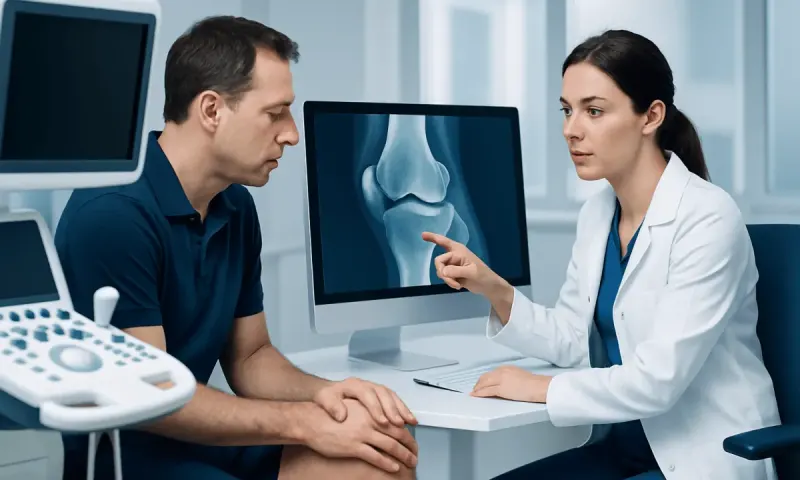
Meniscus Tear Knee: Symptoms, Severity and Treatment
A meniscus tear knee is an injury to the rubbery cartilage that cushions and stabilizes the knee joint. Treatment depends on the tear’s location, pattern, symptoms, age, activity level and whether the knee is locking or unstable.
What is a meniscus tear knee?
A meniscus tear knee is a tear in one of two C-shaped pieces of cartilage inside the knee. The medial meniscus sits on the inner side of the knee, while the lateral meniscus sits on the outer side. Together, they distribute load across the joint, absorb shock and help the knee move smoothly and remain stable.
A tear can occur after a twist, pivot, squat or impact, especially during sport. It can also develop over time as the meniscus becomes less resilient with age. Some tears cause significant symptoms, while others may be found on imaging in people who have little or no pain.
The best approach is not determined by an MRI report alone. A clinician considers the person’s symptoms, physical examination, tear type, other knee injuries and everyday goals before recommending treatment.
Is a meniscus tear very serious?
A meniscus tear can be painful and limiting, but it is not always a medical emergency. Many stable tears, particularly small tears or tears linked with gradual wear, can be managed without an operation. Symptoms may settle with a structured rehabilitation plan and temporary changes to activities that provoke pain.
However, some tears need earlier specialist assessment. A displaced fragment can interfere with knee movement and cause true locking, where the knee cannot fully straighten or bend. A tear may also occur together with ligament injury, fracture or substantial joint swelling after trauma.
The long-term importance of a tear relates partly to meniscus function. Losing a large amount of meniscal tissue can increase stress on joint cartilage. For this reason, when an operation is appropriate, clinicians usually aim to preserve as much healthy meniscus as possible.
Is a torn meniscus very serious?
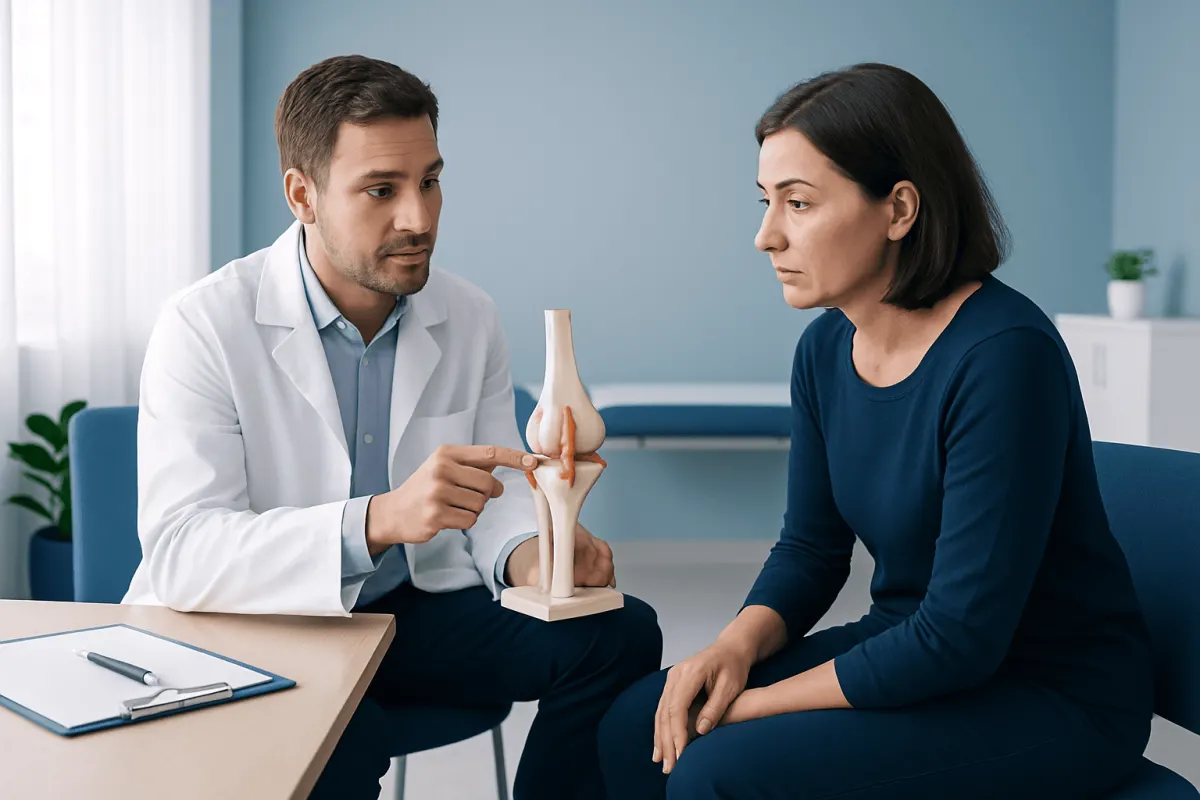
A torn meniscus is very serious when it prevents normal knee movement, causes persistent disability, or is part of a more extensive knee injury. It is also more concerning when symptoms began after a high-energy injury, when the knee gives way repeatedly, or when pain and swelling do not improve with appropriate care.
Not every tear requires urgent surgery. Degenerative tears are common in middle-aged and older adults and can coexist with early osteoarthritis. In these situations, exercise-based rehabilitation and management of pain and inflammation are often considered before surgery unless there is locking or another clear mechanical problem.
An orthopedic assessment can distinguish a tear that is likely to heal or remain stable from one that may need repair or removal of an unstable damaged portion. Early evaluation is particularly worthwhile for younger people with an acute twisting injury, because some repairable tears benefit from timely treatment.
What are three signs of a meniscus tear in the knee?
Three common signs of a meniscus tear in the knee are pain at the inner or outer joint line, swelling, and catching or locking during movement. Pain may be most noticeable while twisting, squatting, climbing stairs or rising from a low chair. Swelling can begin soon after an injury or increase gradually over the next day or two.
Mechanical symptoms can include a clicking sensation, a feeling that something is catching inside the joint, or difficulty fully straightening the knee. Some people also describe stiffness, reduced range of movement or a sense that the knee is less reliable when turning.
- Localized pain along either side of the knee joint
- Swelling or stiffness after activity or injury
- Catching, locking, clicking or loss of full motion
- Discomfort with deep bending, twisting or pivoting
- Occasional giving way, especially if there is another knee injury
These symptoms can overlap with ligament injuries, arthritis, tendon problems and kneecap conditions. A diagnosis should therefore be made by a qualified clinician rather than symptoms alone.
Can you still walk with a torn meniscus in your knee?
Yes, many people can still walk with a torn meniscus in their knee. Walking may be uncomfortable, especially on uneven ground, stairs or longer distances, but the ability to walk does not rule out a meaningful tear. Some people notice symptoms only when they twist or bend deeply.
It is sensible to reduce activities that produce sharp pain, swelling or catching while the knee is being assessed. Low-impact movement may be preferable to running, jumping, pivoting or deep squatting during the early stage. Continuing to force a knee through a locking sensation is not recommended.
Immediate assessment is advisable if the person cannot bear weight after an injury, the knee is visibly deformed, there is severe swelling, or the knee is stuck and cannot be fully straightened. These features may indicate a more significant injury requiring prompt care.
Complete medial meniscus tears and how they are treated
People sometimes use the phrase “complete medial meniscus tear” to describe a tear that extends through the meniscal tissue or a major tear of the inner meniscus. What is a complete medial meniscus tear in clinical terms depends on the imaging description and the tear pattern. A vertical, horizontal, radial, root or complex tear can behave differently, so the wording should be interpreted by an orthopedic specialist.
Complete medial Tear Treatment: When Repair, Trimming, or Rehab Makes the Most Sense" class="ahp-ilk">meniscus tear treatment is individualized. Initial care may include relative rest, ice for short periods, compression if advised, elevation, and pain relief recommended by a clinician. Physical therapy can help restore motion, strengthen the quadriceps and hip muscles, and improve control of the knee during daily activity.
If a tear is repairable and symptoms are persistent or the knee is mechanically blocked, surgery may be considered. Knee arthroscopy allows the surgeon to inspect the joint and, when possible, repair the tear with sutures. A repair usually requires a more protected recovery than trimming a damaged fragment, but it preserves meniscal tissue.
Meniscus complete tear surgery is not automatically necessary. When the damaged area cannot be repaired and remains symptomatic, a surgeon may recommend partial meniscectomy, which removes only the unstable torn portion while retaining as much functioning meniscus as possible. The decision should reflect the individual’s symptoms, tear characteristics and joint health.
How a meniscus tear is diagnosed and managed
A clinician starts by asking how the knee problem began, whether there was a twist or impact, and whether swelling or locking occurred. The examination may assess tenderness at the joint line, range of movement, stability and pain with specific maneuvers. X-rays do not show the meniscus itself, but they can help identify bone injury or arthritis.
MRI is commonly used when the diagnosis remains uncertain, symptoms are substantial, or surgery is being considered. It provides detailed images of soft tissues, including the menisci, ligaments and cartilage. Imaging findings are always interpreted alongside symptoms, since a tear seen on MRI may not be the main source of pain.
Complete meniscus tear treatment may include rehabilitation alone, a repair, or selective removal of an unstable portion. Recovery plans vary according to the treatment and associated injuries. A physiotherapist can guide gradual return to normal movement, strength training and, when appropriate, sport-specific activity.
Acıbadem Health Point’s multidisciplinary orthopedic specialists in JCI-accredited hospitals assess knee injuries and discuss suitable non-surgical and surgical options for international patients.
When to seek medical care
Medical assessment is appropriate for knee pain, swelling or movement problems that continue after an injury or do not improve with reasonable self-care. A clinician can identify whether the symptoms are likely to arise from the meniscus or another structure in the knee.
Prompt medical care is recommended if the knee locks, cannot fully straighten, cannot bear weight, becomes very swollen quickly, looks deformed, or is associated with numbness, a cold foot, fever or increasing redness. These symptoms can have causes other than a meniscus tear and should not be ignored.
Until assessment, avoiding painful twisting and impact activity may help protect the knee. Gentle movement within a comfortable range is often preferable to complete immobility, unless a clinician has advised otherwise. A personalized plan is especially important for athletes, people with physically demanding jobs and those with previous knee surgery or arthritis.
Frequently asked questions
01Can a meniscus tear heal on its own?
Some tears can heal or become symptom-free without surgery, especially when they are small, stable and located in the outer portion of the meniscus where blood supply is better. Tears in the inner region have less healing potential. Even when the tear itself does not fully heal, rehabilitation may relieve symptoms and restore useful function.
02How long does it take to recover from a meniscus tear?
Recovery varies with the tear, treatment and the person’s activity demands. Symptoms managed without surgery may improve over weeks with appropriate rehabilitation. Recovery after a meniscus repair is often longer than after removal of a small unstable fragment because the repaired tissue needs time to heal.
03Can exercise make a meniscus tear worse?
High-impact, twisting and deep-bending activities can aggravate pain or mechanical symptoms in some people. Carefully chosen exercises that improve motion and muscle strength are often part of treatment. A doctor or physiotherapist can recommend activities that fit the specific knee problem.
04Will a torn meniscus show on an X-ray?
An X-ray does not directly show a meniscus tear because the meniscus is soft tissue. It can still be useful to check for fractures, alignment concerns or signs of arthritis. MRI is the imaging test more commonly used to evaluate the meniscus when needed.
05What happens if a meniscus tear is left untreated?
Some tears remain manageable without surgery and do not cause progressive problems. Others continue to cause pain, swelling, catching or loss of motion, particularly if a loose fragment is unstable. Persistent symptoms should be reviewed so that treatment can be tailored to the knee and the person’s functional needs.
06Is surgery always needed for a complete meniscus tear?
No. The word complete does not by itself determine whether surgery is needed. The decision depends on the tear pattern and location, whether the knee locks, the severity of symptoms, associated injuries and response to non-surgical treatment.
This article is for general information only and is not a substitute for professional medical advice. Please consult a qualified doctor about your individual situation.
Joint and spine care in Turkey — expert assessment & treatment
JCI-accredited · board-certified surgeons · reply within 24h
Add us as a Preferred Source to see more of our trusted health content across Google Search, AI Overviews and Discover.