Meniscus Inside the Knee: Pain, Tears and Recovery
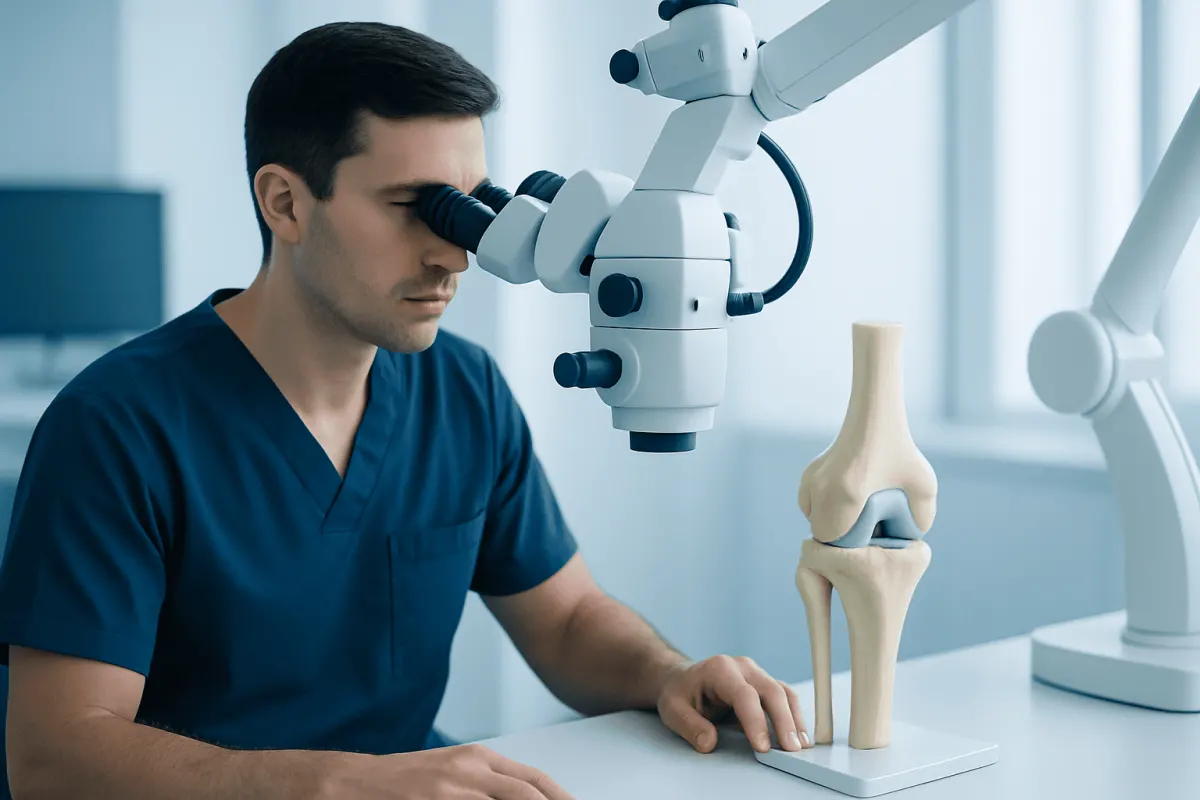
The meniscus inside the knee is a pair of C-shaped cartilage pads that help cushion, stabilize and distribute force across the joint. A meniscus tear may cause pain, swelling, clicking or reduced movement, although the best treatment depends on the tear’s location, size, symptoms and the person’s activity needs.
Meniscus inside knee: the answer in brief
The meniscus inside the knee refers to the two firm, rubbery cartilage structures positioned between the thighbone (femur) and shinbone (tibia). They act as shock absorbers, help spread body weight across the joint and contribute to smooth, stable knee movement.
When people describe pain on the inside of the knee, they may be referring to the medial meniscus, but several other structures can cause similar symptoms. A medical assessment can identify whether a meniscus tear, ligament injury, arthritis or another problem is responsible.
In the meniscus medical definition, it is a crescent-shaped fibrocartilage structure within certain joints. In the knee, there are two: the medial meniscus on the inner side and the lateral meniscus on the outer side. They are not muscles, and they do not simply “grow back” after every injury.
Medial meniscus knee anatomy and its role
The medial meniscus is the meniscus on the inner side of the knee. It is C-shaped and is more firmly connected to the joint capsule and nearby medial collateral ligament than the lateral meniscus. This relative attachment can make it less mobile and more prone to injury during twisting movements.
A medial meniscus knee diagram typically shows the meniscus as a curved wedge sitting on the top surface of the tibia. Its thicker outer edge helps the joint fit together, while its thinner inner edge extends toward the center of the knee. The outer portion has a better blood supply than the inner portion, an important factor in healing.
The menisci help reduce concentrated pressure on joint cartilage. Losing meniscus tissue, especially after a large tear or removal of tissue, can increase stress on the knee over time. For this reason, clinicians generally aim to preserve healthy meniscus tissue whenever it is safe and practical.
What happens if a meniscus tear is inside the knee?
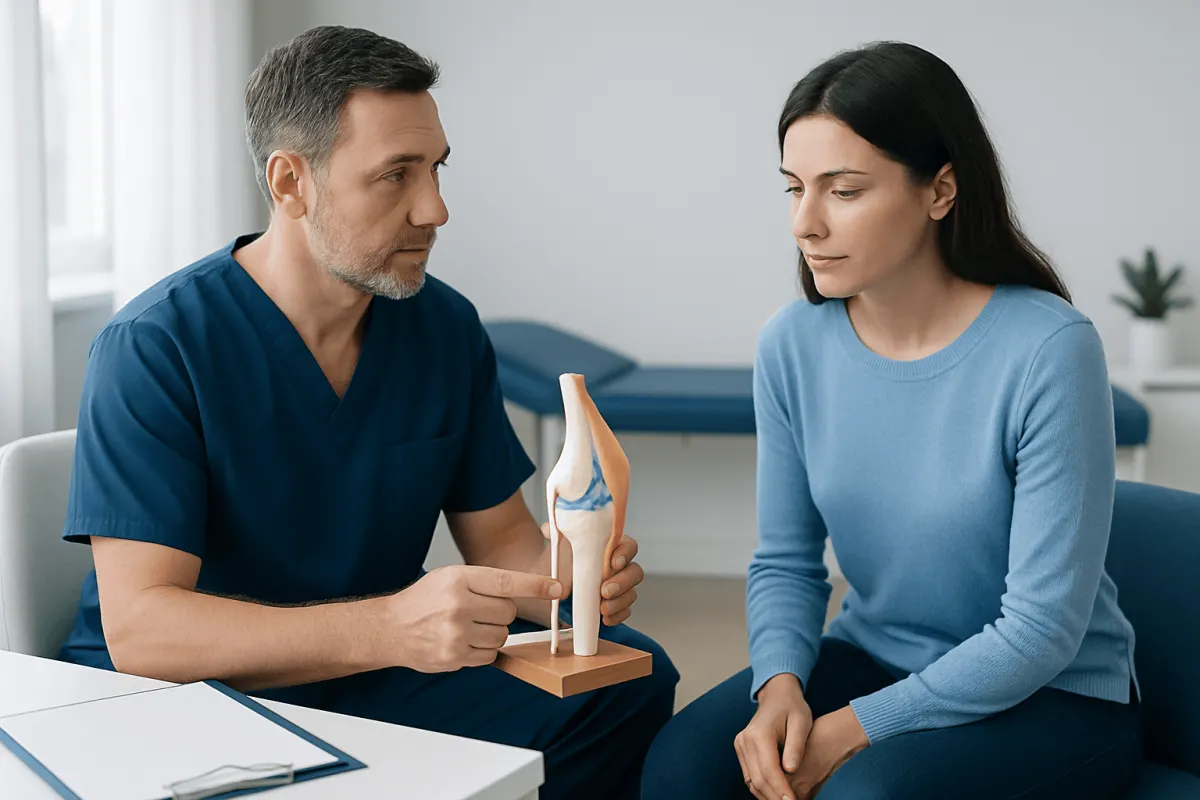
A meniscus tear occurs when the cartilage splits, frays or detaches partly from its usual shape. It can happen suddenly after pivoting, squatting deeply or changing direction, particularly in sports. It may also develop over time as the meniscus becomes less resilient with age.
Symptoms vary greatly. Meniscus inside knee pain may be felt along the joint line, especially with bending, twisting or squatting. The knee may swell, feel stiff, click or catch. Some tears create a loose or displaced fragment that interferes with movement, causing a sensation that the knee is stuck or unable to fully straighten.
Not every tear causes severe symptoms, and an MRI may show a tear that is not the main cause of a person’s knee pain. The clinical picture matters: a clinician considers the injury history, physical examination, knee function and imaging findings together before recommending treatment.
- Small, stable tears may settle with time and rehabilitation.
- Degenerative tears can occur alongside early osteoarthritis.
- Displaced tears or tears causing true locking may need more urgent orthopedic assessment.
Can you still walk with a torn meniscus in your knee?
Many people can still walk with a torn meniscus in the knee, particularly if the tear is small or stable. However, walking may be painful, and symptoms can worsen with long distances, stairs, uneven ground, pivoting or carrying heavy loads. Being able to walk does not rule out a meaningful knee injury.
It is sensible to reduce activities that trigger sharp pain, repeated twisting or deep knee bending while the knee is being assessed. Relative rest does not necessarily mean complete inactivity; gentle movement and exercises recommended by a healthcare professional can help maintain strength and range of motion.
If the knee repeatedly gives way, cannot fully straighten, becomes significantly swollen, or feels locked in one position, medical evaluation should not be delayed. These symptoms can indicate a tear pattern or associated injury that requires prompt attention.
Can an inner meniscus tear heal on its own?
An inner meniscus tear may heal without surgery in some circumstances, but healing depends heavily on its location. Tears in the outer third of the meniscus, sometimes called the red zone, have relatively better blood supply and therefore greater healing potential. Tears in the inner portion, often called the white zone, receive little direct blood supply and are less likely to heal fully on their own.
Even when a tear does not completely knit together, symptoms can improve with non-surgical care. This may include a period of activity adjustment, guided physiotherapy, strengthening of the thigh and hip muscles, and pain-relieving treatments advised by a clinician. Rehabilitation can improve knee control and reduce stress on the joint.
Age, tear type, tear size, knee stability, associated ligament injuries and activity goals all affect the decision-making process. A clinician may recommend monitoring a stable tear, while a repair may be considered for a repairable traumatic tear in an appropriate location. For people with persistent symptoms, knee arthroscopy may be used to inspect and treat selected meniscus injuries.
How serious is a medial meniscus tear?
A medial meniscus tear ranges from a mild, manageable injury to a condition that significantly affects knee function. Its seriousness is not determined by the word “tear” alone. Important considerations include whether the tear is stable or displaced, whether it causes locking, whether other structures are injured, and how much it limits daily life.
A sudden tear after a sports injury may occur alongside an anterior cruciate ligament injury or other ligament damage. A gradual tear in middle or later adulthood may be part of broader wear in the knee joint. In both situations, treatment should be individualized rather than based solely on an imaging result.
Persistent pain, swelling and reduced function deserve evaluation because untreated symptoms can lead to reduced activity, muscle weakness and altered movement patterns. However, many medial meniscus tears can be managed successfully without immediate surgery. Preserving the meniscus whenever possible is generally preferred over removing tissue.
Specialists may also consider whether symptoms relate to knee osteoarthritis, especially when pain has developed gradually and X-rays show joint changes. The two conditions can coexist, but they are managed according to the individual’s symptoms and findings.
How a meniscus tear is diagnosed and treated
A clinician will usually ask how the pain began, what movements trigger symptoms and whether swelling or locking has occurred. They will examine the knee for tenderness, range of motion, swelling, stability and signs that particular movements reproduce symptoms. X-rays do not show the meniscus itself, but they can help identify bone injury or arthritis. MRI is often used when a detailed view of the meniscus and other soft tissues is needed.
Initial treatment commonly includes avoiding aggravating activity, using ice for short periods when swelling is present, and following advice about pain relief. A structured rehabilitation plan can restore movement and strengthen the quadriceps, hamstrings, hips and core muscles. The goal is to improve function without placing unnecessary stress on the healing or irritated knee.
Surgery is not needed for every tear. It may be considered when a tear causes persistent mechanical symptoms, true locking, ongoing pain despite appropriate conservative care, or when a repairable traumatic tear is present. Arthroscopic procedures may repair the tear with sutures or trim only the unstable damaged part when repair is not feasible. Recovery plans differ depending on whether the meniscus was repaired or partially removed.
Acıbadem Health Point’s multidisciplinary specialists and JCI-accredited hospitals assess and treat knee conditions for international patients, including rehabilitation and orthopedic care when these are indicated.
When to seek medical care
Medical care is appropriate for knee pain that continues, recurs or limits normal activities. An orthopedic clinician, sports medicine physician or physiotherapist can help clarify the cause and create a plan that reflects the person’s health, work and activity requirements.
Prompt assessment is particularly important after a significant twist, fall or impact if the knee rapidly swells, cannot bear weight, looks deformed, feels unstable, or will not fully bend or straighten. A locked knee, in which movement is physically blocked, should be assessed urgently.
Emergency care is needed if knee pain is accompanied by fever, marked redness or warmth, severe swelling, a cold or pale foot, new numbness, or other signs of infection or impaired circulation. These symptoms are not typical of a straightforward meniscus tear and require timely evaluation.
Frequently asked questions
01Where is the meniscus inside the knee?
The menisci sit between the femur and tibia, the main bones of the knee joint. The medial meniscus lies on the inner side of the knee, while the lateral meniscus lies on the outer side. Each helps cushion and stabilize the joint.
02Does medial meniscus pain always mean there is a tear?
No. Inner knee pain can also arise from ligaments, tendons, arthritis, cartilage changes or referred pain from another area. A clinical examination and, when needed, imaging help establish the cause.
03What does a torn meniscus feel like?
Symptoms may include pain along the joint line, swelling, stiffness, clicking, catching or pain during twisting and squatting. Some people feel that the knee gives way or cannot fully straighten. Symptoms differ depending on the tear and any associated injury.
04Can exercise make a meniscus tear worse?
High-impact, twisting and deep-bending activities may aggravate symptoms, particularly soon after an injury. Carefully selected strengthening and mobility exercises can be beneficial, but should be guided by a qualified healthcare professional when a tear is suspected or confirmed.
05Will an MRI always be needed for a meniscus tear?
Not always. A clinician may diagnose and initially manage some knee problems based on the history and examination. MRI can be useful when the diagnosis remains uncertain, symptoms persist, or surgical planning is being considered.
06How long does recovery from a meniscus tear take?
Recovery varies according to the tear, treatment approach, overall knee health and rehabilitation progress. Symptoms from some stable tears improve over weeks with conservative care, while recovery after meniscus repair commonly takes longer because the tissue needs time to heal. A treating clinician can provide a more individualized timeline.
This article is for general information only and is not a substitute for professional medical advice. Please consult a qualified doctor about your individual situation.
Joint and spine care in Turkey — expert assessment & treatment
JCI-accredited · board-certified surgeons · reply within 24h
Add us as a Preferred Source to see more of our trusted health content across Google Search, AI Overviews and Discover.