Malignant Tumour in the Neck: Diagnosis and Outlook

A malignant tumour in the neck may begin in nearby tissues or represent cancer that has spread to a neck lymph node. Prompt specialist assessment is important because the tumour type, location, and stage guide treatment and outlook.
Overview: what a malignant tumour in the neck means
A malignant tumour in the neck is a cancerous growth located in neck tissues or, more commonly, an enlarged neck lymph node containing cancer cells. It is not one single disease. The neck contains lymph nodes, thyroid tissue, salivary glands, muscles, nerves, blood vessels, skin, and structures involved in swallowing and breathing, so a cancer found there can have several possible origins.
In adults, a new neck lump that persists or grows should be evaluated rather than watched indefinitely. Some neck lumps are caused by infections or benign conditions, but cancer needs to be ruled out when a lump is firm, unexplained, painless, persistent, or accompanied by symptoms such as difficulty swallowing, voice changes, ear pain, or unintentional weight loss.
A careful diagnosis is essential before treatment begins. Specialists aim to determine whether the tumour started in the neck, spread from a nearby head and neck site, or less often, spread from another part of the body. This information allows the care team to recommend treatment that protects function and quality of life whenever possible.
Symptoms and what a cancerous neck tumor can look like
The most common sign is a lump or swelling in the neck. It may be noticed under the jaw, along the side of the neck, above the collarbone, or in the front of the neck near the thyroid. A cancerous lump is often painless and may feel firm or hard. It can be fixed in place rather than moving easily under the skin, but appearance and feel alone cannot confirm whether a lump is cancerous.
Some malignant tumours cause visible changes, including an enlarging swelling, skin redness, ulceration, or an irregular surface if the tumour involves the skin. However, many cancerous neck lymph nodes cause no skin change at all. A lump may be small at first, and symptoms can depend more on the location of the original cancer than on the neck swelling itself.
Associated symptoms can include persistent sore throat, one-sided ear pain without an ear infection, nasal blockage or nosebleeds, mouth sores that do not heal, hoarseness, trouble swallowing, pain when swallowing, coughing up blood, or breathing difficulty. Thyroid-related cancers may cause a front-neck nodule, hoarseness, or pressure symptoms, although many thyroid nodules are not cancerous.
What does a cancerous neck tumor look like?
A cancerous neck tumor may look like a persistent, enlarging lump, sometimes with uneven contours or overlying skin changes. Yet it may also be a normal-looking swelling beneath intact skin. Because benign cysts, infections, thyroid nodules, and swollen lymph nodes can look similar, imaging and biopsy—not appearance alone—are needed for a reliable diagnosis.
Causes, origins, and risk factors

A malignant neck mass may arise from a primary cancer in the head and neck region. Common primary sites include the mouth, throat, tonsils, base of the tongue, voice box, nasal passages, salivary glands, thyroid, and skin. Cancer cells can travel through lymphatic channels and settle in neck lymph nodes, producing a lump before the original site is recognized.
Squamous cell carcinoma is a common type of head and neck cancer. Tobacco use and heavy alcohol intake increase risk, particularly when both are present. Infection with certain types of human papillomavirus (HPV) is also linked with cancers of the tonsil and back of the tongue. Other risks vary by tumour type and may include prolonged sun exposure for skin cancer, previous radiation exposure to the neck for thyroid cancer, or immune suppression.
Not every malignant neck tumour has an obvious risk factor, and having a risk factor does not mean a person will develop cancer. Conversely, people without known risks can develop neck cancers. A clinician considers age, symptoms, medical history, examination findings, and test results rather than relying on one factor alone.
How serious is a tumor in the neck?
A tumour in the neck can range from benign and easily managed to malignant and potentially serious. A malignant tumour needs timely assessment because it may affect swallowing, speech, breathing, nerves, or major blood vessels, and it may indicate cancer spread to lymph nodes. The seriousness depends on the exact cancer type, where it began, its size, whether it has spread, and how well it responds to treatment.
Diagnosis and staging
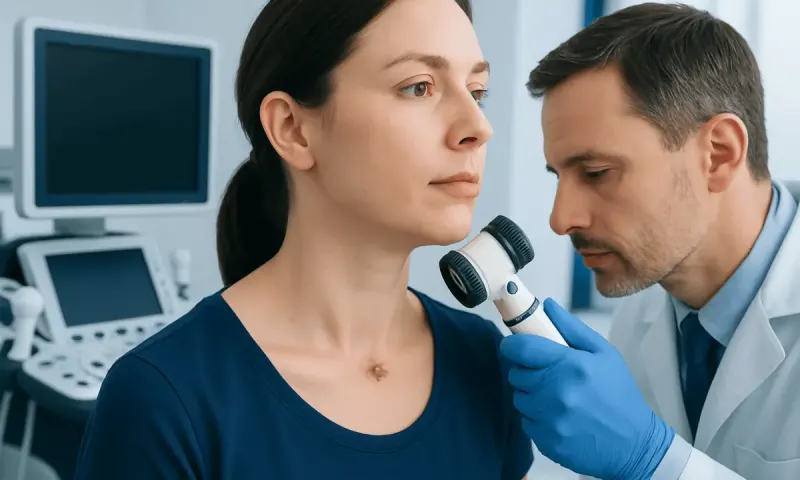
Assessment usually begins with a detailed medical history and examination of the mouth, throat, nose, ears, skin, thyroid, and neck. An ear, nose, and throat specialist may examine the throat and voice box using a flexible camera passed gently through the nose. Dental and oral examinations may also be important when a mouth or throat cancer is suspected.
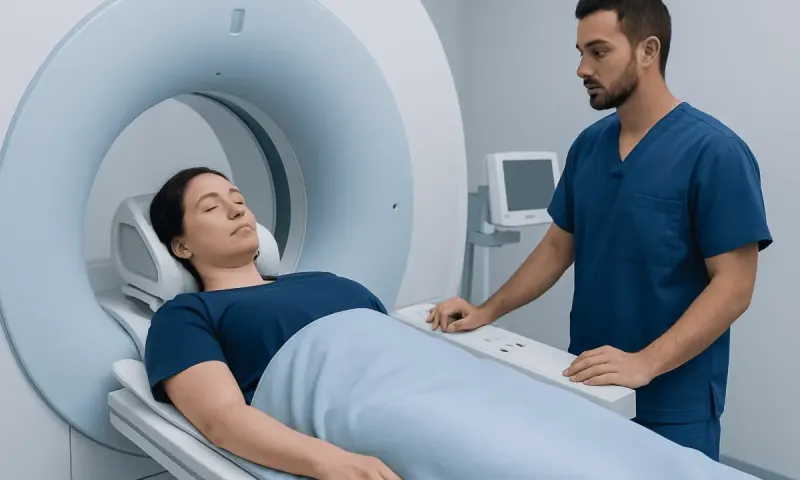
Imaging helps show the size, location, and relationship of a tumour to nearby structures. Ultrasound is often useful for thyroid nodules and superficial lymph nodes. CT, MRI, and PET-CT scans may be used to assess deeper tissues, identify a possible primary site, and look for spread elsewhere in the body.
A biopsy is usually needed to establish the diagnosis. Fine-needle aspiration uses a thin needle to collect cells from a lump and is commonly the first biopsy test for a neck mass. Depending on the findings, a core biopsy, surgical biopsy, or examination under anesthesia may be appropriate. Pathology testing identifies the tumour type and may assess markers, including HPV-related markers when relevant.
After cancer is confirmed, staging describes how extensive it is. Staging takes account of the primary tumour, involved lymph nodes, and any spread to distant organs. A multidisciplinary team uses these details to discuss the most suitable treatment plan.
Treatment options and modern approaches
Treatment is personalized. The plan depends on the type and location of cancer, its stage, tumour biology, a person’s general health, and priorities such as speech, swallowing, appearance, and long-term function. Head and neck surgeons, medical oncologists, radiation oncologists, radiologists, pathologists, dentists, speech and swallowing therapists, and dietitians may all contribute to care.
Surgery may remove the primary tumour, involved lymph nodes, or both. For selected cancers, minimally invasive techniques can help reach tumours through the mouth or use smaller incisions. A neck dissection removes lymph nodes from one or more areas of the neck when there is known or suspected lymph node involvement. Reconstructive surgery may be considered when tissue removal affects appearance or function.
Radiotherapy uses carefully planned radiation to destroy cancer cells. It may be used alone for some early cancers, after surgery to lower recurrence risk, or together with systemic treatment for more advanced disease. Systemic treatments can include chemotherapy, targeted medicines, or immunotherapy, depending on the cancer type and situation. Radiotherapy treatment and medication-based approaches are planned to balance cancer control with potential side effects.
Supportive care is part of treatment from the beginning. Nutrition support, dental assessment, pain management, speech and swallowing therapy, smoking cessation support, and rehabilitation can help a person prepare for treatment and recover afterward. Acıbadem Health Point’s multidisciplinary specialists and JCI-accredited hospitals diagnose and treat head and neck cancers for international patients.
Which type of neck cancer is the most aggressive?
There is no single cancer that is always the “most aggressive” in the neck. Some cancers, such as certain high-grade salivary gland cancers, anaplastic thyroid cancer, and rapidly growing lymphomas, can behave aggressively, but prognosis depends on the individual subtype and stage. Squamous cell carcinoma can also be serious when advanced, while HPV-associated oropharyngeal cancers often have different treatment responses and outlooks than tobacco-associated cancers.
Outlook, follow-up, and living after treatment
How treatable a malignant tumour in the neck is depends mainly on where it started and how far it has spread. Many early-stage head and neck cancers are treated with curative intent. Even when lymph nodes in the neck are involved, treatment may still aim to cure the cancer, particularly when the primary tumour can be controlled and there is no distant spread.
Some advanced or recurrent cancers may be harder to cure, but treatments can still slow growth, relieve symptoms, and support comfort and daily function. Pathology findings, imaging results, HPV status for relevant throat cancers, response to initial treatment, and overall health all contribute to an individual outlook. The care team is best placed to explain what the findings mean for one person.
Follow-up appointments are important after treatment. They help clinicians monitor for recurrence, manage late effects such as dry mouth, thyroid changes, swallowing difficulties, stiffness, or dental problems, and support emotional recovery. Patients should report new lumps, persistent pain, voice changes, swallowing changes, or unexplained weight loss between scheduled visits.
How treatable is neck cancer?
Neck cancer can often be treated effectively, especially when it is diagnosed before it has spread widely. Treatment may involve one approach or a combination of surgery, radiotherapy, and systemic medicines. The term “neck cancer” covers several conditions, so a meaningful prognosis requires a confirmed diagnosis and stage rather than a general estimate.
When to seek medical care
Medical assessment is advisable for any neck lump that lasts more than two to three weeks, becomes larger, or returns after seeming to improve. Adults should not assume that a persistent neck lump is simply due to an infection, particularly if there is no recent cold, dental infection, or other clear explanation.
More urgent review is needed for difficulty breathing, rapidly increasing neck swelling, inability to swallow liquids, significant bleeding from the mouth or throat, or severe worsening pain. These symptoms may have causes other than cancer, but they require prompt medical attention.
People should also arrange an appointment if they have persistent hoarseness, a non-healing mouth sore, one-sided throat or ear pain, trouble swallowing, unexplained weight loss, or a change in an existing thyroid or salivary gland lump. Early assessment can clarify the cause and, if cancer is found, help treatment begin without unnecessary delay.
Frequently asked questions
01Can a neck lump be cancer if it does not hurt?
Yes. Cancerous lymph nodes and other malignant neck tumours are often painless, particularly early on. However, painless lumps are also caused by many non-cancerous conditions, so an examination and, when needed, imaging or biopsy are important.
02Is every swollen lymph node in the neck cancer?
No. Neck lymph nodes often enlarge temporarily because of viral infections, throat infections, dental problems, or inflammation. A node that persists, enlarges, feels unusually firm, or occurs without a clear infection should be assessed by a clinician.
03Can a blood test diagnose a malignant tumour in the neck?
Blood tests may provide useful information about general health or specific conditions, but they usually cannot diagnose most malignant neck tumours on their own. Imaging and a tissue or cell sample from biopsy are typically needed to confirm the diagnosis.
04What doctor should assess a persistent neck lump?
A primary care doctor can make an initial assessment and arrange referral. Depending on the findings, an ear, nose, and throat specialist, head and neck surgeon, endocrinologist, or oncology team may be involved.
05Does a neck biopsy cause cancer to spread?
Needle biopsy is a standard diagnostic procedure and is not considered to cause cancer to spread in the usual assessment of neck masses. The medical team selects the biopsy method that is safest and most likely to provide an accurate diagnosis.
06Can neck cancer come back after treatment?
Some cancers can recur, which is why regular follow-up is important after treatment. Recurrence risk varies by cancer type, stage, treatment, and individual factors, and new symptoms should be discussed with the treating team promptly.
This article is for general information only and is not a substitute for professional medical advice. Please consult a qualified doctor about your individual situation.
Medical weight-loss options in Turkey — costs & eligibility
JCI-accredited · board-certified surgeons · reply within 24h
Add us as a Preferred Source to see more of our trusted health content across Google Search, AI Overviews and Discover.