Lump Inside Anus Cancer: Signs, Tests and Treatment

A lump inside the anus is more often caused by non-cancerous conditions such as hemorrhoids, anal warts, or an abscess, but it should not be self-diagnosed. Persistent or changing symptoms need medical assessment because early anal cancer can resemble common anal conditions.
Overview: can a lump inside the anus be cancer?
A lump inside the anus can be a sign of anal cancer, but cancer is not the most common explanation. Hemorrhoids, skin tags, anal fissures, infections, anal warts, cysts and abscesses can all cause a lump, discomfort, bleeding or itching in the anal area. Because these conditions can feel similar, an examination by a qualified clinician is the safest way to identify the cause.
Anal cancer develops when abnormal cells grow in the anal canal, the short passage connecting the rectum to the outside of the body, or in the skin around the anal opening. Most anal cancers are squamous cell carcinomas. They differ from cancers arising higher in the rectum or colon, so the tests, staging process and treatment plan may also differ.
Finding a lump does not mean a person has cancer. However, a lump that persists, enlarges, bleeds, becomes painful, or is accompanied by bowel changes should not simply be assumed to be hemorrhoids. Timely assessment can clarify the diagnosis and allow treatment to begin promptly if it is needed.
What are the first signs of cancer of the anus?
The first signs of cancer of the anus may be subtle and are often mistaken for hemorrhoids or another benign anal condition. Rectal bleeding, usually bright red blood on toilet paper or in the toilet, is a common symptom. Other early changes can include itching, pain or pressure around the anus, a persistent feeling of needing to pass stool, or a small lump or thickened area.
Some people notice a change in bowel habits, such as narrower stools, constipation, looser stools, or difficulty controlling bowel movements. Mucus-like discharge, sores that do not heal, or swollen groin lymph nodes can also occur. In some cases, particularly at an early stage, anal cancer causes no clear symptoms and is found during an examination for another concern.
These symptoms are not specific to cancer. Still, anyone with unexplained anal bleeding, a new mass, or symptoms that continue despite basic treatment for hemorrhoids should arrange a medical review. A clinician can examine the area and decide whether further tests are necessary.
What does a tumor in the anus look like?
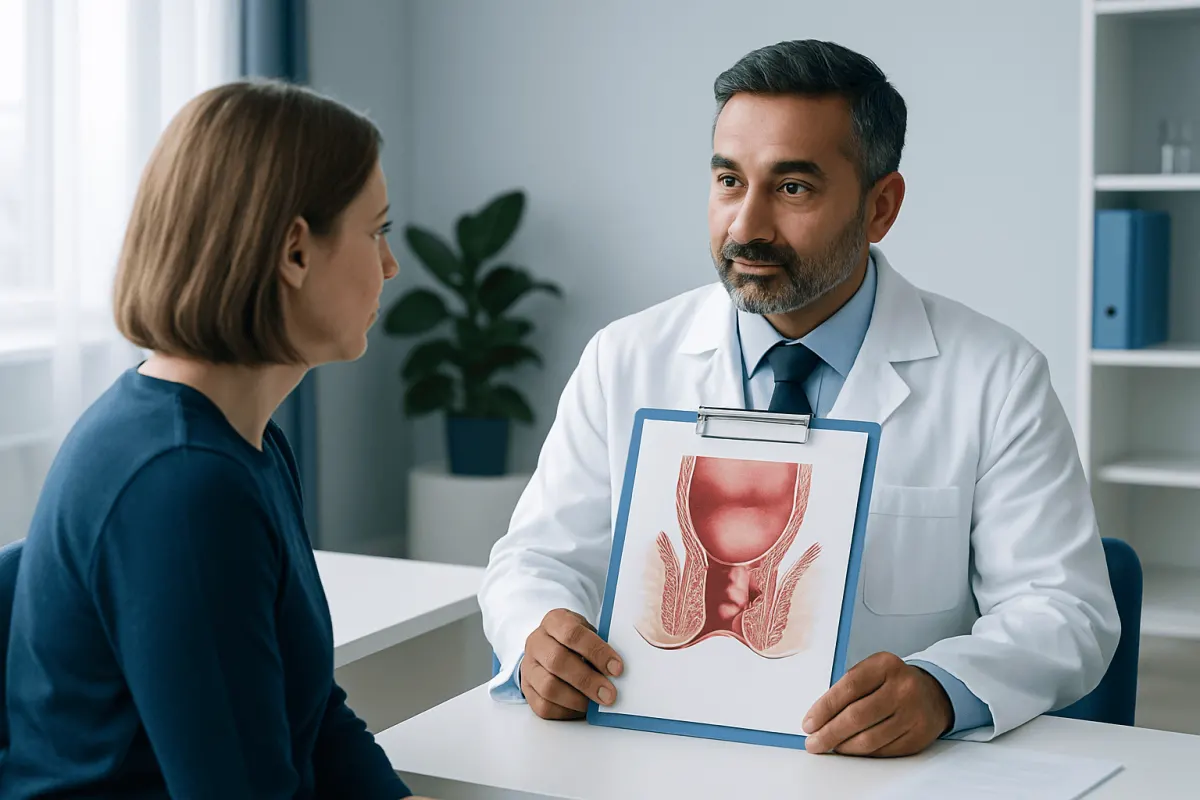
An anal tumor may look or feel like a firm lump, raised growth, thickened patch, ulcer, sore, or wart-like area at or just inside the anal opening. It may be skin-colored, pink, red, darker than the surrounding skin, or irregular in appearance. Some tumors bleed when touched or after a bowel movement, while others may cause discharge, itching or pain.
There is no single appearance that reliably distinguishes an anal tumor from hemorrhoids, warts, inflamed tissue or other non-cancerous conditions. A hemorrhoid may be soft or swollen and may vary in size, whereas a tumor can be persistent and may progressively enlarge, but these differences are not dependable enough for self-assessment.
Internal changes cannot always be seen from outside the body. A doctor may use a gloved finger examination and a small viewing instrument to inspect the anal canal. If an area looks or feels unusual, a biopsy is the only way to determine whether cancer cells are present.
Causes and factors that can raise risk
Most squamous cell anal cancers are linked to persistent infection with certain high-risk types of human papillomavirus (HPV). HPV is common and often clears naturally, but in a small number of people it can cause cell changes that may develop into cancer over time. HPV-related changes can also lead to anal warts, although having warts does not mean a person has cancer.
Other factors associated with a higher risk include smoking, a weakened immune system, long-term use of medicines that suppress immunity, HIV infection, and a previous HPV-related cancer or precancerous condition involving the cervix, vulva, vagina, penis or throat. Receptive anal sex and having multiple sexual partners can increase the likelihood of HPV exposure, but anal cancer can occur in people of any sex, sexual orientation or relationship history.
Risk factors help guide prevention and screening discussions but do not determine an individual’s future. Many people with one or more risk factors will never develop anal cancer, and some people diagnosed with it have no recognized risk factors. Avoiding tobacco and discussing HPV vaccination with a clinician are practical preventive steps for eligible people.
How a suspicious anal lump is diagnosed and staged
Assessment usually starts with a discussion of symptoms and medical history, followed by an examination of the skin around the anus. The clinician may perform a digital rectal examination, gently feeling inside the anal canal with a gloved, lubricated finger. Anoscopy or proctoscopy may be used to view the anal canal more closely.
If a suspicious lump, ulcer or other abnormal area is found, a biopsy is performed. During a biopsy, a small tissue sample is removed and examined by a pathologist. This is essential because scans and physical examination alone cannot confirm cancer. Depending on the location and comfort needs, the procedure may be done in clinic or under anesthesia.
Once cancer is confirmed, imaging tests such as MRI, CT or PET-CT may help show the size of the tumor and whether nearby lymph nodes or other organs are involved. Doctors use this information to assign a stage and plan care. Blood tests may support overall treatment planning but do not diagnose anal cancer on their own.
- Early-stage disease: limited to the anus or nearby tissues.
- Locally advanced disease: larger or involving nearby lymph nodes or structures.
- Metastatic disease: spread to distant organs, which is less common at diagnosis.
Modern treatment approaches and outlook
Treatment is planned by a multidisciplinary team, commonly including medical oncologists, radiation oncologists, surgeons, radiologists, pathologists and specialist nurses. For many people with non-metastatic anal cancer, the main treatment is chemoradiation: radiation therapy directed at the tumor and nearby lymph nodes combined with chemotherapy that makes cancer cells more sensitive to radiation. This approach often preserves anal function and avoids the need for major surgery.
Cancer Radiation Treatment: Options and Outlook" class="ahp-ilk">Radiation treatment is usually delivered over several weeks. Chemotherapy may be given by infusion or as tablets, depending on the regimen. Temporary side effects can include skin irritation, tiredness, diarrhea, nausea, urinary discomfort and changes in blood counts. The care team can provide symptom management and nutrition support, and many effects improve gradually after treatment ends.
Surgery may be considered when a small tumor can be removed safely, when cancer remains after chemoradiation, or when it returns in the same area. For cancer that has spread, treatment may include systemic chemotherapy, immunotherapy for selected situations, radiation for symptom relief, surgery in carefully chosen cases, or a clinical trial. The outlook depends on the tumor stage, treatment response, general health and other individual factors; earlier diagnosis generally offers more treatment options.
Acıbadem Health Point’s multidisciplinary specialists and JCI-accredited hospitals assess and treat anal cancer for international patients, with treatment decisions tailored to pathology findings, stage and personal needs.
When to seek medical care
Medical care should be sought promptly for rectal bleeding that is unexplained, recurrent or increasing; a new anal lump; persistent anal pain; a sore that does not heal; or a change in bowel habits lasting more than a short time. People should also seek assessment if symptoms thought to be hemorrhoids do not improve, recur frequently, or feel different from previous episodes.
Urgent medical attention is appropriate for heavy bleeding, fainting, severe worsening pain, fever with anal swelling, inability to pass stool or urine, or signs of a serious infection. These symptoms may have causes other than cancer, but they need timely evaluation.
People with HIV, immune suppression, a history of HPV-related precancer or cancer, or other increased-risk factors may benefit from individualized advice about anal examinations or screening. Screening practices vary by country and risk group, so a doctor can explain whether anal cytology, high-resolution anoscopy, or another approach is appropriate.
Living well during and after treatment
During treatment, careful skin care, adequate fluids, balanced nutrition and regular communication with the oncology team can help manage common effects. People should ask before using creams, suppositories, herbal products or laxatives, as some may irritate sensitive skin or interfere with recommended care. Pain, bowel changes, sexual concerns and emotional stress are all valid issues to discuss.
Follow-up visits are an important part of care after treatment. The treatment team checks healing, examines the anal area and lymph nodes, and may arrange scans when clinically indicated. Tumors can continue shrinking for a period after chemoradiation, so response is assessed at planned intervals rather than immediately after treatment ends.
Smoking cessation, HPV vaccination where eligible, and safer-sex practices may reduce future HPV-related disease risk. Support from family, counseling services, stoma nurses when needed, pelvic floor specialists and cancer support groups can also help people adapt during recovery and beyond.
Frequently asked questions
01Is a lump inside the anus usually cancer?
No. Many anal lumps are caused by hemorrhoids, infections, anal warts, cysts, abscesses or other non-cancerous conditions. However, a persistent, growing, bleeding or painful lump should be examined because symptoms alone cannot rule out cancer.
02Can hemorrhoids be mistaken for anal cancer?
Yes. Both hemorrhoids and anal cancer can cause bleeding, discomfort, itching and a lump near the anus. A medical examination and, if needed, a biopsy can distinguish between them.
03Does anal cancer always cause pain?
No. Anal cancer can be painless, especially early on. Some people have bleeding, itching, discharge, bowel changes or a feeling of pressure instead of pain.
04How is anal cancer confirmed?
Anal cancer is confirmed with a biopsy, in which a small sample of suspicious tissue is examined under a microscope. Imaging tests may then be used to determine the extent, or stage, of confirmed cancer.
05Can anal cancer be treated without surgery?
Yes. For many people, combined chemotherapy and radiation is the main treatment and can avoid surgery that removes the anus. Surgery is reserved for certain early tumors, persistent disease, recurrence or selected other circumstances.
06Who should discuss anal cancer screening with a doctor?
People with HIV, immune suppression, previous HPV-related precancer or cancer, or other higher-risk circumstances may benefit from an individualized screening discussion. Screening recommendations vary, so a clinician can advise based on personal risk and local guidance.
This article is for general information only and is not a substitute for professional medical advice. Please consult a qualified doctor about your individual situation.
Persistent digestive symptoms? Get evaluated in Turkey
JCI-accredited · board-certified surgeons · reply within 24h
Add us as a Preferred Source to see more of our trusted health content across Google Search, AI Overviews and Discover.