
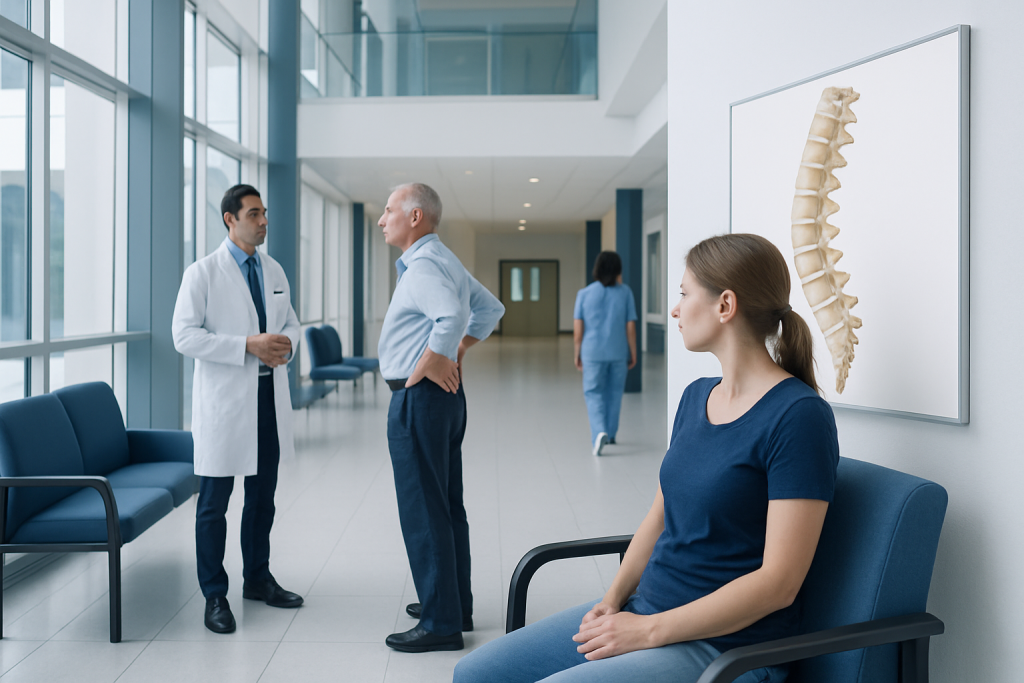
Lumbar Lordosis: Causes, Symptoms and Treatment
- 9 min read
- Published November 28, 2026
Key Takeaways
- Lumbar lordosis is the inward curve of the lower back; changes in this curve can affect posture and comfort.
- A noticeable arch, pain, tight muscles, or walking changes may suggest an underlying issue that deserves assessment.
- Common causes include posture, muscle imbalance, obesity, pregnancy, spinal conditions, and some neuromuscular disorders.
- Diagnosis usually involves a physical examination and, when needed, imaging to look at the spine and surrounding structures.
- Treatment often combines exercise-based rehabilitation, posture training, pain relief, and, in selected cases, medical or surgical care.
Lumbar lordosis is the natural inward curve of the lower spine, but it can become too pronounced or too flat and may lead to pain, stiffness, or posture concerns. Understanding the difference between a normal curve and a spinal problem helps patients seek the right evaluation and care.
Overview
Lumbar lordosis refers to the natural inward curve of the lower spine. Everyone has some degree of this curve, and in many people it helps the body balance, absorb movement, and stand upright efficiently. The topic becomes medically important when the curve is unusually deep, unusually flat, or paired with pain and functional change.
Patients often notice the issue not through a measurement but through day-to-day signs: the lower back looks more arched than before, standing feels tiring, or the pelvis seems to tilt in a way that changes posture. In an international-patient setting, this can matter when someone is planning travel for care, because the difference between a mild postural variation and a structural problem should be clarified before making decisions about treatment or long-distance follow-up.
Lumbar lordosis is not a diagnosis by itself. It is a description of spinal shape, and the next step is always to understand why the curve has changed and whether it is causing symptoms or affecting function.
Symptoms

Many people with mild changes in lumbar curvature have no symptoms at all. When symptoms do appear, they may build slowly and be noticed first during standing, walking, or after long periods of sitting. Pain is not always present, but when it is, it may feel like a dull ache in the lower back rather than a sharp injury.
Common complaints can include:
- Lower back pain or stiffness
- A visible increase or decrease in the curve of the lower back
- Tight hip flexors or hamstrings
- Fatigue when standing for long periods
- Difficulty maintaining an upright posture
- Changes in walking pattern or balance
In more significant cases, the curve may contribute to pressure on nearby joints and muscles, which can make bending, lifting, or twisting less comfortable. If leg numbness, weakness, or bowel and bladder changes are present, those symptoms need prompt medical attention because they may signal a more serious spinal issue.
Causes & Risk Factors

Lumbar lordosis can develop from several different pathways. Some people are born with variations in spinal shape, while others develop a change over time because of posture, injury, muscle imbalance, or another underlying condition. A key part of evaluation is deciding whether the curve is flexible and related to stance, or whether it reflects a structural change in the spine or hips.
Common contributing factors include pregnancy, obesity, weak abdominal and core muscles, tight muscles around the hips and lower back, and prolonged postures that encourage an exaggerated arch. Certain spinal disorders, such as spondylolisthesis, kyphosis compensation, or congenital vertebral differences, may also alter lumbar alignment. Less commonly, neuromuscular conditions, hip problems, or inflammatory spine disease can change the way the lower back is held.
Risk tends to rise when several factors overlap. For example, a person with a physically demanding job, limited exercise, and chronic hip tightness may be more likely to develop back discomfort and a visible postural curve. In children and adolescents, growth-related spine changes should be assessed carefully so that normal development is not mistaken for a disorder requiring treatment.
Diagnosis
Diagnosis starts with a conversation and a physical examination. A clinician will usually ask when the posture change began, whether pain is present, what activities make symptoms better or worse, and whether there has been injury, pregnancy, weight change, or a known spine condition. Observing how the person stands, bends, walks, and moves the hips often provides useful clues.
The examination may include checking muscle strength, flexibility, reflexes, leg length, and pelvic position. In many cases, the doctor can determine whether the curve appears postural, compensatory, or structural based on these findings. Imaging is not always required, but X-rays may be used when the curve seems pronounced, symptoms persist, or another spinal problem needs to be ruled out.
When needed, additional tests such as MRI or CT scans can help evaluate discs, nerves, vertebrae, or joint problems. For international patients, bringing prior imaging, reports, and a list of symptoms in chronological order can make a remote consultation or an in-person review more efficient and help the care team compare findings across time.
Treatment Options
Treatment depends on the cause, the amount of pain, and whether the spine is simply adapting to posture or showing a more fixed change. Many patients improve with conservative care, especially when muscle imbalance or movement habits are part of the picture. The goal is usually to reduce discomfort, improve alignment, and support daily function rather than chase an unrealistic “perfect” curve.
Physical therapy is often the foundation of care. A therapist may work on core strengthening, gluteal activation, hip flexibility, and safer movement patterns for sitting, standing, lifting, and walking. Postural retraining can be helpful, but it tends to work best when paired with muscle conditioning rather than used alone.
Medication may be used for pain relief when appropriate, typically with general measures rather than long-term dependence. If a specific condition such as spondylolisthesis, a disc problem, or inflammatory disease is contributing to the curve, treatment is directed at that underlying issue as well. Surgery is reserved for selected cases, such as severe structural deformity, nerve compression, or persistent symptoms that do not respond to conservative treatment.
When care is coordinated across borders, a clear plan matters: what should improve first, what exercises are safe after travel, and how follow-up will be arranged at home. Acibadem Health Point’s multidisciplinary specialists and JCI-accredited hospitals evaluate and treat lumbar lordosis for international patients when advanced orthopedic and rehabilitation care is needed.
Prevention & Self-care
Not every case of lumbar lordosis can be prevented, especially when anatomy, growth, or another medical condition is involved. Still, many people can reduce strain on the lower back by paying attention to the habits that shape spinal loading every day. Small, steady changes usually matter more than dramatic corrections.
Helpful self-care habits include regular movement breaks during long sitting periods, core and hip strengthening exercises approved by a clinician, and stretching of tight muscle groups such as the hip flexors when advised. A supportive sleep setup, sensible body mechanics for lifting, and weight management when relevant can also lower stress on the spine. For people who travel for treatment, planning comfortable seating, short walking intervals, and a recovery routine before the return journey can make a difference.
It is also important to avoid overcorrecting posture in a tense or rigid way. The spine usually functions best with balanced movement, not forced stiffness. If exercises or braces are recommended, they should be matched to the patient’s age, diagnosis, and daily needs by a qualified professional.
When to See a Doctor
A medical evaluation is advisable if the lower back curve is becoming more pronounced, pain is lasting longer than expected, or posture changes are affecting walking, work, exercise, or sleep. It is also wise to seek care if the problem is new after injury or if there is a known condition that could be changing the spine over time.
Prompt attention is especially important when lower back symptoms come with leg weakness, numbness, balance problems, fever, unexplained weight loss, or bowel and bladder changes. These findings do not necessarily mean a serious illness, but they should be assessed without delay. In children and teenagers, persistent asymmetry or an obvious change in posture should be checked by a clinician familiar with growing spines.
For patients considering Herniated Disc Treatment Abroad: Injection, Rehab, or Surgery?" class="ahp-ilk">treatment abroad, early review of symptoms and imaging can help determine whether travel is appropriate and whether non-surgical care, monitoring, or a more advanced procedure is the best next step. A careful diagnosis makes the journey safer and the recovery plan clearer.
Frequently asked questions
01Is lumbar lordosis always a problem?
No. A certain amount of inward curve in the lower back is normal and helps with balance and movement. It becomes a medical concern when the curve is exaggerated, flattened, painful, or linked to another spine condition.
02Can posture alone cause lumbar lordosis?
Poor posture can contribute to a change in how the lower back looks and feels, especially when combined with weak core muscles or tight hip muscles. However, a clinician should rule out structural causes if the curve is marked or symptoms persist.
03Does lumbar lordosis require surgery?
Usually not. Most patients are treated with exercise-based rehabilitation, posture and movement guidance, and symptom relief. Surgery is considered only when there is significant structural disease, nerve compression, or severe pain that does not improve with conservative care.
04Can exercise help improve lumbar lordosis?
Exercise can often help by improving core strength, hip flexibility, and overall spinal support. The best program depends on the cause of the curve, so it is safer to follow an individualized plan from a clinician or physical therapist.
05How is lumbar lordosis different from scoliosis?
Lumbar lordosis describes the inward curve of the lower spine when viewed from the side. Scoliosis is a sideways curve of the spine when viewed from the back, so the two conditions are different even though they can sometimes occur together.
06Should someone with lumbar lordosis avoid travel or exercise?
Not necessarily, but travel and exercise should be matched to the person’s symptoms and diagnosis. If pain is significant, mobility is limited, or a procedure has been planned, a doctor can advise what is safe before activity or long-distance travel.
This article is for general information only and is not a substitute for professional medical advice. Please consult a qualified doctor about your individual situation.
Persistent digestive symptoms? Get evaluated in Turkey
JCI-accredited · board-certified surgeons · reply within 24h
Add us as a Preferred Source to see more of our trusted health content across Google Search, AI Overviews and Discover.



How can we help you today?
Meet an Acibadem specialist by secure video, before you travel.
Book a video visit