Lumbar Extension: Moving the Lower Back Safely
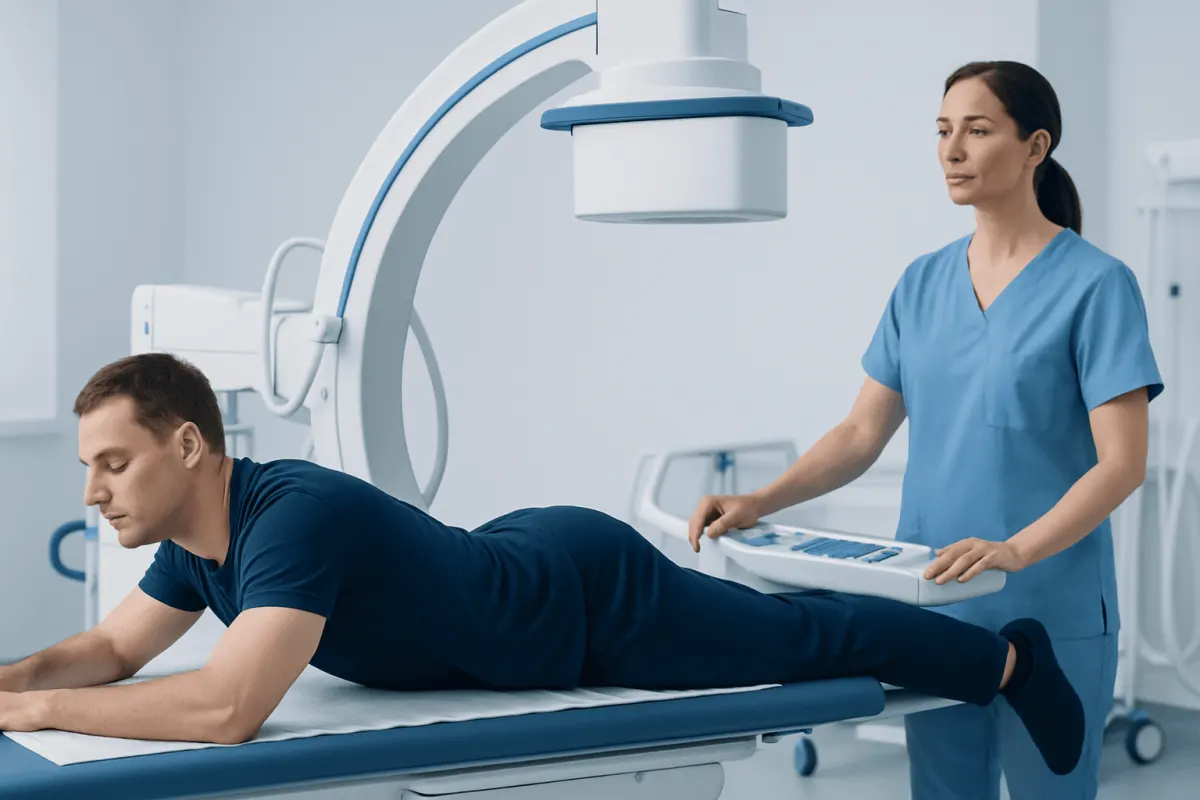
Lumbar extension is the movement of bending the lower back gently backward, such as when standing tall or reaching overhead. It is a normal part of spinal movement, but its comfort and usefulness vary between individuals, particularly when low back pain is present.
Lumbar Extension at a Glance
Lumbar extension is the backward-bending movement of the lumbar spine, the five vertebrae in the lower back. It happens during ordinary actions such as standing upright after sitting, reaching upward, walking with an upright posture, or gently leaning backward. It is one of several directions in which the lower back moves, along with flexion (bending forward), side bending and rotation.
In a healthy spine, extension helps distribute movement across the back, hips and pelvis. The amount of movement that feels normal is individual. A person does not need to achieve a deep backward bend for the spine to function well; pain-free, controlled movement is generally the more meaningful goal.
For some people with low back discomfort, carefully selected extension movements are part of a rehabilitation program. For others, extension can bring on or increase symptoms. The safest approach is to notice how the body responds during activity and afterward, and to seek individualized guidance when pain is persistent, severe or associated with neurological symptoms.
How the Lower Back Produces Extension
The lumbar spine is designed for stability as well as movement. During extension, the vertebrae tilt and glide in a coordinated way while the joints at the back of the spine, known as facet joints, come closer together. Muscles including the erector spinae and multifidus help control the movement, while the abdominal muscles, hips and pelvis provide support.
Lumbar extension does not occur in isolation. Hip flexibility, pelvic position, thoracic spine mobility and core muscle control all influence how much movement comes from the lower back. For example, limited hip extension may lead someone to arch the lower back more while walking or reaching behind them.
Posture is also dynamic rather than fixed. Prolonged sitting, repeated bending, physical work, sport and inactivity can all affect how the back feels from day to day. A comfortable neutral posture with regular position changes is usually more helpful than trying to hold the lower back rigidly in one “perfect” position.
Why Lumbar Extension May Feel Stiff or Painful

Temporary stiffness with lumbar extension can occur after prolonged sitting, unfamiliar exercise, muscle fatigue or reduced activity. It may improve gradually with gentle movement, pacing and a return to usual activity. However, pain during backward bending is not a diagnosis by itself; it can have several possible causes that need to be considered alongside a person’s symptoms, examination findings and medical history.
Facet joint irritation, osteoarthritis, spinal narrowing (spinal stenosis), muscle strain and some stress-related bone injuries can be aggravated by extension. In contrast, certain people with disc-related symptoms may find that repeated, gentle extension reduces pain that has spread into the buttock or leg. This pattern is not universal, and self-testing through painful movements is not a substitute for an assessment by a qualified clinician.
Low back pain may also be influenced by hip conditions, inflammatory disease, osteoporosis-related fractures, nerve irritation or non-spinal health concerns. People with ongoing pain can learn more about common causes and evaluation through back pain information if this resource is relevant to their symptoms.
- Discomfort only at the end of a movement may reflect limited mobility or irritated tissues.
- Pain that travels down the leg, especially with tingling or weakness, may suggest nerve involvement.
- Pain that is worse with standing and walking but improves with leaning forward may occur with spinal narrowing.
- Night pain, fever, unexplained weight loss or pain after a significant injury needs medical review.
Lumbar Extension Exercises: When They May Help
Extension-based exercises are sometimes used in physiotherapy to assess and manage mechanical low back pain. The aim is not simply to bend farther backward. Instead, the aim may be to improve tolerance for movement, reduce symptoms that respond to extension, restore confidence in activity and build control through the trunk and hips.
A clinician may first ask whether repeated gentle extension changes symptoms. Pain that moves out of the leg and becomes more centralized in the back can be a favorable sign in some people. By comparison, pain that spreads farther down the leg, becomes sharper or remains worse after exercise suggests that the movement should be stopped and reviewed.
A simple example is gentle standing extension: with feet about hip-width apart and hands resting on the pelvis, a person leans back only as far as is comfortable, then returns to neutral. Another is a prone press-up, performed by lying on the stomach and gradually straightening the elbows while keeping the pelvis supported. These exercises are not suitable for everyone and should be adapted or avoided if they produce worsening pain, dizziness or other concerning symptoms.
For people recovering from injury or managing recurring symptoms, a physiotherapist can tailor mobility, strengthening and movement-retraining exercises. Physical therapy may include education on daily movement, gradual loading and a home program based on the person’s goals and response to activity.
Using Extension Safely in Daily Life and Exercise
When lumbar extension is comfortable, it can be maintained through normal activity and gentle, controlled exercise. Warming up with walking or easy movement may be useful before more demanding tasks. It is generally better to perform a small range of motion with steady breathing than to force a large arch through the lower back.
During strength training, yoga, gymnastics or work tasks that involve reaching overhead, the lower back should not be pushed repeatedly into painful end-range extension. Building hip, trunk and upper-back strength can help share load across the body. Technique, gradual progression and adequate recovery are particularly important for activities involving repetitive backbends or impact.
People who spend long periods seated may benefit from standing, walking or changing position regularly. These breaks do not need to be complicated: brief, comfortable movement throughout the day can reduce the sense of stiffness that develops when one position is held for too long.
It is sensible to avoid copying online exercise routines without adjustment, especially after a recent injury, surgery, fracture or episode of severe back pain. A health professional can advise on safe progression when there is uncertainty about which movements are appropriate.
Assessment and Treatment for Persistent Symptoms
A clinician assessing pain with lumbar extension will usually ask about when symptoms began, where they are felt, what movements affect them and whether pain travels into the leg. They may examine posture, walking, range of movement, muscle strength, reflexes, sensation and hip function. This assessment helps identify whether conservative care is appropriate and whether further investigation is needed.
Imaging is not routinely required for uncomplicated low back pain, because scans often show age-related changes that may not be the source of symptoms. X-rays, MRI or other tests may be considered when there are persistent symptoms, significant neurological findings, trauma, suspected infection, cancer-related concerns or another reason to look more closely at spinal structures.
Most mechanical low back pain improves with conservative measures such as staying gently active, modifying aggravating tasks temporarily, physiotherapy and appropriate pain management discussed with a doctor. If nerve compression, spinal instability or another structural problem is suspected, the treatment plan may involve specialist review. Spine surgery is considered only for selected conditions when expected benefits outweigh risks and non-surgical care has not been sufficient.
When to Seek Medical Care
Medical advice is appropriate for low back pain that persists beyond a few weeks, repeatedly returns, limits work or daily activities, or is getting worse. An appointment is also advisable when pain extends below the knee, causes numbness or tingling, or occurs with noticeable weakness in a leg or foot.
Urgent medical assessment is needed for new loss of bowel or bladder control, difficulty passing urine, numbness in the saddle area around the buttocks or genitals, rapidly progressing leg weakness, fever with severe back pain, or severe pain after a fall, collision or other significant injury. These symptoms are uncommon, but prompt evaluation is important.
Acıbadem Health Point’s multidisciplinary specialists and JCI-accredited hospitals diagnose and treat spine and musculoskeletal conditions for international patients. A doctor or physiotherapist can help determine whether lumbar extension should be encouraged, modified or avoided based on the individual cause of symptoms and overall health.
Frequently asked questions
01What is lumbar extension?
Lumbar extension is the movement of gently bending the lower back backward. It occurs naturally when standing upright, reaching overhead or leaning back. The amount of extension that is comfortable differs between individuals.
02Is lumbar extension good for low back pain?
Lumbar extension can help some people with low back pain, particularly when a clinician has identified that extension reduces their symptoms. It can also aggravate certain conditions, including some forms of spinal narrowing or facet joint irritation. Exercise should be stopped if it increases pain, especially pain spreading into the leg.
03Why does my lower back hurt when I lean backward?
Pain with backward bending can be related to muscle strain, irritated facet joints, age-related joint changes, spinal narrowing or other causes. The symptom alone cannot identify the cause. Persistent pain or pain with numbness, weakness or leg symptoms should be assessed by a healthcare professional.
04How often should lumbar extension exercises be done?
The appropriate frequency depends on the reason for the exercise, symptom response and a person’s physical condition. A physiotherapist or doctor can recommend a suitable plan. In general, exercises should be gentle, controlled and not cause symptoms to worsen during or after activity.
05Can poor posture cause limited lumbar extension?
Remaining in one position for a long time can contribute to stiffness and make certain movements temporarily uncomfortable. However, posture is only one factor in back symptoms, and there is no single ideal posture for everyone. Regular movement, comfortable positions and gradual strengthening are often more useful than rigid posture correction.
06When is back pain an emergency?
Emergency assessment is needed for back pain with loss of bowel or bladder control, numbness around the groin or buttocks, rapidly worsening leg weakness, or severe pain after major trauma. Fever with severe back pain or unexplained illness also requires prompt medical evaluation. These signs may indicate a condition that needs urgent treatment.
This article is for general information only and is not a substitute for professional medical advice. Please consult a qualified doctor about your individual situation.
Joint and spine care in Turkey — expert assessment & treatment
JCI-accredited · board-certified surgeons · reply within 24h
Add us as a Preferred Source to see more of our trusted health content across Google Search, AI Overviews and Discover.