Separated Abdominal Muscles: When Surgery Helps
Separated abdominal muscles, medically called diastasis recti, occur when the connective tissue between the two vertical abdominal muscles becomes stretched and widened. Targeted rehabilitation can improve function and appearance for many people, while surgery may be considered when symptoms persist, a hernia is present, or the separation remains troublesome after conservative care.
Overview: what are separated abdominal muscles?
Separated abdominal muscles are commonly known as diastasis recti. The condition develops when the linea alba, the band of connective tissue running down the centre of the abdomen, becomes stretched and widened. This allows the paired rectus abdominis muscles—the “six-pack” muscles—to sit farther apart.
Diastasis recti may cause a central abdominal bulge or a ridge that is more noticeable when getting up from lying down, coughing or straining. It is not the same as a hernia: a hernia involves tissue pushing through a defect in the abdominal wall. However, both conditions can occur together, so a clinical assessment is helpful when there is a new or persistent bulge.
Although appearance can be an important concern, the effect on function matters too. Some people notice reduced trunk stability, back discomfort, difficulty with certain activities or dissatisfaction with persistent abdominal contour changes. Many people have no pain and remain fully active.
Why does diastasis recti develop?
Pregnancy is one of the most frequent reasons for separated abdominal muscles. As the uterus grows, hormonal and mechanical changes make the abdominal wall more flexible and place it under increasing stretch. A separation can remain for a period after delivery and may improve gradually as tissues recover.
Separated abdominal muscles after C-section are also common. The main cause is usually the stretching of the abdominal wall during pregnancy, rather than the caesarean incision itself. Scar sensitivity, pain and reduced confidence in using the abdominal muscles after surgery can nevertheless affect recovery and should be addressed with appropriate postnatal support.
Other contributors can include repeated pregnancies, larger abdominal size during pregnancy, activities involving repeated high abdominal pressure, substantial weight changes, previous abdominal surgery and inherited connective-tissue characteristics. Diastasis recti can affect men and people who have not been pregnant as well.
Symptoms and assessment
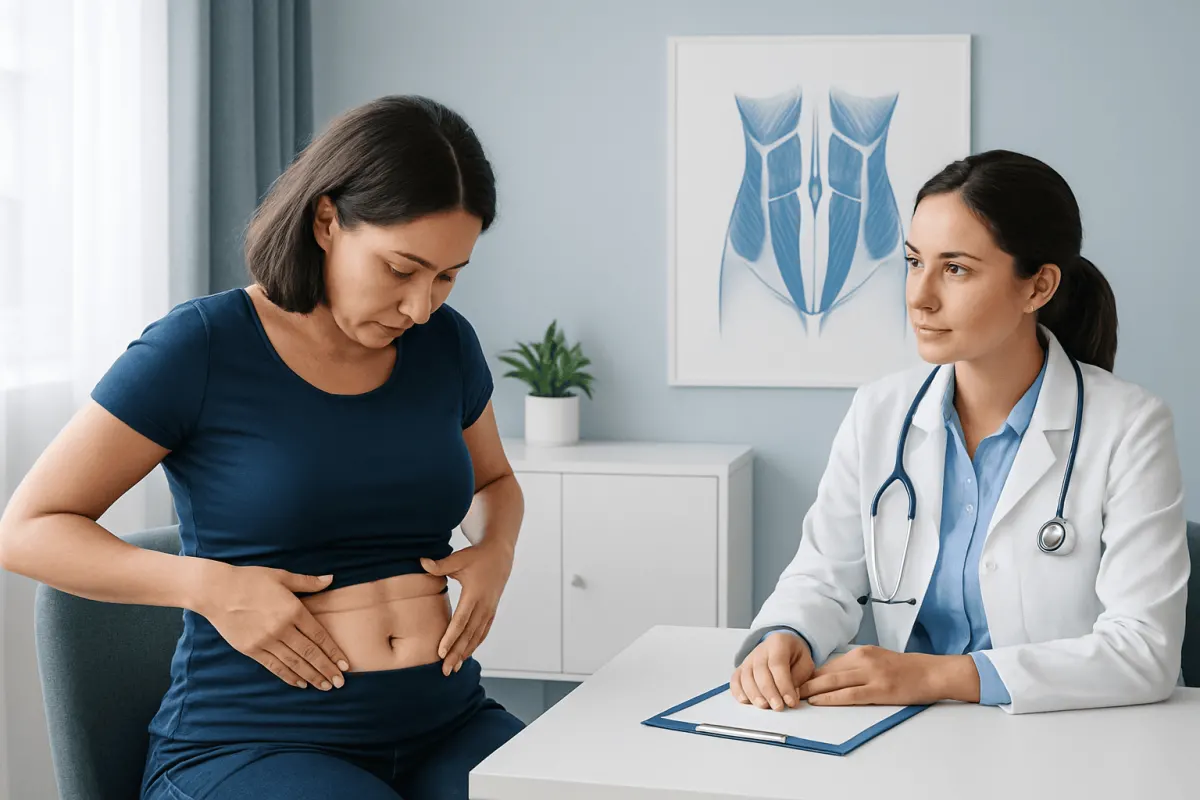
A visible midline gap or doming is often the first sign. When the abdominal muscles are engaged, the centre of the abdomen may rise into a ridge or cone shape. Some people describe a feeling of weakness, poor abdominal support, difficulty lifting safely or discomfort during activities that strain the trunk.
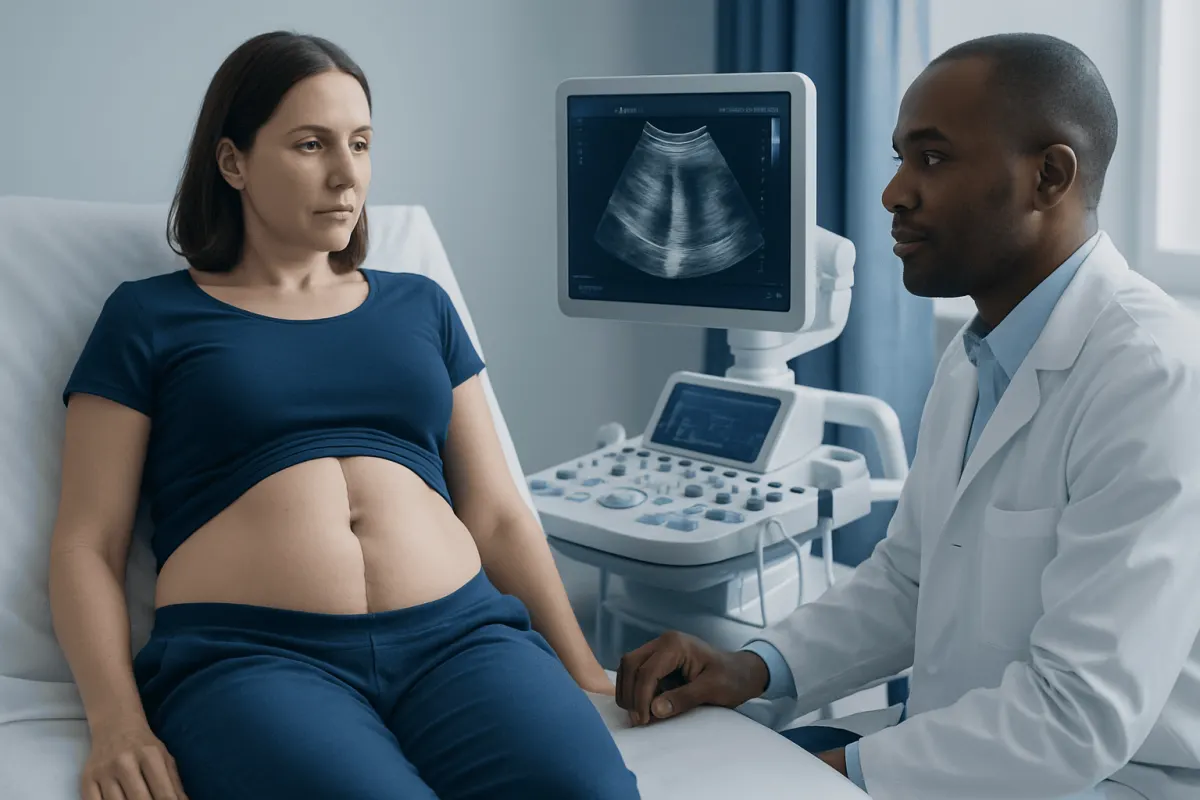
A clinician or physiotherapist can assess the abdominal wall through examination and may measure the width and tension of the linea alba. Ultrasound can be useful in selected cases, particularly when the diagnosis is uncertain or when a hernia needs to be identified. The size of the gap alone does not determine treatment; symptoms, tissue quality, function and personal goals are all relevant.
A firm, tender or enlarging lump, pain around the navel or groin, nausea or vomiting warrants prompt medical assessment because these features may suggest a hernia or another abdominal condition rather than uncomplicated diastasis recti.
Separated abdominal muscles treatment: rehabilitation first
For many people, the first approach is conservative care. A physiotherapist with experience in abdominal wall or postnatal rehabilitation can teach breathing, posture and progressive deep-core exercises. The aim is not simply to “close the gap,” but to improve pressure control, abdominal wall tension, strength and confidence in movement.
Separated abdominal muscles exercise should be individualised. Early programmes often focus on coordinated breathing, pelvic-floor engagement where appropriate, gentle deep abdominal activation and controlled functional movements. As control improves, exercises may be progressed to build overall strength safely.
Movements that repeatedly cause obvious doming, pain, pelvic pressure or loss of control may need modification at first. This does not mean that all sit-ups, planks or lifting must be avoided permanently; the appropriate level depends on the person’s symptoms, technique and stage of recovery. A healthy body weight, balanced nutrition, sleep and gradual return to activity can also support overall recovery.
- Seek guidance before restarting high-impact exercise after pregnancy or abdominal surgery.
- Use good lifting technique and exhale with effort rather than holding the breath.
- Address constipation and chronic coughing, which can repeatedly increase abdominal pressure.
How long does it take for separated stomach muscles to heal?
Healing time varies considerably. After pregnancy, abdominal tissues commonly change over the first weeks and months, and meaningful improvement in control and function may continue with consistent rehabilitation. Some people notice progress within several weeks, while others need several months of progressive exercise and guidance.
There is no single deadline at which recovery is no longer possible. Persistent diastasis can still respond to a well-designed programme long after childbirth, although complete narrowing of the gap is not always necessary for good function. It is also normal for the abdominal wall to feel different following pregnancy, weight changes or surgery.
Factors such as repeat pregnancy, a coexisting hernia, pain, scar restrictions, general fitness and the demands of work or caregiving can affect progress. A healthcare professional can help set realistic goals based on symptoms and functional needs rather than appearance alone.
Is diastasis recti surgery worth it?
Diastasis recti surgery may be worth considering for someone with persistent symptoms or functional limitations despite appropriate rehabilitation, a significant associated hernia, or abdominal wall laxity that has a major effect on quality of life. It is an individual decision that should follow a discussion of expected benefits, limitations, scars, recovery demands and surgical risks.
Separated abdominal muscle surgery generally involves bringing the rectus muscles closer together by repairing or tightening the stretched midline tissue, often called plication. The procedure may be performed with an abdominoplasty when excess skin is also being addressed, or alongside hernia repair when needed. The exact approach depends on the abdominal wall findings and the person’s goals.
Surgery is not usually recommended solely because a gap can be felt. It cannot prevent future changes from pregnancy, significant weight fluctuation or repeated strain, and it involves risks such as bleeding, infection, fluid collection, wound-healing problems, altered skin sensation and recurrence. Consultation with a qualified surgeon helps clarify whether the potential benefits outweigh these considerations.
Acıbadem Health Point’s multidisciplinary specialists and JCI-accredited hospitals assess abdominal wall concerns and discuss appropriate non-surgical and surgical options for international patients.
What to expect after diastasis recti surgery?
After diastasis recti surgery, it is common to have swelling, bruising, tightness and discomfort around the abdomen. The surgical team provides an individual pain-management plan, wound-care instructions and guidance about whether a support garment is appropriate. Early short walks are often encouraged to support circulation, but activity must be increased gradually.
For the first stage of recovery, patients generally avoid heavy lifting, strenuous exercise and movements that put strong pressure on the repair. The timing of return to work, driving, exercise and caregiving tasks varies with the operation performed, the person’s health and the physical demands involved. Follow-up appointments allow the team to monitor healing and advise when rehabilitation can begin.
Abdominal contour and scar appearance continue to settle over time as swelling decreases. A gradual return to core strengthening, often with physiotherapy guidance, can help restore safe movement and strength. Contact the surgical team promptly for increasing pain, spreading redness, fever, wound drainage, shortness of breath, calf swelling or other unexpected symptoms.
Can you lose belly fat if you have diastasis recti?
Yes. Having diastasis recti does not prevent fat loss. Body fat changes through sustainable nutrition, regular physical activity, adequate sleep and management of relevant health conditions. However, fat loss does not directly repair stretched connective tissue, so a midline bulge or loose skin may remain even after weight reduction.
Crash dieting and intense exercise that causes repeated painful bulging are unlikely to be helpful. A safer plan combines gradual weight management with abdominal-wall rehabilitation and full-body strength training that matches current ability. A doctor or dietitian can provide individual advice, especially during breastfeeding, after recent delivery or when medical conditions affect weight.
It can be useful to focus on functional measures as well as waist size or appearance: improved comfort, strength, movement confidence and the ability to perform daily tasks are meaningful signs of progress.
When to seek medical care
Medical review is advisable for a persistent abdominal bulge, suspected diastasis recti, back or abdominal symptoms affecting daily life, or concerns about returning to exercise after pregnancy or surgery. A clinician can distinguish separated abdominal muscles from a hernia and refer to a physiotherapist or surgeon when appropriate.
Urgent assessment is needed for severe or worsening abdominal pain, a painful bulge that does not reduce, vomiting, fever, marked abdominal swelling, or inability to pass stool or gas. These symptoms are not typical of uncomplicated diastasis recti and may require timely evaluation.
People considering surgery should arrange a consultation after their weight and health are reasonably stable and should discuss future pregnancy plans. Future pregnancy is possible after repair, but it can stretch the repaired tissues and affect the durability of results.
Frequently asked questions
01Can separated abdominal muscles heal without surgery?
Yes. Many people improve with time, targeted rehabilitation and progressive strengthening. The goal is better abdominal function and pressure control; a complete closure of the gap is not always necessary for symptom improvement.
02Is diastasis recti painful?
Diastasis recti itself is often painless, but some people experience a sense of weakness, discomfort with movement or associated back symptoms. Painful or tender lumps should be assessed to rule out a hernia or another cause.
03When can someone start exercise after a C-section?
The timing depends on recovery, complications and the type of activity. Gentle walking and basic breathing or mobility work may begin earlier when approved by the care team, while more demanding core and impact exercise should progress gradually with clinical guidance.
04Can planks make diastasis recti worse?
A plank is not automatically harmful, but it may be too demanding if it causes doming, breath-holding, pain or pelvic pressure. A physiotherapist can help modify the exercise and determine when it is appropriate to progress.
05Does a belly binder fix separated abdominal muscles?
A support garment may provide comfort and a sense of support for some people, particularly after delivery or surgery. It does not repair the stretched connective tissue on its own and should not replace guided rehabilitation.
06Can diastasis recti return after surgery?
Recurrence is possible, particularly with future pregnancy, major weight changes or repeated strain on the abdominal wall. Following recovery advice and returning to activity gradually can help protect the repair, but no procedure can guarantee permanent results.
This article is for general information only and is not a substitute for professional medical advice. Please consult a qualified doctor about your individual situation.
Explore treatments in Turkey — costs, top hospitals & a free quote
JCI-accredited · board-certified surgeons · reply within 24h
Add us as a Preferred Source to see more of our trusted health content across Google Search, AI Overviews and Discover.