Liposuction in Turkey Cost 2026: Prices, Packages and What’s Included

Key Takeaways
- Liposuction is a body-contouring procedure for localised fat deposits — it is not a weight-loss treatment and not a substitute for diet and exercise.
- No clinic can give an accurate price without a review of photographs, medical history and, ideally, a video consultation; published figures are indicative planning bands only.
- Most Turkish packages bundle surgeon and anaesthetist fees, theatre and hospital time, standard tests, the compression garment, transfers and hotel nights — but exclusions vary and should be listed in writing.
- Accreditation (such as JCI), the surgeon's registration and specialist plastic surgery credentials, and the ability to manage complications matter more than the headline price.
- Most patients are advised to plan a stay of roughly a week to ten days, with a follow-up review before flying and a personalised clearance to travel from the treating surgeon.
- Aftercare planning before departure — garment use, wound checks, remote follow-up and a UK GP contact — is an essential part of the total cost and the total plan.
For UK patients planning treatment abroad in 2026, the liposuction cost turkey question is best answered as a planning band rather than a single figure: the total depends on how many areas are treated, the technique and anaesthesia used, and how long a hospital and hotel stay is required. This guide explains what packages typically include, how quotes are built, and how the patient journey is coordinated from first enquiry to aftercare at home.
Understanding Liposuction Cost Turkey in 2026: How Quotes Are Built
For UK patients researching a liposuction cost turkey estimate for 2026, the honest answer is that there is no single price. Liposuction is quoted per case, not per procedure, and the final figure is assembled from several separate elements: the surgeon’s fee, the anaesthetist’s fee, operating theatre time, the length of hospital observation, laboratory and imaging tests, the compression garment, medication supplied on discharge, and — in package form — airport transfers, hotel nights and interpreter support. Two people requesting “liposuction” may receive very different estimates simply because one is having a single small area refined under local or sedation anaesthesia while the other requires several areas treated under general anaesthesia with an overnight stay.
It is more useful to think in planning bands than in fixed numbers. At the lower end sit single-area, small-volume cases with a short day-case pathway. A middle band covers the majority of enquiries — typically two to three adjacent areas such as the abdomen, flanks and inner thighs — treated in one operating session with an overnight hospital stay. The upper band covers extensive or circumferential contouring, cases combining liposuction with fat transfer or skin-tightening technology, revision surgery after previous liposuction, and patients who need a longer stay for medical reasons. Where a case falls in that structure, rather than the country it is performed in, is the single biggest driver of cost.
Currency movement, aviation fares and hotel seasonality also shift the total for a UK traveller from one month to the next, which is why coordination teams usually issue estimates with a stated validity period. A responsible estimate is provisional until a surgeon has reviewed photographs, weight and BMI trends, medical history and current medication. Any figure offered before that review should be treated as an illustration of range, not a quotation.
What a Typical Treatment Package Includes
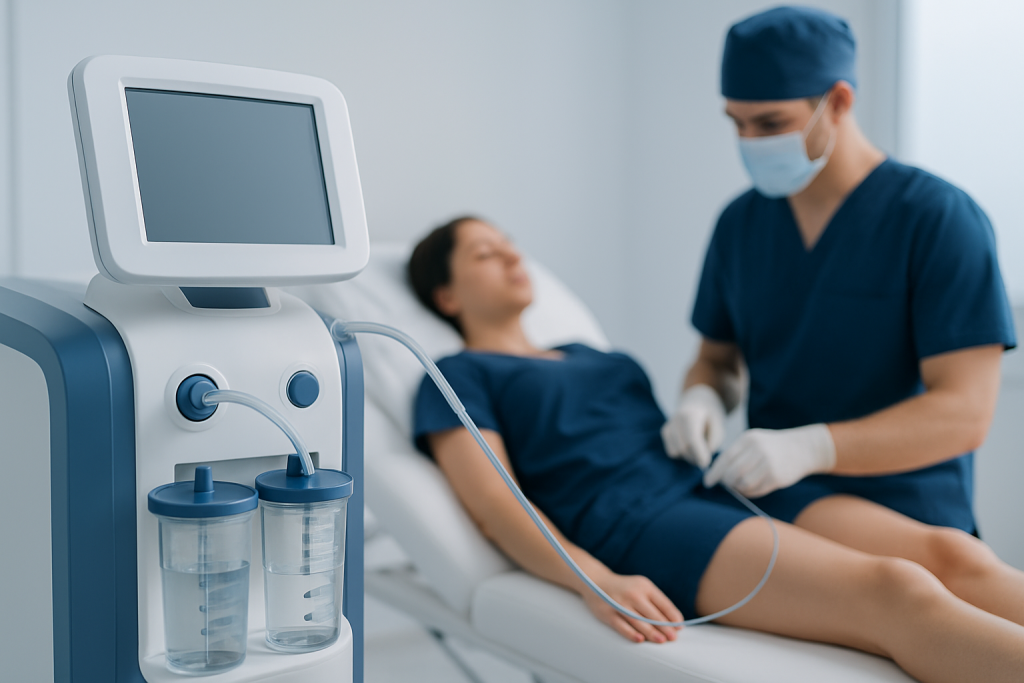
Packages exist because international patients need predictability. Rather than paying separately for each hospital line item, the coordinating team combines the clinical and logistical elements into one written plan. While the contents differ between hospitals and between cases, most comprehensive packages for body-contouring surgery in Turkey are built around a similar core.
- Pre-operative consultation with the operating plastic surgeon, plus anaesthetic assessment.
- Routine pre-operative blood tests, ECG and any screening the anaesthetist requests.
- Surgeon, anaesthetist and nursing fees, operating theatre time and consumables.
- Inpatient observation or an overnight stay where clinically indicated.
- The first compression garment and dressings, plus discharge medication.
- Post-operative reviews during the stay, including wound checks and drain removal if drains are used.
- Airport–hotel–hospital transfers, a set number of hotel nights, and interpreter or patient-host support.
Elements that frequently sit outside a package include flights, additional hotel nights if recovery is slower than expected, a second compression garment, lymphatic drainage massage sessions, treatment of any unrelated medical condition discovered during screening, and management of complications after discharge. Some hospitals offer medical complication cover as an add-on; the scope, duration and exclusions of any such cover should be read carefully rather than assumed.
Before committing, patients are encouraged to request an itemised written plan that names the operating surgeon, states the areas to be treated, describes the anaesthesia type, lists the expected length of stay, and sets out clearly what is and is not covered. A plan that cannot be itemised is difficult to compare, and comparing an all-inclusive package against a surgery-only fee elsewhere is not a like-for-like comparison.
Why Estimates Vary So Widely Between Enquiries

The number and size of treatment areas is the most obvious variable, because it determines theatre time and the volume of fat safely removed in a single session. Surgeons work to safety limits rather than to a patient’s wish list, and it is common — and appropriate — for a plan to be staged across two operations rather than compressed into one long anaesthetic. A staged plan will naturally cost more in total than a single session, and any team suggesting unusually extensive removal in one sitting should be questioned.
Technique also influences the figure. Traditional suction-assisted liposuction, power-assisted, ultrasound-assisted and laser-assisted approaches use different equipment and consumables, and combining liposuction with fat grafting to another area adds theatre time. Anaesthesia type matters too: general anaesthesia with an anaesthetist present and an overnight bed costs more than a short procedure under local anaesthesia and sedation, but the choice is clinical, not commercial, and depends on the extent of surgery and the patient’s health.
Patient factors round out the picture. Higher BMI, previous abdominal surgery, prior liposuction with scarring, diabetes, clotting risk, smoking status and medications such as anticoagulants can all change the pre-operative work-up, the length of monitoring and, occasionally, the suitability for elective surgery abroad at all. Where significant excess skin is present, liposuction alone may not achieve the desired contour and an abdominoplasty or body-lift discussion may follow — a different operation with its own recovery and cost profile. These are questions for the surgeon, not for a price list.
Accreditation, Surgeon Credentials and Safety Criteria
Cost should be the last filter applied, not the first. The starting point is where the surgery will actually take place. A full hospital setting with an intensive care unit, on-site blood bank, resident anaesthetists and 24-hour medical cover offers a different level of safety net from a standalone day clinic. Joint Commission International (JCI) accreditation is a widely recognised international benchmark for hospital quality and patient safety systems; it does not guarantee an individual outcome, but it indicates that the organisation is audited against defined standards.
The second filter is the surgeon. Patients can reasonably ask for the operating surgeon’s full name, their registration with the Turkish medical authorities, their specialist training in plastic, reconstructive and aesthetic surgery, and their experience with the specific areas being treated. It is also fair to ask whether that named surgeon will personally perform the operation, who provides cover if they are unavailable, and how complications would be managed. A pre-operative video consultation with the surgeon — rather than only with a sales adviser — is one of the most useful safety checks available before booking.
Third, consider governance around the journey: written informed consent in English, clear documentation of the operative record, discharge summaries a UK GP can read, and a named contact for questions after the flight home. UK professional bodies advise patients considering cosmetic surgery abroad to plan for follow-up before they travel, because NHS services are not designed to provide routine aftercare for private surgery performed overseas, although urgent care is of course available in an emergency.
Planning the Trip: Timing, Length of Stay and Flying
A typical liposuction trip is planned around a week to ten days, though the surgeon sets the individual timetable. The pattern usually runs: arrival and rest day, face-to-face consultation with examination and consent, pre-operative tests, surgery, an inpatient or hotel recovery period with wound and garment checks, and a final review before departure. Building in spare days is sensible; flights that cannot be changed create pressure to travel before a surgeon is comfortable, which is exactly the pressure worth avoiding.
Flying after surgery carries a raised risk of venous thromboembolism, and long periods of immobility compound it. Surgeons therefore give individual clearance to fly based on the extent of surgery, mobility, wound status and personal risk factors, and may advise measures such as early mobilisation, hydration and, in selected cases, prophylactic medication. Patients should not book a return flight on the assumption of a fixed recovery timeline, and they should expect swelling, bruising and firmness that evolve over weeks to months rather than days.
Practical logistics matter more than they might appear. UK citizens should confirm current entry requirements for Turkey well in advance, arrange travel insurance that explicitly covers planned medical treatment abroad and the return journey, choose accommodation close to the hospital, and — importantly — travel with a companion who can help with mobility, garments and appointments. Coordination teams normally arrange transfers, interpreter support and hotel booking as part of the plan, and can advise on visa documentation where a supporting letter is required.
Aftercare Once You Are Home
The operation is a short part of the process; recovery is the long part. Compression garments are usually worn continuously for a period defined by the surgeon, then part-time as swelling settles. Patients are commonly advised to walk gently from the first day, avoid strenuous exercise and heavy lifting until cleared, keep incisions clean and dry as instructed, and attend for suture removal if non-dissolvable sutures are used. Final contour typically takes several months to declare itself, and some asymmetry or firmness during that period is normal.
Before leaving Turkey, patients should collect a complete discharge pack: operative note, list of medicines given, garment and wound-care instructions, red-flag symptoms, and direct contact details for the clinical team. Remote follow-up by video or messaging, with photographs at agreed intervals, is standard practice for international patients and allows the surgeon to review healing without a second flight. It is also wise to inform a UK GP that surgery has taken place, so that local records are accurate should any assessment be needed.
Urgent medical attention should be sought for fever, spreading redness, increasing pain, wound discharge, heavy bleeding, calf pain or swelling, chest pain or breathlessness. These situations are uncommon, but the plan for them should exist before they arise rather than being improvised afterwards.
When to Speak to a Patient Coordinator
A patient coordinator is the right first contact once someone has moved from general research to a real, specific question: whether their goals are realistically achievable, whether their health history makes elective surgery abroad appropriate, and what a plan would involve in time and money. Coordinators collect medical history and photographs securely, arrange a second opinion or a video consultation with a plastic surgeon, and translate the surgeon’s clinical plan into an indicative cost band, a proposed length of stay and a travel outline. They can also flag early when a case should not proceed as requested — for example when weight is still changing significantly, when skin laxity means a different operation is more suitable, or when a medical condition needs optimising first.
Useful questions to bring to that conversation include: who will operate and what are their credentials; where exactly will the surgery take place and is the facility accredited; what does the written plan include and exclude; how long should the stay be; what happens if recovery is slower than expected; how is follow-up handled after returning to the UK; and what the policy is if a revision is later discussed. Clear, written answers are a good sign. Pressure to decide quickly, deposits requested before any clinical review, or a refusal to name the surgeon are not.
Acıbadem Health Point coordinates this journey for international patients across Acıbadem’s hospital network, which includes JCI-accredited facilities, arranging video consultations with plastic surgery specialists, interpreter support, transfers and accommodation, and structured follow-up after the return flight. Whatever route a patient chooses, the decision to have liposuction should be made with a qualified surgeon who has reviewed the individual case, and never on price alone.
Frequently asked questions
01Why can no one give me an exact liposuction price before I travel?
An accurate figure depends on how many areas are treated, the technique and anaesthesia chosen, the expected theatre time and the length of hospital stay. Those decisions belong to a surgeon who has reviewed photographs, medical history, weight trends and medication. Estimates issued before that review are indicative planning bands, and responsible teams say so in writing.
02What is usually included in a liposuction package in Turkey?
Most packages cover the surgeon, anaesthetist and nursing fees, theatre time, routine pre-operative tests, inpatient observation where indicated, the first compression garment, discharge medication, airport and hospital transfers, a set number of hotel nights, and interpreter support. Flights, extra hotel nights, additional garments and treatment of unrelated conditions are commonly excluded. Ask for an itemised written plan listing inclusions and exclusions.
03How long should I plan to stay in Turkey?
A stay of roughly a week to ten days is commonly suggested, allowing time for consultation, pre-operative tests, surgery, recovery and a final review before departure. The exact timetable is set by the operating surgeon based on the extent of surgery and how healing progresses. Booking flexible return travel avoids pressure to fly before clearance is given.
04Is it safe to fly after liposuction?
Flying after any surgery raises the risk of blood clots, and clearance to fly is an individual clinical decision made by the treating surgeon. Factors include the extent of surgery, mobility, wound healing and personal risk factors such as clotting history or smoking. Patients are usually advised on mobilisation, hydration and, in selected cases, preventive measures before travelling.
05Who provides my aftercare when I return to the UK?
International patients are normally followed up remotely by the operating team through video calls, messaging and photographs at agreed intervals. NHS services are not designed to provide routine follow-up for private surgery performed abroad, although urgent care is available in an emergency. Informing a UK GP that surgery has taken place, and travelling home with a full discharge pack, makes any local assessment safer and easier.
06Does liposuction help with weight loss?
No. Liposuction is a contouring procedure for localised fat deposits that have not responded to diet and exercise, and it is not a treatment for obesity or a substitute for lifestyle change. Candidates are generally advised to be at a stable weight beforehand, because later weight gain or loss can alter the result. A doctor can advise whether other pathways are more appropriate.
07How should I compare quotes from different hospitals?
Compare like with like: check whether each figure is surgery-only or all-inclusive, which areas are covered, what anaesthesia and length of stay are planned, and what happens if complications occur. Then weigh the non-price criteria — facility accreditation, the named surgeon's specialist credentials, availability of intensive care, and the follow-up arrangements. The lowest figure is rarely the most complete plan.
This article is for general information only and is not a substitute for professional medical advice. Please consult a qualified doctor about your individual situation.
Medical weight-loss options in Turkey — costs & eligibility
JCI-accredited · board-certified surgeons · reply within 24h
Add us as a Preferred Source to see more of our trusted health content across Google Search, AI Overviews and Discover.