Lipoedema Care Options, Symptoms and Recovery
Lipoedema is a long-term condition that causes disproportionate, painful fat buildup, most often in the legs and sometimes the arms. Treatment usually begins with supportive care; specialised liposuction may be considered when symptoms remain significant and a clinician confirms it is appropriate.
Lipoedema: what the procedure, recovery and results involve
Lipoedema is a chronic condition involving an abnormal buildup of fatty tissue, usually affecting both legs from the hips to the ankles. Some people also develop symptoms in the arms. When non-surgical measures do not adequately control pain, heaviness, reduced mobility or other day-to-day difficulties, specialised liposuction may be discussed as one part of a longer-term care plan.
The procedure removes some affected fatty tissue through small incisions using a suction technique designed to minimise injury to lymphatic vessels and surrounding tissues. Recovery commonly includes compression garments, temporary bruising and swelling, gradual return to activity, and follow-up appointments. Results may include improved limb shape, mobility and comfort, but outcomes differ between individuals and ongoing self-care is still needed.
Lipoedema is sometimes mistaken for general weight gain, obesity, lymphoedema, or venous disease. An accurate assessment matters because these conditions can overlap but require different management. A specialist can help distinguish lipoedema from lymphoedema, including when both are present.
Recognising lipoedema symptoms
Lipoedema almost always develops symmetrically, meaning that both legs or both arms are affected in a similar pattern. The feet are often relatively spared, creating a noticeable transition around the ankles; similarly, the hands may be spared when the arms are affected. Symptoms often begin or become more noticeable around hormonal changes, such as puberty, pregnancy or menopause.
People may describe their limbs as heavy, tender, tight or painful to touch. Easy bruising is common. Swelling can worsen after standing or sitting for long periods, warm weather, travel, or later in the day. Unlike ordinary body fat, lipoedema tissue generally does not reduce in proportion with weight loss, although maintaining a weight that supports overall health may still improve movement and reduce strain on joints.
Symptoms can progress gradually, but the pattern and pace vary. In more advanced cases, skin folds, altered walking, reduced activity and emotional distress may occur. Seeking assessment early can support symptom management and reduce the risk of complications such as skin irritation, reduced mobility or secondary lymphatic swelling.
Why lipoedema develops and who is at risk
The exact cause of lipoedema is not fully understood. It occurs overwhelmingly in women, and its timing suggests that hormones play a role. A family history is also common, which indicates a likely genetic contribution. Lipoedema is not a personal failure and should not be interpreted as evidence that someone has not taken proper care of their health.
Weight gain does not cause lipoedema, but higher body weight can increase the mechanical load on the legs and may worsen discomfort, mobility limitations and associated health concerns. Conversely, dieting alone does not remove lipoedema fat. A balanced eating pattern can nevertheless help a person maintain energy, support cardiovascular health and manage coexisting conditions.
Healthcare professionals also consider conditions that may look similar or coexist, including obesity, chronic venous insufficiency, primary lymphoedema and generalised oedema. A careful history and examination are especially important when one limb is more swollen than the other, the feet are involved, or symptoms started suddenly.
Assessment and deciding whether a procedure is suitable
There is no single blood test or scan that confirms lipoedema. Diagnosis is mainly clinical, based on symptoms, medical history, family history and examination of the affected areas. The clinician may assess tissue tenderness, bruising, body-fat distribution, skin condition, mobility and whether swelling involves the feet or hands.
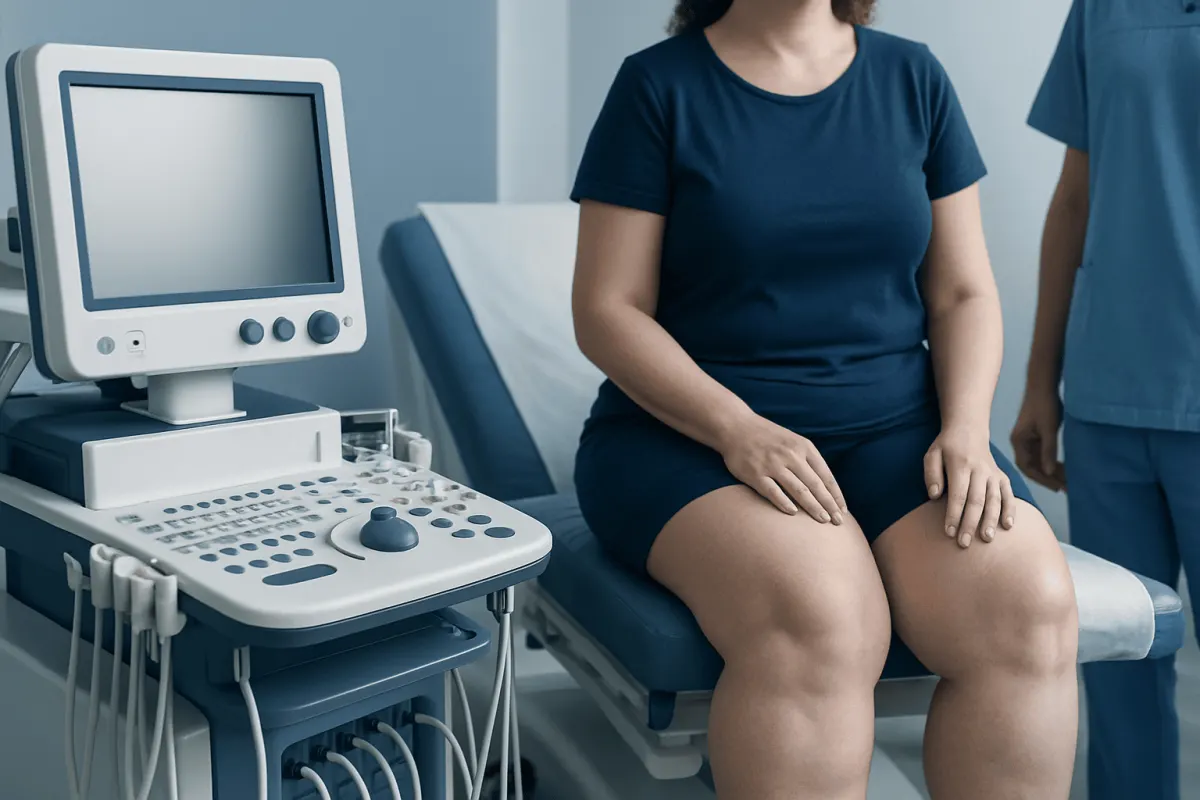
Ultrasound or other imaging may be used when the team needs to assess veins, rule out a blood clot, or investigate another cause of swelling. Before considering surgery, clinicians also review general health, medications, smoking status, anaesthetic risks, history of clotting problems, skin infections and the person’s ability to follow aftercare instructions.
Lipoedema reduction surgery is usually considered for people with a confirmed diagnosis, persistent symptoms despite appropriately supervised conservative care, and clear functional or quality-of-life concerns. The decision should be individualised. It is helpful to discuss what surgery can reasonably improve, what it cannot change, and what long-term compression or monitoring may still be required.
- Current symptoms, pain and impact on daily activities
- Response to compression, exercise and other non-surgical treatment
- Areas that may be treated and whether staged procedures are needed
- Potential benefits, limitations, recovery demands and risks
Lipoedema treatment options and the surgical procedure
Conservative treatment is the foundation of lipoedema care. This can include professionally fitted compression garments, gradual low-impact exercise, physiotherapy, skin care, pacing of daily activities and support for pain or wellbeing where needed. Walking, cycling, swimming and water-based exercise may be more comfortable for some people, but the most suitable plan depends on symptoms and physical ability.
For selected patients, tumescent liposuction or another lymph-sparing liposuction approach may be used to remove lipoedema tissue. During tumescent liposuction, fluid containing local anaesthetic is introduced into the treatment area to help reduce bleeding and support fat removal. The operation may be performed with local anaesthesia and sedation or with general anaesthesia, depending on the planned extent of treatment and the person’s needs.
A thin cannula is inserted through small incisions to loosen and suction fatty tissue. Large affected areas may need treatment over more than one session to support safety and recovery. The goal is symptom and functional improvement, rather than achieving a particular clothing size or eliminating every visible contour difference. A clinician can explain whether liposuction is appropriate in the context of lipoedema.
All surgery has risks. These may include bleeding, infection, fluid collection, temporary numbness, skin contour irregularity, scarring, delayed healing, blood clots and anaesthetic complications. Although techniques aim to protect lymphatic vessels, lymphatic injury or worsening swelling remains possible. Discussing individual risk factors openly with an experienced surgical team is essential.
Recovery after lipoedema liposuction
Recovery is gradual. After the procedure, treated areas are usually swollen, bruised and sore, and fluid may drain from the small incision sites for a short period. The clinical team provides instructions on dressings, showering, pain relief, wound care and warning signs that require prompt contact. Compression garments are commonly used to control swelling and support the tissues as they heal.
Light walking is often encouraged soon after surgery because it supports circulation and reduces the risk of blood clots, but strenuous exercise, heavy lifting and high-impact activity should be resumed only when the surgeon advises. The timing of return to work varies according to the extent of surgery, the nature of the person’s work and the pace of healing.
Follow-up care may involve reassessment of compression needs, scar care, physiotherapy or lymphatic support when indicated. Patients should attend all planned reviews and tell the team about worsening pain, fever, increasing redness, unusual drainage, shortness of breath or one-sided calf swelling. These symptoms do not always mean a serious complication, but they need timely assessment.
Expected results and long-term self-care
Many people report that lipoedema reduction surgery improves heaviness, tenderness, mobility and the ability to take part in everyday activities. Visible changes in limb shape can also occur. However, swelling may take months to settle fully, and early postoperative appearance does not represent the final result. Results depend on the distribution and stage of lipoedema, the amount treated, healing, coexisting conditions and adherence to aftercare.
Surgery does not remove the underlying tendency for lipoedema, and it cannot guarantee that symptoms will not change over time. Some people continue to need compression, while others may use it less often after recovery. Maintaining regular movement, managing body weight in a sustainable way, caring for the skin and obtaining treatment for vein or lymphatic problems all remain valuable parts of care.
Emotional support can be equally important. Chronic pain, changes in body image and prior experiences of being misunderstood can affect mental wellbeing. Discussing these concerns with a clinician, counsellor or appropriately moderated support organisation may help people feel better supported while making treatment decisions.
Acıbadem Health Point’s multidisciplinary specialists and JCI-accredited hospitals assess and treat lipoedema for international patients, with care plans tailored to clinical needs and recovery requirements.
When to seek medical care
Anyone who notices persistent symmetrical enlargement of the legs or arms, pain when the tissue is pressed, easy bruising, heaviness or swelling that does not respond as expected to lifestyle changes should arrange a non-urgent medical assessment. A diagnosis can bring clarity and help guide practical measures that protect mobility and comfort.
Urgent medical care is needed for sudden swelling of one leg, new severe pain, a hot or red limb, chest pain, fainting or shortness of breath. These symptoms can have causes unrelated to lipoedema, including a blood clot or infection, and should be assessed without delay.
After a procedure, patients should contact their surgical team promptly if they develop fever, rapidly increasing swelling, worsening redness, pus-like drainage, uncontrolled pain, persistent bleeding or signs of an allergic reaction. Early advice is the safest way to address concerns during recovery.
Frequently asked questions
01Is lipoedema liposuction a cure?
No. Liposuction can reduce affected fatty tissue and may improve pain, heaviness, mobility and limb contour for selected people, but it does not remove the underlying tendency to develop lipoedema. Long-term follow-up and self-care may still be needed.
02How long does recovery from lipoedema liposuction take?
Initial bruising, swelling and soreness are expected, while return to normal routines varies by the extent of surgery and the person’s work or activity level. Swelling can take several months to settle, so final results should not be judged early in recovery. The surgeon’s aftercare instructions should guide activity and compression use.
03Will lipoedema go away with diet and exercise?
Healthy eating and regular activity can support overall health, mobility and weight management, but they do not specifically remove lipoedema tissue. Lipoedema fat often remains disproportionate even when a person loses weight elsewhere. Exercise should be chosen according to comfort and ability.
04Do all people with lipoedema need surgery?
No. Many people manage symptoms with compression, movement, skin care, physiotherapy and other supportive measures. Surgery is generally considered only after an individual assessment when symptoms significantly affect daily life and conservative treatment has not provided sufficient relief.
05Can lipoedema affect the feet?
In typical lipoedema, the feet are relatively spared, with tissue enlargement ending around the ankles. If the feet are substantially swollen, a clinician may assess for lymphoedema, venous disease or another cause. Lipoedema and lymphoedema can occur together.
06What should someone ask before lipoedema surgery?
Useful questions include which technique is planned, what areas may be treated, whether more than one procedure is likely, and what compression and follow-up will be needed. It is also important to discuss individual surgical risks, realistic goals, recovery time and how the team manages complications.
This article is for general information only and is not a substitute for professional medical advice. Please consult a qualified doctor about your individual situation.
Medical weight-loss options in Turkey — costs & eligibility
JCI-accredited · board-certified surgeons · reply within 24h
Add us as a Preferred Source to see more of our trusted health content across Google Search, AI Overviews and Discover.