Laser Vs LASIK: Which Vision Procedure Fits You?
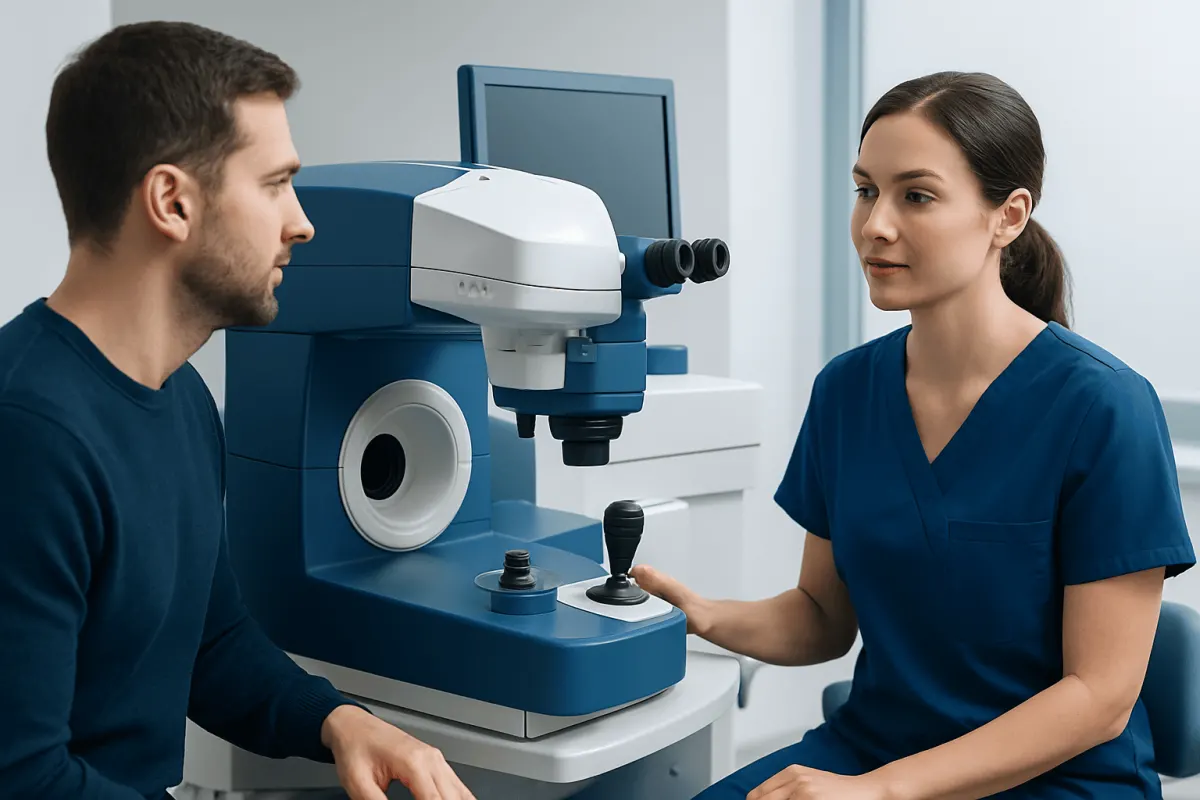
In the laser vs LASIK comparison, LASIK is not an alternative to laser treatment: it is a specific laser vision correction procedure that reshapes the cornea after creating a thin corneal flap. Other laser procedures, such as PRK and SMILE, use different techniques and may be more suitable for certain corneas, prescriptions, lifestyles, or eye-health needs.
Laser vs LASIK: a side-by-side comparison
The main laser vs LASIK difference is one of terminology. LASIK uses a laser, so it is a form of laser vision correction. When people say “Eye Surgery: What It Treats and How It Works" class="ahp-ilk">laser eye surgery,” they may mean LASIK, but they may also be referring to PRK, SMILE, or another procedure designed to reduce refractive errors such as short-sightedness, long-sightedness and astigmatism.
All of these procedures aim to improve how light focuses on the retina by changing the shape of the cornea, the clear front surface of the eye. They do not treat every cause of blurred vision, and they do not prevent age-related changes such as presbyopia or cataracts.
| Procedure | How it is performed | Typical early recovery | May be considered when |
|---|---|---|---|
| LASIK | A thin corneal flap is created, then an excimer laser reshapes tissue beneath it. | Vision often improves within days; healing continues over weeks. | Corneal measurements are suitable and dry-eye risk is acceptable. |
| PRK | The surface cell layer is removed, and an excimer laser reshapes the cornea without a flap. | Initial discomfort and blur can last several days; visual recovery is usually slower. | A flap-free approach is preferred or corneal factors make LASIK less suitable. |
| SMILE | A femtosecond laser creates a small disc of corneal tissue that is removed through a small incision. | Often relatively rapid, although clarity can continue to improve over time. | Some forms of myopia and astigmatism are present and measurements fit the procedure. |
The phrase “laser vs LASIK eye surgery” can therefore be misleading. The practical choice is usually between different types of laser vision correction, based on an individual clinical assessment rather than a single procedure being universally better.
How a clinician tells the procedures apart
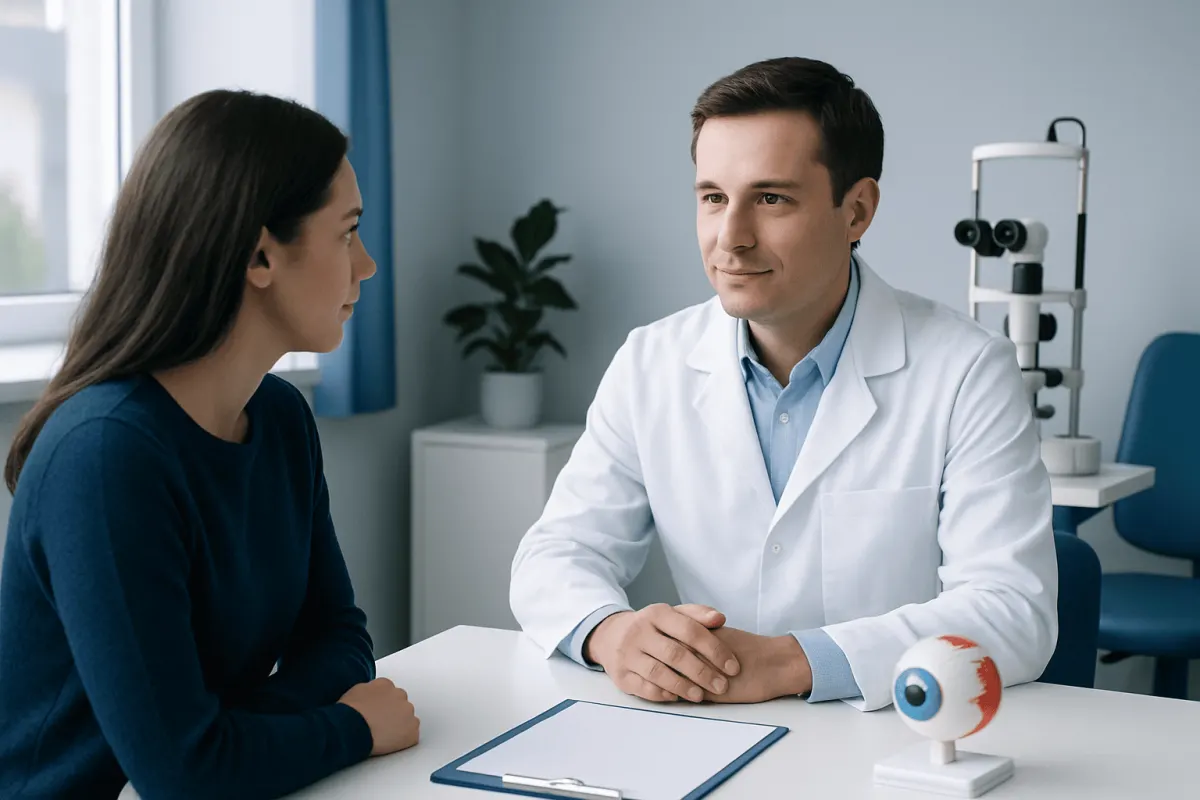
An ophthalmologist or refractive surgeon begins by confirming that blurred vision is caused by a correctable refractive error. A current glasses prescription alone is not enough to decide on surgery. The examination commonly includes refraction testing, corneal topography or tomography, corneal thickness measurement, pupil assessment, tear-film evaluation and a careful review of the retina and optic nerve.
Corneal shape is especially important. Irregular thinning disorders, including keratoconus, may make standard corneal laser procedures unsafe or unsuitable. In some situations, the clinician may recommend monitoring, treating an underlying eye-surface problem, using glasses or contact lenses, or considering another vision-correction approach instead.
Medical history also matters. The clinician will ask about fluctuating prescriptions, pregnancy or breastfeeding, autoimmune conditions, diabetes control, medications, prior eye surgery, recurrent eye infections and dry-eye symptoms. Contact lens wear can temporarily affect corneal measurements, so patients may be instructed to stop wearing lenses for a period before testing.
This assessment explains why two people with a similar glasses prescription may receive different recommendations. The decision is based on safety, likely visual quality and the balance of benefits and possible side effects for each person.
What happens with LASIK and other laser options
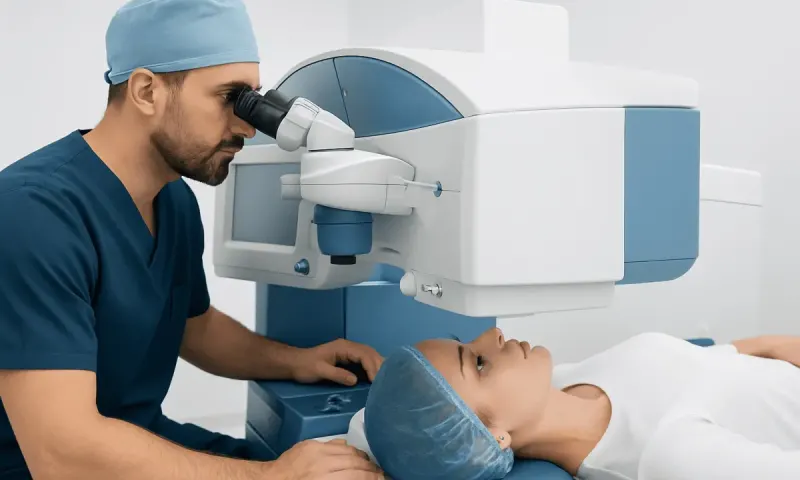
In LASIK, numbing drops are used and a surgeon creates a thin flap in the cornea, usually with a femtosecond laser. The flap is gently lifted, an excimer laser reshapes the underlying corneal tissue according to the treatment plan, and the flap is repositioned. The procedure itself is generally brief, but the preparation and safety checks are equally important.
PRK uses the same general principle of laser reshaping but does not involve a corneal flap. Instead, the outer surface layer of cells is removed or moved aside before treatment. A protective contact lens is commonly placed during early healing. Because the surface needs to regrow, discomfort and blurred vision are usually more noticeable in the first days after PRK than after LASIK.
SMILE is another laser-based option that uses a small incision rather than a wide flap. It is not appropriate for every prescription or corneal profile. The choice among LASIK, PRK and SMILE should be made after discussing the expected recovery, possible complications and whether a given technique can address the person’s refractive error.
For people who are not suitable for corneal laser surgery, options may include updated glasses, contact lenses, or selected lens-based procedures. A clinician can explain whether laser eye surgery or another approach is medically appropriate.
Results, expectations and visual quality
Many appropriately selected patients achieve reduced dependence on glasses or contact lenses after laser vision correction. However, results vary according to the prescription, healing response, age, corneal characteristics and the presence of other eye conditions. Some people still need glasses for certain tasks, such as night driving, detailed work or reading.
LASIK often provides relatively quick functional vision, but “quick” does not mean that healing is complete immediately. Vision may fluctuate during the first weeks, and the eyes can feel dry, irritated or sensitive to light for a period. PRK commonly has a slower visual recovery because the corneal surface must heal, while SMILE recovery patterns vary between individuals.
Night-time glare, halos, starbursts or reduced contrast sensitivity can occur, particularly early after surgery. Modern assessment and laser planning aim to reduce these effects, but they cannot be eliminated entirely. Dry eye can also be temporary or persistent, especially in people who already have symptoms before treatment.
Laser correction changes the cornea permanently. It does not stop natural eye ageing. Most people develop presbyopia in midlife and may need reading glasses even if distance vision remains good. Future cataract surgery is still possible, although the eye surgeon should know about any prior refractive procedure when planning lens calculations.
Choosing the right option for each case
There is no single “best” answer in the lasik vs laser vision correction discussion. LASIK may be a reasonable choice for people with stable prescriptions, healthy corneas and suitable corneal thickness who value a faster initial visual recovery. The flap created in LASIK is an important consideration for people involved in activities with a meaningful risk of direct eye trauma.
PRK may be discussed when a flap-free method is preferred or when corneal measurements require more conservative tissue planning. It can be a useful option for some active individuals, but its recovery is usually slower and early discomfort is greater than with LASIK. Patients should be prepared for scheduled follow-up and the temporary limits on work, driving or sport that their surgeon advises.
SMILE may be an option for suitable short-sightedness and astigmatism. Its small-incision approach differs from both LASIK and PRK, but candidacy still depends on detailed measurements. It is not simply a newer version of LASIK, nor is it automatically preferable for every person.
A helpful consultation includes a discussion of daily visual needs, sports, screen use, night driving, work environment and expectations about reading vision. Patients should feel comfortable asking why a procedure is recommended, what alternatives exist, what recovery involves and what outcome is realistic for their eyes.
Preparation, recovery and eye care after surgery
Before any laser vision correction procedure, patients should follow their clinician’s instructions about contact lenses, eye makeup, medications and transport home. It is important to share all health conditions and medicines, including treatments for acne, allergies or immune disorders, because some can affect eye-surface health or healing.
After surgery, prescribed drops help protect the eye and support healing. Patients should not rub their eyes, especially after LASIK, and should avoid swimming, hot tubs, dusty environments and eye makeup until their clinician confirms it is safe. Protective eyewear may be advised during sleep, sport or certain activities in the early recovery period.
Regular follow-up visits allow the eye team to assess healing, vision and eye pressure. Artificial tears may be recommended for dryness, but people should use only the products and schedule advised by their clinician. Driving should resume only when vision meets local legal standards and the person feels comfortable doing so.
At Acıbadem Health Point, multidisciplinary eye specialists in JCI-accredited hospitals assess refractive errors and discuss suitable vision-correction options with international patients. A personalised examination remains the safest way to determine whether surgery is appropriate.
When to seek medical care
Anyone considering laser vision correction should arrange a comprehensive assessment with a qualified ophthalmologist or refractive surgeon rather than relying on an online prescription estimate. An examination is particularly important if vision has changed recently, contact lenses are uncomfortable, the eyes often feel dry, or there is a history of eye injury, infection or surgery.
After any eye procedure, urgent medical advice is needed for worsening or severe pain, a sudden drop in vision, increasing redness, discharge, marked light sensitivity, a curtain-like shadow, flashes of light or many new floaters. These symptoms do not always indicate a serious problem, but they should not be managed by waiting or self-treating.
People who have diabetes, autoimmune disease, glaucoma, cataracts, retinal disease or a family history of corneal disorders should discuss these factors during assessment. The clinician may recommend further testing or a different strategy for safe, effective vision care.
Frequently asked questions
01Is laser eye surgery the same as LASIK?
LASIK is one type of laser eye surgery. The broader term can also include PRK and SMILE, which reshape the cornea using different methods. A refractive surgeon can explain which, if any, is suitable for an individual’s eyes.
02What is the laser vs LASIK eye surgery difference?
The key difference is that “laser eye surgery” is a broad category, while LASIK is one specific procedure within that category. LASIK uses a corneal flap before laser reshaping; PRK treats the corneal surface without a flap, and SMILE uses a small incision.
03Is LASIK better than other laser vision correction procedures?
LASIK is not universally better. It may offer faster initial visual recovery for suitable candidates, while PRK or SMILE may be preferable for certain corneal measurements, activities or eye-health considerations. The safest choice follows a detailed eye examination.
04Can laser vision correction permanently remove the need for glasses?
It can substantially reduce glasses or contact lens dependence, but no result can be guaranteed. Some people need glasses for particular tasks, and reading glasses commonly become necessary with age because of presbyopia. Vision can also change over time for other reasons.
05Does LASIK hurt?
Numbing eye drops are used, so most people do not experience sharp pain during LASIK. Pressure, awareness of the procedure, tearing or temporary burning afterward can occur. PRK tends to cause more discomfort during the first few days of healing.
06Who may not be a candidate for LASIK or laser eye surgery?
People may be unsuitable if their prescription is unstable, their corneas are too thin or irregular, they have significant dry eye, or they have certain eye or general health conditions. Pregnancy and breastfeeding can also be times when treatment is deferred because prescriptions may fluctuate. A clinician can assess individual eligibility safely.
This article is for general information only and is not a substitute for professional medical advice. Please consult a qualified doctor about your individual situation.
Explore treatments in Turkey — costs, top hospitals & a free quote
JCI-accredited · board-certified surgeons · reply within 24h
Add us as a Preferred Source to see more of our trusted health content across Google Search, AI Overviews and Discover.