Knee Pain After Bending: Causes and Treatment

Key Takeaways
- Pain after bending the knee is often linked to soft-tissue strain, cartilage irritation, or joint wear rather than a single obvious injury.
- Swelling, locking, catching, weakness, or trouble bearing weight can point to a more specific knee problem.
- A careful exam and, when needed, imaging help distinguish common causes such as tendinitis, meniscus injury, patellofemoral pain, or arthritis.
- Early rest from aggravating activities, ice, gentle movement, and supportive exercises may ease symptoms in many mild cases.
- Persistent or worsening knee pain deserves medical assessment, especially if the knee looks deformed, very swollen, red, hot, or unstable.
Knee pain that shows up after bending can come from overuse, tendon irritation, cartilage problems, arthritis, or a minor injury. Understanding the pattern of pain, swelling, stiffness, and movement limits can help a doctor narrow the cause and guide the right treatment.
Overview
When a knee hurts after bending, the complaint is often less about the bend itself and more about what the movement asks the joint to do. Bending deepens pressure across the kneecap, stretches the structures behind the joint, and loads the tendons, cartilage, menisci, and ligaments that keep the knee working smoothly.
For some people, the pain is brief and appears only with squatting, kneeling, stairs, or getting up from a chair. For others, it is a sharper or more persistent ache that suggests irritation inside the joint or a strain in the tissues around it. The pattern matters: pain in the front of the knee, a feeling of catching, swelling after activity, or stiffness after sitting can each point in different directions.
International patients often arrive after trying simple rest at home for a few days and noticing the pain keeps returning with everyday movements. That is usually the moment to move from guessing to a proper orthopedic assessment, because the right treatment depends on the exact source of the pain rather than the symptom alone.
Symptoms
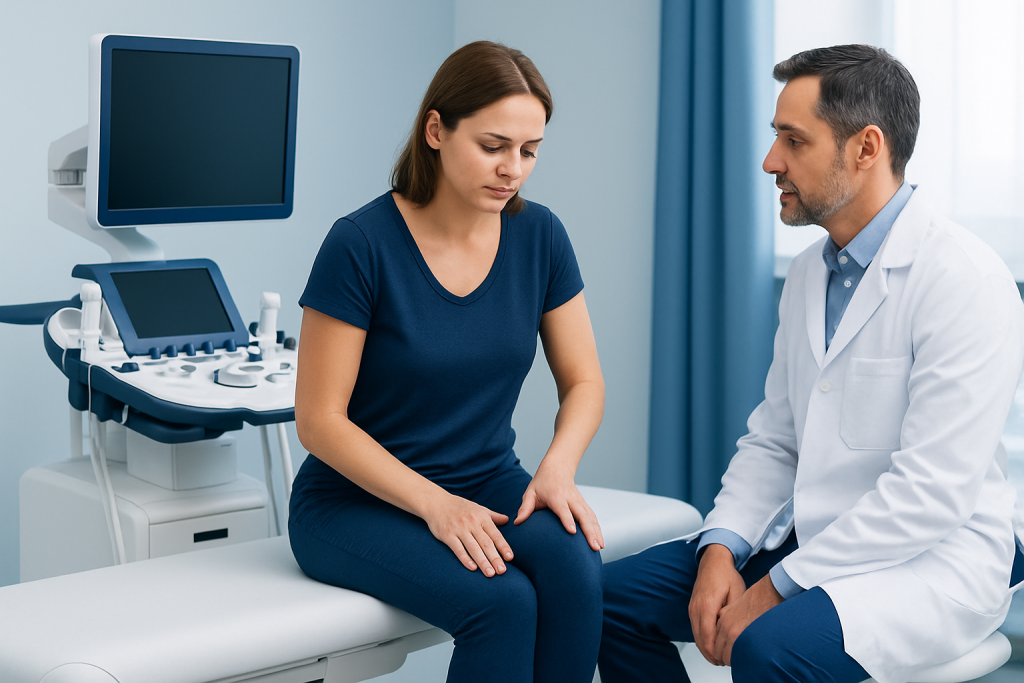
Knee pain after bending can feel different from one person to another. Some describe a dull ache that appears when crouching or sitting on low chairs, while others notice a sharp twinge when going downstairs, kneeling, or standing back up. The location of the discomfort is a useful clue: front-of-knee pain often behaves differently from pain along the inside, outside, or back of the joint.
Other symptoms may travel with the pain and help identify the problem. Swelling, stiffness, clicking, grinding, locking, or the knee giving way can suggest irritation within the joint or a mechanical problem such as a meniscus injury. Redness, warmth, and fever are not typical of simple overuse and deserve prompt attention.
- Pain during squatting, kneeling, or stairs
- Swelling after activity or by the end of the day
- Stiffness after sitting or first thing in the morning
- Clicking, catching, or locking
- Weakness or a feeling that the knee may buckle
If the discomfort is mild and settles with rest, it may reflect temporary overload. If it keeps returning or limits daily movement, it is worth having the knee examined before the pattern becomes harder to reverse.
Causes & Risk Factors
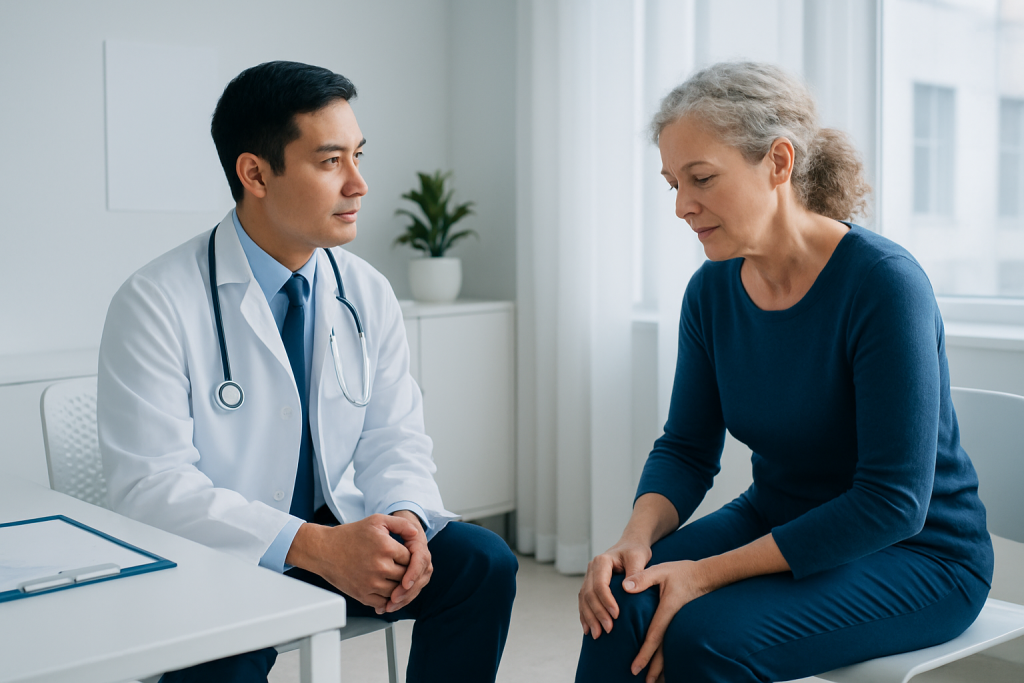
Several common conditions can make the knee hurt after bending. Patellofemoral pain, sometimes called kneecap tracking pain, is a frequent cause of pain in the front of the knee during stairs, squats, or prolonged sitting. Tendon irritation around the kneecap or below it can also flare when the knee is repeatedly loaded.
Meniscus tears may cause pain with deep bending, twisting, or turning, especially if the knee feels locked, caught, or swollen after the activity. Osteoarthritis can make the joint sensitive to compression during bending, often with stiffness and reduced range of motion. Bursitis, ligament strain, and cartilage irritation may also contribute depending on the movement that triggered symptoms.
Risk factors are often practical rather than dramatic: a recent increase in exercise, frequent kneeling, a job that requires squatting, weak hip or thigh muscles, extra body weight, prior knee injury, and poor foot or movement mechanics can all place more stress on the joint. Age can matter too, but knee pain after bending is not limited to older adults; it can also affect athletes, dancers, and people whose work repeatedly asks the knees to absorb load.
Diagnosis
Diagnosis begins with a detailed conversation about when the pain started, where it is felt, what movements trigger it, and whether swelling, locking, or instability has occurred. A clinician will also ask about recent exercise changes, injuries, prior surgeries, and whether the pain is affecting walking, stairs, sleep, or work.
A physical examination usually looks at the alignment of the leg, the knee’s range of motion, tenderness points, swelling, strength, and how the knee responds to specific movements. Simple in-office tests can help separate likely tendon, kneecap, ligament, or meniscus problems. When needed, imaging may be used to confirm the diagnosis or rule out other causes.
X-rays are helpful for evaluating arthritis, alignment, and some bone-related issues. Ultrasound may be used for soft-tissue problems in certain settings, while MRI can show meniscus tears, cartilage injury, ligament damage, and other internal structures in greater detail. The right test depends on the story the knee is telling during the exam, not on a one-size-fits-all approach.
Treatment Options
Treatment depends on the cause, severity, and how long the symptoms have been present. Mild irritation often improves with activity modification, meaning the knee is temporarily protected from the movements that bring on pain. Ice, short rest periods, and switching to lower-impact activities may calm symptoms while the tissue settles.
Physical therapy is a cornerstone of care for many knee conditions. Targeted exercises can strengthen the quadriceps, hips, and supporting muscles, improve flexibility, and reduce stress on the kneecap and joint. A therapist may also help correct movement patterns that place extra pressure on the knee during bending, stairs, or sports.
Depending on the diagnosis, a doctor may recommend supportive measures such as bracing, taping, anti-inflammatory medicines if appropriate for the individual, or supervised rehabilitation. Some structural problems, such as certain meniscus tears, persistent loose bodies, or advanced arthritis, may require procedures or surgery. A specialist can explain whether a conservative plan is reasonable first or whether further intervention would be more effective.
For international patients, this is often a stepwise process: evaluation, imaging if needed, a treatment plan that fits travel timing, and follow-up arrangements that make sense once the patient returns home. At Acibadem Health Point, multidisciplinary specialists and JCI-accredited hospitals work together to diagnose and treat knee conditions for international patients in a coordinated way.
Prevention & Self-care
Not every case can be prevented, but many knee flares respond well to smarter loading. Reducing repeated deep squats, kneeling on hard surfaces, or abrupt jumps in training intensity can give irritated structures time to recover. A gradual return to activity is usually safer than pushing through pain.
At home, short-term self-care may include ice for swelling or soreness, comfortable footwear, and avoiding positions that sharply bend the knee until symptoms ease. Gentle range-of-motion work can prevent stiffness, while strengthening the thighs, hips, and core may lower future strain on the joint. Weight management can also reduce compression across the knees in people carrying extra load.
- Warm up before exercise and increase intensity slowly
- Use cushions or pads for kneeling tasks
- Choose low-impact exercise when the knee is irritated
- Build strength in the hips and thighs
- Pay attention to shoes, surfaces, and training form
Self-care should support recovery, not mask a problem that is getting worse. If pain returns every time the knee bends deeply, that pattern is a signal to evaluate the mechanics of the joint rather than repeatedly “pushing through.”
When to See a Doctor
Medical assessment is a good idea when knee pain after bending lasts more than a short period, keeps coming back, or interferes with normal walking, climbing stairs, exercise, or work. It is also wise to seek care if the knee feels unstable, locks, catches, or cannot fully straighten or bend.
Prompt review is especially important if there is significant swelling, redness, warmth, fever, a visible deformity, or inability to bear weight. These signs may indicate a more serious injury or an inflammatory problem that should not be managed as routine soreness.
A doctor can help identify the cause and decide whether rest, rehabilitation, imaging, medication, or a procedure is needed. For people traveling from abroad, early planning can make assessment and follow-up easier, particularly if symptoms have been affecting mobility or work for some time.
Frequently asked questions
01Why does my knee hurt only when I bend it?
Bending increases pressure on the kneecap, menisci, tendons, and other joint structures, so pain may appear only during that motion. This pattern is common with overuse, kneecap tracking problems, tendon irritation, or certain meniscus issues. A clinical exam can help identify which structure is most likely involved.
02Is knee pain after bending always a sign of arthritis?
No. Arthritis is one possible cause, but many other problems can produce the same symptom, including tendinitis, patellofemoral pain, bursitis, and meniscus injury. The age of the person, the exact location of pain, and whether swelling or locking is present all help narrow the cause.
03Should rest or exercise be used for knee pain after bending?
Short rest from painful movements is often helpful early on, but complete inactivity is not usually the long-term answer. Gentle movement and targeted strengthening are often important for recovery, especially when the pain comes from overload or poor mechanics. The safest plan depends on the underlying diagnosis.
04What does it mean if my knee clicks when I bend it?
Clicking by itself can be harmless, but clicking with pain, swelling, catching, or locking may point to a mechanical issue inside the joint. A meniscus tear, cartilage problem, or kneecap tracking issue can sometimes create these symptoms. If the clicking is new or worsening, it should be assessed.
05Can knee pain after bending go away on its own?
Mild irritation may settle with reduced activity and careful self-care, especially if it came on after a short period of overuse. If the pain persists, keeps returning, or limits normal movement, it is better to have it checked rather than wait indefinitely. Early guidance can prevent a temporary flare from becoming a longer-term problem.
06When is imaging needed for knee pain after bending?
Imaging is considered when the exam suggests a structural injury, arthritis, or another problem that cannot be confirmed without a picture of the joint. X-rays are often used first, while MRI may be more useful for meniscus, cartilage, or ligament concerns. A doctor decides which test, if any, is most appropriate.
This article is for general information only and is not a substitute for professional medical advice. Please consult a qualified doctor about your individual situation.
Joint and spine care in Turkey — expert assessment & treatment
JCI-accredited · board-certified surgeons · reply within 24h
Add us as a Preferred Source to see more of our trusted health content across Google Search, AI Overviews and Discover.