Knee Joint Injuries and Treatment: Symptoms, Causes, and Treatment Options

Maybe your knee twisted awkwardly on the football pitch. Maybe it swelled up hours after a fall on the stairs. Either way, you want to know one thing: how bad is it, and what happens next?
Knee joint injuries and treatment vary by the structure involved, how severe the injury is, and how unstable or painful the knee becomes. Many knee injuries improve with rest, rehabilitation, and supportive care. Others need imaging, specialist assessment, or surgical treatment to restore stability and function.
Overview: what knee joint injuries are and how they are treated
What your treatment looks like depends on which part of the knee is damaged and how badly. Your knee is a busy joint: bones, cartilage, ligaments, tendons, and the kneecap all work together. So injuries range from mild sprains and overuse problems to meniscus tears, ligament ruptures, fractures, or dislocation.
For many people, treatment begins with reducing pain and swelling, protecting the joint, and starting a structured rehabilitation plan. In more severe cases, doctors may recommend imaging, aspiration of fluid, a supportive brace, or surgery to repair or reconstruct damaged structures and restore knee stability.
It helps to think about what the knee can still do, not just how much it hurts. Some injuries mainly cause soreness and swelling. Others take away your balance, your movement, and your confidence in walking, climbing stairs, pivoting, or going back to sport. That difference guides both diagnosis and treatment decisions.
Symptoms and how different knee injuries can feel
Knee injuries do not all feel the same. Some cause immediate sharp pain after a twist or fall, while others lead to swelling and stiffness that become more noticeable over several hours. A person may feel the knee give way, hear or sense a pop, or notice that bending and straightening become difficult.
Symptoms often vary with the injured structure. Ligament injuries may cause instability or a feeling that the knee cannot be trusted. Meniscus injuries can cause catching, clicking, or locking. Tendon injuries may produce pain at the front of the knee or below the kneecap, especially when walking, jumping, or standing from a seated position. Bone or kneecap injuries are more likely to cause significant pain with weight-bearing.
Common symptoms include:
- Pain during movement or at rest
- Swelling or warmth around the joint
- Stiffness and reduced range of motion
- Bruising or tenderness to touch
- Instability, buckling, or weakness
- Clicking, catching, or locking
- Difficulty walking, kneeling, or climbing stairs
Don’t be reassured by a mild start. Swelling that won’t settle, a knee that keeps giving way, or daily activities you still can’t manage can all point to a more significant injury worth having checked.
Common causes and risk factors

Knee injuries often happen when force moves the joint in a way it cannot safely absorb. Twisting while the foot is planted, sudden stopping or changing direction, direct impact to the knee, awkward landings, and falls are all common mechanisms. Sports such as football, basketball, skiing, tennis, and running frequently place high demands on the knee, but injuries can also occur during daily activities or workplace accidents.
Common types of knee injury include ligament sprains or tears, including the anterior cruciate ligament, meniscus tears, tendon injuries, kneecap dislocation, and fractures around the joint. Some injuries happen suddenly, while others develop gradually from repetitive stress and muscle imbalance. A doctor may also consider whether symptoms could overlap with other conditions such as Osteoarthritis: When Injections Still Help and When Surgery Makes More Sense" class="ahp-ilk">knee osteoarthritis in older adults or after previous injuries.
Risk factors can increase both the chance of injury and the time needed for recovery. These include weak hip or thigh muscles, poor movement mechanics, previous knee injury, inadequate warm-up, sudden increases in training load, obesity, certain occupations involving kneeling or heavy lifting, and age-related wear in cartilage or supporting tissues.
Not every knee problem can be prevented. But telling your doctor exactly how it happened narrows down which structures are likely involved and what to do next.
How doctors diagnose knee injuries
Diagnosis starts with a clear history and physical examination. Doctors usually ask how the injury happened, whether a pop was felt or heard, how quickly swelling developed, and whether the knee locks, gives way, or can bear weight. These details can provide important clues about ligament damage, meniscus tears, fractures, or patellar problems.
During the examination, the doctor checks swelling, tenderness, range of motion, alignment, and joint stability. Specific hands-on tests may be used to assess the cruciate and collateral ligaments or look for signs of meniscus injury. The examination may be limited if pain or swelling is severe, and a repeat assessment after the initial swelling improves can sometimes be helpful.
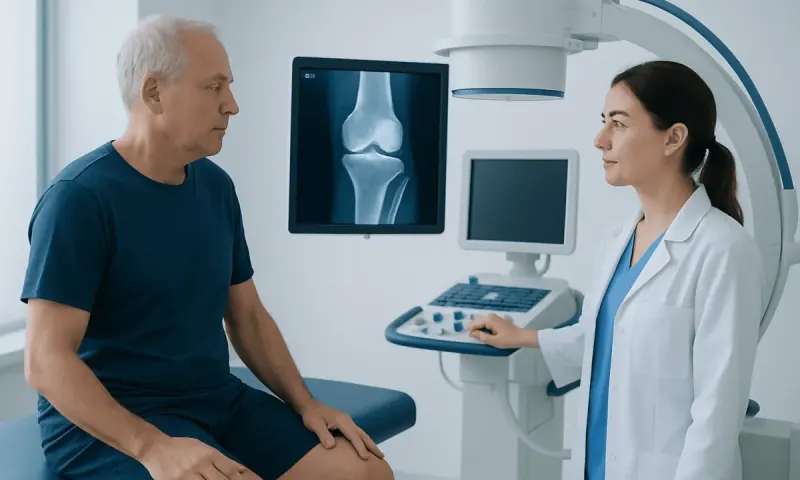
Imaging is used when needed to confirm the diagnosis or rule out serious damage. X-rays help identify fractures or changes in alignment. MRI is especially useful for evaluating ligaments, cartilage, menisci, and other soft tissues, and is often requested when surgery is being considered or symptoms are not explained by examination alone. In some cases, ultrasound may help assess tendons or fluid collections.
If the injury is complex or persistent, a specialist may advise further orthopedic assessment and tailored planning. For conditions involving advanced cartilage or structural damage, treatment pathways can overlap with broader knee pain evaluation and management strategies.
Treatment options: from early care to surgery
Treatment is matched to the injury type, severity, activity level, and the person’s goals. In the early phase, many patients are advised to rest the knee, apply ice, use compression, and elevate the leg to reduce swelling. Temporary use of crutches or a brace may help protect the joint, especially if walking is painful or the knee feels unstable.
Medication may be used to ease pain and inflammation, but it does not repair the injury itself. Physiotherapy is a central part of treatment for many knee injuries. A structured rehabilitation plan can improve range of motion, reduce swelling, strengthen the quadriceps and surrounding muscles, and retrain balance and movement patterns. For many ligament sprains, minor meniscal injuries, and overuse conditions, guided rehabilitation may be enough to restore function.
Some injuries require procedures or surgery. Examples include complete ligament rupture in selected patients, displaced meniscus tears, recurrent kneecap dislocation with instability, tendon rupture, and certain fractures. Depending on the problem, doctors may recommend knee arthroscopy to assess or treat structures inside the joint, or ACL surgery when a torn cruciate ligament is causing persistent instability and limiting activity.
For patients whose injury has led to major joint damage or has worsened existing degeneration over time, treatment may occasionally extend to reconstructive options such as knee replacement when appropriate. At every stage, the aim is more than easing pain: getting you moving safely again, restoring stability, and protecting the joint for the years ahead.
Recovery, rehabilitation, and self-care
Recovery after a knee injury is rarely only about waiting for pain to settle. The knee needs to regain motion, strength, coordination, and confidence. A structured rehabilitation program often progresses in phases, beginning with swelling control and gentle movement, then advancing to muscle strengthening, balance training, and finally sport- or task-specific drills if needed.
Self-care can support recovery between medical visits. Helpful measures may include avoiding activities that trigger pain, following physiotherapy exercises regularly, wearing a brace if advised, using supportive footwear, and returning to activity gradually rather than all at once. Many people improve more steadily when they pace their recovery and do not push through instability or repeated swelling.
Your general health matters too. Keeping to a healthy body weight takes pressure off the knee, and sleep and good nutrition help tissue heal. And if fear of hurting it again is holding you back, say so to your rehabilitation team. Confidence is a real part of getting function back.
At the end of treatment planning, some patients benefit from multidisciplinary care that combines orthopedics, radiology, rehabilitation, and sports medicine. Acıbadem Health Point’s multidisciplinary specialists and JCI-accredited hospitals diagnose and treat knee injuries for international patients when more advanced evaluation or treatment is needed.
Prevention and when to seek medical care
Not all knee injuries can be prevented, but several habits may lower risk. Warming up before exercise, strengthening the hips and thighs, improving landing and pivoting technique, increasing activity gradually, and using proper footwear can all help protect the joint. People returning to sport after an earlier knee injury may benefit from supervised conditioning to reduce re-injury risk.
Medical care should be sought promptly if the knee looks deformed, cannot bear weight, swells rapidly, feels unstable after a twisting injury, or becomes locked and cannot fully bend or straighten. Sudden severe pain after a fall or direct blow may indicate a fracture, dislocation, or major tendon injury and should not be ignored.
A person should also see a doctor if pain, swelling, or stiffness lasts more than a few days, if the knee repeatedly gives way, or if normal activities such as walking and climbing stairs remain difficult. Early assessment can help prevent ongoing joint damage and support a more targeted recovery plan.
Frequently asked questions
01What is the most common treatment for knee joint injuries?
Many knee injuries are first treated with rest, ice, compression, elevation, activity modification, and pain relief. Physiotherapy is often a key part of treatment because it helps restore movement, strength, and stability. Surgery is usually considered when there is major structural damage, instability, or failure of non-surgical care.
02How can someone tell if a knee injury is serious?
Warning signs include severe swelling, inability to bear weight, a visible deformity, the knee giving way, or a locked joint. A popping sensation at the time of injury followed by rapid swelling can also suggest significant ligament damage. A medical assessment is the safest way to judge severity.
03Do all ligament or meniscus injuries need surgery?
No. Some ligament sprains and certain meniscus tears improve with rehabilitation, bracing, and activity changes. Surgery depends on the type of tear, knee stability, symptoms, age, activity level, and whether the injury interferes with daily life or sport.
04How long does recovery from a knee injury take?
Recovery time varies widely depending on the exact injury and treatment. Mild sprains may improve within weeks, while more serious ligament injuries, fractures, or surgery can require several months of rehabilitation. Following a structured recovery plan usually supports better outcomes.
05Can someone walk on a torn ligament or meniscus?
Sometimes yes, especially if the tear is partial or swelling is limited. However, being able to walk does not rule out a significant injury. Persistent pain, instability, or swelling should be evaluated by a doctor.
06When should a person see a doctor for knee pain after an injury?
A doctor should be seen promptly if the knee cannot bear weight, swells quickly, looks misshapen, or will not fully move. Medical advice is also important if pain and stiffness do not improve, if the knee repeatedly buckles, or if there is concern about returning safely to normal activity.
This article is for general information only and is not a substitute for professional medical advice. Please consult a qualified doctor about your individual situation.
Joint and spine care in Turkey — expert assessment & treatment
JCI-accredited · board-certified surgeons · reply within 24h
Add us as a Preferred Source to see more of our trusted health content across Google Search, AI Overviews and Discover.