IT Band Syndrome: Symptoms, Causes and Treatment

Key Takeaways
- IT band syndrome usually comes from repeated friction or compression around the outer knee rather than a single injury.
- Pain is often felt on the outside of the knee and may worsen with running, stairs, hills, or cycling.
- Treatment usually focuses on reducing irritation, correcting training errors, and rebuilding strength and movement control.
- Imaging is not always needed; a careful clinical assessment is often enough to guide care.
- Gradual return to activity and attention to footwear, training load, and hip strength can help reduce recurrence.
IT band syndrome is a common overuse condition that can cause pain along the outer side of the knee, especially during running, cycling, or repeated bending. With the right diagnosis, activity adjustments, and rehabilitation, most people improve and return to their usual routines safely.
Overview
IT band syndrome, also called Iliotibial Band Syndrome: Symptoms and Treatment" class="ahp-ilk">iliotibial band syndrome, is a common cause of pain on the outer side of the knee. It is most often seen in people who repeat the same leg movements for long periods, such as runners, cyclists, hikers, and some workers or athletes who train on a fixed schedule.
The iliotibial band is a strong strip of tissue that runs from the outside of the hip down to the outside of the knee. When this tissue becomes irritated, pain can develop with movement, especially when the knee bends and straightens again and again. The problem is usually related to overload and movement patterns, not to a serious structural injury.
For international patients deciding whether to travel for care, the useful question is often not simply, “Is this IT band syndrome?” but “Why is it happening now, and what needs to change so it does not keep returning?” A careful assessment looks at training habits, strength, flexibility, footwear, and the person’s broader activity goals.
Symptoms
The hallmark symptom is a sharp, aching, or burning pain on the outer side of the knee. At first, the pain may appear only after a certain distance, time, or number of repetitions, and then settle with rest. As irritation increases, it may start earlier in the activity or linger afterward.
Many people notice that the pain becomes more obvious when running downhill, Knee Pain When Climbing Stairs: Common Causes" class="ahp-ilk">climbing stairs, cycling for long periods, squatting, or sitting in a bent-knee position for too long. Some describe tenderness if they press on the outer knee, while others feel a tight or pulling sensation along the side of the thigh.
Symptoms that do not fit the usual pattern deserve attention. Swelling, locking, numbness, a sense that the knee gives way, or pain after a clear traumatic event may point to another condition and should be assessed by a clinician.
Causes & Risk Factors
IT band syndrome is typically an overuse condition. Repeated bending and straightening of the knee can irritate the tissues around the outer knee, particularly when training increases too quickly or the body is not yet conditioned for the workload.
Several factors can contribute. These include sudden jumps in running mileage, frequent hill workouts, poor recovery between sessions, weak hip stabilizing muscles, limited control of leg alignment, and training on tilted surfaces. In cycling, saddle position, cleat setup, or very long rides may add strain.
Risk is often higher when more than one factor is present. Common contributors include:
- Rapid changes in exercise volume or intensity
- Running on cambered roads, tracks, or uneven ground
- Tight or fatigued muscles around the hip and thigh
- Poor movement mechanics, such as inward knee collapse during loading
- Previous episodes of the same pain
It is helpful to remember that the iliotibial band itself is not usually “too short” in a simple mechanical sense. The more useful focus is often on how the hip, knee, and foot work together during movement.
Diagnosis
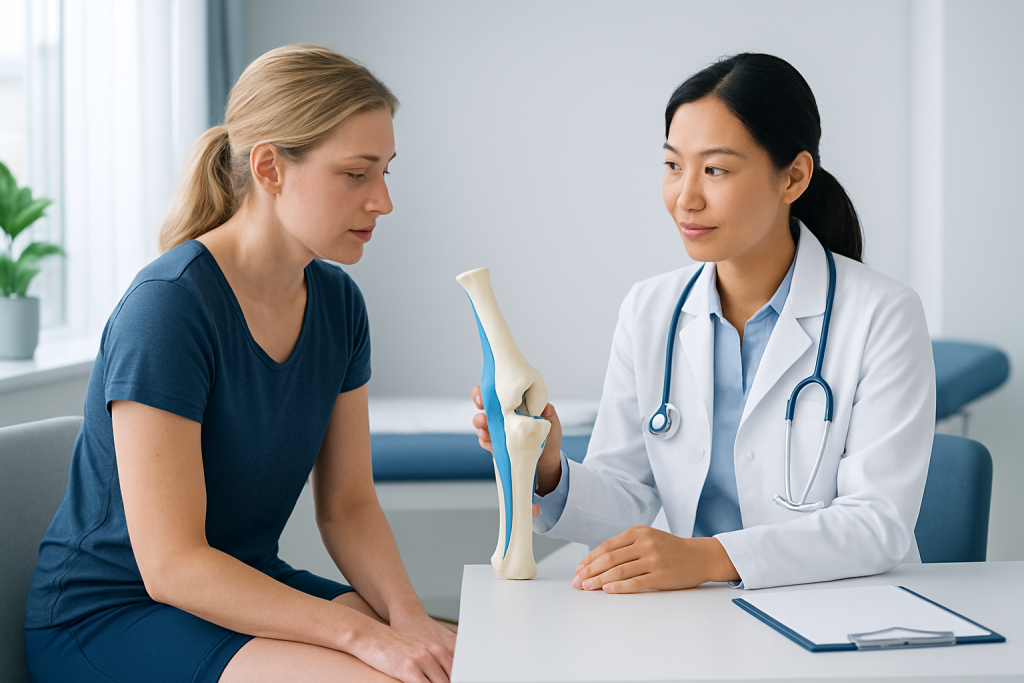
Diagnosis is usually based on a detailed history and physical examination. A clinician will ask where the pain is felt, when it started, which activities trigger it, and whether training habits changed before the symptoms began. They may also watch walking, squatting, running mechanics, or cycling position if relevant.
During the exam, the outside of the knee is checked for tenderness and signs that the pain pattern matches IT band syndrome. The clinician may also assess hip strength, flexibility, leg alignment, and the function of nearby joints so that other causes of lateral knee pain are not missed.
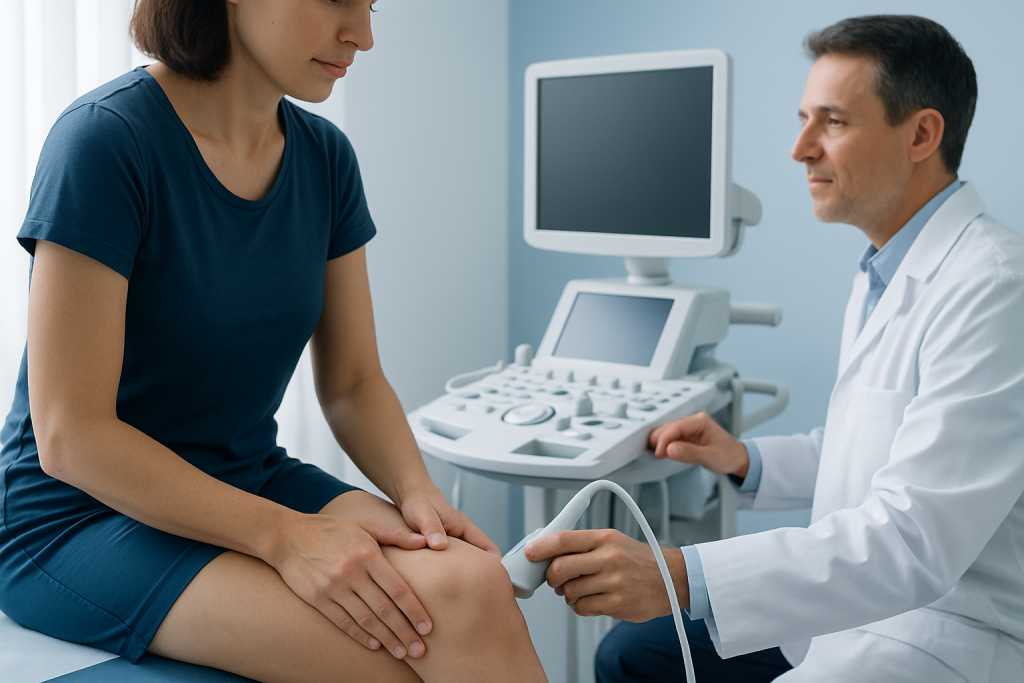
Imaging is not always necessary. X-rays, ultrasound, or MRI may be considered when symptoms are unusual, persistent, severe, or when another diagnosis is being considered. This is especially important for patients traveling from abroad, because a clear diagnosis helps ensure that any time spent in clinic is used efficiently and that the follow-up plan can be continued safely at home.
Treatment Options
Treatment usually begins with reducing the activities that trigger pain, but not necessarily stopping movement entirely. Many people improve when they temporarily lower training load, shorten sessions, avoid hills or speed work, and choose lower-irritation activities while the tissue calms down.
Rehabilitation is often the most important part of recovery. A physiotherapy plan may include hip and gluteal strengthening, movement retraining, gradual loading, and exercises that improve control during running or cycling. The aim is not only to settle symptoms, but also to address the mechanics that contributed to the problem.
Other measures can support recovery, depending on the person’s needs. These may include ice after activity, short-term anti-inflammatory medication when appropriate and recommended by a clinician, manual therapy, taping, or adjustments to footwear, pedals, or training surfaces. In some cases, a doctor may consider injections or further evaluation if pain is persistent, but these are not first-line solutions for most people.
Return to sport should be gradual. The person is usually guided to reintroduce running, hills, or cycling in stages, watching for pain during the session and the next day. This measured approach often prevents the cycle of repeated flare-ups that can happen when activity is resumed too quickly.
Prevention & Self-care
Once symptoms improve, prevention becomes a practical part of long-term care. The most useful strategy is usually to control training load and build tolerance step by step rather than making large jumps in distance, speed, or frequency. A planned increase gives the hips, thighs, and knees time to adapt.
Strength work is often helpful, especially exercises that support the hips and trunk. Good movement quality matters as much as raw strength, so exercises are usually chosen to improve stability during single-leg tasks, squats, step-downs, and sport-specific patterns. For cyclists, a bike fit review can be just as important as the exercise plan.
Everyday self-care can also make a difference:
- Warm up before harder workouts
- Alternate intense days with easier recovery days
- Replace worn shoes when needed
- Avoid prolonged downhill running when symptoms are active
- Listen to early warning pain rather than pushing through it
For people recovering while living in another country, it helps to leave with a written plan for exercises, activity progression, and red-flag symptoms. That makes follow-up more realistic and reduces guesswork once the initial visit is over.
When to See a Doctor
Medical assessment is appropriate when outer knee pain persists for more than a short period, keeps returning, or begins to limit work, sport, or daily movement. It is also wise to seek help if the pain appears after a fall, twist, or other injury rather than gradually through training.
Professional evaluation is especially important if there is swelling, fever, numbness, calf pain, significant instability, or a locked knee. These features are not typical of straightforward IT band syndrome and may suggest a different problem that needs prompt attention.
People who travel for treatment should aim for a clinic that can provide both diagnosis and a structured rehabilitation plan. At Acibadem Health Point, multidisciplinary specialists and JCI-accredited hospitals diagnose and treat musculoskeletal conditions such as IT band syndrome for international patients, with coordinated care that can be continued after returning home.
Living Well During Recovery
Recovery is often smoother when the person thinks in terms of function rather than speed. Instead of asking only when running can restart, it can be more useful to ask what movements are currently well tolerated, what causes symptoms the next day, and which exercises are building capacity without irritation.
It is also normal for improvement to happen in stages. Some days feel better than others, especially when travel, long sitting, unfamiliar beds, or changes in routine temporarily affect symptoms. That does not necessarily mean the treatment is failing; it often means the body is still adapting.
Clear communication with the care team helps. Patients can track which activities trigger pain, how symptoms behave after exercise, and what seems to ease them. That information makes follow-up more precise and helps the rehabilitation plan stay realistic and personal.
Frequently asked questions
01Is IT band syndrome the same as a torn ligament or cartilage injury?
No. IT band syndrome is usually an overuse irritation on the outer side of the knee, not a tear of the major stabilizing structures. A clinician may still check for other injuries if the pain pattern is unusual or if there was a clear accident.
02Can someone keep exercising with IT band syndrome?
Often, yes, but the activity usually needs to be modified. Lower-impact exercise, reduced distance, and avoiding the movements that trigger pain can help the person stay active while healing.
03Does stretching alone fix IT band syndrome?
Stretching may feel helpful for some people, but it is rarely the whole answer. Recovery usually works better when stretching is combined with strength training, load management, and movement correction.
04How long does recovery take?
Recovery time varies depending on how irritated the tissues are, how long symptoms have been present, and how well the contributing factors are addressed. Many people improve with consistent rehabilitation, but returning too quickly can delay progress.
05Why does the pain show up mostly during running downhill?
Downhill running increases repeated stress around the outer knee, so symptoms may appear sooner. This pattern is common in IT band syndrome and often improves when the training load is adjusted and strength is rebuilt.
06When should imaging be considered?
Imaging may be useful if the symptoms do not match the usual pattern, do not improve as expected, or if another condition is suspected. In many cases, a good clinical examination is enough to guide treatment without scans.
This article is for general information only and is not a substitute for professional medical advice. Please consult a qualified doctor about your individual situation.
Joint and spine care in Turkey — expert assessment & treatment
JCI-accredited · board-certified surgeons · reply within 24h
Add us as a Preferred Source to see more of our trusted health content across Google Search, AI Overviews and Discover.