Is Eczema a Form of Herpes or a Different Condition?

No, eczema is not a form of herpes. Eczema is usually a non-contagious inflammatory skin condition, whereas herpes is caused by herpes simplex viruses; however, people with eczema can occasionally develop a herpes-related skin infection that needs prompt care.
Is Eczema a Form of Herpes?
No, eczema is not a form of herpes. Eczema, most often Skin Barrier Care" class="ahp-ilk">atopic dermatitis, is an inflammatory condition in which the skin barrier becomes less effective, leading to dryness, itching, and recurring rashes. Herpes is an infection caused by herpes simplex virus (HSV), usually HSV-1 or HSV-2.
Most eczema flare-ups are harmless in the sense that they are not caused by an infection and are not contagious. The two conditions can look somewhat alike when eczema is inflamed or blistered, which can understandably cause concern. A clinician can help clarify the cause, especially if a rash is new, painful, blistering, or spreading quickly.
The important connection is that damaged eczema-prone skin can be more vulnerable to certain infections, including HSV. A rare but potentially serious infection called eczema herpeticum occurs when herpes virus spreads across areas affected by eczema. This is different from eczema itself and requires prompt medical assessment.
Why Eczema and Herpes May Be Confused
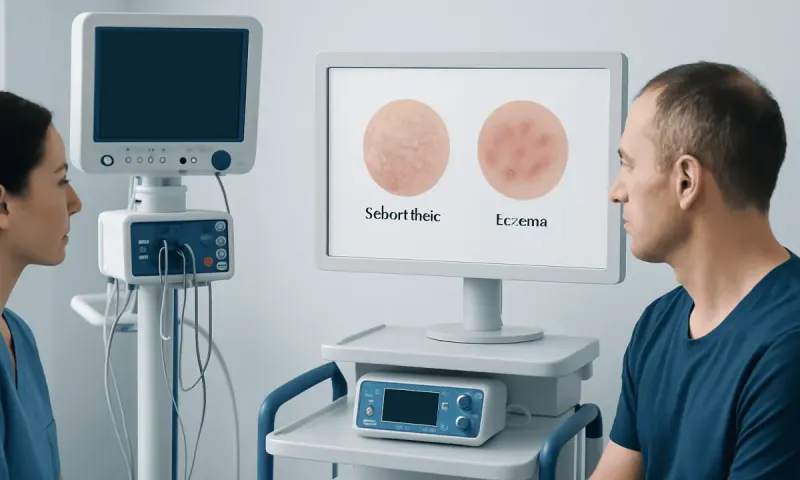
Eczema commonly causes red, brown, purple, or grayish patches depending on skin tone, along with dryness, scaling, cracking, and itching. During a flare, the skin may become swollen, weepy, or develop tiny fluid-filled bumps. These features can sometimes resemble a viral rash at first glance.
Herpes more typically causes groups of small, closely clustered blisters. Cold sores usually occur on or around the lips, while genital herpes affects the genital or anal area. The blisters may tingle, burn, itch, or hurt before breaking open and forming shallow sores or crusts.
Location, timing, and sensation can provide useful clues. Eczema often returns in familiar areas, such as the hands, face, neck, inner elbows, behind the knees, or other skin folds, and itching is often the main symptom. Herpes lesions tend to be more painful or burning and may recur in the same local area. Still, appearance alone is not always enough for a confident diagnosis.
- Eczema: inflammatory, usually intensely itchy, dry or scaly, and not contagious.
- Herpes: viral, often painful or tingling, with grouped blisters or sores, and can spread through direct skin-to-skin contact.
- Eczema herpeticum: a widespread HSV infection in eczema-affected skin that needs urgent medical attention.
What Causes Eczema and What Causes Herpes?

Eczema develops through a combination of genetic tendency, immune-system activity, and problems with the outer skin barrier. The barrier may lose moisture more easily and allow irritants or allergens to enter the skin. Common triggers include soaps, fragranced products, heat, sweat, dry air, stress, rough fabrics, and, for some people, environmental allergens or infections.
Herpes is caused by HSV. HSV-1 commonly causes oral herpes, although it can also cause genital infection. HSV-2 more commonly causes genital herpes. The virus is transmitted through close contact with an infected area, including kissing or sexual contact, and it can spread even when visible sores are not present.
Having eczema does not mean a person has herpes, and having herpes does not cause ordinary eczema. However, active cold sores or genital herpes can pass HSV to another person through direct contact. People with eczema should avoid contact between broken or actively inflamed skin and someone else’s cold sore or herpes lesions, particularly during an active outbreak.
Other skin conditions may also resemble eczema or herpes, including contact dermatitis, impetigo, shingles, fungal infections, and psoriasis. A medical review is valuable when a rash does not follow its usual pattern or does not improve with a usual care plan.
Eczema Herpeticum: The Important Exception
Eczema herpeticum is an HSV infection that can occur when the virus enters areas of skin affected by eczema. It is uncommon, but it is important because it may spread rapidly and can make a person feel unwell. It can affect children and adults, particularly those with widespread, severe, or poorly controlled atopic dermatitis.
The rash often appears as clusters of similar-looking, painful blisters or punched-out erosions. It may develop on the face, neck, or other eczema-affected areas and can spread over a short period. Fever, feeling unwell, swollen lymph nodes, or eye discomfort may occur. This differs from a typical eczema flare, which is more likely to be dry, itchy, and variable in appearance.
Anyone with eczema who develops a rapidly spreading painful blistering rash should seek same-day medical advice. Urgent assessment is particularly important if there is fever, marked illness, lesions near the eyes, eye redness, pain, light sensitivity, or changes in vision. Antiviral treatment may be needed, and early care helps reduce the risk of complications.
Not every weepy or crusted eczema patch is eczema herpeticum. Bacterial infection, often associated with honey-colored crusting, can also occur in eczema. Because these problems are treated differently, a clinician should assess suspicious changes rather than relying on self-diagnosis.
How a Doctor Tells the Difference
A doctor will usually begin by asking when the rash started, whether it itches, burns, or hurts, whether there was a tingling sensation before it appeared, and whether similar episodes have happened before. They may ask about eczema history, contact with someone with cold sores or genital herpes, recent illness, new skin products, medications, and other possible triggers.
A careful skin examination is often the most useful first step. The clinician will look at the pattern, location, type of lesions, extent of the rash, and signs of bacterial infection. They may also examine the mouth, eyes, and nearby lymph nodes if symptoms suggest a herpes-related infection.
If herpes or eczema herpeticum is suspected, the clinician may gently swab fluid from a fresh blister or sore for laboratory testing, such as a PCR test. Testing may also be considered when the diagnosis is uncertain or when another infection is possible. Blood tests are not usually needed to diagnose a current skin outbreak.
Once the cause is clearer, treatment can be tailored. This may include an eczema skin-care plan, treatment for bacterial infection if present, or antiviral medicine for confirmed or strongly suspected herpes infection. It is best not to apply unfamiliar creams to a rapidly changing blistering rash without professional advice.
Treatment and Everyday Skin Care
Eczema management focuses on restoring the skin barrier, easing inflammation, and identifying manageable triggers. Regular use of plain fragrance-free moisturisers, sometimes called emollients, can reduce dryness and support the skin’s protective function. Short lukewarm baths or showers, gentle cleansing, and avoiding known irritants may also help.
For flares, a clinician may recommend prescription anti-inflammatory treatments, including topical corticosteroids or non-steroid options, based on the person’s age, affected body area, severity, and medical history. More persistent eczema may require specialist-directed treatments. Eczema medicines should be used exactly as advised, particularly on the face, around the eyes, or in skin folds.
Herpes is managed differently. Antiviral medicines may be prescribed for an initial outbreak, recurrent symptoms, or more serious infection. They do not remove HSV permanently from the body, but they can shorten or reduce outbreaks for many people. Avoiding direct contact with sores, not sharing lip products or towels during an outbreak, and washing hands after touching the affected area can reduce transmission.
For people with recurring eczema or a difficult-to-identify rash, dermatology input can be helpful. Acıbadem Health Point’s multidisciplinary specialists and JCI-accredited hospitals diagnose and treat skin conditions for international patients, with care plans based on clinical assessment and individual needs.
When to Seek Medical Care
Medical care is recommended when a rash is new, severe, painful, widespread, or different from a person’s usual eczema. A clinician should also review eczema that is not responding to the established treatment plan, is repeatedly becoming infected, or is interfering significantly with sleep, school, work, or daily activities.
Same-day medical advice is appropriate for eczema with sudden clusters of painful blisters, punched-out sores, rapid spreading redness, fever, or feeling generally unwell. These symptoms can indicate eczema herpeticum or another infection that may require prompt treatment. People should not wait for a routine appointment if symptoms are progressing quickly.
Urgent evaluation is needed for a rash or blisters around the eyes, eye pain, redness, sensitivity to light, or changes in vision. HSV can affect the eye, and early assessment is important. Babies, people with weakened immune systems, and people with extensive eczema should be assessed promptly if herpes infection is suspected.
Until medical advice is available, it is sensible to avoid touching or picking at lesions, avoid sharing towels or cosmetics, wash hands regularly, and avoid close skin contact with others if herpes is suspected. A healthcare professional can provide a clear diagnosis and safe next steps.
Frequently asked questions
01Can eczema turn into herpes?
Eczema does not turn into herpes. They are different conditions with different causes. However, herpes simplex virus can infect eczema-affected skin and cause eczema herpeticum, which needs prompt medical assessment.
02Is eczema contagious like herpes?
Eczema itself is not contagious and cannot be passed from person to person. Herpes simplex virus can be transmitted through direct contact with infected skin or sores. It is therefore useful to distinguish an eczema flare from a herpes outbreak.
03What does eczema herpeticum look like?
Eczema herpeticum may cause groups of painful blisters or small, similar-looking punched-out sores on areas of eczema. The rash can spread quickly and may be accompanied by fever or feeling unwell. A person with these symptoms should seek same-day medical advice.
04Can cold sores make eczema worse?
Contact with a cold sore can expose eczema-affected skin to herpes simplex virus, especially if the skin is broken or inflamed. This does not happen in every case, but it can lead to eczema herpeticum in some people. Avoid direct contact with active cold sores and seek advice for a new painful blistering rash.
05How can a doctor test for herpes on the skin?
A clinician may diagnose herpes based on the appearance and symptoms of the rash. If confirmation is needed, they can swab fluid from a fresh blister or sore and send it for laboratory testing, often using PCR. This can help distinguish herpes from eczema and other skin infections.
06Should steroid cream be used on a possible herpes rash?
A person should seek medical advice if herpes or eczema herpeticum is suspected, especially when there are painful blisters, rapid spreading, or fever. The appropriate treatment depends on the diagnosis and may include antiviral medicine. A clinician can advise whether eczema treatments should be continued, adjusted, or combined with other treatment.
This article is for general information only and is not a substitute for professional medical advice. Please consult a qualified doctor about your individual situation.
Joint and spine care in Turkey — expert assessment & treatment
JCI-accredited · board-certified surgeons · reply within 24h
Add us as a Preferred Source to see more of our trusted health content across Google Search, AI Overviews and Discover.