Infiltrative Basal Cell Skin Cancer: Treatment and Outlook
Infiltrative basal cell skin cancer is a subtype of basal cell carcinoma (BCC) that can extend beyond the visible edges of a lesion. It rarely spreads to distant organs, but its growth pattern can make complete removal more complex, so prompt assessment and treatment by a skin cancer specialist are important.
Overview: what is infiltrative basal cell skin cancer?
Infiltrative basal cell skin cancer is a form of basal cell carcinoma (BCC), the most common type of skin cancer. BCC begins in basal cells, which are found in the lower part of the epidermis, the outer layer of skin. The term infiltrative describes how the cancer cells grow: rather than forming a clearly defined lump, they may spread in thin strands or small nests into nearby skin tissue.
This pattern can make the tumour appear smaller on the surface than it is underneath. For that reason, infiltrative BCC is generally managed as a higher-risk subtype. It is still usually very treatable and rarely spreads to distant parts of the body, but it can damage surrounding skin, nerves, cartilage, muscle, or bone if left untreated for a long time.
Infiltrative BCC is often diagnosed on areas that receive frequent sun exposure, including the nose, eyelids, ears, scalp, cheeks, neck, and upper trunk. A dermatologist can assess a suspicious lesion and arrange a biopsy to establish the exact diagnosis.
How serious is an infiltrative basal cell carcinoma?
An infiltrative basal cell carcinoma is serious enough to require timely medical treatment, but it is important to keep its outlook in perspective. Like most basal cell carcinomas, it usually grows locally and is very unlikely to spread elsewhere in the body. The main concern is local invasion: infiltrative cells may extend beyond the visible border and can gradually affect nearby healthy tissue.
Its higher-risk classification does not mean that treatment will be unsuccessful. Instead, it means that treatment planning should aim to identify and remove all cancerous tissue while preserving function and appearance whenever possible. This is particularly important when a lesion is on the face, around the eyes, nose, ears, lips, hands, feet, or genital area.
The risk of recurrence can be higher when infiltrative BCC is incompletely removed, has returned after earlier treatment, is large, or lies in a complex anatomical area. Follow-up skin examinations are therefore an important part of care after treatment for basal cell carcinoma.
How fast does infiltrative basal cell carcinoma grow?
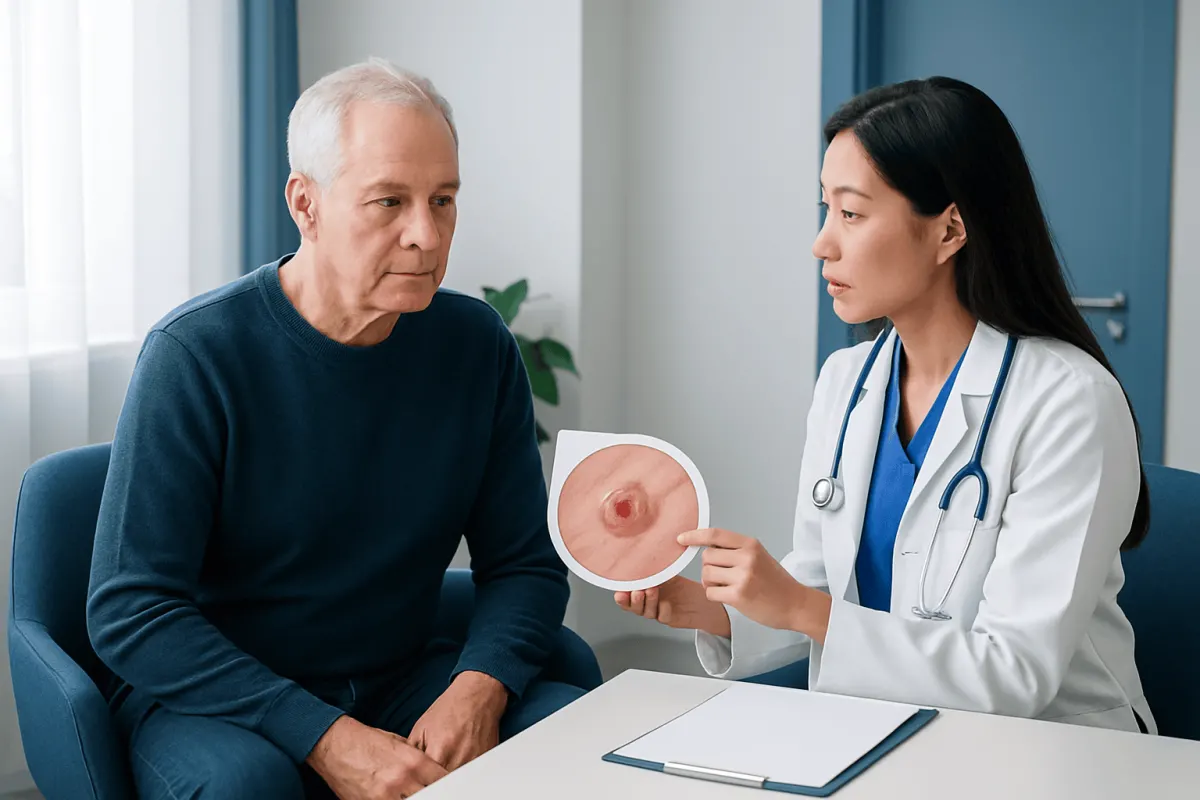
Infiltrative basal cell carcinoma usually grows slowly, often over months to years. However, growth rates differ between individuals and lesions. Some skin changes remain subtle for a long time, while others gradually become more noticeable through persistent crusting, bleeding, ulceration, thickening, or an enlarging scar-like patch.
Although BCC is often described as slow-growing, this should not be interpreted as a reason to delay evaluation. Infiltrative BCC may grow beneath the skin in a way that is not obvious from its surface appearance. A small-looking lesion can therefore have wider microscopic involvement than expected.
Location also matters. Even slowly enlarging lesions can cause meaningful damage in delicate areas, such as the eyelid, nose, ear, or lip. A clinician should examine any spot that does not heal, repeatedly bleeds, changes in appearance, or persists despite ordinary skin care.
What causes infiltrative BCC and who is at risk?
Long-term exposure to ultraviolet (UV) radiation from sunlight is the leading risk factor for basal cell carcinoma. UV exposure can damage DNA in skin cells over time. Indoor tanning devices also emit UV radiation and increase the risk of skin cancer.
Other factors that may raise risk include fair or easily sunburned skin, a history of frequent sunburns, advancing age, outdoor work or recreation, previous skin cancer, Cancer Radiation Treatment: Options and Outlook" class="ahp-ilk">radiation treatment to the skin, and a weakened immune system. People of every skin tone can develop BCC, although lesions may look different on darker skin and may be noticed later.
Some inherited conditions can increase the likelihood of developing multiple BCCs, but most infiltrative BCCs occur without an inherited cancer syndrome. Having one BCC also increases the chance of developing another skin cancer in the future, which is why regular self-checks and clinician-led skin examinations can be valuable.
Diagnosis: how is infiltrative BCC confirmed?
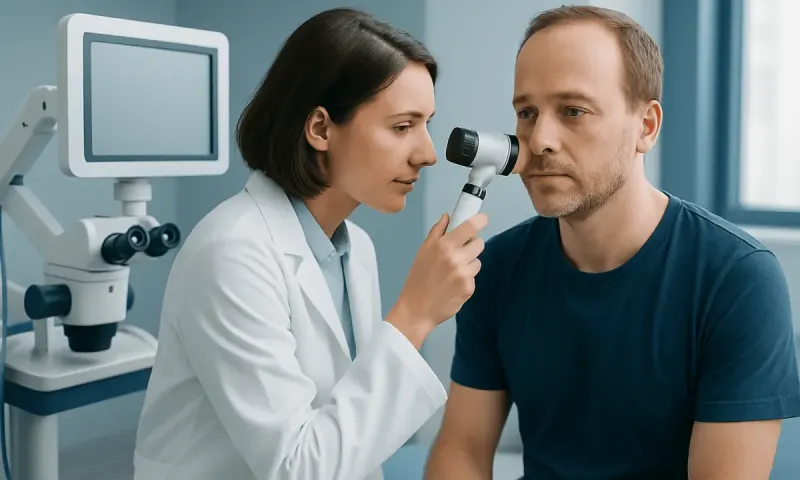
Diagnosis usually starts with a clinical skin examination. Infiltrative BCC can look like a firm, pale, waxy, scar-like, shiny, pink, or slightly depressed area. It may also appear as a sore that heals and returns, a persistent crusted spot, or a lesion that bleeds with minor contact. Its appearance is variable, so a diagnosis cannot be made reliably from appearance alone.
A biopsy is needed to confirm skin cancer and identify its subtype. During a biopsy, a clinician removes a small sample of the lesion under local anaesthetic. A pathologist examines the sample under a microscope and reports whether BCC is present and whether an infiltrative pattern is seen.
The treatment team will also consider the lesion’s size, depth, location, border definition, whether it has been treated before, and the person’s general health. Imaging is not routinely needed for typical cases, but it may be considered when there is concern that an advanced lesion involves deeper structures.
- Examine the entire skin, as more than one suspicious lesion can be present.
- Confirm the diagnosis with biopsy before definitive treatment when appropriate.
- Use pathology findings and body location to choose the most suitable treatment.
What are the treatment options for infiltrative basal cell carcinoma?
Surgery is commonly recommended for infiltrative BCC because it allows the cancer to be removed and examined for clear margins. The best option depends on the lesion’s site, size, previous treatment history, microscopic features, and the person’s health and preferences.
Mohs surgery is often considered when infiltrative BCC is located in an area where conserving healthy tissue is especially important or where recurrence risk is higher. The surgeon removes thin layers of tissue and checks each layer under a microscope during the procedure until no cancer cells are seen at the edges. This approach can provide careful margin control while limiting removal of unaffected tissue.
Standard surgical excision is another effective option for many lesions. A surgeon removes the tumour with a planned border of surrounding tissue, and the specimen is assessed by a pathology laboratory. Depending on the wound and location, repair may involve direct closure, a skin graft, or reconstructive techniques following skin cancer surgery.
Radiotherapy may be considered for selected people who are not suitable for surgery or when surgery would be difficult. For locally advanced BCC that cannot be managed adequately with surgery or radiation, targeted medicines may sometimes be used by a specialist oncology team. Topical creams, cryotherapy, and curettage are generally less suitable for infiltrative BCC because they do not offer the same level of margin assessment.
Can I wait a month to have basal cell carcinoma removed?
A short wait of about a month may be reasonable in some circumstances, particularly after the diagnosis has been confirmed and the treating clinician has reviewed the lesion. However, the appropriate timing depends on the subtype, size, location, symptoms, and whether the cancer is considered high risk. Infiltrative BCC should not be ignored or postponed without discussing it with the treating team.
Because infiltrative BCC can extend beyond what is visible, clinicians commonly recommend arranging definitive treatment promptly. This does not usually mean emergency treatment on the same day, but it does mean following the recommended appointment plan and notifying the clinic if the lesion changes quickly or symptoms worsen.
People should contact their clinician sooner if the area is rapidly enlarging, persistently bleeding, painful, infected-looking, affecting vision or movement, or located close to an eye, nose, ear, lip, or other sensitive structure. A treating dermatologist or surgeon can explain whether a planned wait is medically appropriate in an individual case.
When to seek medical care
Medical assessment is advisable for any skin lesion that lasts longer than a few weeks without healing, especially if it grows, repeatedly scabs, bleeds, becomes tender, or changes in colour or texture. A pale scar-like area with no history of injury also deserves assessment, as infiltrative BCC may not have the classic appearance people associate with skin cancer.
People with a previous BCC should seek review for new or changing spots and attend recommended follow-up appointments. After treatment, it is sensible to ask the clinician how often skin checks are needed, as this interval varies according to the individual’s risk profile and treatment history.
Acıbadem Health Point’s multidisciplinary specialists and JCI-accredited hospitals evaluate and treat skin cancers for international patients, including cases that may need coordinated dermatology, pathology, surgical, reconstructive, or oncology care.
In daily life, sun protection remains important after treatment. This includes seeking shade when practical, wearing protective clothing and a hat, using broad-spectrum sunscreen as directed, and avoiding tanning beds. These measures reduce additional UV damage but do not replace professional examination of a suspicious lesion.
Frequently asked questions
01Is infiltrative basal cell skin cancer curable?
In most cases, infiltrative basal cell skin cancer can be successfully treated, particularly when it is identified before extensive local spread. Surgery that confirms clear margins is commonly used. Ongoing follow-up is important because BCC can recur and people who have had one skin cancer have a higher chance of developing another.
02Does infiltrative BCC spread to other organs?
Basal cell carcinoma very rarely spreads to distant organs. The more typical concern with infiltrative BCC is local growth into nearby skin and underlying structures if it remains untreated. Timely specialist treatment substantially reduces the risk of local damage.
03Why is Mohs surgery often used for infiltrative BCC?
Mohs surgery examines the edges of removed tissue during the operation, helping the surgeon identify remaining cancer cells accurately. This can be particularly useful for infiltrative BCC because its microscopic extensions may not be visible on the skin surface. It is often considered for lesions in high-risk or cosmetically sensitive locations.
04What does infiltrative BCC look like?
It may appear as a shiny, pale, pink, firm, scar-like, or slightly sunken patch. Some lesions form a persistent sore that crusts, bleeds, or does not heal. Appearance alone cannot confirm the diagnosis, so a biopsy is needed for suspicious lesions.
05Will I need radiation therapy after BCC surgery?
Most people with completely removed BCC do not need radiation therapy after surgery. Radiation may be considered when surgery is not suitable, when a cancer cannot be fully removed, or in selected higher-risk situations. The decision is made by the treating specialist team based on pathology and individual circumstances.
06How can I reduce the risk of another basal cell carcinoma?
Regular sun protection and avoiding tanning beds can help reduce further UV-related skin damage. It is also useful to examine the skin periodically and attend follow-up visits recommended by the clinician. Any new, changing, bleeding, or non-healing spot should be checked promptly.
This article is for general information only and is not a substitute for professional medical advice. Please consult a qualified doctor about your individual situation.
Hair transplant in Turkey — costs, graft counts & a free assessment
JCI-accredited · board-certified surgeons · reply within 24h
Add us as a Preferred Source to see more of our trusted health content across Google Search, AI Overviews and Discover.