Impacted Wisdom Teeth: Symptoms, Causes and Treatment

Key Takeaways
- Impacted wisdom teeth may remain quiet for years or begin causing pain, swelling, or repeated gum irritation.
- The position of the tooth, jaw space, and age all influence whether treatment is monitoring or removal.
- Diagnosis usually includes a dental exam and imaging such as an X-ray or panoramic scan.
- Removing an impacted wisdom tooth is a common oral surgery procedure when the tooth threatens nearby teeth, gums, or bone.
- Good oral hygiene and timely dental follow-up can reduce complications and support recovery.
Impacted wisdom teeth are third molars that do not fully emerge into the mouth, often because there is not enough space or their position is angled. Many people have no symptoms at first, but regular dental assessment helps identify problems early and choose the safest treatment plan.
Overview
Impacted wisdom teeth are third molars that do not fully break through the gums in the usual way. They may be trapped in the jawbone, covered by gum tissue, or only partly visible, depending on how they developed and how much room exists in the mouth.
For some people, an impacted wisdom tooth remains a quiet finding on a dental image. For others, it becomes a source of pressure, swelling, repeated infection, or crowding around the back of the jaw. The important point is not simply whether a wisdom tooth is present, but whether it is likely to stay healthy and keep the surrounding tissues healthy too.
Because these teeth sit far back in the mouth, they are sometimes difficult to clean thoroughly. That can make them more vulnerable to decay and gum inflammation, especially when the crown is only partially exposed. A dental team usually looks at the tooth’s position, symptoms, and relationship to nearby nerves and teeth before recommending observation or removal.
Symptoms
Symptoms vary widely. Some impacted wisdom teeth are discovered during a routine dental visit or while an image is being taken for another reason. Others announce themselves more clearly, especially when the surrounding gum tissue becomes irritated or infected.
Common signs can include pain or aching at the back of the mouth, tenderness or swelling of the gums, and discomfort when opening the jaw or chewing. A partially erupted tooth may trap food and bacteria under a gum flap, leading to a bad taste, bad breath, or recurring inflammation in the same area.
In some cases, symptoms develop in a pattern: periods of calm followed by flare-ups. This can happen when the gum tissue over the tooth becomes irritated and then settles down, only to become inflamed again later. People may also notice that the nearby second molar feels sensitive if the wisdom tooth is pressing against it or making it harder to clean.
- Pain or pressure at the back of the jaw
- Swollen, red, or tender gums
- Difficulty opening the mouth fully
- Discomfort when chewing
- Food trapping or repeated gum irritation
- Bad breath or an unpleasant taste
If the pain spreads, swelling increases, or the mouth becomes difficult to open, the person should arrange prompt dental assessment rather than waiting for symptoms to fade on their own.
Causes & Risk Factors
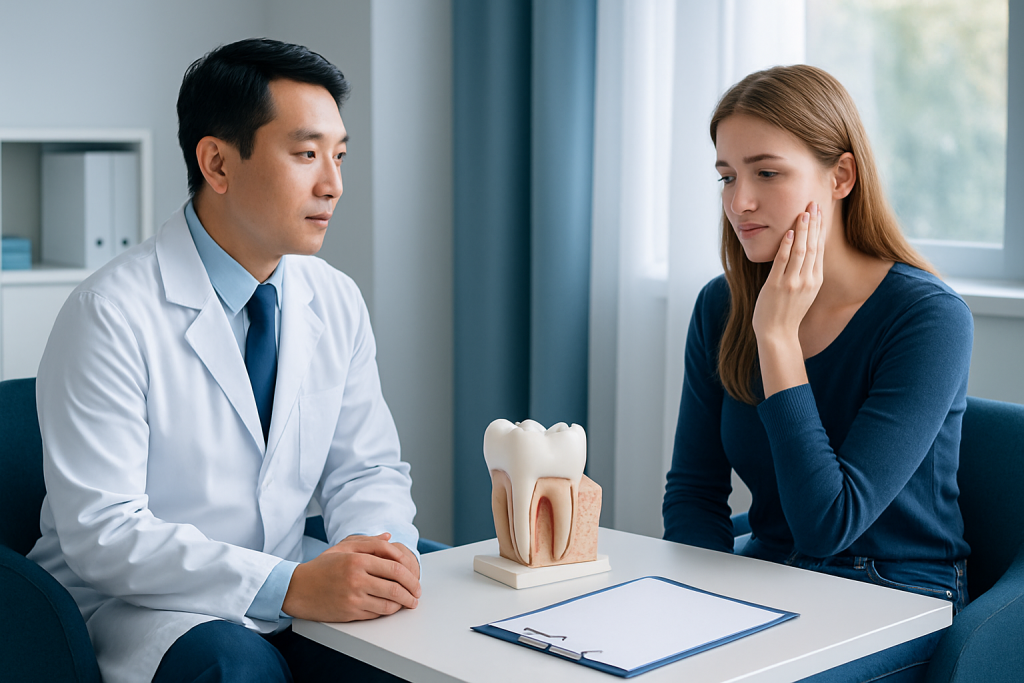
The main reason a wisdom tooth becomes impacted is simple: there is not enough room for it to emerge in the correct position. When the jaw has limited space, the tooth may tilt forward, backward, or sideways, or it may stay embedded beneath the gum and bone.
Tooth size and jaw shape both matter. In some people, the tooth has a normal path but no clear way through because neighboring teeth are already in place. In others, the tooth forms at an awkward angle from the start, making full eruption unlikely even if there appears to be adequate space.
Risk can also be influenced by age and oral anatomy. Younger people may still be developing jaw space, which is why wisdom teeth are often monitored over time. Once the roots are more established, extraction can become more complex if the tooth is already stuck close to nerves or the sinus in the upper jaw.
Factors that may increase the chance of problems include:
- Limited jaw space
- Angled or rotated tooth position
- Partially erupted wisdom tooth with a gum flap
- Difficulty cleaning the back of the mouth
- Previous inflammation or infection around a wisdom tooth
Impaction itself is not caused by poor hygiene, although plaque buildup can make an already difficult tooth more likely to become inflamed. This distinction matters because patients sometimes blame themselves for a structural issue that is largely related to anatomy and tooth development.
Diagnosis
Diagnosis begins with a dental examination, where the clinician checks for tenderness, swelling, signs of infection, and how much of the tooth is visible. The tooth’s position in the arch and the health of the surrounding gums are important clues.
Imaging is usually needed to understand the full picture. A panoramic X-ray is commonly used because it shows the entire jaw and helps the dental team see the angle of the wisdom tooth, nearby roots, and the relationship to important structures such as nerves. In some cases, additional imaging may be helpful if the tooth lies close to a nerve or if surgical planning needs more detail.
The main question is not only “Is the tooth impacted?” but also “What is the safest long-term plan?” The answer depends on whether the tooth is causing symptoms, damaging nearby teeth, creating gum disease, or likely to remain trouble-free with observation. For patients traveling from another country, this assessment may be part of an organized consultation that includes imaging, a treatment discussion, and planning for follow-up care before departure.
Treatment Options
Treatment is tailored to the tooth and the person, not the label alone. Some impacted wisdom teeth are watched over time, while others are removed because they are already causing problems or are likely to do so later.
If the tooth is asymptomatic, fully buried, and not harming nearby structures, a dentist or oral surgeon may recommend periodic monitoring. This usually includes repeat examinations and, when appropriate, repeat imaging to make sure the tooth remains stable and does not affect the second molar, bone, or surrounding tissue.
When removal is advised, the procedure is commonly performed by a dentist with surgical training or an oral and maxillofacial surgeon. The exact approach depends on how the tooth sits in the bone, whether it has partially erupted, and whether nearby structures need special protection. The tooth may be removed in one piece or divided into sections to make extraction safer and more controlled.
After surgery, patients are usually given instructions on protecting the area, managing swelling, eating soft foods, and keeping the mouth clean without disturbing the healing site. Teeth Removal Recovery Time: An Evidence-Based Guide for Patients" class="ahp-ilk">Recovery time varies, but many people are able to return to light activities relatively soon while continuing to heal over the following days.
Potential treatment pathways include:
- Observation with scheduled dental reviews
- Cleaning and treatment of surrounding gum inflammation
- Surgical extraction of the impacted tooth
- Follow-up care to check healing and protect nearby teeth
For international patients, planning is especially important. A clear diagnosis, a shared treatment timeline, and a realistic discussion of aftercare help make it easier to coordinate recovery, travel, and any needed follow-up once home.
Prevention & Self-care
People cannot usually prevent a wisdom tooth from becoming impacted once its growth pattern is established, but they can reduce the chance of complications. The most useful step is regular dental care, since many problems are easier to manage before pain or infection develops.
Daily hygiene matters even when the tooth is hard to reach. Gentle but thorough brushing, cleaning between the teeth, and paying attention to the far back of the mouth can help limit plaque buildup around a partially erupted wisdom tooth. If a person notices recurring irritation in one area, it is better to have it checked rather than trying to manage it indefinitely at home.
After a wisdom tooth procedure, self-care focuses on protecting the healing socket and following the clinician’s instructions carefully. Soft foods, adequate rest, and avoiding habits that disturb the clot or wound are often part of standard advice. People should also be cautious with home remedies that seem harmless but may delay healing if used too aggressively.
Helpful habits include:
- Keeping routine dental appointments
- Brushing and cleaning around the back teeth carefully
- Seeking advice early if swelling or pain repeats
- Following post-procedure instructions exactly as given
- Arranging follow-up before traveling home after surgery when needed
A calm, organized recovery plan is especially useful for patients who receive care away from home. Knowing who to contact, what symptoms are expected, and when to seek help makes the process less stressful and supports safer healing.
When to See a Doctor
A dental appointment is appropriate when a wisdom tooth causes pain, swelling, food trapping, or repeated gum irritation, even if the symptoms seem mild. Ongoing discomfort often means the tooth is interacting with nearby tissue in a way that deserves a closer look.
More urgent assessment is sensible if the mouth becomes difficult to open, swelling spreads into the face or jaw, or the person has fever or worsening pain. These signs may suggest infection or a more complicated inflammatory process that should not be left without review.
It is also wise to seek evaluation before symptoms become severe if a routine image shows an impacted tooth close to a nerve or pressing on the second molar. Early planning can make treatment simpler and may reduce the risk of damage to neighboring teeth. In carefully selected cases, patients may be observed for a period rather than having immediate surgery, but that decision should always come from a qualified dental professional.
Acibadem Health Point can support international patients through multidisciplinary specialists and JCI-accredited hospitals that diagnose and treat impacted wisdom teeth in a coordinated, patient-focused way. A personalized review helps determine whether monitoring or removal is the better option, and whether any follow-up needs to be arranged before travel.
Frequently asked questions
01What does it mean when a wisdom tooth is impacted?
An impacted wisdom tooth is one that cannot fully emerge into the mouth in the normal way. It may be blocked by other teeth, trapped in the jawbone, or partly covered by gum tissue.
02Do all impacted wisdom teeth need to be removed?
Not always. Some can be monitored if they are not causing symptoms and are not harming nearby teeth or gums, but others are better removed because they are already creating problems or are likely to do so later.
03Can an impacted wisdom tooth cause pain even if it is not fully out?
Yes. Pain can come from pressure, inflammation around the gum tissue, or infection near a partially erupted tooth. Some people also feel soreness in the jaw or difficulty chewing.
04How is an impacted wisdom tooth diagnosed?
A dentist usually examines the mouth and takes an X-ray or panoramic image to see the tooth’s position. Imaging helps show whether the tooth is pressing on nearby roots or sitting close to important structures like nerves.
05What is recovery like after wisdom tooth removal?
Recovery usually involves swelling, tenderness, and careful eating for a short period, followed by gradual improvement. The dentist or surgeon gives specific instructions for cleaning, diet, and follow-up, which should be followed closely.
06Can I travel soon after wisdom tooth surgery?
It depends on the procedure and how healing is progressing. Patients who are traveling internationally should discuss timing, follow-up, and emergency contact options with their dental team before making travel plans.
This article is for general information only and is not a substitute for professional medical advice. Please consult a qualified doctor about your individual situation.
Explore treatments in Turkey — costs, top hospitals & a free quote
JCI-accredited · board-certified surgeons · reply within 24h
Add us as a Preferred Source to see more of our trusted health content across Google Search, AI Overviews and Discover.