Images of Hand, Foot, and Mouth Disease Rash

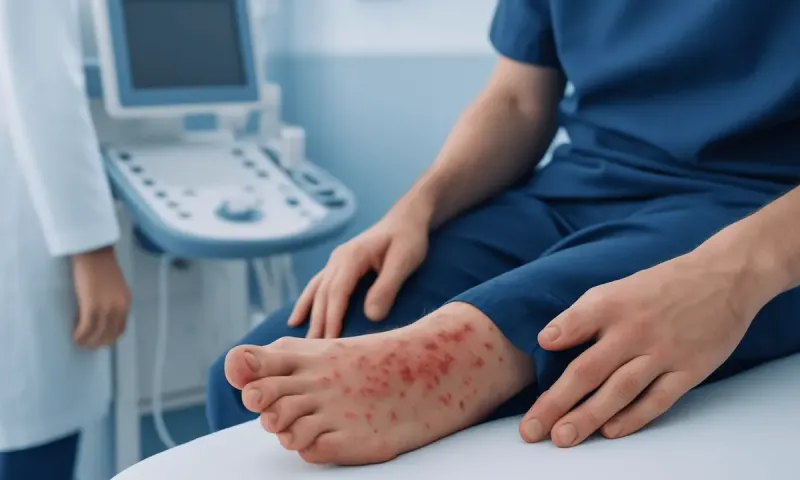
Images of hand foot mouth commonly show small red spots that may become fluid-filled blisters on the palms, soles, mouth, buttocks, legs, or arms. Because several skin conditions can look similar, photographs can be helpful for awareness but cannot reliably diagnose hand, foot, and mouth disease on their own.
What Images of Hand Foot Mouth Can Show
Images of hand foot mouth usually show a rash made up of small red spots, raised bumps, or tiny blisters. The spots often occur on the palms of the hands and soles of the feet, while painful sores or blisters may develop inside the mouth. In many people, the appearance changes over a few days: red spots may become grayish-white or clear blisters with a red border before they dry and heal.
However, the rash does not look identical in every person. On lighter skin, spots may look pink or red. On darker skin, they may appear darker than the surrounding skin, purplish, gray-brown, or less visibly red. Looking for changes in texture, such as raised bumps or small blisters, may be more useful than relying on color alone.
Photographs online can help people recognize a possible pattern, but they cannot confirm the cause of a rash. Chickenpox, insect bites, eczema, impetigo, allergic reactions, herpes infections, and other viral rashes can overlap in appearance. A clinician considers the location of the rash, mouth symptoms, fever, timing, exposures, and the person’s overall condition rather than using an image alone.
Where the Rash Appears and How It Changes
Despite its name, hand, foot, and mouth disease can affect more than three areas. In addition to the hands, feet, and mouth, spots may appear on the buttocks, groin, knees, elbows, legs, or arms. Children who have eczema may develop a more widespread rash, including on areas where the skin is already irritated.
Mouth lesions are often among the most uncomfortable features. They can begin as small red spots on the tongue, gums, inside the cheeks, roof of the mouth, or throat. These spots may develop into shallow sores that make swallowing painful. Young children may drool more than usual, refuse food, or become irritable because they cannot explain that their mouth hurts.
The rash itself is often mildly tender rather than intensely itchy, although itchiness can occur. The blisters are generally small and should not be deliberately opened. Keeping the skin clean and avoiding scratching helps reduce irritation and lowers the chance of a secondary bacterial skin infection.
- Early stage: fever, sore throat, tiredness, or reduced appetite may occur.
- Rash stage: spots or blisters appear, often one to two days after fever begins.
- Healing stage: lesions dry, flatten, and gradually resolve without scarring in most cases.
What Causes Hand, Foot, and Mouth Disease

Hand, foot, and mouth disease is caused by enteroviruses, most commonly coxsackieviruses. It is not related to foot-and-mouth disease in animals. The infection is particularly common among infants and children younger than 5 years because they have not yet developed immunity to many of the viruses that can cause it, but older children and adults can also get sick.
The virus spreads through respiratory droplets, saliva, fluid from blisters, stool, and contaminated hands or surfaces. It can spread easily in households, childcare settings, and schools, particularly when children are in close contact. A person may transmit the virus before the rash is obvious, and the virus may remain present in stool for weeks after symptoms have improved.
Outbreaks can occur at any time, though they are more frequent in warmer months in many regions. Having had hand, foot, and mouth disease once does not guarantee lifelong protection because different enteroviruses can cause similar illness. Good hand hygiene remains important even after recovery.
Symptoms That Help Put Rash Images in Context
A typical illness may start with a low to moderate fever, sore throat, feeling unwell, or a reduced appetite. Within a day or two, mouth sores and a skin rash may appear. Some people, especially adults, have only mild symptoms or no symptoms at all but can still pass the virus to others.
Not every case follows the classic pattern seen in common images of hand foot mouth. Certain strains, including coxsackievirus A6, can cause larger blisters, a more extensive rash, or skin changes around the mouth, on the trunk, or around the nails. In some cases, fingernails or toenails may temporarily shed several weeks after the illness; new nails usually grow back over time.
A diagnosis is often made from the symptoms and a physical examination. Laboratory testing is not usually needed in a straightforward case. Testing may be considered when symptoms are unusual, severe, prolonged, or when another condition needs to be ruled out. It is especially important not to assume that any blistering rash is hand, foot, and mouth disease without professional guidance.
Comfort Care and Recovery at Home
There is no specific antiviral medicine for most uncomplicated cases of hand, foot, and mouth disease. Care focuses on comfort, hydration, and monitoring. Most people recover fully within about 7 to 10 days. Rest and regular fluids are especially important because mouth pain can make drinking difficult.
Cool drinks, ice pops, and soft foods may be easier to tolerate. Acidic, salty, spicy, or very hot foods and drinks can sting mouth sores and are best avoided until healing occurs. For babies and young children, frequent small sips of breast milk, formula, water when age-appropriate, or oral rehydration solution may be more manageable than larger drinks.
A doctor or pharmacist can advise on age-appropriate pain or fever relief. Aspirin should not be given to children or teenagers with viral illnesses because of the risk of Reye’s syndrome. Numbing mouth products may not be suitable for young children and should only be used on a clinician’s recommendation. Antibiotics do not treat viral hand, foot, and mouth disease unless a clinician identifies a separate bacterial infection.
Keep nails short, wash hands after touching the rash, and cover any actively draining lesions with clean clothing or a dressing where practical. Blisters should not be popped. If skin becomes increasingly red, warm, swollen, painful, or produces pus, medical assessment is advisable.
Reducing Spread at Home, School, and Childcare
Careful hygiene can reduce transmission, although it may not prevent every case. Hands should be washed with soap and water for at least 20 seconds, especially after using the toilet, changing diapers, wiping a child’s nose, touching blisters, and before preparing food or eating. Soap and water are particularly useful after diaper changes because the virus can be present in stool.
Frequently touched surfaces, shared toys, changing areas, and bathroom fixtures should be cleaned regularly. Cups, utensils, towels, and toothbrushes should not be shared. Parents and caregivers can also teach children to cough or sneeze into a tissue or elbow and to dispose of used tissues promptly.
Rules about returning to school or childcare vary by location. In general, a child may return when they feel well enough to participate, do not have a fever, and excessive drooling from painful mouth sores has settled. Since viruses can still be shed after visible symptoms resolve, exclusion until every spot disappears is usually not practical; local public health and childcare policies should be followed.
When to Seek Medical Care
Medical care should be sought promptly if a child or adult cannot drink enough, has signs of dehydration, or seems significantly unwell. Possible signs include very dry mouth, no tears when crying, markedly reduced urination or fewer wet diapers, unusual sleepiness, dizziness, or inability to keep fluids down. Infants, particularly those younger than 3 months with a fever, need urgent medical assessment.
It is also sensible to contact a doctor for fever lasting more than a few days, severe headache, neck stiffness, confusion, breathing difficulty, severe pain, a rash that is rapidly worsening, or concern for a skin infection. Serious complications are uncommon, but new neurological symptoms or a person who is difficult to wake require emergency care.
Pregnant people who have been exposed to hand, foot, and mouth disease, or who develop symptoms, can contact their maternity care team for individualized advice. Adults with weakened immune systems should also seek guidance early. Acıbadem Health Point’s multidisciplinary specialists and JCI-accredited hospitals can assess viral illnesses and concerning rashes for international patients when medical evaluation is needed.
Frequently asked questions
01Can images of hand foot mouth confirm a diagnosis?
No. Images can show common features, such as mouth sores and small blisters on the hands or feet, but many conditions can resemble this rash. A qualified clinician can make a more reliable assessment by reviewing symptoms, examining the skin and mouth, and considering recent exposures.
02Does hand, foot, and mouth disease always cause blisters on the hands and feet?
No. Some people have only mouth sores, while others develop spots on the buttocks, legs, arms, elbows, knees, or groin. The appearance and distribution can vary with the virus involved and the person’s age and skin condition.
03How long is hand, foot, and mouth disease contagious?
It is often most contagious during the first week of illness, when fever, mouth sores, and active rash are present. The virus may remain in stool for several weeks, so consistent handwashing remains important after the person feels better.
04Can adults get hand, foot, and mouth disease?
Yes. Adults can become infected, particularly after close contact with an infected child, although symptoms may be mild or absent. Adults who develop fever and an unexplained blistering rash should seek medical advice, especially if they are pregnant or immunocompromised.
05What is the best food for mouth sores from hand, foot, and mouth disease?
Cool, soft, non-acidic foods and drinks are often most comfortable, such as yogurt, chilled soup, mashed foods, or ice pops. Avoid citrus fruits, tomato-based foods, salty snacks, spicy foods, and very hot drinks because they can irritate sores. Hydration is more important than solid food intake during a short illness.
06When should a child with hand, foot, and mouth disease see a doctor?
A child should be assessed if they are drinking poorly, urinating less than usual, have persistent fever, appear unusually sleepy, or have severe pain. Urgent care is needed for signs of dehydration, breathing problems, neck stiffness, confusion, or a fever in a baby younger than 3 months.
This article is for general information only and is not a substitute for professional medical advice. Please consult a qualified doctor about your individual situation.
Joint and spine care in Turkey — expert assessment & treatment
JCI-accredited · board-certified surgeons · reply within 24h
Add us as a Preferred Source to see more of our trusted health content across Google Search, AI Overviews and Discover.