HPV Virus in Men Test: Purpose, Procedure and Results

Key Takeaways
- HPV can affect men even when there are no symptoms.
- Testing is usually targeted to people with visible lesions, anal symptoms, or higher-risk situations.
- Results may be positive, negative, or sometimes unclear depending on the sample and test method.
- A test result does not replace evaluation of warts, sores, or persistent symptoms.
- Vaccination, safer sex practices, and follow-up care are important parts of prevention.
An HPV virus in men test helps evaluate possible human papillomavirus infection, but testing in men is not as routine as other screenings and is usually considered in specific situations. Understanding the purpose, procedure, and results can help men make informed decisions about sexual health and follow-up care.
Overview
The HPV virus in men test is used to look for signs of human papillomavirus infection in a man’s body, most often when a clinician wants to understand the cause of genital warts, anal symptoms, or an abnormal examination finding. It is important to know that HPV testing in men is not as straightforward or routine as many people expect; in many situations, the decision to test depends on symptoms, exposure history, and the part of the body being examined.
Human papillomavirus is a very common group of viruses. Some types cause warts, while others are linked to changes in cells that may increase the risk of certain cancers over time. Many infections clear on their own, and many men never know they were exposed. Because the virus can be silent, men often search for testing after a partner receives a diagnosis or after noticing a skin change, and a clinician’s guidance becomes especially useful at that point.
For international patients considering care, the practical question is often not just whether a test exists, but whether it is the right test for the symptom, the body site, and the overall sexual health picture. In some cases, a visual exam, swab, biopsy, or follow-up visit may provide more useful information than a single HPV test.
Symptoms That May Lead to Testing
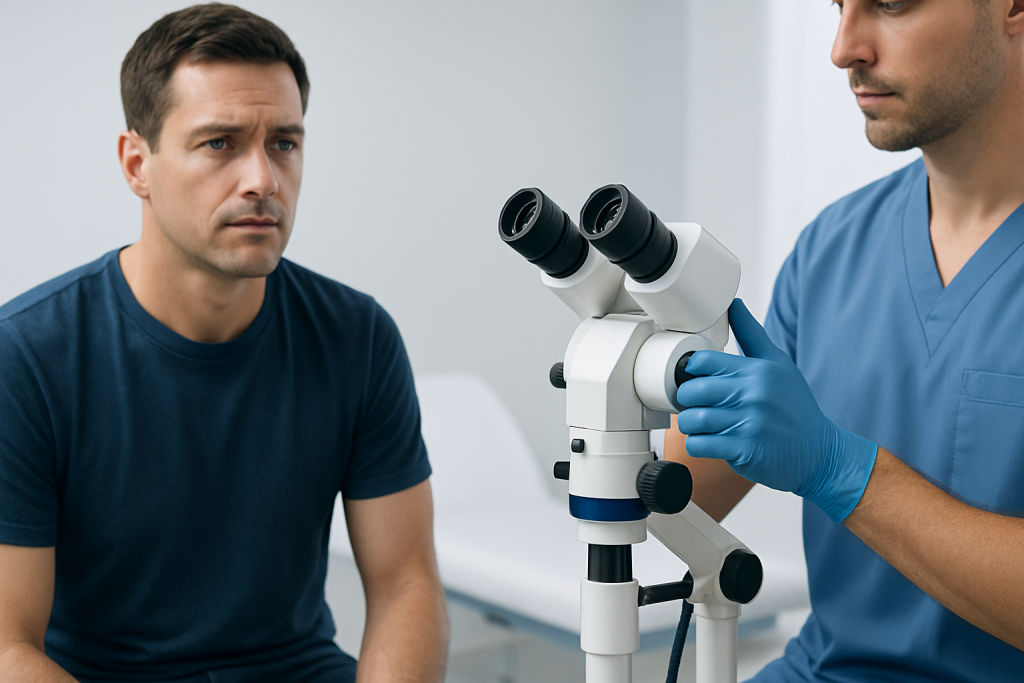
Most HPV infections in men do not cause noticeable symptoms. When symptoms do appear, they may be subtle at first and can be mistaken for other skin or irritation-related problems. A clinician may consider testing or further evaluation when a man reports new growths, persistent discomfort, or changes around the genitals or anus.
Common reasons for evaluation include:
- Small, flesh-colored, or cauliflower-like growths on the penis, scrotum, groin, or around the anus
- Itching, irritation, or mild bleeding in the affected area
- Anal pain, discharge, or a feeling of fullness
- Persistent lesions that do not improve or that look unusual
- A partner recently diagnosed with HPV-related disease
It is also possible to have HPV without any symptoms at all. That is one reason why a man may feel well and still have questions after exposure. A medical assessment helps determine whether the concern is likely to be HPV, another infection, or a noninfectious skin condition.
Causes and Risk Factors

HPV spreads mainly through intimate skin-to-skin contact, including sexual contact. Because the virus can live on areas not covered by condoms, transmission can occur even when barrier protection is used. This does not mean prevention is impossible; it means risk reduction works best when several strategies are combined.
Factors that may increase the chance of exposure or persistent infection include multiple sexual partners, a partner with known HPV, not being vaccinated, smoking, and having a weakened immune system. Men who have sex with men and men living with HIV may face a higher risk of anal HPV infection and related complications, which is why clinicians may take a more individualized approach to screening and follow-up.
Age can also matter. Younger adults may acquire HPV more easily because of exposure patterns, while older adults may seek testing later after a symptom appears. Even so, HPV is not limited to one age group, and a discussion with a qualified doctor is useful whenever a new lesion or concern develops.
How Testing Is Done
The exact procedure depends on what a clinician is trying to evaluate. There is no single universal screening test for all men in the way there is for some other infections. If visible warts are present, a diagnosis is often made by examination alone. If the concern involves the anal canal or another site, a swab-based sample or other targeted evaluation may be considered.
A typical appointment may begin with a review of symptoms, sexual history, previous STI diagnoses, vaccination status, and any immune-related conditions. The clinician may then examine the genital area, perianal skin, or anus. If sampling is appropriate, a swab may be gently collected from the affected site. In some situations, a biopsy of a suspicious lesion is more informative than a simple HPV test because it can show the type of tissue change directly.
The process is usually brief, and discomfort is often mild, though a sensitive area may feel awkward or tender. For men traveling for care, it helps to know in advance whether the visit will include visual examination, swabbing, or same-day treatment planning, since this can shape scheduling, recovery time, and the need for follow-up once back home.
What the Results Mean
HPV test results can be straightforward or limited by the site sampled and the type of test used. A positive result means HPV genetic material or related evidence was found in the sample. It does not automatically mean cancer is present, and it does not tell a man exactly when the infection was acquired.
A negative result means the test did not detect the virus in the sampled area. That can be reassuring, but it does not completely rule out HPV elsewhere in the body or an infection that is below the test’s detection level. If symptoms continue, the clinician may still recommend follow-up, because the clinical picture matters as much as the laboratory result.
Sometimes results are reported as inconclusive, limited, or difficult to interpret. This may happen if the sample is not adequate or if the lesion is better explained by another condition. In those cases, repeat evaluation, a different type of test, or a biopsy may be the next step. The result should always be understood alongside the physical exam and the reason testing was ordered in the first place.
Treatment Options
There is no treatment that removes HPV from the body immediately, but many infections improve over time as the immune system clears them. Treatment focuses on visible lesions, bothersome symptoms, and any tissue changes that require closer management. The approach is individualized rather than one-size-fits-all.
If genital warts are present, a clinician may recommend topical therapy, cryotherapy, cauterization, or removal in selected cases. For persistent or suspicious lesions, biopsy and further specialist care may be needed. If HPV-related changes are found in the anal area or another site, management may involve a urologist, dermatologist, colorectal specialist, infectious disease doctor, or oncologist depending on the findings.
People sometimes expect a positive test to lead directly to medication, but that is not always how HPV care works. Follow-up may be more important than immediate treatment, especially when the issue is monitoring, lesion control, or cancer prevention rather than symptom relief. Clear communication about what was found and what should happen next is a key part of good care.
Prevention and Self-care
Prevention begins with reducing exposure risk and supporting the immune system in everyday ways. HPV vaccination is one of the most effective tools available, and many men may still benefit from it depending on age and prior vaccination status. A doctor can help decide whether vaccination is appropriate.
Safer sex practices can lower risk, although they do not eliminate it completely. Condoms and dental dams may reduce exposure, and limiting the number of new partners can also help. Avoiding tobacco use is another meaningful step, since smoking is associated with poorer clearance of HPV and more persistent infection in general.
Self-care also means paying attention to the body without self-diagnosing. Men should avoid picking at lesions, sharing razors over affected skin, or using unprescribed creams on genital growths. If a partner has been diagnosed with HPV-related disease, it is reasonable to seek medical advice rather than waiting for symptoms to appear.
For men arranging care from another country, planning the next steps matters. It may help to ask how results will be shared, whether pathology or follow-up can be coordinated remotely, and what warning signs should prompt earlier review after returning home.
When to See a Doctor
A doctor should be consulted if a man notices new genital or anal growths, persistent itching, bleeding, pain, or any lesion that changes in size, color, or texture. Medical review is also appropriate if a partner has HPV-related disease, if there is a history of anal sex and new symptoms, or if the immune system is weakened for any reason.
Prompt evaluation is especially helpful when symptoms do not match a simple skin irritation or when a growth does not improve. Even when HPV is the likely explanation, it is best not to assume. Other infections and noninfectious conditions can look similar, and the right diagnosis guides the right treatment.
Acibadem Health Point’s multidisciplinary specialists and JCI-accredited hospitals diagnose and treat HPV-related conditions for international patients, with care that can be coordinated around testing, treatment, and follow-up needs. Men who are unsure whether they need testing can begin with a consultation and let the clinician determine the most appropriate next step.
Frequently asked questions
01Is there a routine HPV virus in men test for all men?
No, routine universal HPV screening for men is not commonly done. Testing is usually considered when there are symptoms, visible lesions, anal concerns, or another specific reason to evaluate the area.
02Can a man have HPV and not know it?
Yes. Many men with HPV have no symptoms at all, and the infection may clear without ever being noticed. That is why a normal feeling does not always mean there was no exposure.
03What happens if the HPV test is positive?
A positive result means HPV was detected in the sampled area, but it does not mean cancer is present. The next step depends on whether there are warts, suspicious lesions, or other findings that need treatment or monitoring.
04Does a negative test rule out HPV completely?
Not completely. A negative result only means HPV was not found in that specific sample, so infection elsewhere or a very small amount of virus may still be possible. Symptoms should still be evaluated if they continue.
05Can genital warts be diagnosed without a test?
Yes, often they can. Many genital warts are diagnosed by a doctor’s examination, and testing may not be necessary unless the diagnosis is uncertain or the lesion looks unusual.
06Is HPV testing painful for men?
Most testing, when needed, involves a swab or examination and is usually quick. Some men find the area sensitive or uncomfortable, but the procedure is generally well tolerated.
07How can men lower their HPV risk?
Vaccination, safer sex practices, and avoiding smoking can all help reduce risk. Regular medical follow-up is also important if symptoms appear or if a partner has been diagnosed with HPV-related disease.
This article is for general information only and is not a substitute for professional medical advice. Please consult a qualified doctor about your individual situation.
Oncology care in Turkey — second opinion and treatment plan
JCI-accredited · board-certified surgeons · reply within 24h
Add us as a Preferred Source to see more of our trusted health content across Google Search, AI Overviews and Discover.