How to Get Rid of Pink Eye: Treatments That Help

Key Takeaways
- How to get rid of pink eye depends on the cause — viral, bacterial, allergic, or irritant conjunctivitis are managed differently.
- Most viral pink eye resolves on its own; care focuses on comfort, hygiene, and protecting the other eye and household members.
- Antibiotic eye drops only help bacterial conjunctivitis and are prescribed by a clinician — they do nothing for viral or allergic causes.
- Cool compresses, preservative-free artificial tears, and pausing contact lens wear are widely recommended supportive steps.
- Severe pain, light sensitivity, blurred vision, or symptoms in a newborn are reasons to seek medical care the same day.
- Redness that lasts beyond a couple of weeks, keeps returning, or worsens on treatment deserves an ophthalmology assessment.
Pink eye (conjunctivitis) is inflammation of the clear membrane covering the white of the eye, and the right approach depends entirely on what is causing it. This guide explains the main treatment paths, safe comfort measures at home, how to avoid spreading it, and the warning signs that mean an eye doctor should be seen promptly.
Overview: Why the Cause Determines the Cure
Pink eye, known medically as conjunctivitis, is inflammation of the conjunctiva — the thin, transparent membrane that lines the inside of the eyelids and covers the white part of the eye. When the tiny blood vessels in that membrane become irritated and swollen, they become more visible, giving the eye its characteristic pink or red appearance. It is one of the most common eye complaints worldwide and, in the majority of cases, it is uncomfortable rather than dangerous.
The single most useful thing to understand about how to get rid of pink eye is that there is no one-size-fits-all remedy. Conjunctivitis is a description of what the eye looks like, not a diagnosis of what caused it. The four broad categories — viral, bacterial, allergic, and irritant or chemical — respond to completely different approaches. Using the wrong treatment, such as leftover antibiotic drops for an allergic flare, generally does not help and can delay the care that would actually work.
Because the eye is a delicate organ, self-diagnosis has limits. Several more serious conditions — including corneal inflammation, iritis, and acute glaucoma — can also produce a red eye, and they require urgent, different management. A clinician can usually distinguish these quickly with a proper examination, which is why persistent, painful, or vision-affecting redness should always be assessed rather than treated blindly at home.
How to Get Rid of Pink Eye: Matching Treatment to the Cause
Once a clinician identifies the likely cause, the treatment plan follows logically. Understanding these paths in advance helps patients ask better questions at the appointment and set realistic expectations for recovery.
- Viral conjunctivitis — the most common form, often linked to the same viruses that cause colds. There is usually no specific antiviral medicine for routine cases. Care is supportive: cool compresses, lubricating drops, rest, and strict hygiene while the immune system clears the infection. Symptoms often peak in the first few days and then gradually settle, though the timeline varies from person to person.
- Bacterial conjunctivitis — typically produces thicker, stickier discharge and eyelids that crust together. A doctor may prescribe topical antibiotic drops or ointment when the picture suggests a bacterial cause or when symptoms are not improving. Milder cases sometimes settle without antibiotics, so the decision is individualized.
- Allergic conjunctivitis — driven by pollen, dust mites, pet dander, or cosmetics, and usually intensely itchy and affecting both eyes. Management centers on avoiding the trigger where possible, cool compresses, and antihistamine or mast-cell-stabilizing eye drops chosen by a clinician or pharmacist.
- Irritant or chemical conjunctivitis — caused by smoke, chlorine, wind, or a splashed substance. The first response is usually gentle, prolonged flushing with clean water or saline; chemical exposures, especially to strong acids or alkalis, are an emergency.
Antibiotics are not a general remedy for red eyes. They target bacteria only, and prescribing them unnecessarily contributes to antibiotic resistance without speeding recovery from a viral infection. Similarly, steroid eye drops are sometimes used for specific inflammatory situations but can be harmful if used inappropriately — for example, in an undiagnosed herpes infection of the eye. These medicines belong under professional supervision.
Patients often ask whether anything can shorten the illness. Honest guidance is that supportive care improves comfort and lowers the chance of complications and transmission, but no over-the-counter product reliably cures viral conjunctivitis. Patience, hygiene, and follow-up if things are not improving remain the mainstays.
Safe Comfort Measures at Home

Whatever the underlying cause, several simple measures make the days of recovery more tolerable. Cool compresses — a clean, damp washcloth laid gently over closed eyelids — reduce the sensation of heat, swelling, and itch. A separate cloth should be used for each eye and laundered after every use to avoid moving infection from one side to the other. Some people with sticky, crusted lids find a warm compress more soothing; either is acceptable as long as the cloth is clean and the temperature is comfortable.
Preservative-free artificial tears, available over the counter, help wash away irritants and relieve the gritty, sandy feeling many patients describe. The dropper tip should never touch the eye, eyelid, or fingers, and bottles should not be shared with anyone else. Decongestant “redness-removing” drops that whiten the eye are best avoided for ongoing use, as they can cause rebound redness once stopped and may mask a problem that needs assessment.
Contact lens wearers should stop wearing lenses until an eye care professional confirms it is safe to resume. Lenses can trap organisms against the cornea and turn a straightforward conjunctivitis into a more serious corneal infection. Daily disposables used during the illness should be discarded, and reusable lenses and cases usually need thorough disinfection or replacement. Eye makeup used around the time symptoms started is generally best thrown away as well.
- Wash hands thoroughly before and after touching the eyes or applying drops.
- Use clean tissues rather than fingers to wipe discharge, and dispose of them immediately.
- Do not use homemade rinses, breast milk, urine, or herbal preparations in the eye — these are not sterile and can introduce infection.
- Sunglasses can ease light sensitivity outdoors while the eye recovers.
Stopping the Spread at Home, School, and Work
Viral and bacterial conjunctivitis can be highly contagious, spreading through direct contact with eye secretions or with contaminated surfaces and objects. The virus can survive on doorknobs, phones, and towels, which is why hygiene measures matter as much as any medicine. Frequent handwashing with soap and water, particularly after touching the face, is the most effective single step.
Household members benefit from using separate towels, washcloths, and pillowcases, changed frequently during the illness. Shared items such as eye drops, makeup, goggles, and pillows should not be passed around. Wiping down commonly touched surfaces with a standard household disinfectant reduces environmental spread. Many people find the infection travels from one eye to the other within a day or two; careful separation of cloths and diligent handwashing can reduce that risk.
Policies for returning to school or work vary by state, district, and employer. Many settings ask that children stay home while there is significant discharge, or until a clinician advises return, particularly if antibiotic treatment has been started. Because guidance differs, families are encouraged to check with the school nurse or occupational health department rather than assume. Healthcare workers, food handlers, and anyone in close-contact roles should follow their workplace protocol.
What Is Normal Healing — and What Is Not
Normal recovery generally involves gradually decreasing redness, less discharge each morning, and improving comfort. A mild scratchy sensation, watering, and slight blurring that clears when the patient blinks away discharge are typical. Viral conjunctivitis sometimes seems to get slightly worse before it improves, and the second eye may become involved shortly after the first; neither is automatically a sign of failure of treatment.
What is not typical is significant pain rather than irritation, sensitivity to light that makes it hard to keep the eye open, or vision that is genuinely reduced and does not clear with blinking. These features suggest that structures beyond the conjunctiva — particularly the cornea or the inside of the eye — may be involved. Likewise, marked swelling of the eyelids and surrounding skin, fever, or a red, tender area spreading onto the cheek or forehead needs same-day medical attention.
Redness that lingers beyond a couple of weeks, or that keeps coming back, warrants a fuller evaluation. Chronic or recurrent conjunctivitis can point to underlying dry eye disease, blepharitis (inflammation of the eyelid margins), an untreated allergy, a blocked tear duct, or an ongoing exposure at home or work. In these situations, treating the root cause is far more effective than repeated courses of drops.
Diagnosis: What Happens at the Eye Appointment
For most patients, diagnosis is clinical. The doctor asks about how symptoms started, whether one or both eyes are affected, the nature of any discharge, contact lens use, recent illness or exposure to someone with red eyes, allergies, and any injury or chemical splash. This history alone often narrows the cause considerably.
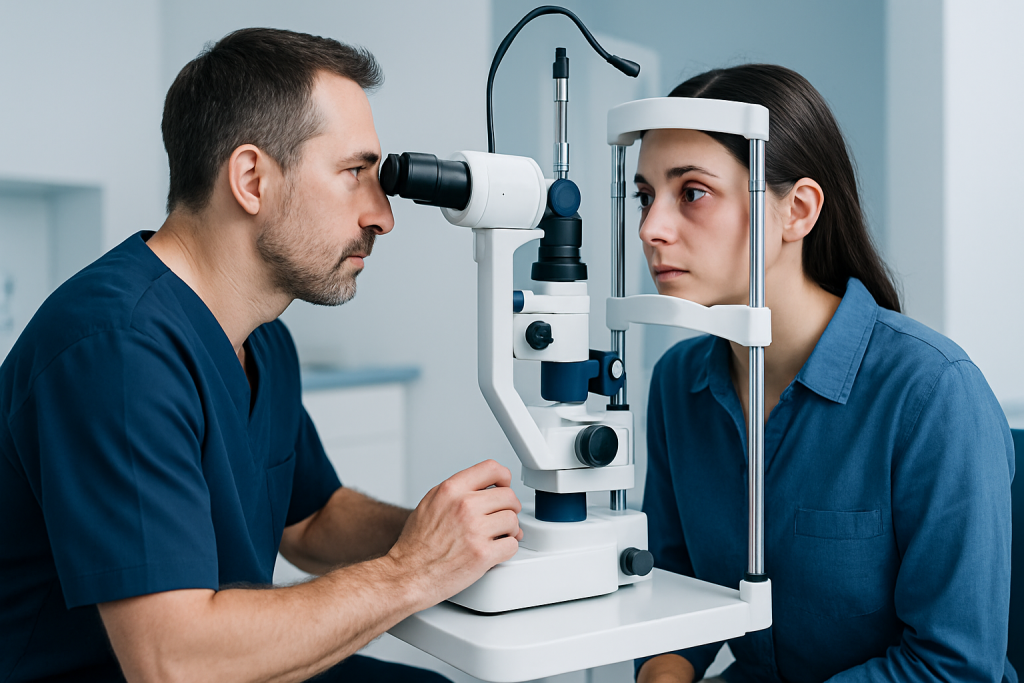
The examination usually includes checking visual acuity, inspecting the eyelids and conjunctiva, and looking at the eye under magnification with a slit lamp. A drop of fluorescein dye may be used to highlight any scratches or ulcers on the corneal surface. In selected cases — severe, unusually persistent, recurrent, or newborn conjunctivitis — a swab may be taken for laboratory testing to identify the organism responsible.
Patients traveling abroad for care, or seeking clarity on an eye problem that has not settled at home, sometimes look for a specialist second opinion. Acibadem Health Point coordinates access to the multidisciplinary ophthalmology teams and JCI-accredited hospitals of Acıbadem Healthcare Group for international patients, arranging video consultations, appointment scheduling, interpreter support, travel and accommodation guidance, indicative cost planning, and follow-up communication after returning home. Any recommendations, of course, come from the treating physician after a proper examination.
When to See a Doctor
Many mild cases of pink eye can be managed at home with hygiene and comfort measures, but certain circumstances call for prompt professional assessment. Seeking care early is particularly sensible for contact lens wearers, people with weakened immune systems, and anyone with a history of eye surgery or eye disease.
- Moderate or severe eye pain, rather than mild irritation.
- Blurred or reduced vision, halos around lights, or marked sensitivity to light.
- Intense redness confined to one part of the eye, or a red eye following injury or a chemical splash.
- Thick discharge that persists, or symptoms that worsen despite a few days of treatment.
- Red eyes in a newborn or young infant — this always needs same-day medical review.
- Recurrent episodes, or redness lasting more than about two weeks.
Emergency care is appropriate for a chemical burn to the eye, sudden vision loss, or a red eye accompanied by severe headache, nausea, and vomiting. When in doubt, an eye examination is quick, painless, and far preferable to guessing. A pharmacist can also offer helpful triage advice about over-the-counter options and whether a doctor’s visit is warranted.
Prevention and Long-Term Eye Comfort
Prevention largely mirrors the hygiene advice used during an active infection. Regular handwashing, avoiding rubbing the eyes, not sharing towels or cosmetics, replacing eye makeup periodically, and following contact lens care instructions precisely — including never sleeping in lenses unless specifically approved and never rinsing lenses in tap water — all lower risk substantially. Protective eyewear during swimming, DIY projects, and work with chemicals or dust prevents many irritant cases.
For people whose pink eye is allergic, prevention means managing exposure: monitoring pollen counts, keeping windows closed during high-pollen periods, showering after time outdoors, using dust-mite covers on bedding, and discussing longer-term allergy control with a clinician. Treating associated conditions such as dry eye or blepharitis, often with regular lid hygiene and lubricating drops, reduces the background irritation that makes eyes vulnerable.
Finally, routine eye examinations are worthwhile even for people with no symptoms. They allow early detection of conditions that may present with redness or discomfort and give patients a professional relationship to turn to when something does go wrong. General advice in an article can never replace an individual assessment, and anyone unsure about their symptoms should speak with a qualified doctor or eye care professional.
Frequently asked questions
01How long does pink eye usually last?
The duration varies with the cause and the individual. Viral conjunctivitis commonly improves gradually over one to two weeks, sometimes appearing to worsen in the first few days before settling, while bacterial cases often improve sooner once appropriate treatment begins. Allergic conjunctivitis tends to persist as long as the trigger is present. Any redness lasting beyond about two weeks should be assessed by a doctor.
02Do I need antibiotic eye drops for pink eye?
Not usually. Antibiotic drops work only against bacterial conjunctivitis, and many red eyes are viral or allergic, where antibiotics offer no benefit. A clinician decides based on the pattern of symptoms and examination findings. Using leftover or borrowed drops is discouraged because it can delay correct treatment and contribute to antibiotic resistance.
03Can pink eye clear up on its own without treatment?
Many mild cases, particularly viral ones, do resolve without specific medication as the immune system clears the infection. Supportive care such as cool compresses, lubricating drops, and hygiene helps with comfort and reduces spread. However, symptoms involving pain, light sensitivity, or changed vision are not ones to wait out — those need prompt evaluation.
04Is pink eye contagious, and for how long?
Viral and bacterial conjunctivitis can be contagious, spreading through contact with eye secretions or contaminated surfaces and objects. Contagiousness generally continues while the eye is watering or discharging, and it can persist for some days. Allergic and irritant conjunctivitis are not contagious. School and workplace return policies differ, so it is best to check locally.
05Can I wear contact lenses while I have pink eye?
Contact lens wear should be paused until an eye care professional confirms it is safe to restart. Lenses can trap organisms against the cornea and raise the risk of a more serious corneal infection. Daily disposables worn during the illness should be discarded, and reusable lenses and cases usually require thorough disinfection or replacement.
06What home remedies are safe for pink eye?
Clean cool or warm compresses, preservative-free artificial tears, careful handwashing, and separate towels are safe and widely recommended supportive measures. Homemade rinses, breast milk, herbal drops, and unsterile solutions should not be placed in the eye, as they are not sterile and may introduce infection. Redness-removing decongestant drops are best avoided for prolonged use.
07When is pink eye an emergency?
Seek urgent care for a chemical splash to the eye, sudden vision loss, severe eye pain, or a red eye with intense headache, nausea, and vomiting. Red eyes in a newborn also require same-day medical review. In these situations, prompt professional assessment matters more than home treatment.
This article is for general information only and is not a substitute for professional medical advice. Please consult a qualified doctor about your individual situation.
Explore treatments in Turkey — costs, top hospitals & a free quote
JCI-accredited · board-certified surgeons · reply within 24h
Add us as a Preferred Source to see more of our trusted health content across Google Search, AI Overviews and Discover.