How Much Is Private Cataract Surgery and What Affects It?
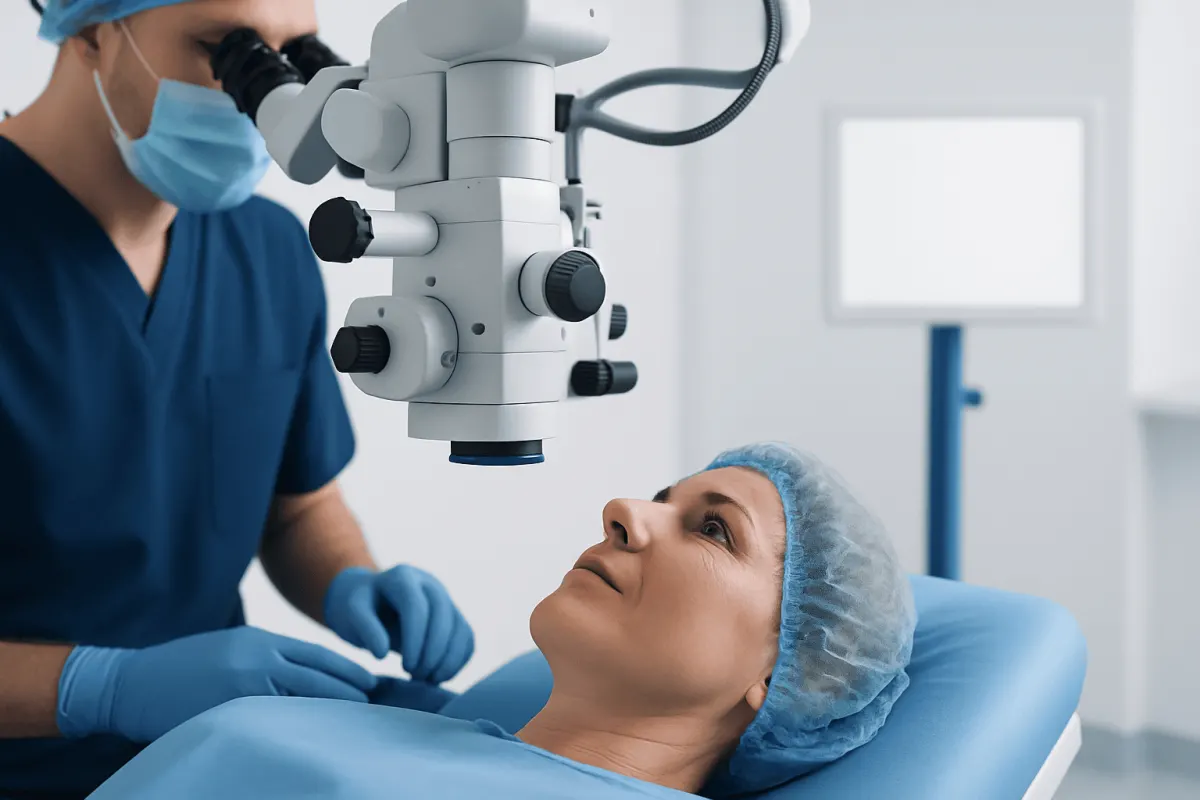
Private cataract surgery costs vary widely, so there is no single reliable price that applies to every patient. The total depends on the country and hospital, the type of artificial lens selected, whether one or both eyes are treated, and what is included before and after surgery.
Private cataract surgery costs: the answer in brief
How much is private cataract surgery? There is no single accurate figure because prices differ substantially between countries, hospitals and individual treatment plans. A private estimate commonly reflects the surgeon’s fee, operating facility, anaesthesia, lens implant, pre-operative measurements, medicines and follow-up appointments, but the exact inclusions vary.
The most useful way to compare options is not to focus only on the headline price. Patients should request a written, itemised estimate for each eye and ask whether it covers the chosen lens, diagnostic testing, surgery, routine aftercare, treatment of unexpected complications and any later laser procedure that may be needed.
A cataract is a clouding of the eye’s natural lens. It can gradually make vision hazy, colours less vivid and glare from sunlight or headlights more troublesome. Cataract surgery is the only treatment that removes the cloudy lens and replaces it with an artificial intraocular lens, or IOL.
What changes the price of private cataract surgery?
The location of treatment is an important factor. Healthcare systems, hospital charges, staffing, operating-room standards, local regulations and currency all influence private fees. Costs can also differ between clinics in the same city, so an estimate should be considered in the context of the services and clinical support provided.
Lens choice often has a major effect on the patient’s personal expense. A monofocal IOL is designed mainly for clear vision at one distance, often far away, while reading glasses may still be needed. Some patients consider premium lens designs, such as toric lenses for astigmatism or multifocal and extended-depth-of-focus lenses intended to reduce reliance on glasses. These options are not suitable for everyone and may involve additional cost.
Other practical factors include whether surgery is planned for one eye or both eyes, the complexity of the cataract, coexisting eye conditions, the type of anaesthesia, and the number of appointments needed. Patients travelling internationally should also budget separately for travel, accommodation, interpreters if required, insurance and enough time for post-operative reviews.
- Ask whether the quote is per eye or for both eyes.
- Confirm which IOL is included and whether lens upgrades cost extra.
- Check whether pre-operative scans, eye drops and follow-up visits are included.
- Ask what arrangements apply if further treatment is clinically needed.
How cataract surgery works and who may benefit

During cataract surgery, the surgeon removes the clouded natural lens and inserts an artificial lens inside the lens capsule. The most common technique uses ultrasound energy through a very small incision to break up and remove the cataract. This is often called phacoemulsification.
People may be candidates when cataract-related vision changes interfere with everyday life, such as reading, driving, working, recognising faces or managing stairs safely. A cataract does not need to be “ripe” before it can be treated. The timing is usually based on symptoms, eye examination findings and the person’s goals rather than age alone.
An ophthalmologist will also consider the health of the retina, optic nerve and cornea. Conditions such as glaucoma, macular degeneration, diabetic eye disease or previous eye surgery can affect expected visual improvement and lens selection. A full assessment helps establish whether the cataract is the main cause of reduced sight. Patients can learn more about cataract surgery and the evaluation used to plan it.
What happens before, during and after the procedure?
Before surgery, the eye team measures the eye to calculate the strength and type of IOL. The patient discusses visual priorities, such as distance driving, screen use, close reading and tolerance of glasses. Existing medicines, allergies and health conditions are reviewed, and the team gives instructions about eating, drinking and eye drops where relevant.
Cataract surgery is usually performed as an outpatient procedure. Numbing drops or local anaesthesia are commonly used, sometimes with medication to help the patient relax. The surgeon makes a small opening, removes the cloudy lens material and places the IOL. The procedure itself is often relatively short, although the overall appointment is longer because of preparation and recovery checks.
After surgery, vision may be blurred initially but commonly improves over days to weeks. Drops are prescribed to support healing and lower the chance of infection or inflammation. The eye team will advise on bathing, rubbing the eye, driving, work, exercise and attending follow-up visits. The second eye, if needed, is generally treated at a separate time chosen by the surgeon and patient.
Benefits, recovery and possible risks
The main expected benefit is clearer vision when the cataract is the primary cause of sight problems. Many people notice reduced glare and improved contrast or colour perception. However, the degree of improvement depends on the health of the rest of the eye, and glasses may still be needed after surgery for reading, intermediate tasks or fine visual adjustment.
Mild scratchiness, watery eyes, light sensitivity and fluctuating vision can occur during early recovery. The biggest complaint after cataract surgery is often temporary blurred or fluctuating vision, sometimes accompanied by dryness, glare or halos around lights. These symptoms frequently improve as the eye heals, but persistent or troubling symptoms should be discussed at follow-up.
Cataract surgery is commonly successful, but all surgery carries risk. Possible complications include infection, inflammation, raised eye pressure, swelling at the back of the eye, retinal detachment, lens-position problems and changes in vision. Some people later develop clouding of the lens capsule, sometimes called a secondary cataract, which can often be treated with a laser procedure. The surgeon can explain personal risks and expected benefits before consent.
What is the average out of pocket cost for cataract surgery?
There is no meaningful global average out-of-pocket cost for cataract surgery because insurance rules, public funding, provider fees and lens choices differ widely. An amount quoted in one country or health system may not apply in another, even for the same procedure.
Out-of-pocket spending may be limited when medically necessary surgery is covered by insurance or a public health programme and the patient uses an approved provider. It may be higher when a person chooses private care, receives care outside their coverage network, has a deductible or co-payment, or selects an elective premium IOL feature not covered by their plan.
Before booking, patients should ask both the insurer and the clinic for written clarification. Important questions include whether the procedure, facility, anaesthesia, lens, tests and follow-up are covered; what personal contribution remains; and whether there are exclusions for astigmatism-correcting or presbyopia-correcting lenses.
Does Medicare pay for 100% of cataract surgery?
In the United States, Medicare coverage for cataract surgery depends on the person’s plan, the clinical indication, the provider and the services received. Original Medicare generally covers medically necessary cataract surgery and a conventional intraocular lens when eligibility and billing requirements are met, but it does not automatically mean that every related cost is paid in full.
Deductibles, coinsurance and other patient responsibilities may still apply. Medicare Supplement coverage, Medicare Advantage plan rules, provider network status and additional services can also affect what an individual pays. Premium lens features or services intended mainly to reduce dependence on glasses may create additional out-of-pocket costs.
Because coverage details can change and differ by plan, patients should contact Medicare, their plan administrator and the ophthalmology billing team before surgery. They should ask for a personalised estimate rather than relying on general coverage information online.
Is it worth paying extra for cataract surgery?
Paying extra may be worthwhile for some people, but it is a personal decision rather than a medical requirement. The relevant question is whether a particular lens or service is likely to meet the patient’s visual goals, suits the eye’s health and is affordable within their own circumstances.
For example, a toric IOL may help some people with significant corneal astigmatism. Multifocal or extended-depth-of-focus lenses can reduce glasses dependence for selected patients, but they may also be associated with visual effects such as halos or reduced contrast in some settings. A standard monofocal lens remains an effective option for many people.
A balanced discussion with the ophthalmologist should cover expected glasses use, night-driving needs, hobbies, eye disease, risks, adaptation and total costs. Choosing a more expensive lens does not guarantee perfect vision or freedom from glasses, and the best option is the one aligned with realistic expectations.
When to seek medical care
An eye examination should be arranged when gradually worsening blur, glare, difficulty driving at night, fading colours or frequent changes in glasses prescription begin to affect daily activities. These symptoms may be caused by cataracts, but other eye conditions also need to be considered.
Urgent eye care is important for sudden loss of vision, a curtain or shadow in vision, new flashes with many floaters, severe eye pain, marked redness, nausea with eye pain, or rapid worsening after surgery. These symptoms can have several causes and should not be managed by waiting for a routine appointment.
For international patients, Acıbadem Health Point’s multidisciplinary specialists and JCI-accredited hospitals can assess cataracts and discuss appropriate treatment plans. A consultation should provide individual advice on eye health, lens options, recovery and the full expected care pathway.
Frequently asked questions
01What is the biggest complaint after cataract surgery?
A common complaint is temporarily blurred or fluctuating vision while the eye heals. Dryness, light sensitivity, glare and halos around lights can also occur, particularly in the early recovery period. Symptoms that are severe, worsening or accompanied by pain or increasing redness should be assessed promptly.
02What is the average out of pocket cost for cataract surgery?
There is no single average that is reliable across countries or insurance systems. Personal costs depend on coverage, provider network, deductibles, facility fees, the lens implant and elective upgrades. A written estimate from the clinic and confirmation from the insurer provide the most useful answer.
03Does Medicare pay for 100% of cataract surgery?
Medicare may cover medically necessary cataract surgery when its requirements are met, but it does not necessarily pay every cost in full. Deductibles, coinsurance, plan rules and elective premium lens features may leave an out-of-pocket balance. Patients should confirm coverage with their specific plan before treatment.
04Is it worth paying extra for cataract surgery?
It can be worthwhile when an additional lens feature is appropriate for the person’s eyes, visual needs and budget. Premium lenses may reduce dependence on glasses for some patients, but they can have trade-offs and do not guarantee glasses-free vision. An ophthalmologist can help compare options realistically.
05How long does cataract surgery recovery take?
Many people notice visual improvement within days, but vision can continue to settle over several weeks. The exact timeline depends on the eye, the procedure and any coexisting conditions. Follow-up appointments and prescribed eye drops are important parts of recovery.
06Can cataracts come back after surgery?
The removed natural lens cannot grow back, so the original cataract does not return. However, the thin capsule supporting the artificial lens can become cloudy months or years later. This is often treatable with a brief laser procedure when it affects vision.
This article is for general information only and is not a substitute for professional medical advice. Please consult a qualified doctor about your individual situation.
Explore treatments in Turkey — costs, top hospitals & a free quote
JCI-accredited · board-certified surgeons · reply within 24h
Add us as a Preferred Source to see more of our trusted health content across Google Search, AI Overviews and Discover.