How Long Does a High Ankle Sprain Take to Heal?
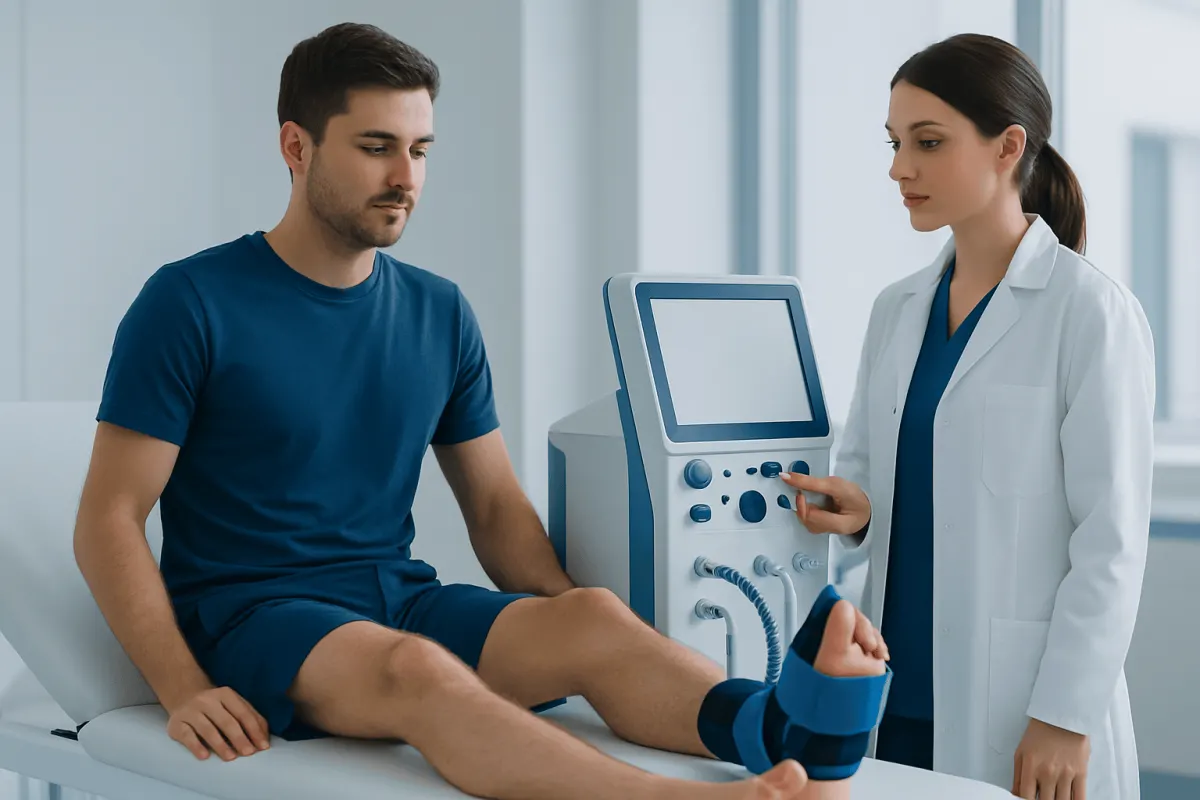
High ankle sprain recovery time is commonly around 6 to 12 weeks, although mild stable injuries may improve sooner and severe or unstable injuries can require several months of rehabilitation. A careful diagnosis and a gradual return to walking, exercise and sport help protect the ankle’s connecting ligaments while they heal.
Overview: what determines high ankle sprain recovery time?
A high ankle sprain is an injury to the syndesmosis: a group of strong ligaments that connect the shin bones, the tibia and fibula, just above the ankle joint. It often happens when the foot turns outward or upward while the lower leg rotates, such as during a tackle, a fall, a pivot or a twisting injury. Unlike a common lateral ankle sprain, which affects ligaments on the outside of the ankle, a syndesmotic sprain can make push-off, stairs and turning particularly uncomfortable.
High ankle sprain recovery time is usually about 6 to 12 weeks for a stable injury managed without surgery. The actual timeline varies with the severity of ligament damage, whether the ankle joint remains stable, associated cartilage or bone injuries, the demands of work or sport, and adherence to rehabilitation. Some people regain comfortable daily walking earlier, while a safe return to running, cutting and contact sport may take considerably longer.
Early assessment matters because treatment differs when the syndesmosis is unstable. An orthopedic examination and imaging can clarify the injury and guide a plan that protects healing tissues while maintaining as much safe movement and strength as possible.
Symptoms and injury grades
Symptoms may begin above the ankle rather than directly over the outside ankle bone. Pain may be felt in the front of the ankle or between the lower shin bones, and it can increase when the foot is pushed upward, rotated outward, or used to push off the ground. Swelling and bruising may occur, but they are sometimes less obvious than with other ankle sprains.
Clinicians may describe syndesmotic sprains as Grade 1, Grade 2 or Grade 3. A Grade 1 injury generally involves stretching or a partial injury to the ligaments without joint instability. Grade 2 injuries involve more substantial partial tearing and may be stable or unstable. Grade 3 injuries usually involve complete disruption of key syndesmotic ligaments and may cause widening or instability of the ankle joint.
Symptoms alone cannot reliably determine the grade. A person with a painful but stable injury may need conservative care, whereas an unstable injury can require surgical stabilization to restore proper alignment of the ankle joint.
- Pain above the ankle, especially with twisting or pushing off
- Difficulty walking, climbing stairs, running or changing direction
- Tenderness between the tibia and fibula
- Swelling, bruising or a feeling that the ankle is unstable
- Pain that persists longer than expected after an apparent ankle sprain
Diagnosis and deciding whether surgery is needed
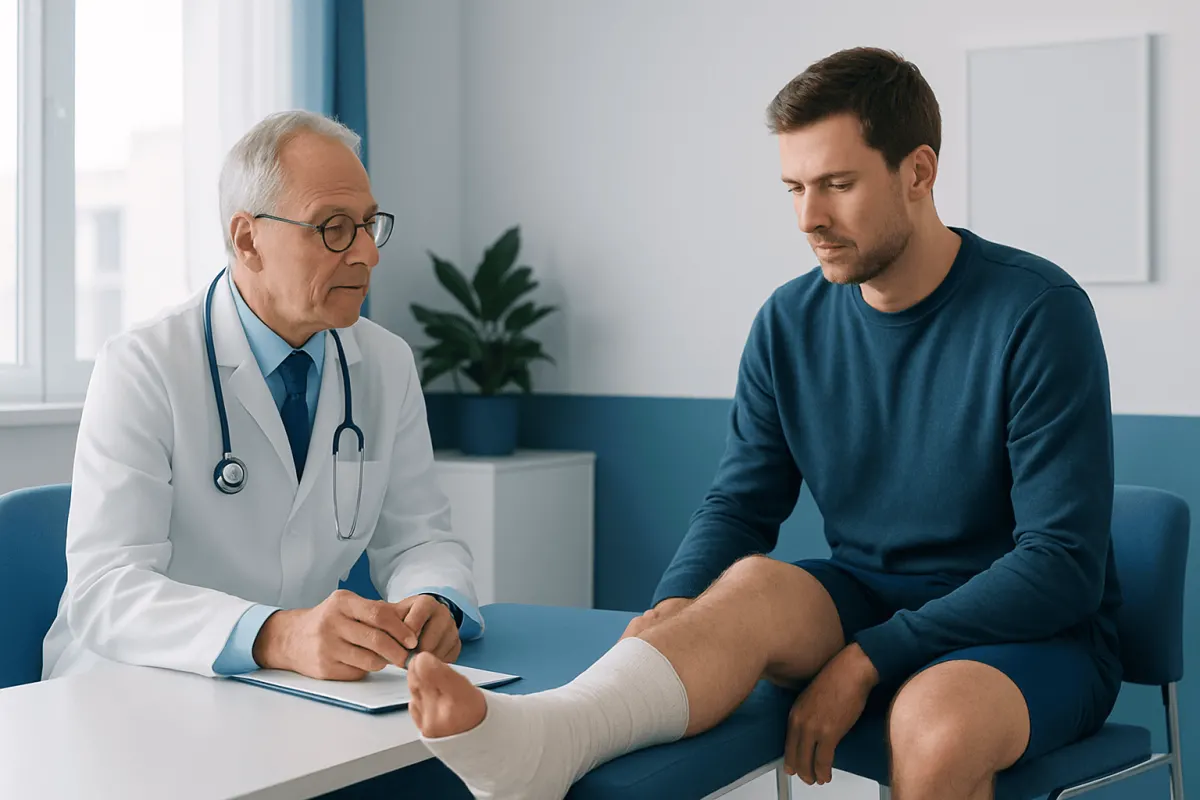
A clinician will ask how the injury happened, assess swelling and tenderness, and check ankle motion, strength and stability. Gentle stress tests may reproduce syndesmotic pain. The examination also considers the foot, lower leg and knee, since related injuries can occur with a significant twisting force.
Standard X-rays may be used to look for fractures and to assess the relationship between the tibia and fibula. However, a normal X-ray does not exclude a ligament injury. Depending on the findings, weight-bearing or stress X-rays, ultrasound, magnetic resonance imaging (MRI) or computed tomography (CT) may help identify ligament damage, cartilage injury or subtle instability.
Stable sprains are generally candidates for non-surgical treatment. Surgery may be considered when imaging or examination shows an unstable syndesmosis, a displaced fracture, persistent widening of the joint, or a severe injury in which the bones cannot remain correctly aligned during healing. The goal is not simply to reduce pain; it is to preserve normal ankle mechanics and lower the risk of ongoing instability.
Treatment options: how care works step by step
For a stable high ankle sprain, treatment usually begins by reducing stress across the syndesmosis. This may involve a walking boot, brace, taping or temporary crutches, depending on pain and the clinician’s assessment. Rest from pivoting, running and impact activities is important in the early stage. Elevation and cold packs may help with symptoms, while suitable pain relief should be discussed with a healthcare professional.
Once pain and swelling begin to settle, rehabilitation progresses in stages. A physiotherapist may introduce gentle range-of-motion exercises, then calf and lower-leg strengthening, balance work, gait retraining and activity-specific drills. The plan is adjusted according to symptoms, stability and functional tests rather than a fixed calendar alone. This structured approach is a central part of orthopedic care for ankle ligament injuries.
If surgical stabilization is required, the procedure is usually performed under anesthesia. The surgeon aligns the tibia and fibula and uses specialized fixation, such as screws or a flexible fixation device, to hold the syndesmosis in the correct position while ligaments heal. After surgery, there is typically a period of protection from weight-bearing, followed by guided rehabilitation. Benefits include restoration of stability in appropriately selected injuries; risks can include infection, stiffness, blood clots, nerve or blood-vessel injury, persistent pain, hardware-related symptoms and the possible need for further procedures.
At Acıbadem Health Point, multidisciplinary orthopedic specialists in JCI-accredited hospitals assess and treat ankle injuries for international patients, with rehabilitation planning tailored to the person’s injury and goals.
Week-by-week high ankle sprain recovery timeline
Days 1 to 7: The priority is protection and diagnosis. Walking may be painful, and some people need crutches or a boot. The ankle should not be tested through twisting, running or jumping. A clinician can determine whether weight-bearing is safe and whether imaging is needed.
Weeks 2 to 3: For a stable, milder injury, pain and swelling may begin to improve. The person may gradually increase weight-bearing as advised and start controlled mobility work. Normal walking is not a requirement at this point; limping or increased pain signals that activity may be progressing too quickly.
Weeks 4 to 6: Many people with uncomplicated stable injuries can work toward full, comfortable walking and more focused strengthening and balance exercises. Low-impact conditioning may be introduced when it does not provoke symptoms. Running is usually delayed until walking, calf raises and basic balance tasks can be completed without pain or a limp.
Weeks 6 to 12: Higher-level rehabilitation can include jogging, hopping, agility drills and sport- or work-specific movements. Return to pivoting or contact activities should be based on strength, balance, confidence and functional testing, with no significant pain or swelling after activity. Severe injuries and those treated surgically often follow a longer, individualized schedule.
Protecting recovery and preventing another injury
Returning too early is a common reason for lingering symptoms. Pain medicines can make activity feel easier, but they do not mean the ligament has regained full tolerance for twisting and impact. Progression is generally safest when daily walking is comfortable, swelling is controlled, ankle movement is improving and exercises do not cause a next-day increase in pain.
Rehabilitation usually includes restoring ankle flexibility, strengthening the calf, foot and hip muscles, and improving balance and coordination. These elements help the body control rotation at the ankle during uneven-ground walking, landing and changes of direction. A brace or taping may be recommended temporarily for higher-risk activity, especially during the transition back to sport.
Supportive footwear, a gradual training increase and attention to fatigue can also reduce reinjury risk. Anyone who has repeated ankle sprains, ongoing giving-way or trouble returning to usual activities should be reassessed rather than continuing to train through symptoms.
When to seek medical care
Medical assessment is recommended after a significant ankle twist when there is pain above the ankle, inability to take several steps, marked swelling, deformity, numbness, or pain over the bones of the ankle or lower leg. Urgent care is appropriate if the foot becomes cold, pale or blue, there is an obvious deformity, severe uncontrolled pain, or concern for an open injury.
A person should also arrange a review if ankle pain does not steadily improve over several days, walking remains difficult, the ankle feels unstable, or symptoms return when rehabilitation advances. These concerns can indicate a more significant syndesmotic injury, fracture, cartilage injury or another condition requiring different management.
For athletes and physically demanding workers, a clinician or physiotherapist can help determine readiness to return. This decision should be based on examination and functional ability, not only on the number of weeks since injury.
Frequently asked questions
01Can a high ankle sprain heal in a week?
A high ankle sprain rarely heals fully in one week. Mild symptoms may improve during the first week, but the syndesmotic ligaments typically need several weeks to regain enough strength for normal walking, exercise and twisting movements. Returning to sport after only one week can raise the risk of reinjury unless a clinician has confirmed a very minor injury and cleared activity.
02What does a Grade 2 high ankle sprain look like?
A Grade 2 high ankle sprain usually involves a more significant partial tear of the syndesmotic ligaments. The ankle may be painful above the joint, swollen and difficult to use for push-off, turning, stairs or running. It is not always visibly dramatic, and imaging plus a clinical examination are needed to determine whether the injury is stable or unstable.
03How long does a high ankle sprain take to heal in the NFL?
Professional athletes may return sooner or later than the general timeline because their injuries differ and they have intensive medical supervision and rehabilitation. A stable injury may allow return in several weeks, while a severe or surgically treated injury can keep an athlete out for months. The same principles apply to everyone: return should follow restored function and ankle stability rather than a predicted date.
04When can I walk after a high ankle sprain?
Some people can walk carefully soon after a mild stable injury, while others need crutches or a walking boot for a period of time. Weight-bearing should increase only as advised by the treating clinician and as pain allows without a worsening limp. An unstable injury or one treated surgically may require a longer period without weight-bearing.
05Why does a high ankle sprain take longer to heal than a regular ankle sprain?
The syndesmotic ligaments are stressed every time the leg moves over the foot during walking, climbing and push-off. They also help keep the tibia and fibula properly aligned at the ankle, so twisting and impact may continue to irritate the area during recovery. This can make rehabilitation slower than with many common outer-ankle sprains.
06Is surgery always needed for a high ankle sprain?
No. Many high ankle sprains are stable and improve with protection, temporary activity modification and rehabilitation. Surgery is generally reserved for unstable injuries, certain associated fractures, or cases where the bones cannot maintain proper alignment. An orthopedic clinician uses the examination and imaging findings to recommend the most appropriate treatment.
This article is for general information only and is not a substitute for professional medical advice. Please consult a qualified doctor about your individual situation.
Joint and spine care in Turkey — expert assessment & treatment
JCI-accredited · board-certified surgeons · reply within 24h
Add us as a Preferred Source to see more of our trusted health content across Google Search, AI Overviews and Discover.