How Do Hair Grafts Work After Transplantation?
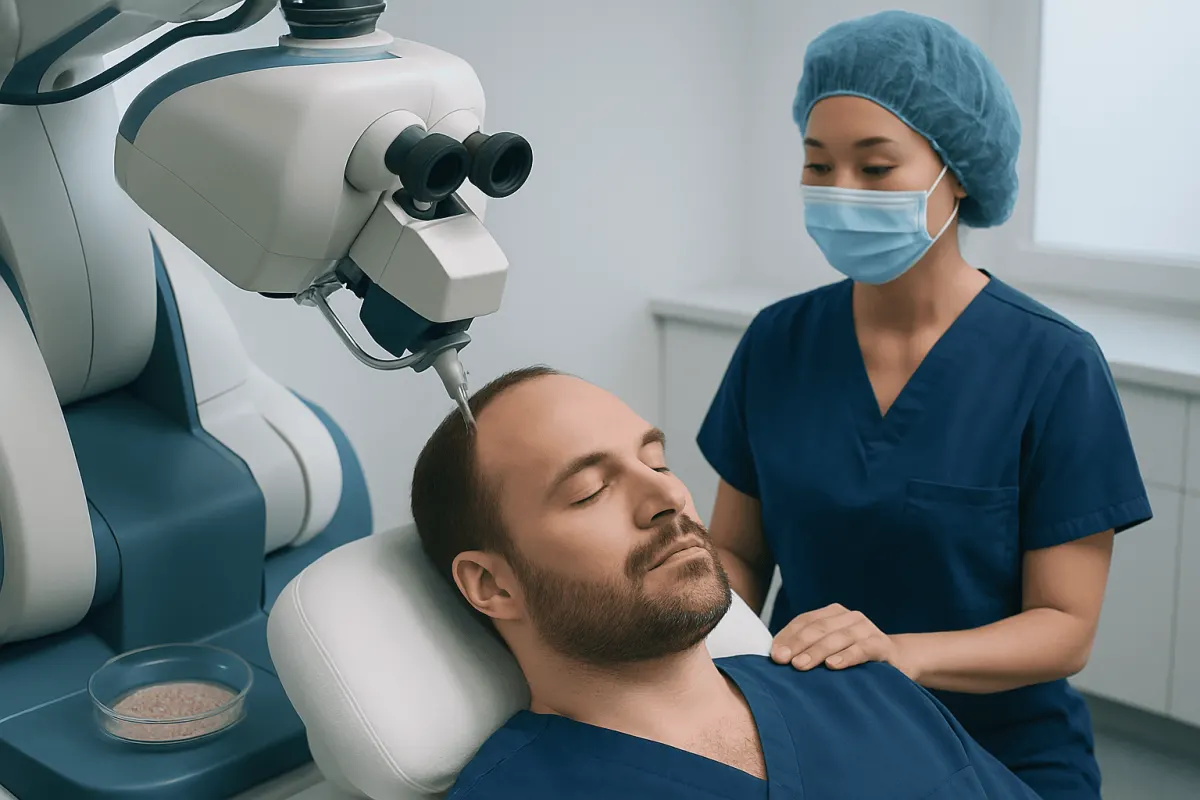
Hair grafting is a surgical procedure that relocates living hair follicles, usually from the back or sides of the scalp, to areas with thinning or hair loss. The transplanted follicles need time to heal and enter a new growth cycle, so visible results develop gradually over months.
How do hair grafts work?
Hair grafts work by moving healthy, living hair follicles from an area with relatively stable growth—called the donor area—to an area affected by thinning or baldness. The donor area is most often the back and sides of the scalp. Each graft is carefully placed into tiny recipient sites at an angle, direction, and density intended to blend with the person’s existing hair.
A graft usually contains a naturally occurring group of follicles, known as a follicular unit. It may produce one, two, three, or sometimes more hairs. Once transferred, the follicles establish a blood supply in their new location and resume their normal cycle of rest, shedding, and growth. This is why a transplant does not produce immediate visible hair.
When people ask how do hair transplants work or how do hair implants work, they are usually referring to this follicle-relocation process. A modern hair transplant uses a person’s own follicles rather than artificial implanted hair fibers. It can improve coverage in selected areas, but it cannot stop genetically driven thinning in untreated native hair.
Who may be a candidate for hair grafting?
Hair grafting may be considered for adults with stable or gradually progressing hair loss who have sufficient healthy donor hair. It is commonly used for androgenetic alopecia, also called male-pattern or female-pattern hair loss, and may also help restore hair after selected injuries, burns, or surgical scars. A specialist first needs to identify the cause of hair loss, because not every type responds well to transplantation.
For men, planning often focuses on preserving donor hair while creating a natural-looking hairline and coverage pattern that will still suit possible future hair loss. For women, hair transplantation may be appropriate when hair loss is localized or when the donor area remains dense; diffuse thinning can make assessment more complex. This is why how do hair transplants work for men and how do hair transplants work for women can have different practical answers, even though the grafting principle is the same.
A consultation generally includes scalp examination, review of medical history and medications, assessment of hair density and hair characteristics, and a discussion of expectations. Active scalp inflammation, uncontrolled medical conditions, some autoimmune forms of hair loss, or insufficient donor density may mean treatment should be delayed, modified, or avoided.
- Good candidates usually have adequate donor hair and realistic goals.
- Hair loss should be diagnosed before surgery is planned.
- Medical treatment may be recommended to help preserve non-transplanted hair.
Hair graft procedure: step by step

The procedure is normally performed under local anesthesia, sometimes with medication to help the person feel more relaxed. First, the surgeon designs the recipient area and plans graft distribution. The aim is not simply to place the largest possible number of grafts, but to use the available donor hair carefully and create an appropriate, natural-looking pattern.
Grafts are collected using one of two main methods. Follicular unit extraction (FUE) removes individual follicular units with small instruments. Follicular unit transplantation (FUT), also called strip harvesting, removes a narrow strip of donor scalp that is divided into grafts under magnification. Both techniques can provide useful results when performed for the right person and indication.
The surgical team then creates very small recipient sites and places the grafts. Placement affects the final appearance: hairline grafts require particularly careful attention to angle and direction, while larger grafts may be used strategically for coverage farther back on the scalp. People seeking hair transplant treatment should ask how the proposed technique, donor management, and follow-up plan fit their individual pattern of hair loss.
Questions such as how do hair transplants work in Turkey or how do hair implants work in Turkey should be approached in the same clinical way as anywhere else. A safe decision depends on an in-person or appropriate medical assessment, transparent discussion of who performs each part of the procedure, infection-control standards, and a realistic aftercare plan—not location alone.
Recovery timeline and caring for transplanted grafts
In the first days after a hair graft procedure, small crusts, redness, swelling, tenderness, and temporary numbness can occur. The clinic provides instructions on washing, sleeping position, activity, and when it is safe to return to regular grooming. Grafts are most vulnerable to accidental rubbing or dislodgement early in healing, so following aftercare directions is important.
Within a few weeks, many transplanted hairs shed. This can be concerning, but it is often an expected part of the growth cycle: the follicles remain beneath the skin while the visible shafts fall out. New growth commonly begins after several months, initially fine and uneven. Density and hair caliber usually continue to improve over the following months.
Recovery varies with the technique used, the size of the procedure, skin healing, and individual factors. Strenuous exercise, sun exposure, smoking, alcohol use, and certain medications may affect healing or bleeding risk, so these should be discussed with the treating clinician before and after surgery. Do not change prescribed medicines without medical advice.
Online discussion forums can offer personal experiences, but they cannot assess an individual scalp or transplant plan. Searches such as how do hair transplants work Reddit may be useful for learning what questions people ask, yet medical advice should come from a qualified clinician who can examine the person directly.
Benefits, limitations, and possible risks
The main potential benefit of hair grafting is that transplanted follicles can continue producing hair in their new location for many years. Because the hair is the person’s own, it can generally be washed, cut, and styled as usual once healing is complete. Results may improve the appearance of coverage, hairline shape, or scar concealment when the procedure is well planned.
However, no procedure can guarantee a particular density or appearance. The donor supply is limited, and transplanted hair may not fully recreate the density of an untreated scalp. Native hair surrounding the transplant can continue to thin over time, which may change the overall look and can sometimes lead to a need for medical treatment or further carefully planned surgery.
Possible risks include bleeding, infection, prolonged redness or swelling, temporary numbness, itching, visible scarring, uneven growth, poor graft survival, and an unnatural-looking hairline or density if planning or placement is inadequate. A temporary shedding response in nearby native hair, sometimes called shock loss, can also occur. Serious complications are uncommon but should be discussed before consent.
A board-qualified clinician can explain which risks are most relevant based on skin type, medical history, hair characteristics, and the chosen technique. Acıbadem Health Point’s multidisciplinary specialists and JCI-accredited hospitals diagnose and treat hair-loss concerns for international patients, with treatment planning tailored to clinical assessment.
How long does hair grafting last?
Hair grafting is intended to provide long-lasting results because follicles taken from the donor area often retain their relative resistance to pattern hair loss after they are moved. Once transplanted follicles have healed and established growth, they can continue producing hair for many years and often for a lifetime.
Long-lasting does not mean that every transplanted hair will grow indefinitely or that the appearance will never change. Individual graft survival varies, and the person’s original, non-transplanted hair may continue to thin. Ongoing medical treatment, where appropriate, and a conservative surgical design can help preserve a balanced result over time.
The durability of a result also depends on careful donor-area management. Removing too many grafts can visibly thin the donor area, while using too few may limit coverage. An experienced assessment considers both current concerns and likely future changes in hair loss.
How painful is a hair graft?
Most people feel brief discomfort during the local anesthetic injections, followed by pressure, pulling, or mild awareness during the procedure rather than sharp pain. The level of sensation differs from person to person and can depend on the technique, the extent of surgery, and anxiety levels. The treating team monitors comfort throughout the procedure.
Afterward, soreness or tightness may occur in the donor and recipient areas for several days. FUT can cause more tightness at the donor site because it involves a linear incision, while FUE may leave many small extraction sites. Clinicians typically provide individualized instructions for pain relief and wound care.
Severe or worsening pain, spreading redness, fever, pus-like drainage, or increasing swelling should not be managed with online advice alone. These symptoms need prompt review by the surgical clinic or another qualified healthcare professional.
Is hair transplant 100% success? What happens 10 years after a hair transplant?
No, a hair transplant is not 100% successful. Although many transplanted grafts can survive and grow, no surgeon can guarantee that every graft will take or that a person will achieve a specific density. Success is best understood as an individualized outcome that includes graft survival, natural appearance, scalp healing, donor preservation, and alignment with realistic goals.
Ten years after a hair transplant, transplanted donor hair may still be growing well. However, the person may have further loss of native hair due to aging or ongoing androgenetic alopecia. This can create a contrast between transplanted and thinning areas if the original treatment plan did not account for future progression.
For this reason, clinicians may recommend monitoring hair loss and considering evidence-based medical options when suitable. Some people later choose another procedure, while others prefer styling changes or non-surgical approaches. A long-term plan should protect the donor area and avoid promising an outcome that future hair loss could alter.
When to seek medical care
A person should arrange medical assessment for sudden, patchy, painful, itchy, or rapidly worsening hair loss; scalp scaling, sores, or inflammation; or hair loss accompanied by fatigue, weight changes, or other new symptoms. These signs can indicate a condition that needs diagnosis and treatment before hair grafting is considered.
Anyone who has already had a transplant should contact their clinic if there is significant bleeding, fever, worsening pain, marked swelling, spreading redness, foul-smelling drainage, or concern that grafts have been injured. Early assessment can help address complications appropriately.
Before booking a procedure, it is reasonable to seek a consultation with a dermatologist or hair-restoration surgeon. They can confirm the cause of thinning, discuss alternatives, and explain whether a graft procedure is likely to provide a safe and worthwhile result.
Frequently asked questions
01How do hair transplants work?
Hair transplants work by relocating hair follicles from a donor area, usually the back or sides of the scalp, to an area with thinning or hair loss. The follicles are placed into small recipient sites and, after healing, can begin growing hair in the new location. Growth is gradual because transplanted hairs often shed before entering a new growth phase.
02How do hair implants work?
The term hair implants is often used to describe hair transplantation, in which a person’s own follicles are moved to another part of the scalp. This differs from artificial hair fibers, which are not the standard meaning of modern surgical hair restoration. A clinician can explain which approach is being discussed and whether it is appropriate.
03Can women have hair graft surgery?
Yes, some women are candidates for hair graft surgery, particularly when thinning is localized and the donor area is sufficiently dense. Because women may experience diffuse thinning or hair loss related to hormonal, nutritional, autoimmune, or other causes, a diagnosis is important before surgery. The treatment plan should be individualized.
04When will new hair grow after a hair transplant?
Transplanted hairs often shed within the first several weeks, which is usually expected. New growth may begin after several months and typically becomes more noticeable as hair length, thickness, and coverage increase over time. The exact timeline varies between individuals.
05Will a hair transplant stop future hair loss?
No. A transplant moves donor follicles but does not prevent non-transplanted hair from thinning due to pattern hair loss or other causes. A clinician may discuss medical treatment and long-term monitoring to help protect existing hair when appropriate.
06Can a hair transplant look natural?
It can look natural when the hairline, graft selection, angle, direction, and density are planned carefully. Natural results also depend on the person’s donor-hair characteristics and the extent of existing hair loss. A conservative, long-term approach is especially important when future thinning is possible.
This article is for general information only and is not a substitute for professional medical advice. Please consult a qualified doctor about your individual situation.
Hair transplant in Turkey — costs, graft counts & a free assessment
JCI-accredited · board-certified surgeons · reply within 24h
Add us as a Preferred Source to see more of our trusted health content across Google Search, AI Overviews and Discover.