Skin Graft Surgery for Wounds, Burns and Healing
Skin graft surgery is a reconstructive procedure that transfers healthy skin from one part of the body, or occasionally a donor source, to cover a wound that cannot heal or close properly on its own. The graft protects underlying tissue and supports healing, while recovery requires careful wound care and follow-up to help the transferred skin establish a new blood supply.
Skin Graft Surgery: How It Works
Skin graft surgery is a procedure in which a surgeon takes healthy skin from a donor area of the patient’s body and places it over an area of damaged or missing skin. It is commonly performed when a wound is too large, deep or complex to close with stitches alone. The graft acts as a protective covering while the recipient area heals.
Most grafts are autografts, meaning the skin comes from the same person. This reduces the risk of rejection. The donor area is often the thigh, buttock, back, upper arm or abdomen, chosen according to the amount and type of skin needed.
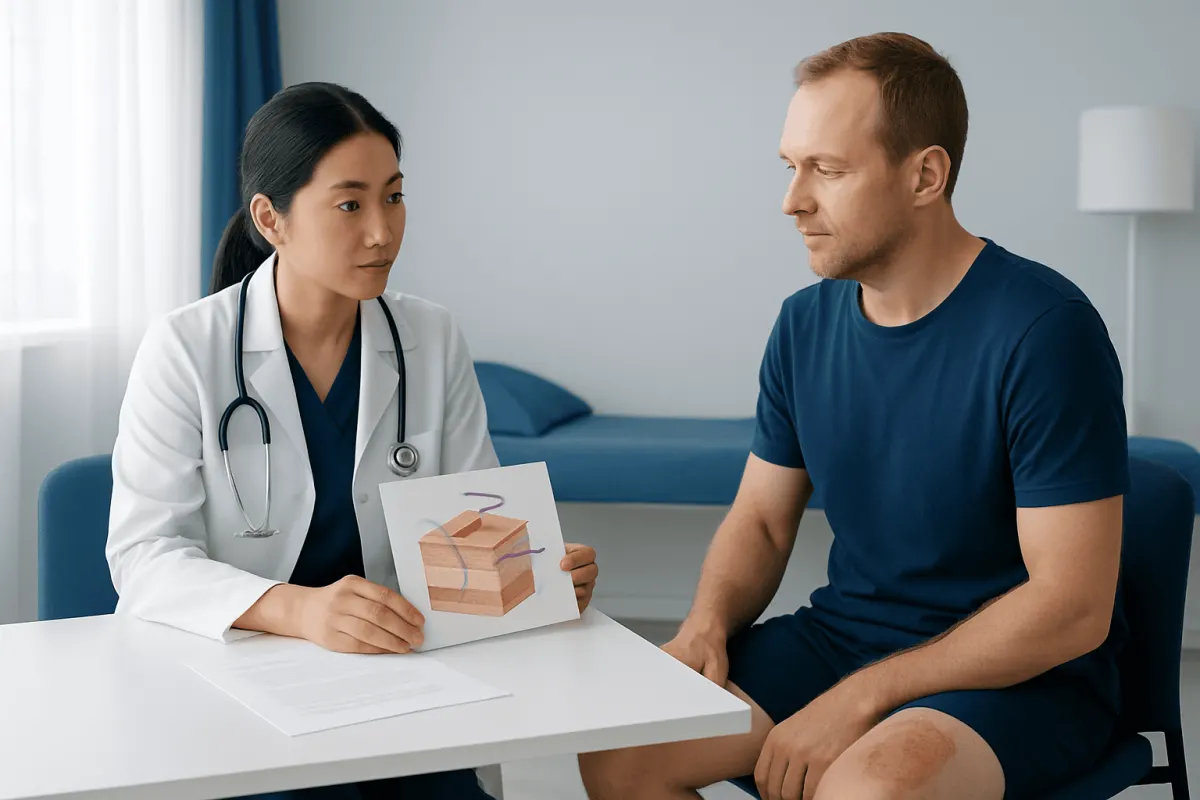
In a split-thickness skin graft, the surgeon removes the epidermis and a thin portion of the dermis. These grafts can cover larger wounds and the donor site usually heals on its own. A full-thickness skin graft includes the epidermis and all of the dermis; it may provide a closer match in color and texture for certain areas, but the donor site typically needs stitches or another form of closure.
The goal is not only wound coverage. A successful graft can help lower the risk of infection, reduce fluid loss, preserve movement around joints and improve the wound’s long-term appearance. The exact outcome depends on the wound’s size, location, cause and overall health of the patient.
Who May Need a Skin Graft?
A doctor may recommend skin graft surgery for a wound that is unlikely to heal adequately with dressings, stitches or local wound care alone. This can include deep burns, traumatic skin loss, wounds after removal of a skin cancer, areas affected by severe infection, pressure injuries and some long-standing wounds related to circulation problems or diabetes.
Before recommending a graft, the surgical team assesses whether the wound has a healthy blood supply and is free of uncontrolled infection. A graft needs a well-prepared wound bed to survive. Dead tissue, heavy drainage, persistent bleeding or inadequate circulation may need treatment first.
Suitability also depends on general health. Smoking or nicotine use, poorly controlled diabetes, malnutrition, certain medicines and conditions that impair blood flow can make healing slower or reduce the chance of graft take. The care team may recommend steps to optimize these factors before surgery.
Some wounds need a different reconstructive approach, such as a skin flap, which moves skin along with its own blood supply. For wounds related to serious burns, care may be coordinated with specialists experienced in burn injuries and reconstructive recovery.
What Happens During the Procedure?
The procedure may be performed using local anesthesia with sedation, regional anesthesia or general anesthesia. The choice depends on the size and location of the wound, the type of graft and the person’s medical needs. The surgeon first cleans the recipient site and removes damaged tissue where necessary.
Healthy skin is then taken from the donor site. For a split-thickness graft, a specialized instrument removes a precise thin layer of skin. The graft may be placed as a sheet or gently meshed. Meshing creates small openings that allow fluid to drain and lets a smaller graft cover a larger area.
The graft is positioned carefully over the wound and secured with stitches, staples, surgical glue or a dressing designed to hold it still. A bolster dressing or negative-pressure wound therapy may be used in some cases to keep the graft in close contact with the wound bed. Movement, pressure and fluid collecting beneath the graft can interfere with healing.
Both the graft and donor site are covered with dressings. Depending on the procedure and health status, skin graft surgery may be done as day surgery or require a short hospital stay. Detailed instructions are given about dressing care, activity limits and follow-up appointments.
Recovery Timeline and Expected Results
The graft relies initially on the recipient site for oxygen and nutrients. During the first few days, it begins connecting to the blood supply beneath it. This early period is often called graft take, and protecting the area from friction, stretching and pressure is especially important.
In the first week, the graft may look pale, pink, purple or somewhat blotchy. Mild swelling and small amounts of drainage can be expected, depending on the dressing and wound location. The surgical team usually checks the graft within several days to one week, although the timing varies by procedure.
Over the following weeks, the graft generally becomes more securely attached. The donor site may feel sore, tight or itchy as it heals. Split-thickness donor sites often heal similarly to a superficial skin injury, while full-thickness donor sites may have a linear scar where the skin was removed and the area was closed.
Healing continues well beyond the first few weeks. Skin grafts may remain different in color, texture, sweating, hair growth and sensation compared with nearby skin. Scars can become firmer or more noticeable before gradually settling over several months. Scar care, sun protection and, when advised, compression garments or therapy can support longer-term recovery.
Benefits, Risks and Factors That Affect Healing
The main benefit of skin graft surgery is reliable coverage of a wound that would otherwise remain open or heal poorly. It can protect exposed tissue, decrease discomfort from an uncovered wound and support function, especially when wounds are near joints or other areas where scarring may restrict movement.
As with any operation, there are potential risks. These include bleeding, infection, pain, swelling, scarring, delayed healing, changes in sensation and an unsatisfactory difference in skin color or contour. A graft may also fail to take fully or partly, requiring additional wound treatment or, occasionally, another procedure.
Common reasons for impaired graft healing include infection, poor circulation, smoking, excessive pressure or movement, fluid under the graft and inadequate nutrition. People with diabetes, vascular disease or immune system conditions may need closer monitoring because these conditions can affect wound healing.
Following the surgeon’s instructions is one of the most effective ways to reduce avoidable problems. Patients should not remove or wet dressings unless instructed, should avoid stretching the grafted area, and should attend all scheduled wound checks. Any new concern should be discussed with the treating team rather than managed with unadvised creams or home remedies.
How Painful Is Skin Graft Recovery?
Skin graft recovery can involve discomfort, but the level of pain varies with the size and location of the graft, the donor site and the individual’s health. Many people find that the donor site is more tender than the graft itself, particularly during the first days after surgery.
Pain may feel like soreness, burning, stinging or tightness. The surgical team may recommend appropriate pain relief and practical measures such as elevating the affected area, resting as advised and avoiding pressure on the dressings. Pain should gradually improve rather than intensify.
Severe pain, sudden worsening pain, pain with fever, or pain accompanied by spreading redness or foul-smelling drainage should be assessed promptly. These symptoms can indicate a complication that needs medical attention.
How Should a Skin Graft Look After 2 Weeks?
At around two weeks, a healing skin graft is often attached to the wound bed and may appear pink, red, purple, pale or unevenly colored. It can look shiny, dry, slightly raised or wrinkled, and the appearance may differ depending on the graft type, location and skin tone. Small mesh-pattern openings may still be visible if a meshed graft was used.
The donor site may be pink or red, tender and itchy, with new fragile skin forming over it. Some crusting or dry skin can occur as healing progresses. The care team will advise when dressings can change and whether moisturizers, non-stick coverings or scar management should begin.
Appearance alone cannot confirm that a graft is healthy. Concerning signs include darkening that spreads, a cold or black appearance, increasing swelling, pus-like drainage, a bad odor, fever, or graft edges lifting away from the wound. A patient should contact the surgical team if there is uncertainty about the graft’s appearance.
What Helps a Skin Graft Heal Faster?
A skin graft heals best when it is protected and supported rather than rushed. Keeping all dressings clean, dry and in place until the clinician says otherwise helps prevent disruption. Patients should avoid smoking and nicotine products, as nicotine narrows blood vessels and can interfere with the blood flow needed for healing.
A balanced diet with sufficient protein, calories, vitamins and fluids supports wound repair. For people with diabetes, keeping blood glucose within the individualized range advised by their clinician is particularly important. The medical team may involve a dietitian or wound-care specialist if nutrition or healing is a concern.
Activity advice depends on the body area treated. Gentle movement may be encouraged to prevent stiffness, while stretching, lifting, rubbing or pressure near the graft may be restricted temporarily. Elevation can reduce swelling in some limb grafts. Patients should follow their surgeon’s plan rather than comparing recovery with another person’s experience.
Once the wound has closed, protecting the graft and scar from sun exposure is important because new skin can burn or discolor easily. Sunscreen and protective clothing may be recommended after the treating clinician confirms they are appropriate for the healed area.
Is a Skin Graft a Serious Surgery?
Skin graft surgery is a significant reconstructive procedure because it creates two healing areas: the wound receiving the graft and the donor site where skin is taken. However, its complexity varies widely. A small graft for a limited wound can sometimes be managed as an outpatient procedure, whereas larger grafts after major burns or trauma may require hospital-based care and a longer recovery.
The seriousness of the operation depends more on the underlying injury, wound location, amount of skin needed, anesthesia and the person’s overall health than on the term “skin graft” alone. The surgeon can explain the expected level of care, likely recovery time and individual risks before treatment.
For patients travelling for care, Acıbadem Health Point’s multidisciplinary specialists and JCI-accredited hospitals provide assessment and reconstructive treatment planning for international patients, including plastic and reconstructive surgery when clinically appropriate.
When to Seek Medical Care
Contact the surgical team urgently if there is increasing redness or warmth around the wound, worsening swelling, uncontrolled bleeding, fever, chills, pus-like drainage, a foul odor or pain that is becoming more severe. These signs do not always mean a graft has failed, but they require timely assessment.
Medical advice is also important if the graft changes rapidly to dark purple, gray or black, becomes detached, or if the dressing becomes soaked through or falls off unexpectedly. Patients should not try to reattach a graft or apply antiseptics, creams or adhesive dressings unless a clinician specifically advises this.
Anyone with a new deep wound, major burn, wound exposing deeper tissue, or a wound that is not healing should seek professional care. Early assessment can help determine whether wound care, infection treatment, vascular evaluation or reconstructive surgery is needed.
Frequently asked questions
01How long does it take for a skin graft to heal?
Initial graft attachment commonly develops over the first one to two weeks, but complete recovery takes longer. The graft, donor site and surrounding scar can continue to change for months. Healing time depends on the wound, graft type, blood supply, location and overall health.
02Can a skin graft fail?
Yes, a graft can fail partly or completely if it does not establish a sufficient blood supply or if complications develop. Infection, bleeding or fluid beneath the graft, movement, pressure, smoking and poor circulation can increase this risk. Regular follow-up helps the surgical team identify problems early.
03Can a person shower after skin graft surgery?
This depends on the type of dressing, graft location and surgeon’s instructions. The graft and donor site often need to remain dry for a defined early period. A patient should ask the surgical team exactly when showering is safe and how to protect the dressings.
04Will a skin graft match the surrounding skin?
A graft may not match the surrounding skin exactly in color, texture, thickness, hair growth or sensation. The difference may become less noticeable as healing and scar maturation continue. The surgeon selects graft type and donor area to achieve the best practical functional and cosmetic result.
05What should not be done after a skin graft?
Patients should avoid smoking or nicotine, scratching, rubbing, stretching or putting pressure on the grafted area unless their clinician says it is safe. They should not remove dressings or use unapproved creams and antiseptics. Activity restrictions should be followed carefully, especially during the first days of healing.
06Does a skin graft leave scars?
Both the recipient area and donor site can leave scars. The degree of scarring varies with the injury, graft type, skin characteristics and healing process. Scar management may include moisturization, sun protection, silicone products, compression or other treatments recommended by the care team.
This article is for general information only and is not a substitute for professional medical advice. Please consult a qualified doctor about your individual situation.
Joint and spine care in Turkey — expert assessment & treatment
JCI-accredited · board-certified surgeons · reply within 24h
Add us as a Preferred Source to see more of our trusted health content across Google Search, AI Overviews and Discover.