Hair Transplant Price in the UK: Key Cost Factors
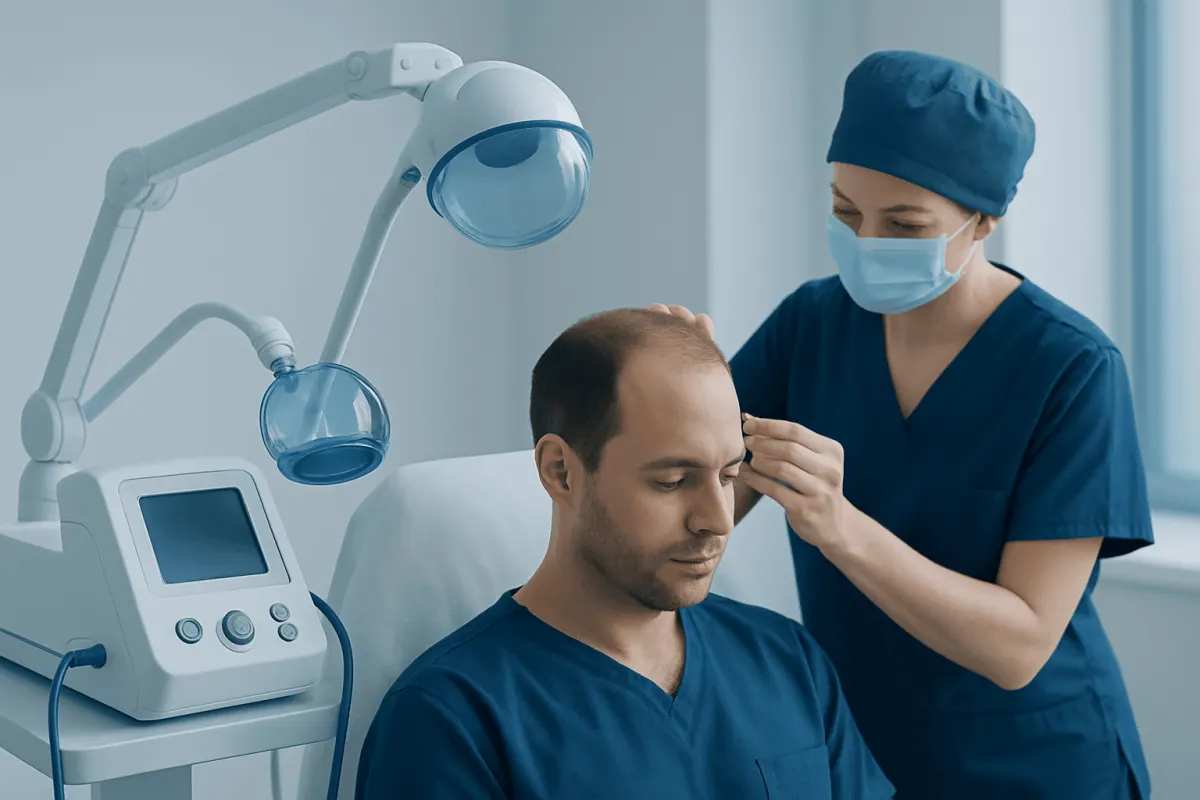
Hair transplant price UK cannot be represented by one reliable figure because each plan depends on the diagnosis, available donor hair, graft requirement, technique and aftercare. A consultation with an appropriately qualified clinician is the safest way to understand suitability, treatment scope and the full written quote.
Hair transplant price UK: what a quote should explain
The hair transplant price UK cannot be reduced to one trustworthy figure. The number of grafts needed, the type of procedure, the complexity of the hair-loss pattern and the clinical team involved all affect a treatment plan. A written quote following an in-person or comprehensive clinical assessment is the most reliable basis for planning.
Rather than comparing advertised starting prices alone, patients benefit from understanding exactly what is included. A lower initial figure may not reflect the same level of medical assessment, surgical involvement, follow-up or support as another provider. A responsible clinic should explain what the procedure can realistically achieve, as well as its limits.
A clear quote commonly sets out:
- the planned graft range and the reason it has been recommended;
- the proposed technique, such as follicular unit extraction (FUE) or follicular unit transplantation (FUT);
- who will perform each clinical and surgical stage of care;
- pre-procedure assessment, anaesthesia, follow-up appointments and aftercare arrangements; and
- whether a future procedure may be considered if hair loss continues.
How hair transplantation works and who may be suitable
Hair transplantation redistributes healthy hair follicles from a donor area, usually the back and sides of the scalp, to areas affected by thinning or baldness. The follicles are transplanted as naturally occurring groups called follicular units. Once established, transplanted follicles generally keep the growth characteristics of the donor area.
The procedure is most often considered for people with stable or reasonably predictable pattern hair loss, adequate donor density and realistic expectations. It may be suitable for men and women, but the cause and pattern of hair loss need careful assessment. Hair loss can also result from medical conditions, nutritional issues, medicines, stress-related shedding or scalp disease, and these causes may need treatment before surgery is considered.
A clinician should assess scalp health, hair calibre, donor capacity, family history and the likely pattern of future loss. People with active inflammatory scalp conditions, sudden patchy hair loss, widespread unexplained shedding or limited donor hair may need further investigation or a different management approach first.
Step by step: assessment and procedure day

Planning begins with a detailed consultation. The clinician reviews the patient’s health history, examines the scalp and donor area, discusses goals and may take clinical photographs. The hairline and distribution plan should account for age, facial proportions, existing hair and the possibility of future thinning, rather than focusing only on short-term density.
On the procedure day, the scalp is prepared and local anaesthetic is normally used. With FUE, follicular units are removed individually from the donor area. With FUT, a narrow strip of donor-bearing scalp is removed and dissected into follicular units; this technique leaves a linear donor scar. The appropriate method depends on the individual rather than on a single technique being universally better.
The surgical team then creates very small recipient sites at planned angles and places the grafts to support a natural-looking direction of growth. Many procedures are completed as day treatments, while larger plans may be divided into stages. Patients should receive written aftercare instructions and know how to contact the clinical team if concerns arise.
Recovery timeline, benefits and possible risks
In the first few days, mild swelling, tenderness, redness and small scabs in the treated areas can occur. Scabs usually settle over the following one to two weeks when aftercare guidance is followed. It is also common for transplanted hairs to shed in the weeks after the procedure; this is a temporary part of the normal growth cycle and does not necessarily mean that the follicles have failed.
New growth often becomes noticeable after several months, with changes continuing over approximately 6 to 12 months. Some patients see maturation of texture and density beyond this period. A successful transplant can improve coverage and frame the face using the patient’s own growing hair, but it cannot create unlimited density or stop ongoing loss in untreated areas.
Possible risks include bleeding, infection, prolonged redness or swelling, temporary numbness, scarring, uneven growth, poor graft survival and an unnatural-looking hairline or distribution. There can also be temporary shedding of existing nearby hair, sometimes called shock loss. Careful diagnosis, conservative planning, experienced surgical technique and suitable follow-up help reduce avoidable risks, although no procedure is risk-free.
Graft-count questions: coverage and larger treatment plans
What do 3,000 hair grafts cover?
Three thousand grafts refers to 3,000 follicular units, not 3,000 individual hairs. Each follicular unit can contain one or several hairs, so the total hair count varies. Hair calibre, curl, colour contrast between hair and scalp, and the quality of the donor area also influence the appearance of coverage.
For some patients, 3,000 grafts may be planned for the hairline, frontal scalp and part of the mid-scalp. For others, it may be used to build density in a smaller existing area. It is usually not realistic to expect one graft number to restore extensive baldness to the density of an untouched scalp, so the distribution plan matters as much as the graft count.
How much do 5000 hair grafts cost in the UK?
There is no single reliable cost for 5,000 grafts in the UK. A plan of this size is substantial, and its suitability depends on donor capacity, scalp characteristics, the area requiring treatment and the need to preserve donor hair for the future. Some people may require staged treatment, while others may not be appropriate candidates for this number of grafts.
When discussing a large graft plan, patients should ask for a personalised written proposal that explains the graft estimate, technique, clinician involvement, expected number of treatment days, aftercare and any likely future needs. A clinic should not recommend a high graft count simply because it is requested; protecting the donor area and achieving a balanced result are important clinical priorities.
Does NHS pay for hair transplants?
The NHS does not routinely pay for hair transplants undertaken for cosmetic treatment of common pattern hair loss. Hair transplantation is usually accessed privately when the aim is to improve the appearance of thinning or baldness.
In limited reconstructive circumstances, such as hair loss associated with injury, burns or certain medical treatments, an NHS specialist may assess whether reconstructive options are appropriate. Eligibility is not automatic and can vary according to the clinical situation and local NHS policies. A GP or dermatologist can help assess the underlying cause of hair loss and advise on referral where needed.
Do hair transplants really work in the UK?
Hair transplants can work in the UK when they are performed for an appropriate diagnosis, with sufficient healthy donor hair and a well-designed plan. The biological process is the same in every country: transplanted follicles can continue growing after they heal in their new location. However, results vary between individuals and depend strongly on planning, technique, donor quality and continued hair loss.
A transplant redistributes existing hair; it does not produce new donor follicles or prevent genetic hair loss from progressing elsewhere. A clinician may discuss non-surgical Acne Treatment Options: Topical, Oral, and Procedure-Based Care" class="ahp-ilk">treatment options that can help manage ongoing pattern hair loss when these are suitable for the patient. Continuing care is particularly important for younger patients or those with a strong family history of progressive thinning.
Patients should ask who will assess them, who will carry out the surgical steps and how complications or follow-up concerns will be managed. They can also check the credentials of the doctor and ask about the relevant regulatory arrangements for the clinic. A careful consultation should prioritise long-term donor preservation and realistic expectations over a rapid or overly dense result.
When to seek medical care
Patients should seek medical assessment before considering a transplant if hair loss is sudden, patchy, painful, itchy, scaly, associated with redness or scarring, or accompanied by other health changes. These features can suggest a cause other than typical pattern hair loss and may require medical treatment. Early assessment can also be helpful when diffuse shedding persists or causes significant distress.
After a transplant, the treating clinic should be contacted promptly if there is increasing pain, spreading redness, discharge, significant bleeding, fever, a suspected allergic reaction or any symptom that feels unusual or worsening. Patients should follow the aftercare instructions provided by their own surgical team rather than relying on general advice alone.
For international patients considering planned assessment or treatment, Acıbadem Health Point coordinates care through multidisciplinary specialists and JCI-accredited hospitals. Individual suitability, expected outcomes and arrangements for follow-up should always be discussed with a qualified clinician before travel or treatment.
Frequently asked questions
01What is the difference between a graft and a hair?
A graft is usually a follicular unit, which is a naturally occurring group of one to several hairs. This is why graft numbers and total hair counts are not the same, and why two people receiving the same number of grafts may see different-looking coverage.
02Why do clinics count grafts rather than hairs?
Grafts are the units that are extracted and implanted during modern hair transplantation. Counting follicular units helps the clinical team estimate donor use and plan distribution, although the appearance of density also depends on hair thickness, curl and colour contrast.
03Can a hair transplant stop future hair loss?
No. A transplant can move hair into thinning areas, but it does not stop underlying pattern hair loss from progressing in non-transplanted areas. A clinician may discuss whether medical management or a long-term monitoring plan is appropriate.
04Will a patient need more than one hair transplant procedure?
Some patients need or choose a further procedure because their natural hair continues to thin over time, or because coverage goals change. This is why a conservative plan that preserves donor hair is important from the outset.
05What should patients compare in written hair transplant quotes?
Patients should compare the recommended graft range, technique, clinician involvement, aftercare, follow-up and the plan for managing complications. They should also ask whether the quote clearly describes what is and is not included, rather than comparing a headline figure alone.
06Can women have a hair transplant?
Some women are suitable candidates, especially when hair loss has a stable pattern and the donor area is strong. However, diffuse thinning is more common in women and can limit donor availability, so a thorough diagnosis is especially important before surgery is planned.
This article is for general information only and is not a substitute for professional medical advice. Please consult a qualified doctor about your individual situation.
Hair transplant in Turkey — costs, graft counts & a free assessment
JCI-accredited · board-certified surgeons · reply within 24h
Add us as a Preferred Source to see more of our trusted health content across Google Search, AI Overviews and Discover.