Hair Transplant for Receding Hairline: Procedure, Benefits, Risks and Recovery

Key Takeaways
- A hair transplant can restore a receding hairline by relocating healthy follicles to thinning areas.
- The two main techniques are FUE and FUT, and the best choice depends on hair pattern, donor supply, and goals.
- Not everyone with a receding hairline is a candidate; the cause of hair loss should be assessed first.
- Recovery is usually gradual, with temporary shedding and visible growth developing over months.
- Good hairline design aims for natural proportions rather than an artificially low or straight front line.
A hair transplant for receding hairline is a surgical option that moves healthy hair follicles to areas where the hairline has thinned or moved back. It can create a more natural-looking frame for the face, but success depends on proper diagnosis, donor hair quality, and realistic planning.
Overview
A hair transplant for receding hairline is a procedure designed to rebuild the front edge of the scalp using a person’s own healthy hair follicles. It is often considered when the hairline has moved back gradually, making the forehead appear larger or the hair frame less defined.
For many people, the main appeal is not simply adding hair, but restoring balance to the face. A well-planned transplant can soften the appearance of recession and create a hairline that looks believable at close range, in photographs, and as the hair continues to age.
Before any procedure is chosen, a clinician should confirm why the hairline is receding. Male pattern hair loss is common, but traction alopecia, scarring conditions, thyroid disorders, nutritional issues, and some medications can also contribute. Treating the cause first, or alongside surgery, often leads to better long-term planning.
What the procedure involves
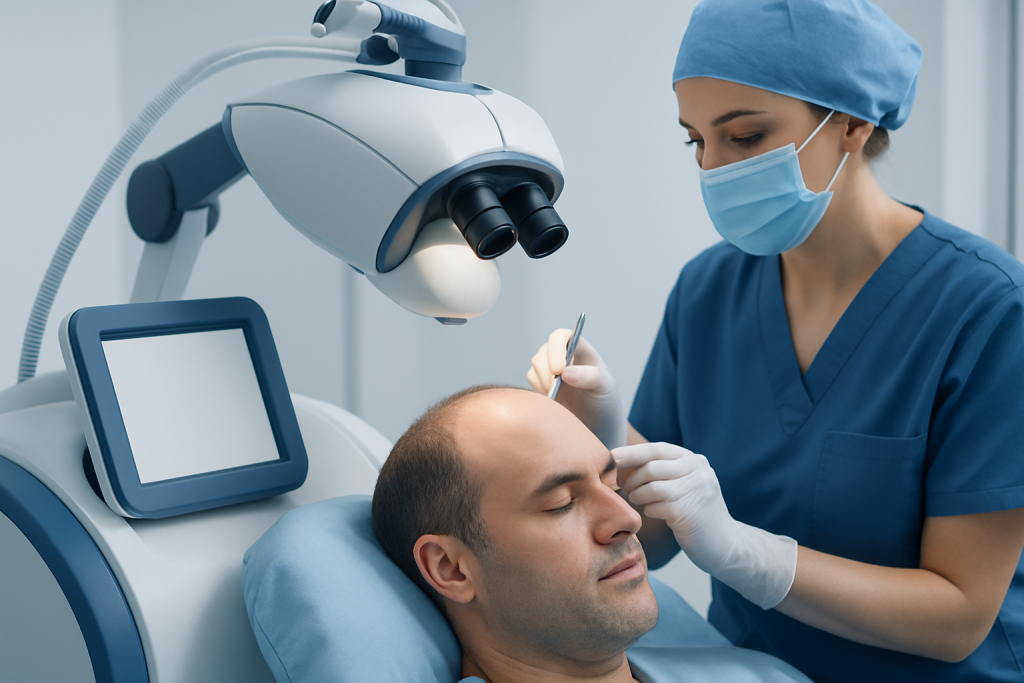
Hair transplantation works by removing follicles from an area where hair is more resistant to thinning, usually the back or sides of the scalp, and placing them into the hairline and frontal scalp. These donor follicles retain their growth characteristics after transplantation, which is why they are used to rebuild permanent hair-bearing areas.
The two main methods are follicular unit extraction, often called FUE, and follicular unit transplantation, or FUT. FUE removes follicles one by one using tiny punches, while FUT removes a thin strip of scalp and separates it into grafts under magnification. Each method has different trade-offs in terms of scarring, recovery, and the number of grafts that can be harvested.
Hairline design is a major part of the process. Surgeons usually aim for a soft, irregular front edge rather than a sharp straight line. They also consider the patient’s age, facial shape, hair texture, future hair loss pattern, and donor hair availability so the result still makes sense years later.
Signs that a receding hairline may be suitable for transplant

A transplant may be considered when the hairline recession is stable enough to plan around and there is enough donor hair to support the desired result. People often seek this option when styling changes no longer conceal the recession, or when the hairline is affecting confidence in social or professional settings.
Suitability depends on more than wanting more hair in the front. A specialist will look at the pattern of loss, the extent of thinning on the crown or mid-scalp, the thickness and quality of the donor zone, scalp health, and whether the person’s hair loss appears to be still progressing quickly.
- The hairline has receded in a pattern consistent with androgenetic hair loss.
- Donor hair at the back and sides appears adequate.
- Hair loss is not primarily from an untreated inflammatory or scarring scalp disorder.
- The person understands that a transplant redistributes hair rather than creates new follicles.
Some younger patients may be advised to delay surgery if future loss could significantly change the result. In those cases, medical treatment and observation may be recommended first, with surgery considered later once the pattern is clearer.
Benefits and realistic expectations
The strongest benefit of hair transplant surgery is permanence in the transplanted area, because the moved follicles are usually taken from hair that is genetically more resistant to thinning. For many people, that creates a long-term improvement in the appearance of the hairline and a more youthful frame to the face.
Another benefit is flexibility in styling. Patients often find they can wear their hair in ways that were difficult before surgery, especially when the frontal density has improved. The change can be subtle or more noticeable depending on the extent of recession and the amount of grafts placed.
Realistic expectations matter. A transplant may improve coverage, but it does not reproduce the exact density of an untouched youthful hairline. The goal is usually a natural-looking result that suits the person’s current age and future hair pattern, not a return to childhood hair density.
Risks and possible downsides
Like any surgical procedure, hair transplantation carries some risks. Temporary swelling, redness, crusting, tenderness, and itching are common during early healing. Most of these settle with time and proper aftercare, but they can be inconvenient during the first days and weeks.
Less common issues include infection, bleeding, poor graft survival, visible scarring, shock loss, and results that appear uneven or unnatural if the planning or technique is not appropriate. In some cases, additional procedures are needed later to refine density or adjust the hairline.
The donor area also deserves attention. Too much harvesting can thin the back of the scalp, especially if hair loss continues after surgery. For that reason, a careful surgeon plans not only for today’s hairline, but also for how the overall pattern may evolve over time.
Recovery and the growth timeline
Recovery is usually gradual rather than dramatic. In the first several days, the scalp may feel tender and look pink or crusted, and patients are typically advised to avoid rubbing, heavy exercise, and direct sun exposure until the grafts are secure.
A temporary shedding phase often occurs after transplantation. This can surprise patients, but it is a normal part of the cycle: the hair shaft may fall out while the follicle stays in place and later begins producing new growth. Visible regrowth commonly starts slowly, then becomes more noticeable over the following months.
Because the scalp heals at its own pace, follow-up is important. Patients traveling from another country may need a plan for remote check-ins, local wound care if needed, and a clear understanding of when it is safe to wash, style, color, or cut the new hair. Patience is part of the process, and final cosmetic refinement usually takes time.
Prevention, self-care, and supporting long-term results
After a transplant, protecting the scalp and following post-operative instructions are central to healing. Gentle washing, avoiding traction on the grafts, and limiting sun exposure help the newly placed follicles settle in without unnecessary stress.
Long-term care may also include treatment for ongoing hair loss in the non-transplanted areas. A specialist might discuss medical therapies, scalp care, or lifestyle factors that can affect hair health. The aim is not only to protect the transplant, but to preserve the overall appearance of the hairline and surrounding hair.
- Use only the cleansing and grooming routine recommended by the surgical team.
- Avoid tight hats, helmets, or styling that pulls on healing grafts early on.
- Keep follow-up appointments, including virtual reviews if traveling abroad.
- Discuss any ongoing thinning so future loss can be planned for thoughtfully.
For international patients, planning recovery logistics matters. It helps to arrange a comfortable return trip, understand medication and washing instructions before leaving, and know exactly whom to contact if the scalp changes unexpectedly.
When to see a doctor
A doctor should evaluate any receding hairline that is progressing, sudden, patchy, or accompanied by itching, scaling, pain, redness, or scarring. These features can suggest causes other than ordinary pattern hair loss and may need different treatment.
Medical advice is also important before considering surgery. A qualified dermatologist or hair restoration surgeon can confirm the diagnosis, review donor hair, assess whether the hair loss is stable enough for transplant, and explain whether non-surgical options should be used first.
People who are unsure about travel for treatment may benefit from a consultation that includes discussion of the procedure, expected recovery, and follow-up once they return home. Acibadem Health Point’s multidisciplinary specialists and JCI-accredited hospitals diagnose and treat hair and scalp conditions for international patients, with coordinated planning from consultation through recovery.
FAQs
Q: Is a hair transplant a good solution for a receding hairline?
A hair transplant can be a good option when the recession is due to pattern hair loss and there is enough donor hair. It is most successful when the hairline design is conservative and the overall hair loss pattern has been carefully assessed.
Q: How long does it take to see results after a hair transplant?
The new hairs do not appear immediately. After an early shedding phase, new growth usually develops gradually over several months, with more complete cosmetic improvement taking longer.
Q: Are FUE and FUT both used for hairline restoration?
Yes. Both techniques can be used to rebuild a receding hairline, and the better choice depends on donor supply, scarring considerations, the extent of hair loss, and the surgeon’s approach.
Q: Will the transplanted hair fall out again?
The transplanted follicles are usually taken from areas that are more resistant to thinning, so they are generally long-lasting. However, hair outside the transplanted zone can continue to thin over time, which is why ongoing planning matters.
Q: Is the procedure painful?
Most patients report discomfort rather than severe pain, especially when local anesthesia is used. Some tenderness, tightness, or soreness is common during early recovery and usually improves as healing progresses.
Q: Can women have a hair transplant for a receding hairline?
Yes, in selected cases. A specialist first needs to determine why the hairline is thinning, because female hair loss patterns and causes can differ from those seen in men.
Q: What should be avoided after surgery?
Patients are usually advised to avoid touching the grafts, strenuous activity, direct sun, and anything that places pressure on the healing scalp. The surgical team should provide personalized instructions based on the technique used and the patient’s recovery plan.
Frequently asked questions
01Is a hair transplant a good solution for a receding hairline?
A hair transplant can be a good option when the recession is due to pattern hair loss and there is enough donor hair. It is most successful when the hairline design is conservative and the overall hair loss pattern has been carefully assessed.
02How long does it take to see results after a hair transplant?
The new hairs do not appear immediately. After an early shedding phase, new growth usually develops gradually over several months, with more complete cosmetic improvement taking longer.
03Are FUE and FUT both used for hairline restoration?
Yes. Both techniques can be used to rebuild a receding hairline, and the better choice depends on donor supply, scarring considerations, the extent of hair loss, and the surgeon’s approach.
04Will the transplanted hair fall out again?
The transplanted follicles are usually taken from areas that are more resistant to thinning, so they are generally long-lasting. However, hair outside the transplanted zone can continue to thin over time, which is why ongoing planning matters.
05Is the procedure painful?
Most patients report discomfort rather than severe pain, especially when local anesthesia is used. Some tenderness, tightness, or soreness is common during early recovery and usually improves as healing progresses.
06Can women have a hair transplant for a receding hairline?
Yes, in selected cases. A specialist first needs to determine why the hairline is thinning, because female hair loss patterns and causes can differ from those seen in men.
07What should be avoided after surgery?
Patients are usually advised to avoid touching the grafts, strenuous activity, direct sun, and anything that places pressure on the healing scalp. The surgical team should provide personalized instructions based on the technique used and the patient’s recovery plan.
This article is for general information only and is not a substitute for professional medical advice. Please consult a qualified doctor about your individual situation.
Hair transplant in Turkey — costs, graft counts & a free assessment
JCI-accredited · board-certified surgeons · reply within 24h
Add us as a Preferred Source to see more of our trusted health content across Google Search, AI Overviews and Discover.