Hair Implants for Women: Candidacy and Recovery
Hair implants for women, also called hair transplant surgery, relocate healthy hair follicles from a donor area to areas of permanent thinning. Results develop gradually over months, and the best outcome depends on identifying the cause of hair loss, having adequate donor hair and following individualized aftercare.
Overview: How Hair Implants for Women Work
Hair implants for women are a surgical method of restoring hair in areas affected by permanent thinning or hair loss. The procedure uses a person’s own healthy hair follicles, usually collected from the back or sides of the scalp, where hair is often more resistant to hormonal thinning. These follicular units are then placed into carefully made recipient sites in the thinning area.
The term “hair implants” can sound as though artificial hair is inserted. In modern hair transplantation, however, the usual approach is to transplant living natural follicles. Common techniques include follicular unit extraction (FUE), in which individual follicular units are removed, and follicular unit transplantation (FUT), which involves removing a narrow strip of donor scalp and separating it into grafts.
Hair transplantation does not stop every type of hair loss. It is most useful when the donor follicles are healthy and the cause of loss is known. A clinician will usually assess for female pattern hair loss, scarring conditions, nutritional factors, hormonal changes, medication effects and other possible contributors before recommending surgery. A detailed hair transplant evaluation and treatment plan can help determine whether surgery is appropriate.
Who May Be a Candidate for a Female Hair Transplant?
Good candidates often have stable thinning caused by female pattern hair loss, a high hairline, traction-related loss that has stopped progressing, or a stable scar from injury or previous surgery. They need enough healthy donor density to make transplantation worthwhile and realistic expectations about the coverage that can be achieved. The donor area is limited, so the plan must protect it for the future.
Hair transplant surgery may be postponed or may not be recommended when shedding is sudden, diffuse or still actively progressing. Telogen effluvium, for example, can occur after illness, childbirth, major stress, weight change or some medications and often improves after the trigger is addressed. Similarly, active inflammatory or scarring scalp disorders require specialist management before any consideration of transplantation.
An assessment may include scalp examination, review of medical and family history, evaluation of hair density and hair shaft characteristics, and selected blood tests when clinically indicated. Women with signs such as irregular periods, acne, excess facial hair, fatigue or rapid hair loss may need assessment for hormonal, thyroid, iron-related or other medical causes. For pattern thinning, clinicians may also discuss nonsurgical female pattern hair loss management to protect existing hair.
- Hair loss should have a clear diagnosis and, ideally, a stable pattern.
- The scalp should be healthy and free of untreated infection or inflammation.
- There should be an adequate donor supply for the individual’s goals.
- The person should be able to follow aftercare and attend follow-up appointments.
The Procedure Step by Step

Planning is a central part of the procedure. The surgical team discusses the hairline, density goals, direction of hair growth and the number of grafts that may reasonably be available. For women, the plan often prioritizes a natural-looking frontal hairline, part-line coverage or camouflage of a localized area while preserving future options if hair thinning progresses.
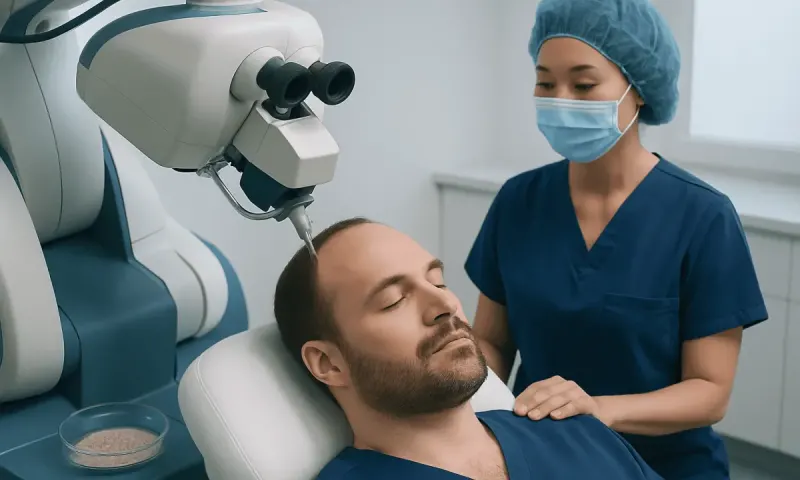
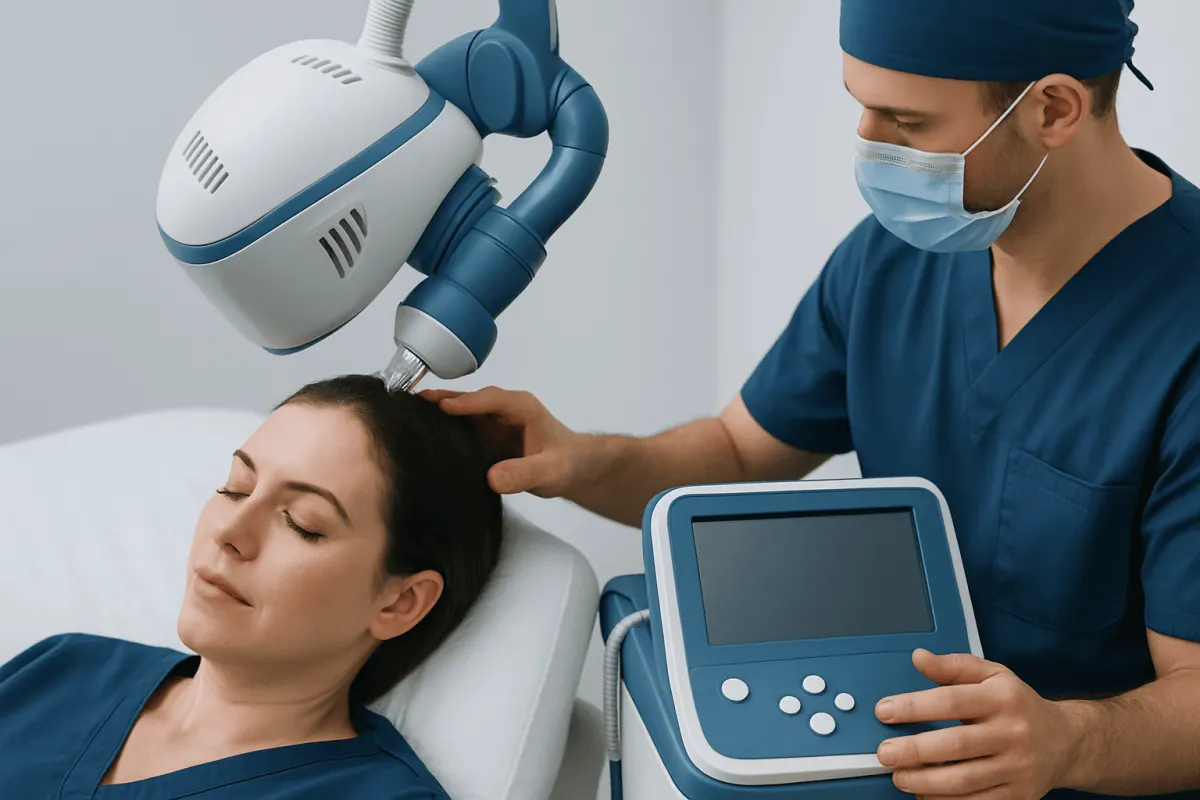
On the day of surgery, the scalp is cleaned and local anesthetic is used to numb the donor and recipient areas. Depending on the technique, follicular units are either removed individually with FUE or harvested from a thin strip of donor scalp with FUT. The grafts are examined and kept in a controlled environment while the clinician creates very small recipient sites at the correct angle and direction.
The grafts are then placed into these sites. The procedure can take several hours, depending on the size of the area being treated and the number of grafts. Some people benefit from one session, while others may need staged treatment to improve coverage or address future changes in hair loss. A reputable team should explain both the possible benefits and the limits of surgery before proceeding.
Most procedures are performed with the person awake under local anesthesia. Sedation may sometimes be offered, depending on clinical suitability and the treatment setting. The individual usually goes home the same day with written instructions for washing, sleeping, activity and medications prescribed by the treating clinician.
Recovery Timeline and Early Results
During the first few days, mild soreness, tightness, swelling or tenderness can occur. Tiny crusts commonly form around the implanted follicles. It is important not to scratch, rub or pick the recipient area, as this may disturb grafts during their earliest healing stage. The surgical team will explain when and how to wash the scalp gently.
Within approximately one to two weeks, crusting usually resolves and the grafts become more secure. Temporary numbness or altered sensation in the donor area can last longer for some people. The appearance of the scalp may be noticeable in the first days, so some patients plan time away from work or social events, although this varies according to the technique, hairstyle and extent of treatment.
Transplanted hairs often shed several weeks after surgery. This is a normal phase known as shock shedding; the follicles remain beneath the skin and later begin a new growth cycle. Early new hairs may appear around three to four months, with more visible improvement commonly developing from six months onward. Final maturation may take 12 months or longer, especially for crown or diffuse-density areas.
Aftercare commonly includes avoiding strenuous exercise, swimming, direct sun exposure and tight headwear for the period advised by the surgical team. Smoking can impair wound healing, and patients should discuss all medicines, supplements and hair products before the procedure. Follow-up visits allow the clinician to monitor healing and discuss ongoing medical treatment for native hair when needed.
Benefits, Risks and Long-Term Planning
The main potential benefit of transplantation is the redistribution of a person’s own growing hair into areas where density is reduced. When performed for an appropriate indication and planned conservatively, it can improve hairline shape, part-line visibility or localized coverage. Because transplanted follicles retain many of the characteristics of the donor area, they can continue to grow for many years.
However, all surgery has risks. These include bleeding, infection, prolonged swelling, discomfort, scarring, temporary numbness, folliculitis, poor graft growth and an unnatural-looking direction or density if the procedure is not planned carefully. Some people also experience temporary shock loss of nearby native hair, particularly if that hair is already fine or miniaturized.
Results cannot be guaranteed. Hair characteristics, scalp health, donor density, technique, the extent of pre-existing loss and future progression of hair loss all influence the outcome. Transplantation adds hair to selected locations; it does not create unlimited density or prevent the loss of untreated native hair elsewhere.
Long-term planning is particularly important in women with progressive pattern hair loss. A dermatologist or hair restoration clinician may recommend medical or supportive therapies to preserve existing hair where appropriate. These may include topical treatments or treatment of an identified deficiency or underlying condition; the choice should be individualized, especially for those who are pregnant, breastfeeding or planning pregnancy.
When to Seek Medical Care
A medical assessment is advisable before considering a hair transplant, particularly if hair loss is new, rapidly worsening, patchy, accompanied by scalp pain or scaling, or associated with other health changes. Prompt evaluation is also important for hair loss after childbirth, major illness, surgery, substantial weight change or a new medication, since these situations may have reversible causes.
After a procedure, patients should contact their surgical team if they develop increasing redness, warmth, severe or worsening pain, pus-like drainage, fever, excessive bleeding or significant swelling that does not improve as expected. These symptoms do not always indicate a serious problem, but they should be assessed without delay.
Women who feel distressed by hair loss can also benefit from professional support while diagnosis and treatment are underway. Hair loss may affect confidence and daily well-being, and discussing concerns openly helps clinicians tailor realistic treatment goals. Acıbadem Health Point’s multidisciplinary specialists and JCI-accredited hospitals diagnose and treat hair loss conditions and hair transplantation needs for international patients.
Common Questions About Hair Implant Surgery
How long does it take to recover from hair implant surgery? Most people can resume light routine activities within a few days, while crusting and visible early healing generally improve over one to two weeks. The scalp continues to heal over subsequent weeks, and temporary shedding is common before new growth begins. Meaningful cosmetic improvement takes months rather than days, with final results often assessed after about 12 months or longer.
What I wish I knew before a hair transplant? It is helpful to know that a transplant is not an instant result and that the first weeks can involve crusts, redness and shedding of the transplanted hair shafts. Donor hair is a limited resource, so an ethical plan focuses on natural-looking coverage and future hair-loss patterns rather than pursuing unrealistic density. Identifying and treating an underlying cause of shedding before surgery is equally important.
What happens 10 years after a hair transplant? Transplanted follicles may continue growing for many years, but the person’s non-transplanted hair can still thin over time, particularly with female pattern hair loss. This can create a contrast between transplanted and native hair if ongoing loss is not managed. Long-term follow-up and, when appropriate, treatment to maintain existing hair can help preserve a balanced appearance.
How painful is hair implant surgery? Local anesthetic is used, so people commonly feel brief discomfort during numbing injections but should not feel sharp pain during graft harvesting or placement. Mild tenderness, tightness or soreness afterward is common and is usually manageable with the care plan provided by the clinician. Pain that becomes severe or steadily worsens should be reported to the surgical team.
Frequently asked questions
01Can women get hair implants without shaving their whole head?
Often, yes. Depending on the technique, the donor area may be trimmed in a limited way or the procedure may be adapted for longer hair. The safest and most effective approach depends on donor density, hair length, the area being treated and the surgical team’s method.
02Is FUE or FUT better for women?
Neither technique is universally better. FUE may avoid a linear scar but can require more trimming of the donor area, while FUT may preserve follicles efficiently for some patients but leaves a fine linear scar. A specialist can recommend an approach based on the individual’s hair characteristics, goals and expected future hair loss.
03Will transplanted hair look natural?
It can look natural when the hairline, angle, direction and density are carefully designed for the individual. Natural results also depend on matching the procedure to the available donor hair and avoiding overly dense or low hairline plans. Hair texture, color and contrast with the scalp influence the appearance as well.
04Can a hair transplant treat diffuse thinning in women?
It may help selected women with diffuse thinning if there is a sufficiently strong donor area and the cause of hair loss is stable. However, diffuse thinning can also affect the donor region, making surgery less suitable. Careful assessment is essential before proceeding.
05Do hair implants require maintenance treatment?
The transplanted follicles do not usually need special maintenance to continue growing, but the surrounding natural hair may need treatment if the underlying hair-loss process continues. A clinician may recommend ongoing medical management, scalp care or periodic review based on the diagnosis. Follow-up also helps identify changes in hair density over time.
06Can hair transplant surgery be done after pregnancy?
Hair shedding after pregnancy is common and often improves naturally over time. It is usually sensible to wait until shedding has stabilized and a clinician has assessed the cause before considering surgery. Treatment choices should also take breastfeeding and future pregnancy plans into account.
This article is for general information only and is not a substitute for professional medical advice. Please consult a qualified doctor about your individual situation.
Hair transplant in Turkey — costs, graft counts & a free assessment
JCI-accredited · board-certified surgeons · reply within 24h
Add us as a Preferred Source to see more of our trusted health content across Google Search, AI Overviews and Discover.