Guy Tummy Tuck: Removing Excess Abdominal Skin
A guy tummy tuck, also called male abdominoplasty, is surgery that removes loose lower-abdominal skin and fat and may tighten separated abdominal muscles. It is designed for men who are near a stable weight but have skin laxity or abdominal contour changes that do not improve with diet and exercise.
Guy Tummy Tuck: What It Is and How It Works
A guy tummy tuck is the common term for abdominoplasty performed for men. It reshapes the abdomen by removing excess skin and, when appropriate, some underlying fat. The surgeon may also repair stretched or separated abdominal wall muscles, known as rectus diastasis, to create a flatter, firmer-looking contour.
Male abdominoplasty is not intended to create dramatic weight loss or replace healthy eating and physical activity. Instead, it can address loose skin, a lower-abdominal overhang, or persistent contour concerns after weight change. For men with good skin elasticity and mainly localized fat, liposuction alone may sometimes be considered; however, liposuction cannot remove significant loose skin or repair muscle separation.
The scar is usually placed low on the abdomen so it can often be covered by underwear or swimwear. The exact length and placement depend on the amount and location of excess skin. A specialist assessment helps determine whether a full, mini, or extended approach is most appropriate. More information about tummy tuck (abdominoplasty) can help patients understand the procedure in context.
Who May Be a Candidate for a Male Tummy Tuck?
Suitable candidates are generally men who are in good overall health, have a stable body weight, and have realistic expectations about what surgery can achieve. Many seek a guy tummy tuck after substantial weight loss, when aging or weight fluctuations have reduced skin elasticity, or when a lower-abdominal bulge remains despite regular exercise.
A surgeon will consider skin quality, the amount and distribution of fat, abdominal muscle strength, prior operations, medical conditions, medication use, and smoking or nicotine exposure. People planning further major weight loss are often advised to postpone surgery because future weight changes can affect the result.
Men should tell the surgical team about previous abdominal surgery, hernias, diabetes, circulation problems, blood-clot history, sleep apnea, and any supplements or medicines they take. A physical examination can also identify concerns such as an umbilical hernia, which may require separate evaluation or coordinated care.
- Body weight is reasonably stable for several months.
- There is excess skin or tissue that is unlikely to improve with lifestyle measures alone.
- The person can avoid smoking and nicotine before and after surgery as directed.
- There is a clear understanding that scars are permanent, although they usually fade over time.
What Happens During a Guy Tummy Tuck?
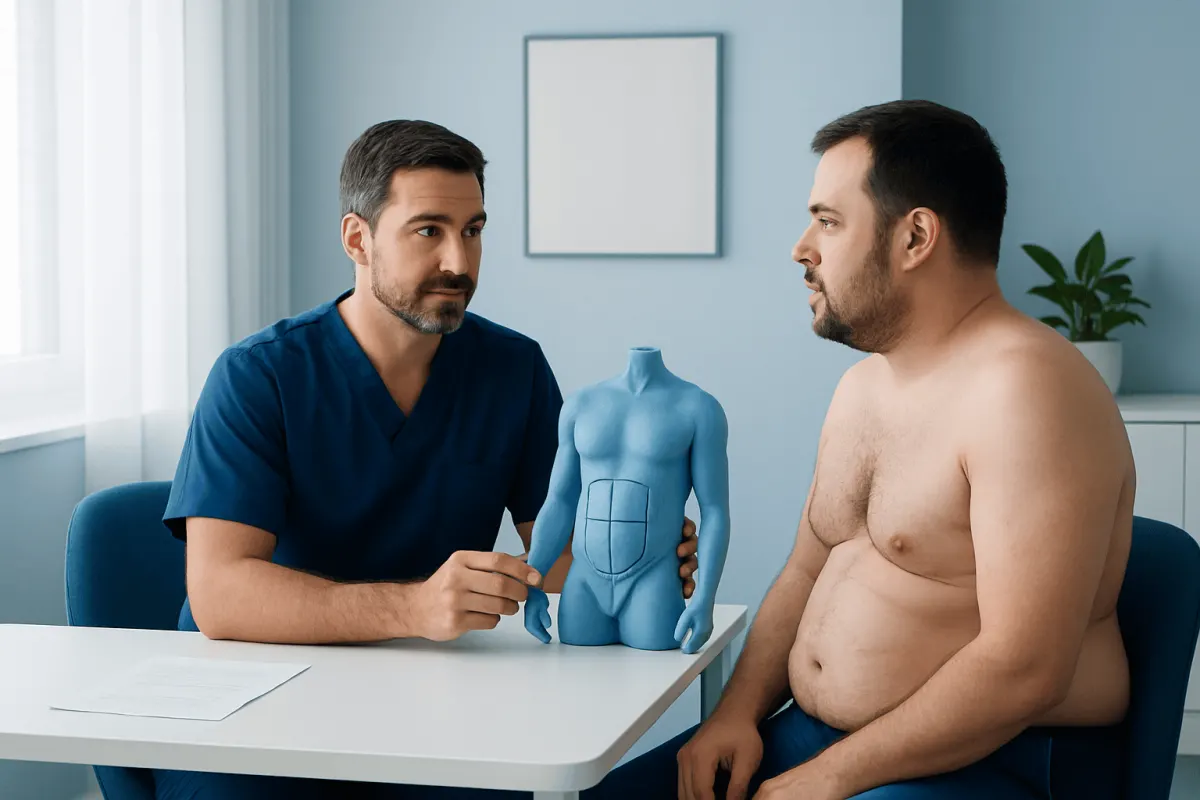
A guy tummy tuck is usually performed under general anesthesia. Before surgery, the surgeon marks the planned incision while the patient is standing, reviews the treatment plan, and confirms consent. The operation often takes several hours, although timing varies with the technique and whether other procedures are performed at the same time.
In a full abdominoplasty, the surgeon makes a low horizontal incision, lifts the abdominal skin, and assesses the underlying tissues. If abdominal muscles are separated or weakened, they may be brought closer together with internal sutures. Excess skin is then removed, the remaining skin is redraped, and the navel is repositioned when needed for a natural appearance.
Some men need only a mini tummy tuck, which treats a smaller amount of skin laxity below the navel and generally uses a shorter incision. An extended procedure may be considered when loose tissue continues toward the hips or flanks, particularly after significant weight loss. Liposuction may be combined selectively to improve contour, but the choice depends on safety, tissue quality, and individual goals.
Temporary drains may be used to remove fluid from the surgical area, although techniques differ. Compression garments are commonly recommended after surgery to support healing and help limit swelling. Patients receive individualized instructions about walking, wound care, showering, garments, medicines, and follow-up appointments.
Recovery Timeline After a Male Tummy Tuck
Recovery differs from person to person, but early swelling, bruising, tightness, and discomfort are expected. The care team provides an individualized pain-management plan and encourages short, gentle walks soon after surgery to support circulation. Patients may initially walk slightly bent at the waist to avoid placing tension on the incision.
During the first one to two weeks, help at home may be useful, especially for meals, transport, and tasks that require bending, lifting, or reaching. Driving should wait until the person is no longer taking sedating pain medicine and can move comfortably enough to react safely. Drain care, if drains are used, should follow the surgical team’s instructions exactly.
Many men can resume desk-based or otherwise light work in about two to four weeks, depending on discomfort, work demands, and the extent of surgery. Strenuous exercise, heavy lifting, core training, and contact sports usually need to be avoided for several weeks or longer. The surgeon will advise when activity can increase safely.
Swelling improves gradually over months. Incisions continue to mature for many months and may take a year or more to fade. Follow-up visits are important because they allow the team to monitor wound healing, adjust activity advice, and address questions promptly.
Benefits, Limitations and Possible Risks
A successful guy tummy tuck can remove hanging skin, improve the shape of the lower abdomen, reduce discomfort from skin folds, and make clothes fit more comfortably. Muscle repair may also improve the feeling of abdominal support for selected patients. Results are often long-lasting when body weight remains stable and overall health habits are maintained.
However, surgery cannot guarantee a perfectly defined abdomen, remove all stretch marks, or prevent future changes from aging, weight fluctuations, or reduced muscle tone. Stretch marks below the removed skin may be eliminated, while marks on the remaining abdominal skin may still be present. A tummy tuck also leaves a permanent scar, even though scar appearance usually improves over time.
Potential complications include bleeding, infection, fluid collection under the skin, delayed wound healing, numbness or altered sensation, unfavorable scarring, asymmetry, skin loss, blood clots, anesthesia-related problems, and the need for revision surgery. Risks can be higher with smoking, nicotine products, uncontrolled health conditions, obesity, or poor wound healing.
Choosing an appropriately trained surgeon and following preoperative and postoperative guidance can reduce, but not eliminate, risk. Acıbadem Health Point’s multidisciplinary specialists and JCI-accredited hospitals assess and treat suitable international patients with individualized surgical planning and follow-up arrangements.
Common Questions About Guy Tummy Tuck Results
How long does it take a man to heal from a tummy tuck? Initial wound healing and a return to basic daily routines commonly take several weeks. Many men feel more comfortable by four to six weeks, but internal healing, scar maturation, and resolution of swelling continue for several months. The exact timeline depends on the procedure performed, whether muscle repair was needed, general health, and adherence to aftercare instructions.
Is a male tummy tuck worth it? Whether a male tummy tuck is worthwhile is a personal decision based on the degree of loose skin, physical symptoms, body-image concerns, recovery commitment, and acceptance of a scar and surgical risks. It may be valuable for a well-informed man with stable weight and realistic goals, particularly when loose skin will not respond to exercise. A consultation should explore alternatives, expected improvement, limitations, and safety rather than promise a particular outcome.
Can I lose 20 pounds after a tummy tuck? It is generally best to reach and maintain a sustainable target weight before surgery rather than plan substantial weight loss afterward. Losing 20 pounds after a tummy tuck may loosen the remaining skin and change the abdominal contour, potentially reducing the durability of the result. If weight loss is medically advised, a clinician can help create a safe plan and advise on the best timing for body-contouring surgery.
What happens 10 years after a tummy tuck? Ten years after surgery, removed skin and fat do not return in the same way, but the abdomen can still change with aging, weight gain or loss, changes in exercise habits, and health conditions. A stable weight, regular activity, balanced nutrition, and sun protection for scars can help preserve the appearance of the result. Some people remain satisfied long term, while others may notice gradual laxity or seek further assessment if their body changes substantially.
When to Seek Medical Care
Before surgery, a man should seek medical advice if there is a new or enlarging abdominal bulge, persistent abdominal pain, skin irritation in a fold, unexplained weight change, or concerns about a hernia. These symptoms may have causes that need assessment before cosmetic body-contouring surgery is considered.
After a tummy tuck, the surgical team should be contacted urgently for increasing redness, warmth, swelling, worsening pain, drainage with an unpleasant odor, fever, opening of the incision, or one-sided leg swelling. Emergency care is needed for chest pain, sudden shortness of breath, coughing blood, fainting, or other signs that could suggest a serious complication.
Patients should attend all planned follow-up appointments, even when they feel well. Questions about compression garments, drains, activity, nutrition, scar care, or return to work are best discussed with the operating surgeon, who knows the details of the procedure and individual medical history.
Frequently asked questions
01What is the difference between a guy tummy tuck and liposuction?
A guy tummy tuck removes excess skin and can repair separated abdominal muscles. Liposuction removes localized fat through small incisions but does not tighten significant loose skin or correct muscle separation. Some patients may benefit from a combination, but this depends on their anatomy and safety assessment.
02Will a male tummy tuck create visible abs?
A tummy tuck can improve abdominal flatness and contour, especially when loose skin or muscle separation is present. It does not directly build abdominal muscles or guarantee a defined six-pack appearance. Muscle tone, body-fat distribution, skin quality, and lifestyle all influence the final look.
03How painful is a guy tummy tuck?
Discomfort is expected, particularly in the first days after surgery, and can be more noticeable if muscle repair is performed. The surgical team provides a pain-management plan and guidance on safe movement. Pain that becomes suddenly worse or is accompanied by fever, redness, or breathing symptoms needs medical attention.
04How long do I need to wear a compression garment after a tummy tuck?
Compression garment recommendations vary by surgical technique, swelling, and the surgeon's protocol. Many patients wear one for several weeks, sometimes with changes in duration or type as healing progresses. The garment should be worn only as instructed, because overly tight compression can be uncomfortable or interfere with circulation.
05Can a man have a tummy tuck after weight-loss surgery?
Yes, a tummy tuck may be considered after weight-loss surgery once weight has stabilized and nutritional health has been assessed. Significant weight loss can leave excess abdominal skin that affects comfort, hygiene, and body contour. A surgeon may work with bariatric, nutrition, and medical teams to plan care safely.
06Can weight gain affect tummy tuck results?
Yes. Weight gain can enlarge remaining fat cells and stretch the skin, changing the abdominal contour after surgery. Maintaining a stable weight through sustainable nutrition and activity habits is one of the best ways to support long-term results.
This article is for general information only and is not a substitute for professional medical advice. Please consult a qualified doctor about your individual situation.
Medical weight-loss options in Turkey — costs & eligibility
JCI-accredited · board-certified surgeons · reply within 24h
Add us as a Preferred Source to see more of our trusted health content across Google Search, AI Overviews and Discover.