Groin Tear Exercises: Safe Techniques That Actually Help

Key Takeaways
- Groin tear exercises should begin gently and progress based on pain, swelling, and function.
- Early rehab usually focuses on range of motion, light activation, and controlled isometric work.
- Stretching too aggressively or returning to sport too soon can delay healing.
- Pain that is sharp, worsening, or associated with weakness should be medically assessed.
- A structured plan helps reduce re-injury risk and supports a safer return to walking, work, and sport.
Groin tear exercises can help restore mobility, strength, and confidence after an adductor strain, but they need to be introduced at the right stage of healing. A careful rehabilitation plan is usually more effective than complete rest alone, especially when guided by a clinician or physiotherapist.
Overview
A groin tear, often called an adductor strain, affects the muscles on the inner thigh that help stabilize the pelvis and move the leg inward. The right exercises can make a real difference, but the timing matters: the goal is not to “push through” pain, but to rebuild control in a way the tissue can tolerate.
For many people, recovery starts with very simple movements and gradually moves toward strengthening, balance, and sport-specific drills. The best groin tear exercises are the ones that match the stage of healing, the severity of the injury, and the person’s day-to-day goals, whether that is walking comfortably, returning to running, or getting back to a court or field sport.
Because groin pain can also come from the hip joint, lower abdomen, or even the lumbar spine, a proper diagnosis is important before starting a rehab routine. That helps ensure the exercises are treating the correct problem rather than aggravating something else.
Symptoms
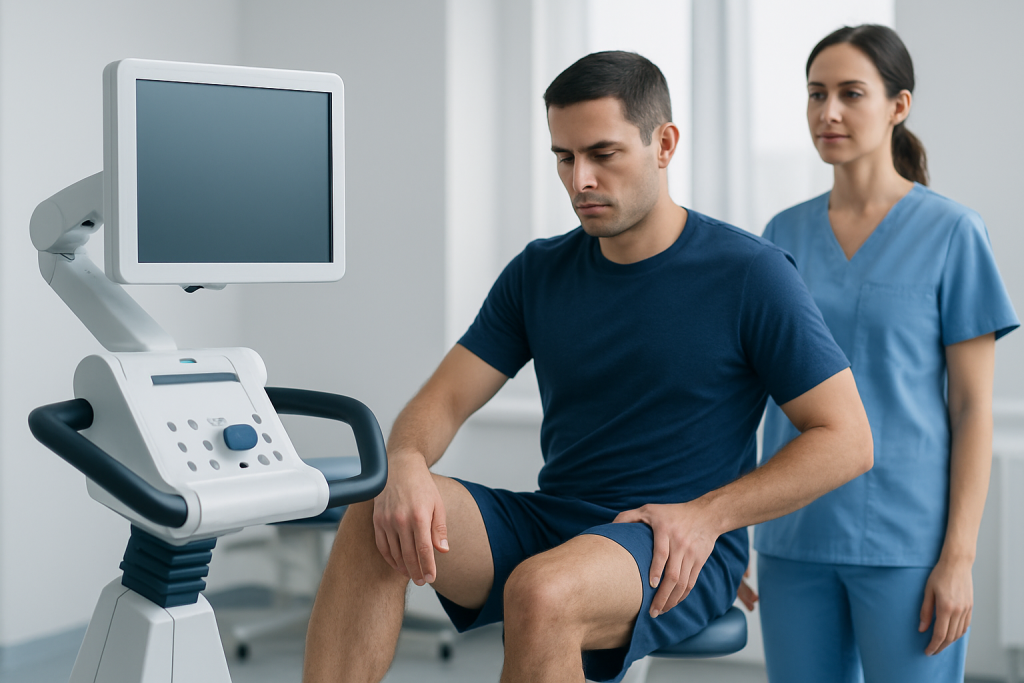
A groin tear usually causes pain along the inner thigh or where the thigh meets the pelvis. The discomfort often appears during quick direction changes, kicking, lunging, getting out of a car, or lifting the knee.
Depending on the grade of strain, symptoms can include tenderness, stiffness, swelling, bruising, or a feeling of weakness in the leg. Some people notice that walking feels awkward at first, especially when the injured side has to support body weight or when the leg is stretched outward.
Symptoms often improve gradually, but it is common for the area to feel tight or irritated if activity increases too quickly. A recovery plan should respect that sensitivity and use symptoms as a guide rather than treating discomfort as a sign to do more.
Causes & Risk Factors
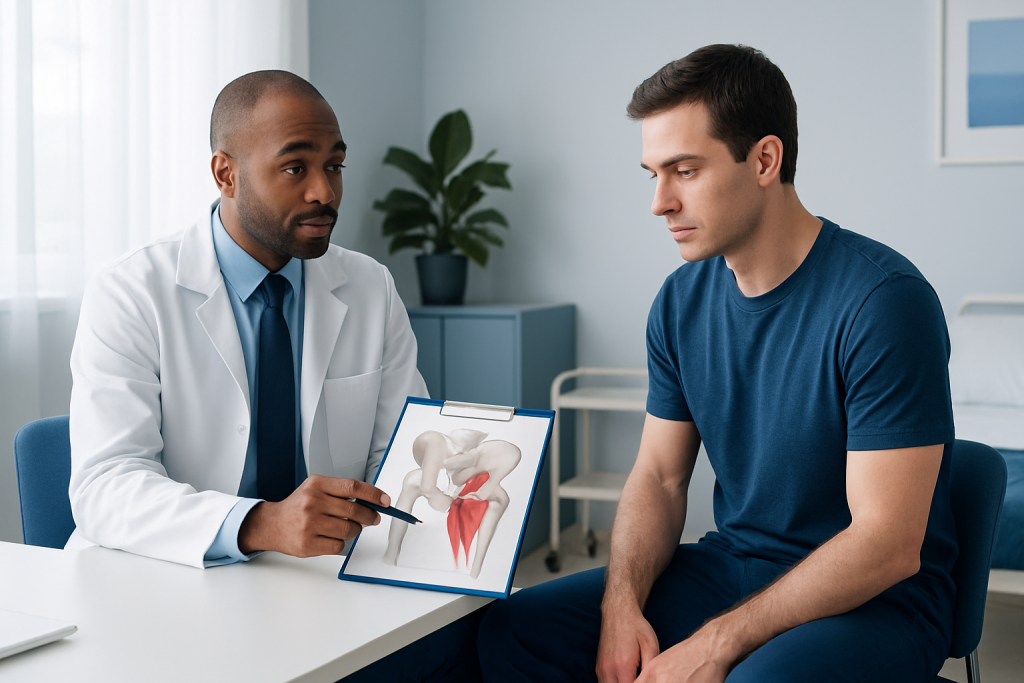
Groin tears commonly happen when the adductor muscles are asked to produce force faster than they are prepared for. Sprinting, cutting, sudden twisting, ball striking, and slipping are common mechanisms. In everyday life, an awkward step or overreaching movement can also trigger the injury.
Several factors can make a groin strain more likely. These include previous groin injury, reduced hip mobility, weak hip and core muscles, poor warm-up, muscle fatigue, and sports that involve repeated acceleration or change of direction. In some cases, differences in training load or technique can increase risk as well.
It is also worth noting that pain in the groin region is not always a muscle tear. Hip joint conditions, hernias, stress injuries, and tendon problems can create similar symptoms, which is another reason a medical assessment is helpful before starting exercises on your own.
Diagnosis
Diagnosis usually begins with a medical history and physical examination. A clinician will ask how the pain started, what movements trigger it, and whether there was a popping sensation, bruising, or difficulty bearing weight. They will also check strength, tenderness, and how the hip and pelvis move.
Imaging is not always needed, but it may be recommended if symptoms are severe, the diagnosis is unclear, or a more significant injury is suspected. Ultrasound or MRI can help evaluate muscle and tendon involvement, while X-rays or other tests may be used when bone or joint problems need to be ruled out.
For people traveling from another country for care, a clear diagnosis is especially valuable because it helps avoid unnecessary treatment and makes remote follow-up simpler. A well-documented assessment also helps coordinate the next steps in rehabilitation once the person returns home.
Treatment Options
Most groin tears are treated without surgery. Early care often includes relative rest, activity modification, ice or other comfort measures, and a gradual return to movement. The exact plan depends on whether the injury is mild, moderate, or more extensive.
Groin tear exercises are usually introduced in phases. Early exercises may focus on gentle pain-free motion and isometric contractions, which help activate the muscles without pulling too hard on the injured tissue. As symptoms settle, the plan may progress to resistance work, balance training, and functional movements such as stepping, squatting, and controlled side lunges.
Useful exercise stages often include:
- Gentle hip and leg range-of-motion movements
- Adductor isometrics, such as light ball or pillow squeezes
- Bridging and core activation exercises
- Standing hip strengthening and controlled side steps
- Progressive return-to-run or return-to-sport drills when pain is minimal
What should be avoided early on? Forceful groin stretching, explosive change-of-direction drills, heavy resistance before pain settles, and “testing” the injury with sports movements too soon. A good rule is that exercises should cause, at most, mild discomfort that settles quickly and does not worsen later that day or the next morning.
In more persistent cases, physiotherapy plays a central role. A therapist can fine-tune load progression, correct movement patterns, and build the strength and coordination needed to prevent the injury from becoming a repeat problem.
Prevention & Self-care
Once pain begins to improve, the recovery process is usually shaped by consistency rather than intensity. Short, regular sessions are often more helpful than occasional hard workouts, especially in the early stages of healing. Progress should be based on function: walking, climbing stairs, changing direction, and performing daily tasks without a flare-up.
Self-care measures can support the exercise plan. These may include avoiding sudden strain, using comfortable footwear, keeping overall activity light on symptom-heavy days, and warming up before exercise. Adequate sleep and balanced nutrition also support tissue recovery, although they do not replace rehabilitation.
To reduce the chance of future groin problems, many people benefit from strengthening the hips, glutes, and trunk in addition to the adductors. Sports-specific preparation, gradual training increases, and attention to flexibility and technique are also important. Prevention is less about one “magic” stretch and more about keeping the whole movement system prepared for load.
When to See a Doctor
Medical evaluation is advisable if groin pain is severe, there is a visible deformity or major bruising, or walking becomes difficult. It is also important to seek assessment if the pain follows a fall, a sudden pop, or a twisting injury that feels more than a simple strain.
Persistent pain, recurring symptoms, numbness, swelling in the groin or testicular area, fever, or pain that spreads to the abdomen, back, or hip should not be ignored. These features may point to a condition that needs a different treatment approach.
Anyone who has been trying groin tear exercises for a while without steady improvement should also be checked by a clinician or physiotherapist. A tailored plan can clarify whether the issue is truly a muscle strain, whether the exercise load is appropriate, and how to move forward safely. For international patients, Acibadem Health Point’s multidisciplinary specialists and JCI-accredited hospitals can diagnose and treat groin injuries with coordinated follow-up care.
Return to Activity and Recovery Expectations
Recovery is usually gradual. The first milestone is often simple comfort with walking and daily movement, followed by pain-free strengthening, then higher-level actions such as jogging, cutting, and sport drills. People who try to jump ahead often discover that symptoms return when the tissue is asked to absorb force before it is ready.
A useful sign of progress is not just less pain, but better control. The injured leg should feel more stable, stronger in side-to-side movement, and less reactive after exercise. If a session causes a clear setback the next day, the load may need to be reduced.
Patience matters here. A groin injury can look small from the outside, but the adductor muscles are heavily involved in many everyday and athletic tasks. A stepwise plan gives them the best chance to heal without becoming a long-term frustration.
Frequently asked questions
01What are the safest groin tear exercises to start with?
The safest early exercises are usually gentle range-of-motion movements and light isometric contractions, such as a soft squeeze between the knees. These help activate the muscles without placing too much stretch on the injured tissue. A clinician can help decide when to move on to strengthening.
02Should stretching be part of groin tear recovery?
Gentle mobility can be useful, but aggressive stretching is usually not a good idea early on. If stretching increases pain or leaves the area more irritated later, it is probably too much. The best approach is gradual, not forceful.
03How long does it take to recover from a groin tear?
Recovery time varies depending on how severe the strain is and how the person responds to rehab. Mild injuries may improve in a few weeks, while more significant strains can take longer. Progress should be guided by function and symptoms, not only by the calendar.
04Can someone exercise with a groin tear?
Often yes, but the exercise should be modified to match the stage of healing. Early on, that may mean low-load movements only, while later stages may include more demanding strengthening and balance work. Exercise should not make the injury noticeably worse afterward.
05What should be avoided after a groin tear?
It is usually wise to avoid sprinting, cutting, jumping, heavy resistance, and deep groin stretching at first. Sudden increases in training volume can also slow healing. Activities should return in steps rather than all at once.
06When is surgery needed for a groin tear?
Most groin tears do not need surgery. It is considered mainly when the injury is severe, there is a major tendon problem, or symptoms do not improve with proper rehabilitation. A specialist can determine the right course after an examination and, if needed, imaging.
This article is for general information only and is not a substitute for professional medical advice. Please consult a qualified doctor about your individual situation.
Joint and spine care in Turkey — expert assessment & treatment
JCI-accredited · board-certified surgeons · reply within 24h
Add us as a Preferred Source to see more of our trusted health content across Google Search, AI Overviews and Discover.