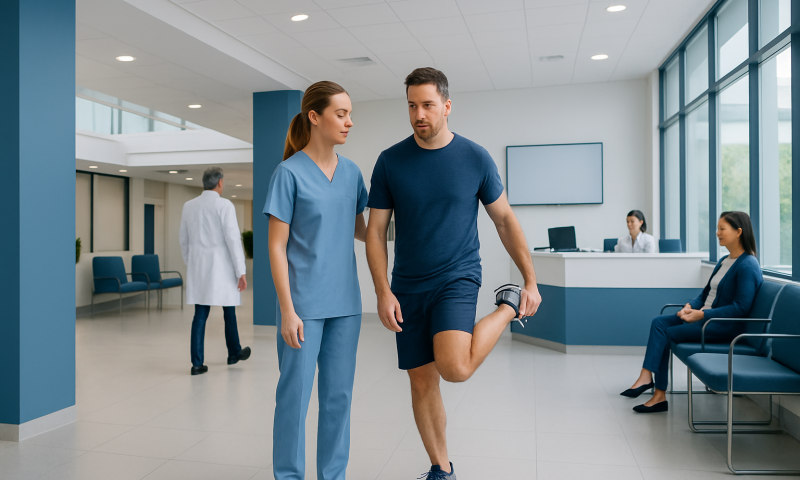
What Is Fitness Leg Day? A Complete Medical Guide

Key Takeaways
- Fitness leg day is a lower-body strength session that targets major muscles used for walking, climbing, squatting, and stability.
- Good form matters more than heavy load, especially for people new to resistance training or returning after injury.
- Muscle soreness after leg day can be normal, but sharp pain, swelling, or joint instability should be assessed.
- Recovery, sleep, hydration, and gradual progression are part of the training plan, not extras.
- People with knee, hip, back, or vascular conditions may need individualized exercise advice from a clinician or physiotherapist.
Fitness leg day is a strength-training session focused on the muscles of the hips, thighs, glutes, and calves. When planned well, it can improve mobility, balance, and overall function while helping reduce injury risk from weak lower-body muscles.
Overview
Fitness leg day is a structured workout devoted to the lower body. It usually includes exercises that train the quadriceps, hamstrings, gluteal muscles, calves, and the smaller stabilizing muscles around the hips, knees, and ankles. In simple terms, it is the part of a training routine that helps the body push, squat, step, stabilize, and move with more control.
For many people, leg day is not only about appearance or athletic performance. Strong lower-body muscles support everyday actions such as standing up from a chair, carrying groceries, climbing stairs, and maintaining balance on uneven ground. A well-designed leg session can also contribute to healthier movement patterns by improving joint support and coordination.
Because lower-body exercises can be demanding, the best version of fitness leg day is not the most extreme one. It is the version that matches a person’s experience, mobility, and overall health. A medical and fitness perspective both point to the same idea: effective training should challenge the muscles without overwhelming the joints, spine, or cardiovascular system.
What a leg day workout usually includes

There is no single universal leg day routine. Some programs use free weights, some rely on machines, and others depend on bodyweight movements. Common exercises include squats, lunges, step-ups, deadlift variations, leg presses, calf raises, and hip-focused movements such as bridges or thrusts.
These exercises are often chosen because they work multiple muscle groups at once. For example, squats and lunges train not only the thighs and glutes but also the core and foot stabilizers. That broader muscle engagement is one reason leg day can feel challenging even when the exercise list seems short.
A balanced lower-body session usually includes a warm-up, the main strength work, and a short cooldown. The warm-up may involve light walking, cycling, or dynamic mobility work to prepare the joints and muscles. The cooldown can help the body transition out of exercise more comfortably and may support recovery in the hours that follow.
Muscles worked during fitness leg day

Fitness leg day primarily targets the large muscles that power movement and support posture. The quadriceps on the front of the thighs help with straightening the knee and rising from seated positions. The hamstrings at the back of the thighs assist with bending the knee and extending the hip. The gluteal muscles are central to standing, climbing, running, and pelvic stability.
The calves contribute to walking, jumping, and ankle control, while the hip abductors and adductors help keep the pelvis steady during single-leg tasks. Many lower-body exercises also require the muscles of the trunk to brace the spine. This is why leg day can improve more than leg strength alone; it often influences total-body coordination.
Understanding which muscles are being trained can help people choose better exercise variations. Someone with limited knee tolerance may do better with hip-dominant work, while someone recovering from a back issue may need a more supported machine-based approach. The right plan depends on the person, not just the workout trend.
Why leg training matters for health and function
Lower-body strength is closely tied to independence. When the hips, thighs, and calves are weak, routine movements can become harder and more tiring. Over time, that may affect walking speed, stair climbing, and confidence during balance-demanding tasks.
Fitness leg day can also support joint health by improving the muscles that absorb force and control movement. Stronger muscles may reduce stress on certain structures during daily activities, although they do not replace medical treatment for existing injuries or arthritis. For some people, properly supervised resistance training becomes part of rehabilitation or long-term prevention.
There is also a metabolic benefit to training large muscle groups. Because the legs contain some of the body’s biggest muscles, working them can feel more demanding than training smaller areas. That challenge is not a drawback; it is one reason lower-body exercise is so useful in a complete fitness plan.
Common mistakes and injury risks
Leg day is often where people are most tempted to add weight too quickly or push through fatigue with poor form. That approach can place unnecessary stress on the knees, hips, lower back, or ankles. The goal should be controlled movement and steady progress rather than chasing the deepest squat or heaviest load.
Typical mistakes include skipping the warm-up, using a range of motion that the body cannot control, letting the knees collapse inward, rounding the lower back under load, and training through sharp pain. Muscle fatigue is expected; joint pain is not something to ignore. Good technique usually looks less dramatic than social media makes it appear.
People with prior injuries, pregnancy-related pelvic changes, arthritis, osteoporosis, hernias, or balance issues may need modifications. In those situations, a physiotherapist, sports medicine specialist, or doctor can help decide which movements are safe and which should be avoided or adapted.
How to recover after leg day
Recovery starts as soon as the workout ends. Gentle walking, light mobility work, hydration, and a return to normal eating patterns can help the body settle after a challenging session. Sleep is especially important, because muscle repair and nervous system recovery are strongly influenced by rest.
Some soreness one to two days after a hard workout is common, particularly when trying a new movement or increasing intensity. This delayed soreness usually improves gradually and tends to feel like stiffness or muscle tenderness rather than a sudden injury. It should still allow a person to move, even if comfortably.
Recovery also includes pacing future sessions. Repeating intense leg training without enough rest can lead to excessive fatigue, reduced performance, and a higher chance of overuse problems. Many people benefit from alternating heavy and lighter sessions, or combining lower-body strength work with other forms of exercise across the week.
- Use a gradual training progression.
- Prioritize sleep and hydration.
- Eat regular meals with adequate protein and overall energy.
- Allow time between demanding sessions when muscles are very sore.
How to make fitness leg day safer and more effective
Safe leg training begins with choosing exercises that match current ability. A beginner may start with bodyweight squats, supported split squats, step-ups, or machine-based movements before progressing to heavier barbell exercises. Technique should be learned first, then load should be added slowly.
It also helps to train with intention. That means moving through a comfortable and controlled range, keeping breathing steady, and stopping a set when form starts to break down. A person does not need to train to exhaustion for the workout to be effective.
People returning to exercise after a long break, illness, or orthopedic problem may benefit from an individualized plan. In an international care setting, that planning can include consultation with the right specialists before travel, followed by supervised exercise guidance or rehabilitation after evaluation. Acibadem Health Point’s multidisciplinary specialists and JCI-accredited hospitals diagnose and treat a wide range of musculoskeletal conditions for international patients, which can be helpful when lower-body pain or injury is part of a larger health picture.
When to see a doctor
Medical advice is important when leg pain is sudden, severe, or linked to swelling, redness, numbness, weakness, or difficulty bearing weight. Sharp pain during exercise, pain that changes a person’s gait, or pain that does not improve with rest should also be evaluated. These symptoms may point to an injury rather than normal post-workout soreness.
A doctor should also be consulted if repeated leg-day workouts trigger knee locking, instability, back pain, or hip pain. People with diabetes, circulation problems, or nerve symptoms in the legs may need a more cautious exercise plan. If the person is unsure whether the discomfort is muscle soreness or a problem needing care, it is better to ask early.
For travelers seeking evaluation abroad, it is often helpful to arrange a consultation before leaving home so the care plan is clear on arrival. A focused review of symptoms, imaging if needed, and a tailored rehabilitation strategy can make the recovery process more predictable and less stressful.
Frequently asked questions
01What is fitness leg day in simple terms?
Fitness leg day is a workout session focused on the muscles of the lower body, especially the thighs, glutes, hips, and calves. It is usually designed to improve strength, movement control, and overall function. The exact exercises can vary depending on experience and health status.
02Is soreness after leg day normal?
Mild to moderate soreness can be normal, especially after a new or intense workout. It often feels like stiffness or muscle tenderness and improves over time. Sharp pain, swelling, or pain in a joint rather than the muscle should be checked by a doctor.
03How often should someone do leg day?
That depends on training experience, recovery, and overall exercise volume. Many people do lower-body strength work one to three times per week, with enough rest between harder sessions. A clinician or fitness professional can help choose a safe schedule for specific needs.
04Can beginners do leg day safely?
Yes, beginners can usually do leg day safely when they start with simple movements and light resistance. Learning proper form and avoiding rushed progression are more important than using heavy weights. A guided plan may be especially useful for people with past injuries or joint concerns.
05Should leg day include cardio?
It can, but it does not have to. Some people do a short cardio warm-up before strength work, while others keep cardio for separate days. The best structure depends on goals, fitness level, and recovery needs.
06When should leg pain after exercise be taken seriously?
Leg pain should be taken seriously if it is severe, sudden, or accompanied by swelling, numbness, weakness, redness, or trouble walking. Pain that lasts longer than expected or keeps returning with exercise also deserves assessment. Early evaluation can help identify whether the issue is a strain, joint problem, or another condition.
This article is for general information only and is not a substitute for professional medical advice. Please consult a qualified doctor about your individual situation.
Joint and spine care in Turkey — expert assessment & treatment
JCI-accredited · board-certified surgeons · reply within 24h
Add us as a Preferred Source to see more of our trusted health content across Google Search, AI Overviews and Discover.