

Back of Thigh Pain: Causes, Relief and When to Worry

Key Takeaways
- Back of thigh pain is commonly caused by hamstring strain, overuse, or nerve irritation.
- Pain that starts in the low back and travels down the leg may suggest sciatica or another nerve problem.
- Swelling, redness, warmth, or sudden shortness of breath with leg pain can signal a more urgent condition.
- Gentle rest, activity modification, and targeted rehabilitation often help uncomplicated muscle pain.
- A doctor should assess persistent pain, major weakness, numbness, or pain after an injury.
Back of thigh pain is often linked to a strained hamstring or irritated nerve, but it can also reflect problems in the lower back, blood vessels, or nearby tissues. Most causes improve with simple care, yet certain symptoms deserve prompt medical assessment.
Overview
Back of thigh pain usually means discomfort felt along the hamstring area, which runs from the sitting bone to just below the knee. In many people, the cause is straightforward: a muscle strain after sport, a sudden movement, or a period of unusual activity. In others, the pain is referred from the lower back or caused by irritation of a nerve, so the location of the pain does not always reveal the true source.
For someone deciding whether to travel for care, the first question is often whether the pain is likely to settle with rest or whether it needs imaging, rehabilitation, or specialist review. Mild aches that improve over a few days are often managed conservatively. Pain that is severe, keeps returning, or comes with numbness, swelling, or weakness deserves a more careful evaluation.
Understanding the pattern matters. Pain that appears during sprinting, bending, or climbing stairs tends to point toward muscle or tendon involvement. Pain that shoots, burns, or tingles down the leg may fit nerve irritation. Because the causes overlap, a clear history and examination are usually more useful than trying to self-diagnose from the painful spot alone.
Symptoms
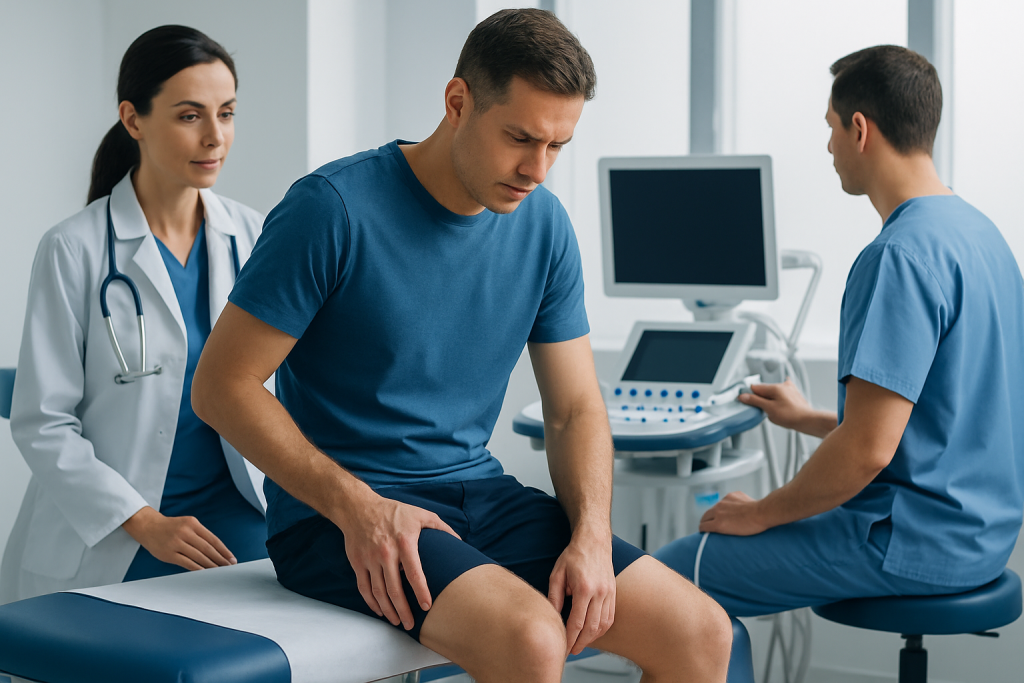
The feeling of back of thigh pain can vary from a dull ache to a sharp pull or a cramping sensation. Some people notice stiffness when they first stand up, while others feel pain only when stretching, walking fast, or trying to sit for long periods. A recent “twinge” during exercise often suggests a muscle injury, especially if it is worse when contracting the hamstring.
When the pain comes from the nerve system, the character is often different. It may be described as burning, electric, or traveling from the buttock toward the calf. Numbness, tingling, or weakness can appear alongside the pain, which makes nerve-related causes more likely.
- Pain during running, kicking, or bending at the hip
- Tightness or tenderness in the back of the thigh
- Bruising or swelling after a strain or tear
- Pain that radiates from the low back or buttock
- Numbness, tingling, or reduced strength in the leg
Symptoms that change the urgency include marked swelling, warmth, redness, trouble bearing weight, or sudden shortness of breath. Those signs can point to a problem that should not be ignored, even if the pain itself seems mild.
Causes & Risk Factors

The most common cause is a hamstring strain. This often happens when the muscle is overloaded during sprinting, jumping, or sudden acceleration and deceleration. Small tears in the muscle fibers can cause pain, tenderness, and difficulty straightening the leg.
Another frequent cause is referred pain from the lower back or the sciatic nerve. A disc problem, spinal narrowing, or muscle-related compression around the buttock can irritate the nerve and send pain to the back of the thigh. In these situations, the thigh may feel sore even though the main problem starts higher up.
Less commonly, back of thigh pain may be linked to tendon irritation, bruising after a direct blow, or a circulation issue such as a blood clot. Risk is higher in people who have had a previous hamstring injury, sudden training changes, poor warm-up habits, prolonged sitting, dehydration, or a recent period of immobility such as long-distance travel.
Important risk factors include:
- High-intensity sports or abrupt increases in exercise
- Prior muscle injury or poor flexibility
- Low back problems
- Long periods of sitting or driving
- Recent surgery, long-haul travel, or reduced mobility
Because more than one factor can be present at the same time, a careful clinician will usually look at both the leg and the spine, rather than focusing on the painful area alone.
Diagnosis
Diagnosis starts with a conversation about how the pain began, where it is felt, and what makes it better or worse. A recent sports injury suggests muscle involvement, while pain linked to coughing, bending, or long sitting may suggest a back or nerve source. The doctor will also ask about swelling, redness, numbness, weakness, and any history of travel, surgery, or blood clots.
A physical examination often includes checking strength, flexibility, walking pattern, and tenderness over the hamstring and buttock. Simple bedside maneuvers can help distinguish a muscle strain from nerve irritation. If the leg is swollen or the symptoms raise concern for a clot, urgent imaging may be needed.
Tests are not always required for a mild, improving strain. However, ultrasound, X-rays, MRI, or nerve studies may be used if the pain is persistent, the diagnosis is unclear, or there are red-flag symptoms. For someone seeking care from another country, this staged approach can be reassuring: the first visit is often enough to decide whether conservative care, rehabilitation, or a more detailed workup is needed.
Treatment Options
Treatment depends on the cause. For a simple hamstring strain, short-term rest from painful activity, ice in the early phase, and gradual return to movement are commonly recommended. Over-restricting activity can slow recovery, so the goal is usually protected motion rather than complete immobilization.
Rehabilitation is often the most important part of recovery. A physiotherapist may guide stretching, strengthening, and balance work to reduce the chance of re-injury. For nerve-related pain, treatment may also focus on the low back, posture, movement mechanics, and exercises that reduce pressure on the irritated nerve.
Other measures may include supportive footwear, activity modification, heat for muscle tightness after the early stage, and pain relief options advised by a doctor. If the cause is a blood clot, infection, or another more serious condition, treatment is very different and should begin promptly under medical supervision.
In more complex cases, especially after failed conservative care or when the diagnosis is uncertain, multidisciplinary assessment can be helpful. Acibadem Health Point’s specialists and JCI-accredited hospitals diagnose and treat these conditions for international patients, with coordinated care that can include orthopedics, neurology, imaging, and rehabilitation.
Prevention & Self-care
Preventing back of thigh pain starts with reducing sudden overload. A warm-up before exercise, gradual training progression, and attention to fatigue all lower the chance of a hamstring strain. People who sit for long hours may also benefit from regular breaks, hip mobility work, and strengthening of the glutes and core.
Self-care is most helpful when symptoms are mild and clearly tied to a muscle injury. Light walking as tolerated, avoiding painful sprinting or deep stretching early on, and returning to exercise step by step can support recovery. If sitting worsens symptoms, cushions or position changes may help temporarily.
- Build up running or gym activity gradually
- Include hamstring and glute strengthening
- Change position regularly during long travel or desk work
- Stay hydrated and recover well after exercise
- Seek a tailored plan after repeated injuries
For travelers or people recovering away from home, having a realistic rehabilitation plan matters. It is often better to arrange follow-up, physiotherapy, and return-to-activity guidance before resuming full training or a long journey home.
When to See a Doctor
Medical assessment is advisable if back of thigh pain follows a clear injury and there is a visible bruise, swelling, or trouble walking. It is also wise to seek care if the pain lasts more than a short period without improvement, keeps returning, or interferes with sleep and daily movement.
Prompt evaluation is especially important if there is numbness, weakness, a feeling of the leg giving way, pain spreading from the back, or symptoms that suggest a clot, such as swelling, warmth, or redness. Sudden shortness of breath, chest pain, or fainting with leg symptoms requires urgent emergency care.
People who are traveling, post-operative, pregnant, or recently immobilized should be more cautious with new leg pain. In those settings, even symptoms that seem modest can deserve same-day assessment, because the threshold for checking circulation or nerve-related causes is lower.
Living With Recovery and Follow-up
Recovery from back of thigh pain is often gradual rather than immediate, especially after a tear or nerve irritation. Many people do best when they monitor pain during activity, not just after it, and increase load only when walking, stairs, and light strengthening are comfortable.
Follow-up matters when the plan includes rehabilitation, imaging review, or a return to sport or work. A clinician may adjust the exercise program, check for persistent weakness, or investigate whether the pain is truly from the hamstring or from the back. That second look can be especially useful for international patients who need a clear roadmap before leaving the country.
With the right diagnosis and a paced recovery plan, most uncomplicated cases improve well. The key is not to rush the process, while also not ignoring warning signs that point to something other than a routine muscle strain.
Frequently asked questions
01What is the most common cause of back of thigh pain?
A hamstring strain is one of the most common causes, especially after running, jumping, or sudden acceleration. The pain is usually worse with movement and may feel tender when the back of the thigh is pressed. If the pain travels from the lower back or includes tingling, a nerve-related cause becomes more likely.
02Can sciatica cause pain in the back of the thigh?
Yes. Sciatica or other nerve irritation can cause pain that travels from the lower back or buttock down the back of the thigh and sometimes into the calf or foot. The pain may feel burning, shooting, or electric, and it can come with numbness or weakness.
03How can someone tell if it is a muscle strain or something more serious?
A muscle strain often follows a clear activity or injury and feels worse with stretching or using the hamstring. More serious causes should be considered if there is major swelling, redness, warmth, severe weakness, numbness, or shortness of breath. When in doubt, a medical examination is the safest way to distinguish them.
04Should stretching help back of thigh pain?
Gentle stretching may help later in recovery, but aggressive stretching too early can worsen a strain. If the pain is caused by a nerve or the low back, the right exercises may be different from hamstring stretching. A clinician or physiotherapist can guide the safest approach.
05When is imaging needed for back of thigh pain?
Imaging is not always necessary for a mild strain that improves as expected. It may be useful when the pain is severe, persistent, associated with weakness or numbness, or when a clot or other diagnosis needs to be ruled out. The best test depends on the suspected cause, so examination comes first.
06Can long flights or sitting cause back of thigh pain?
Long sitting can make muscle tightness, tendon irritation, or nerve symptoms feel worse. It can also increase concern for circulation problems if pain appears with swelling or redness. Regular movement breaks during long travel are a sensible preventive step.
This article is for general information only and is not a substitute for professional medical advice. Please consult a qualified doctor about your individual situation.
Joint and spine care in Turkey — expert assessment & treatment
JCI-accredited · board-certified surgeons · reply within 24h
Add us as a Preferred Source to see more of our trusted health content across Google Search, AI Overviews and Discover.


