Gleason 7 Prostate Cancer: Choosing Treatment
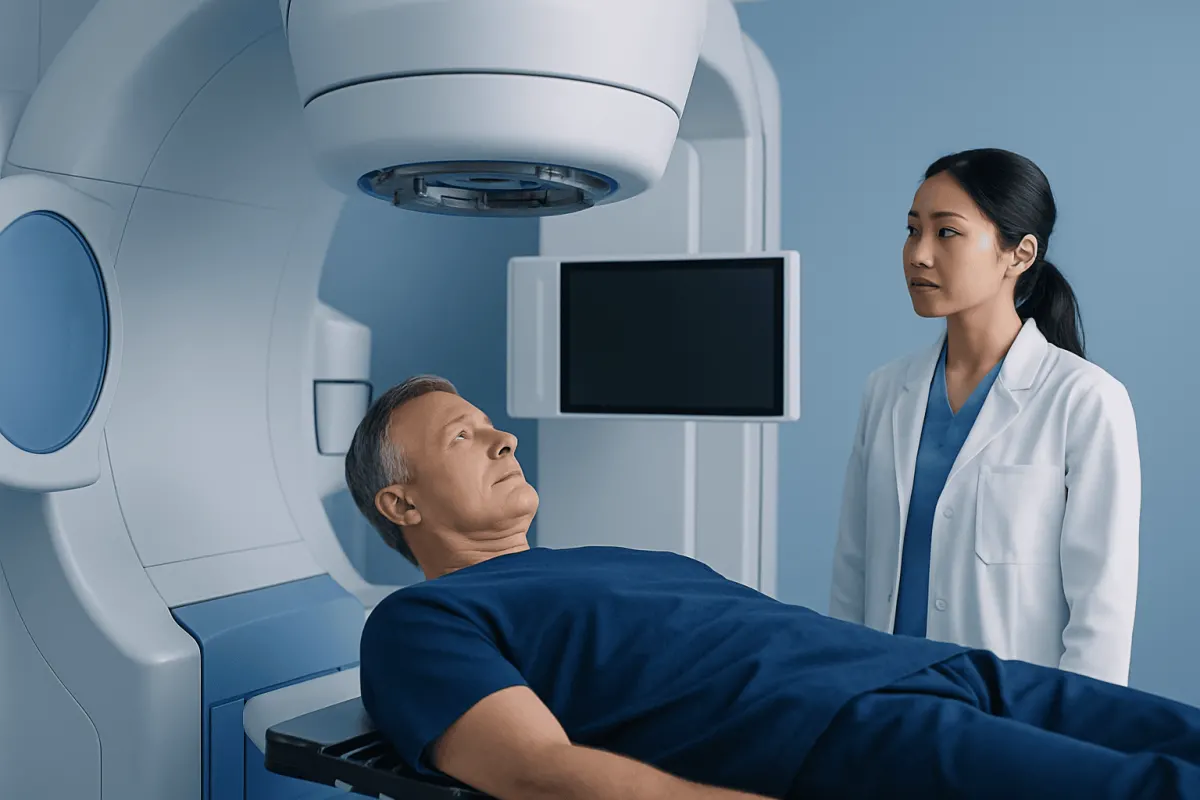
The best treatment for Gleason 7 prostate cancer is individualized rather than one single option. Surgery or radiation are often considered for localized disease, while carefully selected people with favorable intermediate-risk cancer may be candidates for active surveillance after specialist review.
Overview: Choosing the Best Treatment for Gleason 7 Prostate Cancer
The best treatment for Gleason 7 prostate cancer depends on whether the cancer is favorable or unfavorable intermediate risk, whether it remains confined to the prostate, the prostate-specific antigen (PSA) level, imaging results, general health and the person’s goals. For many people with localized disease, surgery or radiation therapy are effective curative options; some with favorable intermediate-risk disease may safely consider active surveillance with close follow-up.
A Gleason score describes how abnormal prostate cancer cells appear under a microscope. It is reported as two patterns added together. A score of 3+4=7 is Grade Group 2 and generally has more pattern 3, which tends to behave less aggressively. A score of 4+3=7 is Grade Group 3 and has more pattern 4, so it is usually treated as a higher-risk form of Gleason 7 disease.
Gleason 7 cancer is commonly classified as intermediate risk, but this is a broad group. A thoughtful decision should not be based on one biopsy number alone. Reviewing the pathology, PSA trend, prostate MRI, the number and location of positive biopsy samples, and staging information helps the care team recommend an approach that fits the individual.
How Gleason 7 Prostate Cancer Is Assessed
Before treatment is chosen, clinicians determine the cancer’s risk category and extent. This includes the PSA value and how it has changed over time, a digital rectal examination when appropriate, biopsy details and imaging. Multiparametric MRI can help show whether a tumor may be near the edge of the prostate and can guide further evaluation.
Doctors commonly distinguish favorable from unfavorable intermediate-risk prostate cancer. Favorable intermediate-risk disease may include a lower PSA, Grade Group 2 disease (Gleason 3+4), limited cancer in biopsy samples and no multiple concerning risk features. Unfavorable intermediate-risk disease may include Gleason 4+3, a higher PSA, more extensive biopsy involvement or more than one intermediate-risk feature.
Some people need additional staging tests when clinical findings suggest a greater chance that cancer has spread beyond the prostate. The aim is to select treatment based on the true extent of disease, not to assume that all Gleason 7 cancers behave the same way. A pathology review may also be useful if treatment decisions rely on a small or uncertain biopsy finding.
Should a Gleason Score of 7 Be Treated?

Many Gleason 7 prostate cancers are treated because they have a meaningful potential to grow or spread over time, particularly Gleason 4+3 disease or cancer with unfavorable intermediate-risk features. When cancer appears localized, treatment may aim to remove or destroy it before it progresses. However, treatment is not automatically urgent for every person with a score of 7.
Selected people with small-volume Gleason 3+4 cancer and otherwise favorable findings may discuss active surveillance. This is an organized monitoring plan, not a decision to ignore cancer. It usually includes regular PSA testing, clinical review, repeat MRI when indicated and repeat biopsy or other reassessment at planned intervals.
Age, other medical conditions, life expectancy and treatment priorities are important. For a person with significant health problems or limited expected benefit from curative treatment, monitoring or symptom-focused care may be more appropriate. A urologist can explain the likely benefits and downsides of treatment in the individual situation.
What Is the Best Treatment for Prostate Cancer in Its Early Stages?
For early-stage prostate cancer, there is no universal best treatment. The most suitable option is the one that offers an appropriate level of cancer control while respecting the person’s health, anatomy, work and family circumstances, and preferences about possible side effects. Localized Gleason 7 cancer is often managed with radical prostatectomy, radiation therapy or, for carefully selected favorable cases, active surveillance.
Radical prostatectomy removes the prostate and nearby tissues as needed. It may be performed using open, laparoscopic or robot-assisted techniques depending on the clinical setting and surgical team. Possible effects include urinary leakage and changes in erections; nerve-sparing approaches may be possible for some people, but outcomes vary with cancer location and individual health.
Radiation therapy can be delivered from outside the body, commonly as external-beam radiation therapy, or in selected circumstances through internal radiation techniques. Short-term effects can include urinary or bowel irritation and fatigue. Sexual function can also change gradually after treatment. For unfavorable intermediate-risk cancer, a clinician may recommend a limited course of hormone therapy alongside radiation, depending on the overall risk profile.
People should consider speaking with both a urologic surgeon and a radiation oncologist before deciding. This gives them a balanced comparison of the practical steps, monitoring needs and potential long-term effects of each approach. Prostate cancer care is most effective when treatment planning is guided by a multidisciplinary review.
Treatment Options and Shared Decision-Making
Active surveillance is generally considered most often for lower-risk cancers, but it can be discussed in selected people with favorable intermediate-risk Gleason 3+4 disease. The safety of this approach depends on reliable follow-up and willingness to proceed with treatment if tests indicate that the cancer is becoming more significant. It is usually not the preferred approach for Gleason 4+3 or other unfavorable intermediate-risk findings.
Surgery and radiation are both established treatments for cancer that is believed to be confined to the prostate. Neither is automatically better for every patient. The cancer’s location and extent, prostate size, baseline urinary symptoms, erectile function, previous pelvic treatment and access to follow-up can all influence the choice.
Hormone therapy, also called androgen-deprivation therapy, lowers testosterone activity that can stimulate prostate cancer cells. It may be used with radiation for certain intermediate-risk cases, but it is not usually a stand-alone curative treatment for localized Gleason 7 cancer. Its possible effects, such as hot flashes, fatigue, sexual changes, bone loss and metabolic changes, should be discussed before starting.
Acıbadem Health Point’s multidisciplinary specialists and JCI-accredited hospitals evaluate and treat prostate cancer for international patients, using individualized assessment to help guide appropriate care.
What to Avoid When You Have Prostate Cancer
A person with prostate cancer should avoid delaying recommended follow-up appointments, PSA tests, imaging or biopsy discussions. Prostate cancer often develops slowly, but a monitoring plan is only useful when it is followed consistently. New symptoms or a changing PSA result should be reviewed by the treating clinician rather than interpreted alone.
It is also wise to avoid unproven products promoted as cancer cures. Supplements, restrictive diets and alternative therapies may be costly, may interact with medicines or may delay effective care. Any vitamin, herbal preparation or complementary therapy should be discussed with a doctor or pharmacist, particularly before surgery, radiation or hormone treatment.
Smoking should be avoided, and limiting alcohol may support overall health and recovery. A balanced eating pattern, regular physical activity appropriate to current fitness, healthy weight management and adequate sleep can support wellbeing, but these measures do not replace cancer treatment or surveillance. People should seek individualized nutritional advice if they are losing weight unintentionally or have treatment-related bowel or appetite changes.
Can Low-Grade Prostate Cancer Go Away?
Low-grade prostate cancer does not usually disappear on its own. Some cancers grow so slowly that they may never cause symptoms or threaten health during a person’s lifetime, which is why active surveillance can be appropriate for selected low-risk cases. Surveillance aims to identify signs of progression early, while avoiding or postponing treatment side effects when immediate treatment is unlikely to help.
Gleason 7 prostate cancer is not generally described as low grade. Gleason 3+4 may be favorable intermediate risk in some circumstances, while Gleason 4+3 is typically more concerning. A person should not assume that a stable PSA means the cancer has gone away; PSA is useful, but it is interpreted alongside examination, imaging and biopsy findings.
After surgery, PSA is expected to become very low or undetectable. After radiation, PSA usually falls more gradually and may fluctuate. The treating team will explain what PSA pattern is expected after a chosen treatment and when further assessment may be needed.
When to Seek Medical Care
Anyone with a new prostate cancer diagnosis should arrange a consultation with a urologist to review the biopsy report, PSA result and imaging. It can be helpful to bring a list of questions about risk group, whether the cancer appears localized, the expected benefits of each option and possible effects on urinary, bowel and sexual function.
A person already on active surveillance should contact their care team if they miss planned testing or receive a result they do not understand. New urinary symptoms, blood in urine or semen, persistent bone pain, unexplained weight loss or worsening fatigue should also be assessed. These symptoms have many possible causes and do not necessarily mean cancer progression, but they deserve medical attention.
Urgent medical evaluation is appropriate for inability to pass urine, heavy bleeding in urine, severe pain, fever with urinary symptoms or sudden serious weakness. These symptoms may be related to conditions other than prostate cancer, but prompt care is important.
Frequently asked questions
01Is Gleason 7 prostate cancer curable?
When Gleason 7 prostate cancer is localized to the prostate, curative treatment is often possible. Surgery and radiation therapy are commonly used with curative intent. The outlook depends on the grade pattern, PSA, stage and other individual findings.
02Is Gleason 3+4 better than Gleason 4+3?
Yes, Gleason 3+4 and Gleason 4+3 both total 7, but they are not considered equivalent. Gleason 3+4 has more of the lower-grade pattern 3, while Gleason 4+3 has more pattern 4 and is usually associated with a higher risk of progression. This difference can affect whether surveillance or active treatment is recommended.
03Can active surveillance be used for Gleason 7 prostate cancer?
Active surveillance may be considered for carefully selected people with favorable intermediate-risk Gleason 3+4 cancer. It is generally less suitable for Gleason 4+3 cancer or more extensive disease. Surveillance requires consistent PSA testing, clinical assessment and repeat imaging or biopsy as advised.
04How do doctors choose between surgery and radiation for Gleason 7 cancer?
Doctors consider tumor stage, biopsy pattern, PSA level, MRI findings, urinary and sexual function, age, overall health and personal priorities. Both treatments can be appropriate for localized disease. Meeting with both a urologic surgeon and a radiation oncologist can help a person make an informed choice.
05Will prostate cancer treatment affect sexual function?
Both surgery and radiation can affect erections, although the timing and degree of change differ. Baseline erectile function, age, other health conditions, cancer location and treatment technique all matter. A care team can discuss rehabilitation and treatment options for sexual side effects before therapy begins.
06Does a rising PSA always mean prostate cancer is getting worse?
No. PSA can change for several reasons, including prostate inflammation, urinary infection, recent ejaculation, cycling or laboratory variation. After treatment, PSA patterns also differ between surgery and radiation. A rising result should be interpreted by the treating clinician in context rather than viewed in isolation.
This article is for general information only and is not a substitute for professional medical advice. Please consult a qualified doctor about your individual situation.
Oncology care in Turkey — second opinion and treatment plan
JCI-accredited · board-certified surgeons · reply within 24h
Add us as a Preferred Source to see more of our trusted health content across Google Search, AI Overviews and Discover.