Germ Cell Tumor Diagnosis, Treatment, and Outlook
Germ cell tumors arise from cells that normally develop into eggs or sperm and can occur in the testes, ovaries, or less commonly elsewhere in the body. Many are highly treatable, but the outlook and treatment plan depend on whether the tumor is benign or malignant, its type, location, stage, and tumor-marker results.
Germ Cell Tumor Overview
A germ cell tumor is a growth that begins in germ cells, the early cells that normally become eggs or sperm. Most germ cell tumors develop in the testes or ovaries. Less often, they arise outside the reproductive organs, such as in the chest, abdomen, pelvis, lower back, or brain. These are called extragonadal germ cell tumors.
Germ cell tumors can affect children, teenagers, and adults. Their behavior varies substantially: some are noncancerous and can be removed with surgery, while others are cancerous but often respond very well to modern treatment. A precise diagnosis is important because the tumor subtype strongly influences the recommended care and expected outlook.
In the testes, the main malignant types are broadly grouped as seminoma and nonseminomatous germ cell tumors. Ovarian germ cell tumors include dysgerminoma, yolk sac tumor, immature teratoma, and mixed tumors, among others. A tumor may contain more than one cell type, which is why specialist pathology review is central to planning treatment.
Are Germ Cell Tumors Always Cancerous?
No. Germ cell tumors are not always cancerous. Teratomas, for example, may be mature and benign, especially when found in the ovaries or certain locations in children. However, some teratomas can be immature or may contain malignant components, so they still require expert assessment.
Malignant germ cell tumors can invade nearby tissue or spread to lymph nodes and other organs. Examples include seminoma, dysgerminoma, embryonal carcinoma, yolk sac tumor, choriocarcinoma, and many mixed germ cell tumors. The words used in a pathology report can be unfamiliar, but they help the clinical team determine how closely the tumor needs to be monitored and whether additional treatment is needed.
A mass should not be assumed to be benign or malignant based on symptoms alone. Imaging, blood markers, and—when appropriate—pathology provide the information needed to distinguish the type of tumor safely.
Symptoms, Causes, and Risk Factors

Symptoms depend on the tumor’s location. A testicular germ cell tumor may cause a painless lump, swelling, heaviness, firmness, or a change in the size or feel of a testicle. Some people notice a dull ache in the groin or lower abdomen. A sudden, severe testicular pain needs urgent assessment because it may be caused by testicular torsion rather than cancer.
Ovarian germ cell tumors can cause pelvic or abdominal pain, bloating, a feeling of fullness, an enlarging abdomen, urinary frequency, or changes in menstrual patterns. Tumors outside the reproductive organs may cause symptoms related to pressure on nearby structures, such as cough or breathlessness with a chest tumor, back or abdominal pain, headaches, or neurological symptoms when the brain is involved.
Most germ cell tumors do not have a clear preventable cause. In testicular cancer, an undescended testicle, a personal or family history of testicular cancer, and certain differences in testicular development are recognized risk factors. Having a risk factor does not mean a person will develop cancer, and many people diagnosed have no known risk factors.
- A new testicular lump, even if painless, should be checked promptly.
- Persistent pelvic swelling or unexplained abdominal enlargement also warrants medical review.
- Symptoms are often caused by noncancerous conditions, but timely evaluation allows appropriate treatment.
How Are Germ Cell Tumors Diagnosed?
Diagnosis begins with a medical history and physical examination. The clinician asks about symptoms, their timing, past medical history, and family history. For a suspected testicular tumor, scrotal ultrasound is usually the first imaging test because it can identify whether a lump is inside the testicle and help distinguish a solid mass from conditions such as a cyst or fluid collection.
Blood tests may measure tumor markers, including alpha-fetoprotein (AFP), beta-human chorionic gonadotropin (beta-hCG), and lactate dehydrogenase (LDH). These markers can support diagnosis, help classify some tumors, guide treatment planning, and provide a useful baseline for monitoring. Normal markers do not rule out a germ cell tumor, and raised markers can have causes other than cancer.
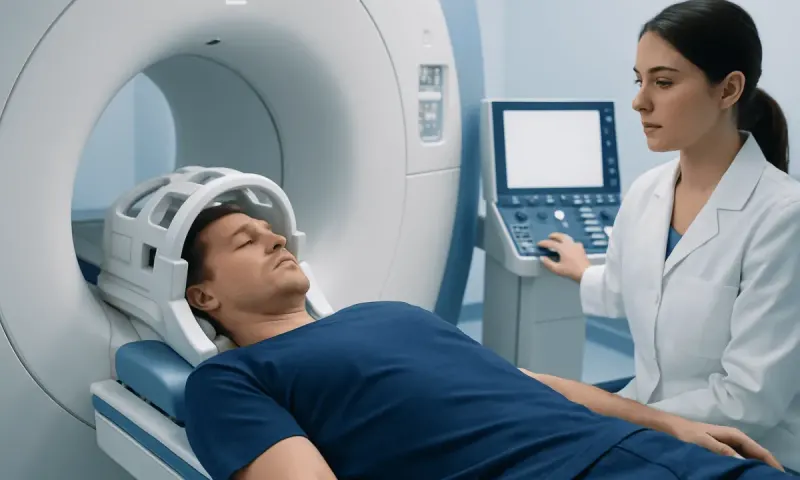
Imaging such as CT, MRI, ultrasound, or chest imaging may be used to evaluate the primary tumor and check whether it has spread. In many suspected testicular cancers, doctors remove the affected testicle through an incision in the groin rather than performing a needle biopsy through the scrotum. The removed tissue is examined by a pathologist to establish the diagnosis. For tumors in other sites, a biopsy or surgery may be used to obtain tissue safely.
Staging combines the pathology findings, marker levels, imaging results, and, where relevant, lymph-node involvement. This detailed assessment helps the multidisciplinary team recommend care that is effective while avoiding unnecessary treatment.
What Are the Treatment Options for Germ Cell Tumors?
Treatment for a germ cell tumor is individualized. The main considerations are the tumor’s location, whether it is benign or malignant, the exact cell type, stage, marker levels, age, overall health, and fertility goals. Care is commonly coordinated by surgeons, medical oncologists, radiologists, pathologists, fertility specialists, and other professionals as needed.
Surgery is often the first step. It may remove a tumor and provide a definitive diagnosis. For testicular tumors, surgery usually involves removal of the affected testicle; in many cases, the remaining testicle continues to produce testosterone and sperm. For ovarian tumors, surgeons aim to remove the tumor while preserving fertility when this is medically appropriate, particularly in younger patients with disease confined to one ovary.
Some early-stage tumors can be managed with active surveillance after surgery. This involves scheduled examinations, marker blood tests, and imaging so that recurrence can be detected early. Other tumors require chemotherapy, often with platinum-based combinations, to treat disease that has spread or to lower the chance of recurrence. Radiation therapy may be considered for selected seminomas, although its use is tailored carefully because of potential long-term effects.
Residual masses after chemotherapy may need further imaging, surgery, or observation, depending on the tumor type and response. Before treatment that could affect fertility, patients may wish to discuss sperm banking, egg or embryo freezing, or other fertility-preservation options. Where appropriate, chemotherapy treatment and surgery are planned with both cancer control and long-term wellbeing in mind.
What Is the Survival Rate for Germ Cell Tumors?
There is no single survival rate that applies to every germ cell tumor. Prognosis depends on whether the tumor is benign or malignant, where it began, its subtype, how far it has spread, tumor-marker levels, response to treatment, and the person’s general health. These factors are more useful for an individual discussion than one overall number.
In general, malignant germ cell tumors are among the solid tumors most likely to be cured with appropriate modern treatment. Many tumors diagnosed at an early stage have an excellent outlook, and effective chemotherapy can also cure many people whose disease has spread. Follow-up is important because it helps identify recurrence and monitors longer-term effects of treatment.
Survival statistics are based on groups of people treated in the past and cannot predict an individual’s result. A treating specialist can explain the stage and risk group in plain language, discuss the likely goals of treatment, and describe the follow-up plan. Patients can also ask how fertility, hormone health, and emotional wellbeing will be supported during and after care.
When to Seek Medical Care
Medical care should be sought promptly for a new testicular lump, persistent testicular swelling, heaviness, or a change in the shape or firmness of a testicle. A clinician should also assess persistent pelvic or abdominal pain, unexplained abdominal swelling, a growing lump, or symptoms that do not settle as expected. Early assessment does not mean cancer is likely; it is the safest way to identify the cause.
Emergency care is needed for sudden severe testicular pain, particularly when it occurs with nausea, vomiting, or a high-riding testicle. These symptoms may indicate testicular torsion, a time-sensitive condition in which blood supply to the testicle can be affected.
After treatment, people should attend all planned follow-up visits and report new or persistent symptoms between appointments. Follow-up commonly includes examinations, tumor-marker testing, and imaging at intervals determined by the tumor type and stage. Acıbadem Health Point’s multidisciplinary specialists and JCI-accredited hospitals diagnose and treat germ cell tumors for international patients, with care plans tailored to the clinical findings and personal needs.
Frequently asked questions
01Can a germ cell tumor be benign?
Yes. Some germ cell tumors, including many mature teratomas, are benign. However, imaging and pathology are needed to determine the exact type and whether treatment or follow-up is required.
02What blood tests are used for germ cell tumors?
Doctors may measure AFP, beta-hCG, and LDH. These tumor markers can help with diagnosis, staging, treatment monitoring, and follow-up, but they are interpreted alongside imaging and pathology.
03Can germ cell tumor treatment affect fertility?
It can, depending on the tumor location and treatment used. Surgery, chemotherapy, and radiation may affect fertility in some people, so fertility preservation should be discussed before treatment whenever possible.
04Is a testicular lump always a germ cell tumor?
No. Testicular lumps can have several causes, including cysts, infection, injury, or other noncancerous conditions. Nevertheless, any new testicular lump should be assessed promptly because testicular germ cell tumors can be painless.
05Can germ cell tumors come back after treatment?
Some can recur, which is why follow-up is an important part of care. The schedule and tests used depend on the tumor type, stage, treatments received, and time since treatment.
06Do all germ cell tumors need chemotherapy?
No. Some benign tumors need surgery alone, and selected early-stage malignant tumors may be managed with surgery followed by surveillance. Chemotherapy is used when it is likely to improve cancer control, such as for higher-risk or advanced disease.
This article is for general information only and is not a substitute for professional medical advice. Please consult a qualified doctor about your individual situation.
Oncology care in Turkey — second opinion and treatment plan
JCI-accredited · board-certified surgeons · reply within 24h
Add us as a Preferred Source to see more of our trusted health content across Google Search, AI Overviews and Discover.