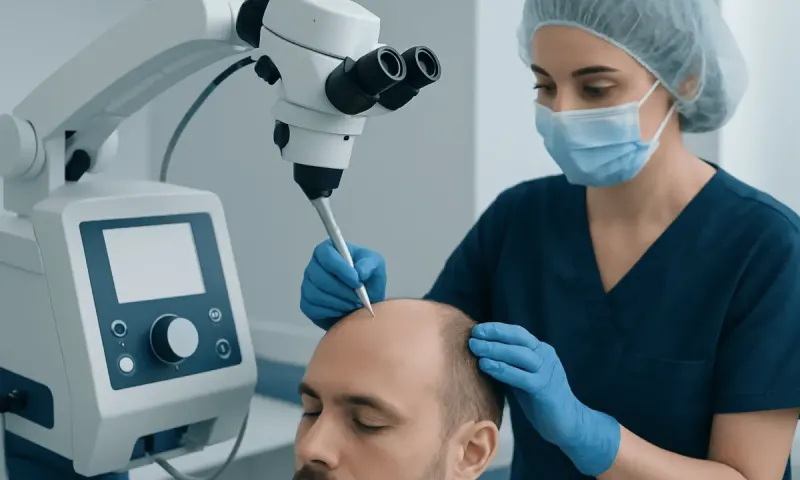
FUE Hair Transplant Price: Factors That Shape Costs

The Hair Transplant: Candidacy, Procedure Steps, and Recovery Timeline" class="ahp-ilk">FUE hair transplant price is not a single standard figure because treatment plans are individualized. The final estimate usually reflects the number of grafts needed, the complexity of hair loss, the clinical team, the treatment setting and the follow-up care included.
FUE Hair Transplant Price: What Does It Include?
The FUE hair transplant price depends on an individual treatment plan, not simply on a standard procedure fee. FUE, or follicular unit extraction, is a surgical technique in which naturally occurring groups of hairs are removed one by one from a donor area—commonly the back or sides of the scalp—and transplanted into areas of thinning or baldness. The cost discussion should begin after an in-person or virtual medical assessment has clarified whether transplantation is appropriate and what level of coverage is realistic.
A careful estimate commonly considers the number of follicular-unit grafts required, the quality and supply of donor hair, the pattern of hair loss, the design of the hairline and the complexity of placing grafts. It may also include pre-procedure testing, local anesthesia, the surgical team, prescribed medicines, aftercare products, follow-up appointments and, for people travelling, non-medical arrangements. Patients should ask for a written explanation of inclusions and exclusions so that they can compare plans meaningfully.
The least expensive option is not always the most appropriate option. Hair transplantation is a medical procedure that requires sound diagnosis, careful graft handling, sterile surgical practice and a long-term plan for existing hair. A consultation that assesses safety, likely benefit and future hair-loss progression can be more valuable than an estimate based on photographs alone.
How FUE Hair Transplantation Works
Hair grows in small natural groupings called follicular units. In FUE, a clinician uses a very small instrument to extract individual follicular units from the donor area. The units are then prepared and placed into tiny recipient-site openings created at specific angles, directions and depths. These details help the transplanted hair blend with surrounding hair as it grows.
The donor area is selected because hair there is often more resistant to the hormonal effects that contribute to common pattern hair loss. However, donor hair is limited. Removing too many grafts or planning a dense hairline without considering future loss can leave the donor area looking thinner or make later treatment more difficult. For this reason, responsible planning prioritizes a natural appearance and preservation of donor resources.
FUE is commonly compared with follicular unit transplantation, sometimes called strip surgery. Both techniques can transplant hair follicles, but they differ in how donor follicles are obtained. FUE avoids removal of a linear strip of scalp, although it still creates many small extraction sites and can leave tiny scars. The most suitable method depends on the individual’s scalp, hair characteristics, goals and medical assessment.
Who May Be a Candidate for FUE?

FUE may be considered for adults with stable or appropriately managed hair loss who have enough healthy donor hair and realistic expectations. It is often used for androgenetic alopecia, also known as male- or female-pattern hair loss. A specialist should determine the cause before recommending surgery, since some forms of hair loss may improve with medical treatment or may make transplantation unsuitable. Readers can learn more about hair loss and why an accurate diagnosis matters.
Good candidacy depends on more than the visible thinning area. The clinician assesses hair caliber, color contrast between hair and scalp, curl pattern, scalp flexibility, donor density, family history and the expected course of future hair loss. Younger people and those with rapidly progressing loss may need particular caution, as an aggressive early design may not match their hair pattern in later years.
People with active scalp inflammation, uncontrolled medical conditions, certain scarring disorders, significant bleeding risks or unrealistic expectations may need treatment, further investigation or a different approach before considering surgery. Smoking and nicotine exposure can impair wound healing, so clinicians may advise stopping before and after the procedure. A consultation should also review current medicines, allergies and any prior scalp procedures.
What Happens During the Procedure?
Before treatment, the clinician discusses the desired result and marks a hairline or treatment area that fits the person’s facial features, age and likely future hair-loss pattern. The donor and recipient areas are usually trimmed or shaved to permit accurate work. Local anesthesia is generally used, meaning the person remains awake while the scalp is numbed.
During extraction, follicular units are removed from the donor area in a spread-out pattern intended to avoid overharvesting. The team then creates recipient sites and places the grafts with attention to natural growth direction. Sessions can take several hours, particularly when a larger area requires treatment, and breaks may be offered as appropriate.
Afterward, the scalp is checked and aftercare instructions are provided. The exact experience varies with the extent of treatment and the clinic’s protocol. Patients considering FUE hair transplant treatment should ask who performs each stage of the procedure, how grafts are protected and stored, what clinical supervision is provided, and what follow-up plan is available.
Recovery Timeline, Results and Expected Benefits
Most people can return home on the day of an FUE procedure. Mild tenderness, swelling, redness and small crusts in the donor and recipient areas are common during early healing. The clinical team gives instructions on washing, sleeping position, exercise, headwear and avoiding scratching or rubbing the grafts. These instructions are important because newly placed grafts need time to settle.
In the first few weeks, transplanted hairs often shed. This can be expected and does not necessarily mean that the follicle has been lost; the follicles typically enter a resting phase before new growth begins. Visible growth usually starts gradually over subsequent months, while changes in thickness, length and overall coverage continue to develop over a longer period. Individual timelines vary.
The main potential benefit is improved coverage in selected areas using the person’s own hair. FUE can also avoid a linear donor scar associated with strip-based transplantation. However, it does not create new follicles, guarantee a particular density or prevent further thinning of non-transplanted hair. Some people benefit from a long-term plan that includes medical management of pattern hair loss, when clinically appropriate.
Risks, Limitations and Questions to Ask About Cost
FUE is generally performed as an outpatient procedure, but all surgery carries possible risks. These include temporary swelling, discomfort, bleeding, infection, delayed healing, numbness or altered sensation, inflammation around follicles, visible scarring, uneven growth and less density than hoped. Some transplanted follicles may not grow. Rarely, excessive donor extraction can make the donor area appear noticeably thinner.
There can also be a temporary increase in shedding of existing hair near the recipient area, sometimes called shock loss. This may be more likely when pre-existing hair is fragile. A qualified clinician can explain how the person’s hair-loss type, donor supply and overall health may affect these risks and the likely outcome.
When reviewing an FUE hair transplant price, patients can ask whether the quote is based on graft count, session length or a defined treatment area; whether medical consultation and follow-up are included; and whether additional treatments could be needed later. They should also ask about the credentials of the medical team, infection-control standards, revision policies and the plan should hair loss continue. Clear answers support informed decision-making and reduce the chance of unexpected expenses.
- Request a personalized written treatment plan rather than relying on a generic online quote.
- Confirm which medical and aftercare services are included in the estimate.
- Discuss both the donor area and the possibility of future hair loss.
- Be cautious of promises of guaranteed density or immediate final results.
When to Seek Medical Care
A medical evaluation is advisable before pursuing any hair transplant, especially if hair loss begins suddenly, occurs in patches, is accompanied by itching, pain, scaling or redness, or follows illness, childbirth, major weight change or a new medicine. These patterns can have causes that need investigation and may not be best treated with transplantation.
People who have had an FUE procedure should contact their treating team promptly if they develop increasing pain, spreading redness, fever, pus-like drainage, persistent bleeding or other signs of possible infection. They should also seek advice if swelling is severe or if they are uncertain about wound care. Early review allows problems to be assessed appropriately.
Acıbadem Health Point’s multidisciplinary specialists and JCI-accredited hospitals diagnose and treat hair-loss concerns for international patients. A consultation can help determine whether FUE, another hair-restoration approach or treatment for an underlying scalp condition is most appropriate.
Frequently asked questions
01How is the FUE hair transplant price determined?
The price is usually determined after assessing the number of grafts needed, donor-hair availability, the treatment area and the complexity of the plan. It may also reflect the clinical team, facility standards, anesthesia, aftercare and follow-up appointments. A written, itemized plan helps patients understand what is and is not included.
02Is FUE hair transplantation permanent?
Transplanted follicles can continue growing hair for many years because they are often taken from areas relatively resistant to pattern hair loss. However, outcomes vary, and the person’s non-transplanted hair may continue to thin over time. Ongoing medical management may be discussed to help protect existing hair when appropriate.
03How many grafts are needed for an FUE hair transplant?
The needed number varies substantially according to the size of the thinning area, hair characteristics, donor density and the desired coverage. A larger area does not automatically mean all available grafts should be used. The clinician should balance cosmetic goals with preserving donor hair for the future.
04Does an FUE hair transplant hurt?
The scalp is usually numbed with local anesthesia, so significant pain during the procedure is not expected. Some discomfort may occur during anesthetic injections and mild tenderness can occur afterward. The treating team provides individualized advice for managing recovery discomfort safely.
05When will FUE hair transplant results be visible?
Transplanted hairs commonly shed during the first weeks, followed by a resting period. New growth generally appears gradually over the following months, and the appearance continues to mature as hairs lengthen and thicken. The full timeline differs between individuals.
06Can women have an FUE hair transplant?
Some women are suitable candidates, particularly when there is a stable pattern of thinning and adequate donor hair. Because diffuse thinning and other causes of hair loss are relatively common, careful diagnosis is especially important. A dermatologist or hair-restoration specialist can assess whether transplantation is likely to help.
This article is for general information only and is not a substitute for professional medical advice. Please consult a qualified doctor about your individual situation.
Hair transplant in Turkey — costs, graft counts & a free assessment
JCI-accredited · board-certified surgeons · reply within 24h
Add us as a Preferred Source to see more of our trusted health content across Google Search, AI Overviews and Discover.