Foot Pain: Causes, Symptoms and Treatment

Key Takeaways
- Foot pain is a symptom, not a diagnosis, and may come from the heel, arch, forefoot, toes, or ankle area.
- Common causes include overuse, footwear problems, injuries, arthritis, plantar fasciitis, bunions, nerve irritation, and stress fractures.
- A clinician may use a physical exam and, when needed, imaging or other tests to find the source of pain.
- Many cases improve with rest, activity changes, supportive shoes, orthotics, physical therapy, or other conservative care.
- Medical review is important when pain is severe, persistent, linked to swelling or numbness, or follows an injury.
Foot pain can come from many structures in the foot, including bones, joints, tendons, ligaments, nerves, and skin. A clear diagnosis helps guide treatment, ease discomfort, and protect mobility at home, work, or while traveling.
Overview
Foot pain can turn ordinary movement into a daily negotiation. Walking through an airport, standing in line, climbing stairs, or simply getting out of bed can all feel more difficult when the foot is irritated or injured.
Because the foot contains many bones, joints, muscles, tendons, and nerves packed into a small space, pain can start in different places and feel very different from one person to another. Some people notice a sharp heel pain with their first steps in the morning, while others feel a dull ache in the arch, a burning sensation in the toes, or soreness across the top of the foot.
Most foot pain is manageable once the underlying cause is identified. The goal is not only to ease discomfort, but also to help the foot bear weight normally again and prevent the problem from returning during travel, exercise, or everyday life.
Symptoms

Foot pain can be constant or only appear during certain activities. It may start suddenly after an injury or develop gradually after weeks or months of repeated strain.
People may describe the pain as stabbing, aching, throbbing, burning, or tight. It may be worse with the first steps in the morning, after standing for long periods, after exercise, or when wearing narrow or unsupportive shoes.
- Swelling, redness, or warmth
- Bruising or visible deformity after an injury
- Stiffness, limited movement, or trouble bearing weight
- Numbness, tingling, or a “pins and needles” feeling
- Pain in a specific area such as the heel, arch, ball of the foot, or toes
Symptoms that affect walking or balance deserve attention, especially if they are new, worsening, or associated with a recent fall, twist, or impact.
Causes & Risk Factors
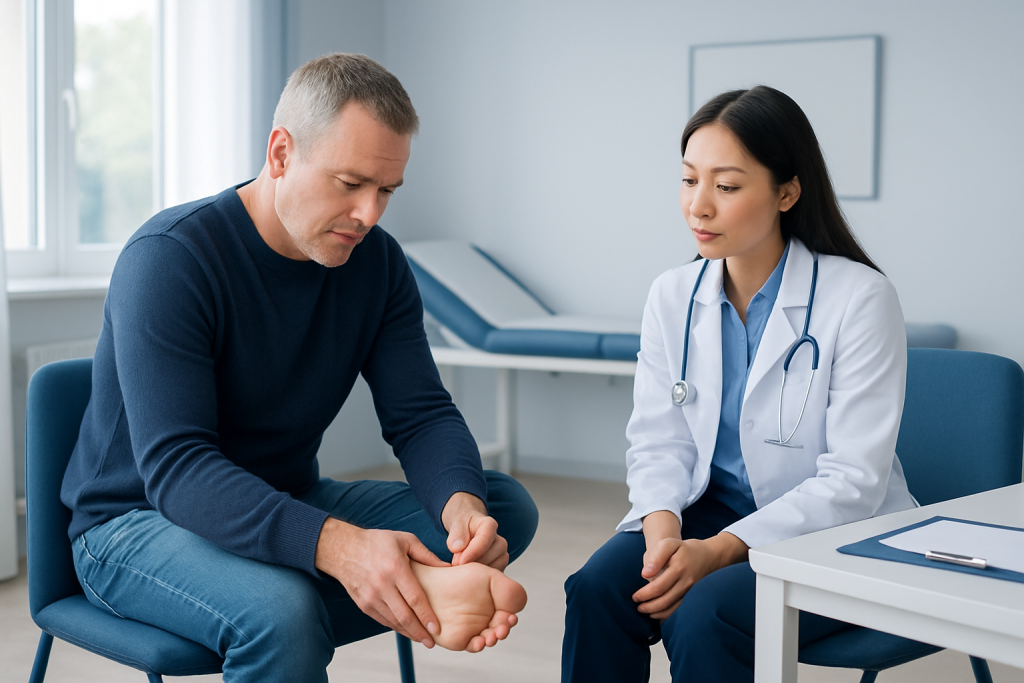
There is no single explanation for foot pain. The source may be mechanical, inflammatory, nerve-related, or injury-related, and several problems can occur together.
Common causes include plantar fasciitis, Achilles tendon irritation, bunions, hammertoes, Morton’s neuroma, arthritis, gout, stress fractures, sprains, and tendon strain. Corns, calluses, ingrown toenails, and skin infections can also make walking painful. In some cases, pain begins in the ankle or lower leg and is felt in the foot.
Certain factors can increase the chance of foot pain:
- High-impact sports, prolonged standing, or repetitive walking
- Footwear that lacks support, has a poor fit, or changes foot mechanics
- Flat feet, high arches, or abnormal gait patterns
- Age-related wear and tear or joint disease
- Extra body weight, diabetes, nerve conditions, or inflammatory arthritis
- A previous injury that changed how weight is placed on the foot
For international travelers, long days of walking, unfamiliar shoes, and disrupted routines can expose a problem that was already mild at home. A small issue can become more noticeable when the foot is under prolonged demand.
Diagnosis
Diagnosis usually begins with a careful discussion of when the pain started, where it is located, and which movements make it better or worse. This history often gives important clues about whether the problem is in a tendon, joint, bone, nerve, or soft tissue.
A clinician may examine the foot while the person is standing and walking, since alignment and weight-bearing patterns can reveal more than a resting exam alone. Range of motion, tenderness, swelling, skin changes, and nerve sensation may all be checked.
Depending on the situation, tests may include X-rays to look for fractures or joint changes, ultrasound for soft tissue problems, MRI for deeper structures, or blood tests when inflammatory disease, infection, or gout is suspected. The right test depends on the likely cause, the severity of the pain, and whether symptoms followed trauma.
Treatment Options
Treatment is tailored to the cause, but many foot problems begin with conservative care. Reducing the load on the painful area can allow irritated tissues to settle and heal.
Common approaches include rest from aggravating activity, ice or elevation for swelling, supportive shoes, padded inserts, orthotics, stretching, and physical therapy. A clinician may also recommend taping, immobilization in a boot or brace, or temporary modification of exercise and work duties.
For certain conditions, medicine or procedures may be helpful. Anti-inflammatory medicines may be used in selected cases, while nerve pain, gout, inflammatory arthritis, or infection may require targeted treatment. Some structural problems, such as severe bunions, persistent tendon tears, or fractures that do not heal as expected, may need specialist care and occasionally surgery.
Treatment is usually more effective when it matches the exact source of pain rather than treating every foot problem the same way. That is especially important for people arranging care from another country, because a precise plan can simplify recovery and follow-up once they return home.
Prevention & Self-care
Many everyday habits can reduce strain on the feet and lower the chance of repeat pain. The most useful changes are often simple and consistent rather than dramatic.
Well-fitted shoes with enough room in the toe box and proper arch support can make a major difference. Gradually increasing walking, running, or hiking time gives the feet and lower legs time to adapt. Stretching the calf muscles and the plantar fascia may also help when tightness is contributing to discomfort.
- Choose footwear that matches the activity and the shape of the foot
- Replace worn-out shoes before the sole or support breaks down
- Build activity levels slowly after rest or injury
- Maintain healthy blood sugar control if living with diabetes
- Check the feet regularly for blisters, redness, skin breaks, or new swelling
Home care should be gentle. A short period of reduced activity, ice wrapped in cloth, and foot elevation can support recovery after overuse or minor strain. If a person is unsure whether it is safe to keep walking on the foot, a clinician should guide that decision.
When to See a Doctor
Medical evaluation is a good idea when foot pain lasts more than a few days, keeps returning, or interferes with work, sleep, exercise, or travel. A persistent limp is also a sign that the foot may need more than self-care.
Prompt assessment is especially important if the pain follows an injury, there is inability to bear weight, the foot looks crooked or very swollen, or there is numbness, weakness, fever, or a wound that is not healing. People with diabetes, circulation problems, or reduced sensation in the feet should seek care sooner rather than later, even when symptoms seem mild.
Early evaluation can prevent a small problem from becoming a longer recovery. For international patients, a coordinated orthopedics team can help clarify the diagnosis, align treatment with travel plans, and create a practical follow-up strategy. Acibadem Health Point’s multidisciplinary specialists and JCI-accredited hospitals diagnose and treat foot pain for international patients as part of a carefully organized care pathway.
Living with Foot Pain During Recovery
Recovery is often smoother when the foot is given time to settle while the rest of the body stays active in a safe way. Low-impact exercise, such as seated workouts or clinician-approved cycling or swimming, may help maintain fitness without overloading the painful area.
It can also help to plan ahead for routines that involve standing or walking. Shorter routes, rest breaks, cushioned footwear, and carrying less weight can reduce flare-ups. For travelers, it may be wise to allow extra time in airports or during sightseeing so the foot is not forced into back-to-back strain.
Follow-up matters because foot pain sometimes improves before it is fully resolved. Checking progress with a clinician helps confirm that healing is on track and that the underlying cause has been addressed, not just the symptoms.
Frequently asked questions
01What is the most common cause of foot pain?
The most common cause depends on where the pain is located and what activities trigger it. Overuse, poor footwear, plantar fasciitis, tendon irritation, and minor injuries are frequent causes, but a proper evaluation is needed to identify the exact reason.
02When should foot pain be considered serious?
Foot pain becomes more concerning when it follows an injury, prevents weight-bearing, is linked to major swelling or deformity, or comes with numbness, fever, or an open wound. Pain that keeps returning or does not improve should also be assessed.
03Can foot pain go away on its own?
Mild pain from overuse or short-term strain may improve with rest, supportive footwear, and reduced activity. If symptoms persist, recur, or affect walking, medical review is important to avoid missing a fracture, arthritis, nerve issue, or another treatable cause.
04Is walking good or bad for foot pain?
It depends on the cause. Gentle walking may be acceptable for some mild conditions, but walking through pain can worsen certain injuries such as stress fractures, tendon problems, or severe inflammation, so guidance from a clinician is useful.
05What type of doctor treats foot pain?
Orthopedic specialists, podiatrists, sports medicine doctors, and rehabilitation professionals may all help depending on the cause. If symptoms are complex or linked to another medical condition, more than one specialist may be involved.
06Can supportive shoes really help?
Yes, supportive shoes can reduce pressure on irritated structures and improve foot alignment. They are especially helpful when pain is related to poor fit, flat feet, high arches, or long periods of standing.
This article is for general information only and is not a substitute for professional medical advice. Please consult a qualified doctor about your individual situation.
Joint and spine care in Turkey — expert assessment & treatment
JCI-accredited · board-certified surgeons · reply within 24h
Add us as a Preferred Source to see more of our trusted health content across Google Search, AI Overviews and Discover.