Fever Temperature: What It Means and When to Worry

Key Takeaways
- Fever is usually defined as a temperature above the normal range, but the exact cutoff can vary by how and where it is measured.
- The cause matters more than the number alone; many fevers are short-lived and improve with rest and fluids.
- Certain symptoms, such as breathing difficulty, confusion, dehydration, or a fever lasting several days, need medical evaluation.
- Children, older adults, pregnant people, and people with chronic illness may need earlier medical advice.
- Correct temperature measurement and simple supportive care can make home monitoring more reliable.
Fever temperature is the body’s way of signaling that something is affecting its normal balance, most often an infection but sometimes another health issue. Understanding how to measure it correctly and when to seek medical advice can help patients respond calmly and appropriately.
Overview
Fever temperature is one of the body’s most familiar signals, yet it is often interpreted too quickly. A number on a thermometer does not tell the whole story. What matters is the person’s age, how the temperature was taken, what other symptoms are present, and whether the fever is rising, steady, or settling.
In everyday language, a fever means body temperature is above the usual range. For many adults, a reading around 37.5°C to 38°C or higher may be considered a fever depending on the method used. In children, the same reading may also need to be viewed alongside appetite, activity level, hydration, and comfort rather than in isolation.
For international patients, fever can feel especially unsettling when it happens during travel or while recovering away from home. A practical approach helps: confirm the reading, note associated symptoms, rest and hydrate, and seek medical advice if the fever is high, persistent, or accompanied by warning signs.
Symptoms
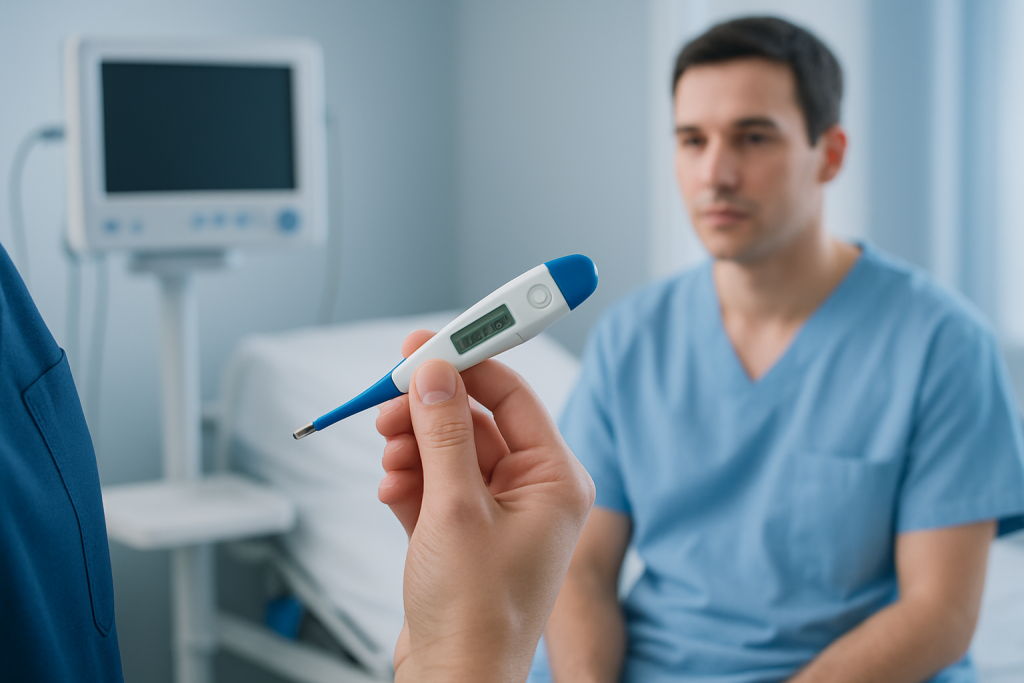
A fever does not always feel the same from one person to another. Some people notice obvious heat, chills, sweating, or shivering, while others mainly feel tired, achy, or off balance. The body may also react with headache, reduced appetite, thirst, or irritability.
Common features that can appear with a fever include:
- Warm or flushed skin
- Chills or shaking
- Muscle aches and general discomfort
- Headache
- Fatigue and low energy
- Reduced appetite
- Sweating as the temperature begins to fall
It is important to remember that fever is a symptom, not a diagnosis. A mild fever with a sore throat may point to a simple viral illness, while fever with cough, burning when urinating, stomach pain, or a rash may suggest a different cause that deserves medical attention.
Causes & Risk Factors

The most common cause of fever is infection. Viruses such as those that cause colds, flu-like illnesses, or stomach infections can raise body temperature. Bacterial infections, including those affecting the lungs, urinary tract, skin, or sinuses, may also produce fever and sometimes need targeted treatment.
Fever can also appear for reasons that are not directly infectious. Inflammatory conditions, some medication reactions, heat-related illness, and certain autoimmune disorders may all trigger a temperature rise. Less commonly, ongoing fever may be a clue that a doctor needs to look deeper for an underlying cause.
Risk is shaped by the person, not just the illness. Infants, older adults, pregnant people, and those with weakened immune systems may have fever patterns that are harder to interpret. Recent surgery, long-distance travel, exposure to new environments, and chronic medical conditions can also influence how a fever is assessed.
Diagnosis
Diagnosis begins with a good history and a careful temperature reading. Doctors usually ask when the fever started, how high it has been, what method was used to measure it, and what other symptoms have appeared. In an international-patient setting, it can be especially helpful to share any records, medication lists, and the timing of recent flights, hotel stays, or clinic visits.
To confirm the cause, a clinician may recommend a physical examination and, if needed, tests such as blood work, urine testing, a throat swab, or imaging studies. The choice depends on the person’s age, symptoms, travel history, and exam findings. The goal is not to chase the number itself, but to identify why the body is responding that way.
Temperature measurement technique matters. Oral, axillary, ear, and rectal readings do not always match exactly, and each method has its own strengths and limitations. A doctor can help interpret the reading in context, especially when a child is involved or when a home thermometer gives conflicting values.
Treatment Options
Treatment depends on the cause of the fever. If a viral illness is responsible, care often focuses on rest, fluids, and symptom relief while the body recovers. If a bacterial infection or another treatable condition is identified, the doctor may recommend a more specific therapy based on the diagnosis.
Supportive treatment is often the first practical step. This may include drinking enough fluids, wearing light clothing, resting, and keeping the room comfortably cool rather than cold. Fever-reducing medicine may be suggested for comfort, but the choice should be guided by a clinician, especially for children, pregnant people, or anyone with other medical conditions.
In some cases, fever needs faster medical evaluation rather than home care alone. High fever, persistent fever, or fever with dehydration, confusion, breathing difficulty, stiff neck, chest pain, severe pain, or a new rash can point to a more serious problem that should be assessed promptly.
Prevention & Self-care
Not every fever can be prevented, but sensible habits reduce risk and make recovery smoother. Hand hygiene, avoiding close contact with people who are visibly ill, keeping vaccinations up to date when appropriate, and being careful with food and water during travel can all help lower the chance of infection.
When fever is already present, self-care should be simple and steady. The person should drink fluids regularly, rest, and recheck temperature at sensible intervals instead of repeatedly measuring it out of anxiety. A written note of the time, temperature, and symptoms can help track whether the illness is improving or changing.
Travelers may find it useful to keep a small health kit with a thermometer, basic supplies, and any usual medications listed by their doctor. If fever develops while abroad, seeking local medical guidance early can prevent delays, especially if the person feels weaker than expected or does not know the cause.
When to See a Doctor
Medical advice is recommended when a fever is high, lasts more than a few days, or keeps returning without a clear explanation. A clinician should also be contacted sooner if the person is unusually sleepy, difficult to wake, short of breath, dehydrated, or unable to keep fluids down.
Immediate evaluation is especially important for infants, older adults, pregnant people, and anyone with a weakened immune system. Fever with confusion, seizure, stiff neck, severe headache, chest pain, persistent vomiting, abdominal pain, or a spreading rash should not be watched at home without medical input.
For patients traveling from another country, a prompt assessment can make the experience less disruptive and reduce uncertainty about follow-up. Acibadem Health Point’s multidisciplinary specialists and JCI-accredited hospitals diagnose and treat fever-related conditions for international patients, with care coordinated around testing, treatment, and recovery planning.
Living With Fever: Practical Questions Patients Often Ask
Many people focus on the thermometer number, but day-to-day functioning is often more informative. If the person can drink, rest, breathe comfortably, and stay reasonably alert, the illness may be manageable with observation and supportive care. If those basics start to slip, the situation deserves closer attention.
It is also reasonable to ask whether the fever is following a pattern. A temperature that rises in the evening and settles by morning may behave differently from one that steadily climbs or is paired with new symptoms. This pattern can help a doctor narrow down the cause, especially when the patient is far from home and trying to decide whether to continue traveling, rest longer, or seek care.
Families and caregivers should remember that a fever is not a failure of care. It is a sign that the body is responding to something. The useful question is not “How do we force it down?” but “What is causing it, and does this person need professional assessment now?”
Frequently asked questions
01What temperature counts as a fever?
The exact cutoff can vary by measurement method and age, but a temperature above the usual body range is generally considered a fever. In many adults, readings around 37.5°C to 38°C or higher may be treated as fever depending on how the temperature was taken. A doctor can help interpret an isolated reading in context.
02Is fever always a sign of infection?
No. Infection is the most common cause, but fever can also occur with inflammation, medication reactions, heat-related illness, and some autoimmune conditions. The surrounding symptoms are often more useful than the temperature alone.
03Should fever always be treated with medicine?
Not always. If the person is comfortable and the cause appears mild, rest and fluids may be enough. Fever-reducing medicine is usually used for comfort, but a healthcare professional should guide the choice in children, pregnancy, and chronic illness.
04When is fever in a child more concerning?
A child should be seen sooner if the fever is accompanied by poor drinking, unusual sleepiness, breathing problems, a seizure, a stiff neck, or a rash. Infants and very young children need especially careful assessment because signs can change quickly.
05Can I travel if I have a fever?
It depends on the cause and how unwell the person feels. If fever is mild and improving, travel may sometimes be possible with rest and hydration, but fever with weakness, dehydration, respiratory symptoms, or an unknown cause should be assessed before continuing the trip. When in doubt, medical advice is safer than trying to push through.
06How often should temperature be checked at home?
It is usually enough to check periodically rather than repeatedly throughout the day. The most helpful pattern is to measure at similar times, note symptoms, and watch whether the person is getting better or worse. Overchecking can create unnecessary worry without improving care.
This article is for general information only and is not a substitute for professional medical advice. Please consult a qualified doctor about your individual situation.
Persistent digestive symptoms? Get evaluated in Turkey
JCI-accredited · board-certified surgeons · reply within 24h
Add us as a Preferred Source to see more of our trusted health content across Google Search, AI Overviews and Discover.