Face and Neck Lift Cost: What Affects Your Quote?
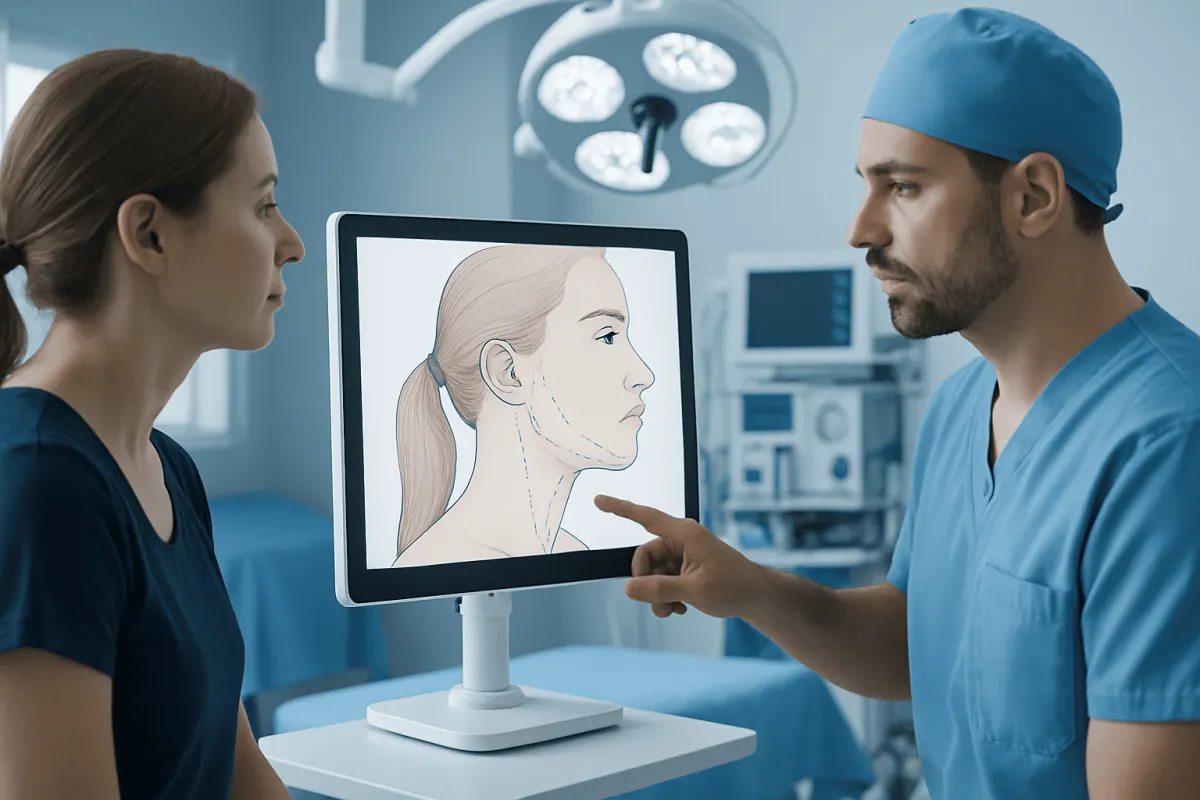
The cost of face and neck lift is not a single fixed amount because treatment plans differ widely. A meaningful estimate should include the surgeon’s fee, anesthesia, operating facility, pre-operative testing, post-operative care and any additional procedures discussed during consultation.
Overview: what affects the cost of face and neck lift?
The cost of face and neck lift varies because a facelift and neck lift are tailored operations rather than standard packages. The final estimate reflects how much correction is needed, whether the lower face, jawline and neck are treated together, the surgical technique used, the operating setting, anesthesia, and the surgeon’s experience and credentials.
Patients considering the cost of face lift and neck lift should request an itemized treatment plan. It may include the surgeon’s professional fee, anesthesia team, operating room or hospital charges, medications, laboratory tests, compression garments, follow-up visits and the expected costs of recovery. Travel, accommodation, time away from work and help at home may also be relevant for patients receiving care away from home.
Cost should be considered alongside safety, communication and the quality of aftercare. A lower initial quote may not include important elements of care, while a higher quote may reflect a more extensive operation or hospital-based services. Cosmetic facial surgery is usually not covered by health insurance unless it is part of reconstructive treatment for a medical reason.
For an individualized evaluation of facial aging, skin quality and neck contour, patients can discuss facelift surgery with a qualified plastic surgeon.
How face and neck lift surgery works
A facelift, also called rhytidectomy, is designed to improve laxity in the cheeks, lower face and jawline. A neck lift addresses loose neck skin, visible vertical neck bands, excess fat under the chin and loss of definition between the jaw and neck. These procedures are often combined because the face and neck age together, but they can also be planned separately.
During surgery, the surgeon makes carefully positioned incisions, commonly around the ears and sometimes beneath the chin or into the hairline. The deeper supporting tissues may be lifted and secured, excess fat may be reshaped or removed when appropriate, and extra skin may be redraped without excessive tension. The exact approach depends on anatomy, degree of laxity and the desired level of correction.
A surgical lift does not stop the natural aging process, and it does not replace healthy skin care, sun protection or lifestyle measures. Some people may also discuss non-surgical treatments for texture, pigmentation or mild volume loss, but these do not provide the same degree of structural correction as surgery.
Who may be a candidate?

Good candidates are generally adults bothered by sagging along the jawline, jowls, a poorly defined neck angle, loose neck skin or prominent platysma bands. The most suitable procedure depends on whether the main concern is skin laxity, fat beneath the chin, deeper tissue descent, facial volume changes or a combination of these features.
Age alone does not determine candidacy. People considering surgery should be in good overall health, have stable weight, understand the recovery process and hold realistic expectations. A consultation should include a review of medical conditions, medications, allergies, previous facial procedures, smoking or nicotine use, and any history of poor wound healing or abnormal scarring.
Smoking and nicotine products can significantly impair healing and increase complications. A surgeon may advise stopping them well before and after surgery. Patients should never stop prescribed medicines independently; the surgical team and the prescribing clinician can advise whether adjustments are needed safely.
For some patients, a procedure focused mainly on the neck may be appropriate. Others obtain a more balanced result from combined treatment, which is why the cost of neck lift and lower face lift should be discussed as part of a personalized surgical plan.
What happens before, during and after the procedure?
Before surgery, the patient meets the surgeon to discuss concerns, goals, medical history and treatment alternatives. Photographs and a physical examination help the surgeon plan incision placement and determine whether a face lift, neck lift or combined operation is appropriate. Pre-operative instructions often address medications, fasting, skin preparation, transport home and arranging assistance during the first days of recovery.
On the day of surgery, the procedure may be performed under general anesthesia or, in selected cases, under local anesthesia with sedation. The cost of neck lift with local anesthesia can differ from the cost of surgery under general anesthesia, but anesthesia choice should be based on safety, comfort, the operation’s extent and the anesthesiology team’s assessment—not price alone.
The surgeon then performs the planned lifting, contouring and skin redraping. Small drains may occasionally be used to reduce fluid buildup, depending on the technique. Dressings or a supportive garment may be applied at the end of the operation.
After surgery, patients need a responsible adult to accompany them home or to their planned recovery accommodation. Follow-up appointments allow the team to check healing, remove sutures or drains when needed, and answer questions as recovery progresses.
Recovery timeline, benefits and possible risks
In the first days after a face and neck lift, swelling, bruising, tightness and mild discomfort are common. The surgeon provides individualized instructions for pain control, wound care, sleeping position, activity limits and use of compression garments. Patients should avoid strenuous exercise, heavy lifting and activities that increase blood pressure until cleared by their surgical team.
Many people gradually resume quiet daily activities as bruising and swelling improve, but the timing varies. Early changes can look uneven or overly tight because tissues are still healing. It may take several weeks for most visible swelling to settle, and longer for scars and deeper tissues to mature. Planning social events and work commitments with flexibility is helpful.
Potential benefits include a smoother jawline, improved neck contour, reduced skin laxity and a more rested facial appearance. Risks include bleeding, infection, fluid collection, delayed healing, unfavorable scarring, skin or hairline changes, numbness, asymmetry, nerve injury, anesthesia-related complications and dissatisfaction with the cosmetic result. Although serious complications are uncommon, they require prompt medical assessment.
Careful patient selection, a qualified surgical team and adherence to aftercare instructions support safer healing. A surgeon should explain the procedure-specific risks, likely scars, recovery expectations and alternatives before the patient decides whether to proceed.
What is the downside of a neck lift?
The main downside of a neck lift is that it is surgery: it involves scars, downtime, temporary swelling and bruising, and a small but important risk of complications. Results also develop gradually, so the immediate post-operative appearance is not the final result. Some numbness, tightness or altered sensation around the ears, jawline or neck can occur during healing.
A neck lift improves selected signs of aging but cannot make the neck perfectly smooth or prevent future skin laxity. Patients with significant skin texture changes, weight fluctuation or limited skin elasticity may need to accept a more modest improvement. A detailed consultation helps match the operation to the person’s anatomy and expectations.
There may also be practical downsides, including time away from work, activity restrictions and the need for support at home. Patients should ask how scars are expected to heal, what follow-up is included, and what the team recommends if healing is slower than expected.
How much does an 8-point face lift cost for a 50-year-old?
An “8-point facelift” is not a universally standardized medical term. It may be used differently by clinics to describe lifting or volume-restoring treatment at several facial points, and it can refer to surgical or non-surgical approaches. For this reason, it is not possible to give a reliable or comparable cost based only on the phrase and a person’s age.
For a 50-year-old, the appropriate plan depends more on facial anatomy and goals than on age. The clinician may assess skin laxity, jowl formation, cheek descent, neck contour, bone structure, skin quality and prior treatments. A treatment using injectables, energy-based devices or surgery has different benefits, limitations, recovery requirements and cost components.
Patients should ask the clinic to define exactly what the proposed “8-point” treatment includes, who will perform it, what products or techniques are involved, how many sessions may be needed and which follow-up costs are included. An in-person assessment is essential before comparing quotes.
What is the average age for a neck lift?
There is no single average age that determines when a person should have a neck lift. Many patients consider it from midlife onward, when neck skin laxity, jawline changes or muscle banding become more noticeable. However, some younger adults seek treatment for inherited fullness beneath the chin or early loss of neck definition, while older adults may also be suitable if they are medically well.
The better question is whether the person has concerns that a neck lift can realistically address and whether they are prepared for surgery and recovery. Skin elasticity, general health, tobacco use, medical history and personal goals are more informative than a chronological age alone.
A consultation can clarify whether surgical lifting, a less invasive option or no procedure is the most appropriate choice. The surgeon should discuss expected improvement honestly rather than promising a particular age-related outcome.
Where is the cheapest state to get a facelift?
There is no consistently “cheapest” state to get a facelift because charges vary substantially within the same state and even within the same city. Surgeon qualifications, hospital or surgery-center standards, anesthesia, procedure complexity, demand and aftercare policies all influence the total cost. A low advertised starting price may not represent the final amount a patient pays.
For people researching the cost of face and neck lift in California or any other location, comparing complete estimates is more useful than comparing headline prices. Patients can ask whether the quote includes anesthesia, operating facility charges, pre-operative assessment, garments, follow-up care, medications and management of routine post-operative needs.
Traveling for surgery adds further considerations. Follow-up is important, and patients should have a clear plan for accommodation, local recovery support, return travel and how concerns will be handled after they go home. Choosing a properly qualified surgeon and an accredited facility should take priority over seeking the lowest price.
When to seek medical care
Before elective surgery, patients should seek medical advice if they have uncontrolled health conditions, take medicines that affect bleeding or immunity, use nicotine products, have a history of blood clots, or develop a new skin lesion, dental infection or facial infection. These issues do not always prevent surgery, but they may require treatment or a change in timing.
After a face or neck lift, urgent medical assessment is needed for rapidly increasing swelling, significant bleeding, severe or worsening pain not controlled by the prescribed plan, chest pain, shortness of breath, fever, spreading redness, pus-like drainage or a sudden change in skin color. Patients should contact their surgical team promptly rather than waiting for a scheduled appointment.
Acıbadem Health Point’s multidisciplinary specialists and JCI-accredited hospitals evaluate and treat facial aesthetic concerns for international patients, with treatment planning guided by individual clinical needs and recovery support.
Frequently asked questions
01What does the cost of face and neck lift usually include?
A complete estimate may include the surgeon’s fee, anesthesia, operating facility charges, pre-operative tests, surgical supplies, follow-up appointments and post-operative garments. However, inclusions vary by clinic and country. Patients should request a written, itemized quote and ask about any possible additional charges.
02Is a neck lift less expensive than a combined facelift and neck lift?
A neck lift performed alone may involve fewer treatment areas than a combined lower facelift and neck lift, but this is not always the case. The final cost depends on surgical complexity, anesthesia, facility charges and recovery needs. A surgeon can explain whether treating both areas together is clinically appropriate and how this affects the treatment plan.
03Can a neck lift be done with local anesthesia?
Some selected neck procedures can be performed with local anesthesia, sometimes with sedation. More extensive lifting may be better suited to general anesthesia for safety and comfort. The anesthesia approach should be decided by the surgeon and anesthesia team after assessing the planned procedure and the patient’s medical history.
04How long do face and neck lift results last?
Results can be long-lasting, but they do not stop natural aging. Skin quality, genetics, weight changes, sun exposure, smoking and lifestyle can influence how the face and neck change over time. Maintaining a stable weight and protecting the skin from sun exposure may help preserve the appearance of the result.
05How long is recovery after a face and neck lift?
Initial swelling and bruising are most noticeable in the early recovery period, while improvement continues over several weeks. Deeper healing, scar maturation and final settling of tissues can take longer. The recovery timeline varies with the technique, extent of surgery and individual healing response.
06How can patients compare facelift quotes safely?
Patients should compare written, all-inclusive estimates rather than advertised starting prices. It is important to verify the surgeon’s relevant qualifications, the facility’s safety standards, the anesthesia arrangements and the availability of follow-up care. A safe decision should balance cost with clinical expertise, communication and appropriate aftercare.
This article is for general information only and is not a substitute for professional medical advice. Please consult a qualified doctor about your individual situation.
Explore treatments in Turkey — costs, top hospitals & a free quote
JCI-accredited · board-certified surgeons · reply within 24h
Add us as a Preferred Source to see more of our trusted health content across Google Search, AI Overviews and Discover.