Eyelid Malposition: Entropion, Ectropion, and Oculoplastic Repair

Eyelid malposition occurs when the eyelid turns inward, outward, droops, or sits away from the eye surface, often causing irritation, tearing, redness, or dryness. With a careful eye examination, most cases of entropion and ectropion can be managed effectively, and oculoplastic repair may restore comfort, eyelid function, and eye surface protection.
Overview
Eyelid malposition describes a group of conditions in which the upper or lower eyelid is not aligned normally against the eye. The eyelids have an important protective role: they spread tears, keep the eye surface moist, help drain tears through the tear duct openings, and shield the eye from dust and injury. When an eyelid turns in, turns out, droops, retracts, or becomes loose, these functions can be affected.
The two common eyelid malpositions discussed in this article are entropion and ectropion. Entropion occurs when the eyelid margin rolls inward, causing eyelashes or eyelid skin to rub the cornea and conjunctiva. Ectropion occurs when the eyelid margin turns outward or sags away from the eye, leaving part of the eye surface exposed and interfering with tear drainage.
Although eyelid malposition can affect appearance, it is primarily a functional eye health issue. Irritation, watering, dryness, redness, and foreign body sensation are frequent reasons people seek care. Evaluation by an ophthalmologist, and when needed an oculoplastic specialist, helps determine whether the problem is mild, temporary, or best treated with reconstructive eyelid surgery.
Entropion and Ectropion: What Is the Difference?
Entropion is an inward rotation of the eyelid edge. It most often affects the lower eyelid, but it can also occur in the upper eyelid, especially when scarring is present. Because the eyelashes and skin may constantly touch the eye surface, entropion can cause a scratchy sensation, tearing, blinking discomfort, and sensitivity to light. Over time, rubbing may irritate the cornea, so the condition should not be ignored.
Ectropion is an outward rotation or sagging of the eyelid, usually the lower lid. The eyelid may no longer sit closely against the eyeball, and the small tear drainage opening near the inner corner of the lid may move out of position. As a result, tears may spill down the cheek even though the eye also feels dry. The exposed inner eyelid can appear red or inflamed.
Both conditions can vary from subtle to more noticeable. Some people have symptoms only during blinking or when looking downward, while others have constant irritation. The treatment plan depends on the type of malposition, the severity of symptoms, the health of the eye surface, and the underlying cause.
Symptoms and Possible Effects on the Eye

Symptoms often develop gradually, especially when eyelid malposition is related to age-related tissue laxity. A person may first notice watery eyes, mild redness, or a feeling that something is in the eye. These symptoms can fluctuate with wind, air conditioning, screen use, or outdoor activity. In some cases, friends or family notice that the lower eyelid appears droopy, turned out, or rolled inward.
Common symptoms may include:
- Excess tearing or tears running down the cheek
- Dryness, burning, or stinging
- Redness of the eye or inner eyelid
- Foreign body sensation, as if sand is in the eye
- Mucus discharge or crusting, especially in the morning
- Light sensitivity or blinking discomfort
- Blurred vision that improves temporarily after blinking or using lubricating drops
Most symptoms are manageable when assessed early. However, persistent rubbing from entropion may irritate the cornea, and exposure from ectropion may worsen dryness. A medical eye examination helps check the corneal surface, tear film, eyelid tone, and tear drainage so that treatment can protect both comfort and vision.
Causes and Risk Factors
The most common cause of entropion or ectropion is age-related loosening of eyelid tissues. Over time, the tendons and muscles that support the eyelid may stretch, allowing the lid margin to rotate inward or outward. This is not a reflection of general health or personal habits; it is often part of natural tissue change around the eyes.
Scarring can also alter eyelid position. Scars may result from previous eyelid surgery, injury, burns, chronic inflammation, skin disease, infection, or certain autoimmune conditions. When scarring tightens the skin or inner eyelid surface, it can pull the eyelid into an abnormal position. Facial nerve weakness, such as after facial palsy, may also reduce eyelid tone and blinking strength, contributing to ectropion or exposure symptoms.
Other risk factors include a history of eyelid trauma, long-standing eye irritation, sun-related skin changes, tumors or growths near the eyelid, congenital eyelid differences, and repeated eye rubbing. Contact lens wear and dry eye disease do not usually cause structural malposition on their own, but they can make symptoms more noticeable. Identifying the cause is important because treatment for a loose eyelid may differ from treatment for a scarred or paralyzed eyelid.
Diagnosis and Specialist Evaluation
Diagnosis usually begins with a detailed medical history and eye examination. The doctor asks about symptoms, duration, previous eye or eyelid surgery, facial nerve problems, injury, skin conditions, medication use, and any changes in vision. The eyelids are examined at rest and during blinking to assess lid position, looseness, muscle function, and whether the eyelashes touch the eye surface.
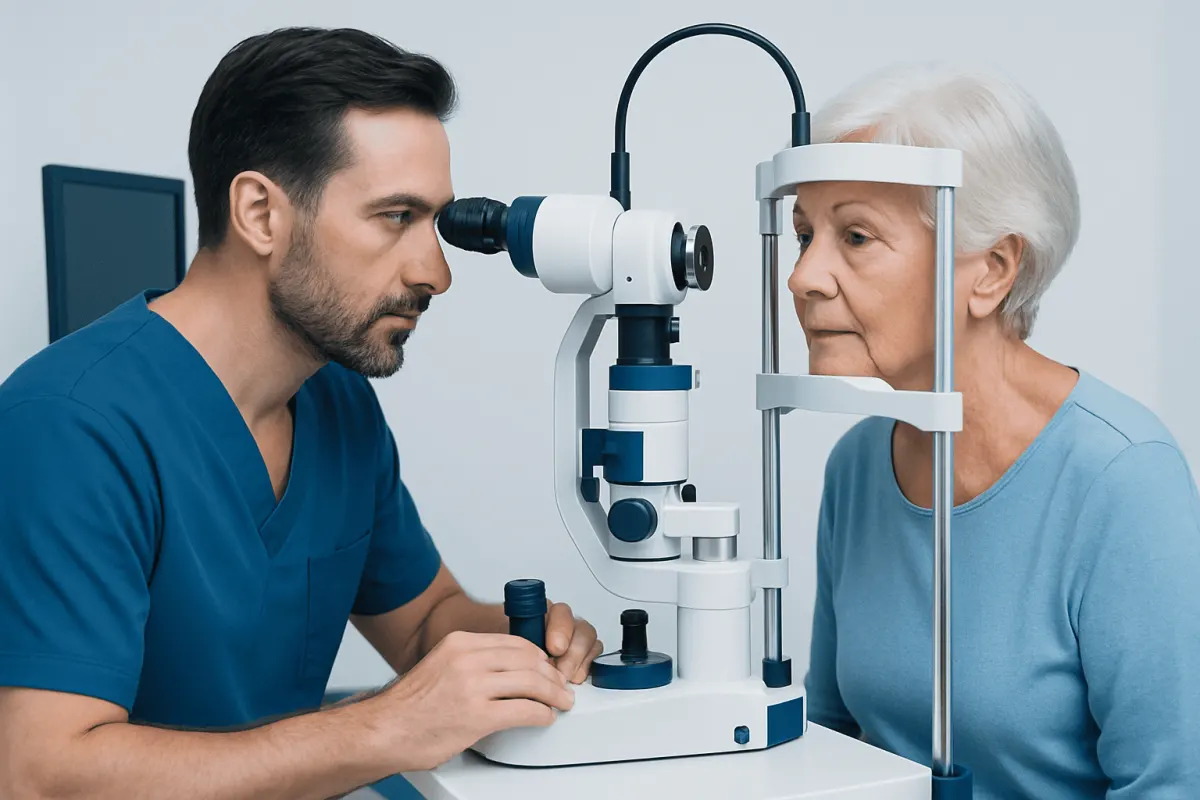
A slit-lamp examination allows the ophthalmologist to inspect the cornea, conjunctiva, tear film, and eyelid margin under magnification. Fluorescein dye may be placed on the eye to highlight dryness, irritation, or small surface abrasions. Tear drainage openings may also be assessed, especially when tearing is a major symptom.
Oculoplastic evaluation is helpful when eyelid structure, function, and cosmetic balance all need to be considered together. Specialists in oculoplastic eyelid care focus on the eyelids, tear drainage system, orbit, and surrounding facial tissues. This type of assessment helps distinguish whether symptoms are caused mainly by entropion, ectropion, dry eye, blocked tear drainage, inflammation, or a combination of factors.
Treatment Options and Oculoplastic Repair
Treatment depends on severity and cause. Mild symptoms may improve with lubricating eye drops, nighttime ointment, eyelid taping, moisture protection, or treatment of associated inflammation. These measures can be useful while a patient is waiting for specialist evaluation or surgery. However, when the eyelid is structurally turned inward or outward, conservative care may relieve symptoms but usually does not permanently correct the eyelid position.
Entropion repair aims to rotate the eyelid margin outward into a normal position and tighten the tissues that have become loose. The surgical method may involve tightening the lower eyelid, reinforcing eyelid retractors, placing small everting sutures, or addressing scarring if present. When eyelashes are rubbing the cornea, repair can significantly improve comfort and reduce ongoing irritation.
Ectropion repair aims to bring the eyelid back against the eye surface and restore proper tear distribution and drainage. Depending on the cause, surgery may include tightening the outer corner of the eyelid, repositioning the lid, repairing scar-related shortening, or using a skin graft if the front layer of the eyelid is too tight. In facial nerve weakness, additional supportive procedures may be considered to improve eyelid closure and surface protection.
Complex cases may require reconstructive ophthalmology techniques, especially after trauma, tumor removal, burns, or previous surgery. The goal is not only to improve appearance but also to restore eyelid function, blinking, tear balance, and eye surface safety. The most suitable approach is individualized after examination by a qualified ophthalmologist or oculoplastic surgeon.
Recovery, Prevention, and Self-care
Recovery after eyelid malposition surgery is usually planned as a short outpatient process, although instructions vary according to the procedure and the patient’s general health. Temporary swelling, bruising, mild tightness, and watery eyes can occur during early healing. Doctors may recommend cold compresses, prescribed eye ointment or drops, head elevation, and avoiding heavy lifting or strenuous activity for a short period. Patients should follow the exact post-operative instructions provided by their surgeon.
Self-care before and after treatment focuses on protecting the eye surface. Lubricating drops may reduce dryness and friction, while ointment can help at night if the eye does not close fully. Patients should avoid rubbing the eyes, remove crusting gently as advised, and use sunglasses outdoors if wind or light worsens irritation. If contact lenses increase discomfort, the eye doctor may suggest pausing lens wear until the eyelid and cornea are stable.
Not all eyelid malposition can be prevented, especially when it is related to aging or facial nerve weakness. Still, risk may be reduced by treating chronic eyelid inflammation, protecting the face and eyes from injury, seeking care for persistent eye irritation, and attending follow-up visits after eyelid or facial surgery. Early assessment often allows simpler management before symptoms become more disruptive.
When to See a Doctor
A person should arrange an eye examination if tearing, redness, dryness, discharge, eyelid turning, or a foreign body sensation persists for more than a short period. Medical evaluation is especially important if eyelashes appear to rub the eye, the eyelid is visibly turned outward, or symptoms interfere with reading, driving, screen use, or sleep. Early care can help protect the cornea and improve daily comfort.
More prompt assessment is recommended for eye pain, sudden vision changes, marked light sensitivity, a new white or cloudy spot on the cornea, increasing swelling, or significant discharge. These symptoms may have several causes, and only an eye examination can determine whether the cornea or eye surface needs urgent treatment.
For international patients, Acıbadem Health Point’s multidisciplinary specialists and JCI-accredited hospitals diagnose and treat eyelid malposition, including functional oculoplastic and reconstructive eyelid conditions. Patients considering care abroad should bring previous eye records, medication lists, surgical reports, and clear photographs if symptoms change over time.
Frequently asked questions
01Is eyelid malposition the same as droopy eyelids?
Not always. Eyelid malposition refers to an eyelid that is turned inward, turned outward, too loose, retracted, or otherwise not sitting normally against the eye. A droopy upper eyelid, called ptosis, is a different condition, although both can occur in the same person.
02Can entropion or ectropion go away without surgery?
Temporary eyelid turning caused by inflammation or spasm may improve when the underlying problem is treated. However, age-related looseness, scarring, or structural changes often do not resolve permanently with drops alone. Lubricants and taping can reduce symptoms, but surgery may be needed for lasting correction.
03Is eyelid malposition surgery mainly cosmetic?
For entropion and ectropion, surgery is usually functional rather than purely cosmetic. The main goals are to protect the eye surface, improve tear distribution, reduce irritation, and restore normal eyelid position. Appearance often improves as a result of restoring normal anatomy.
04What happens if entropion is left untreated?
Entropion may cause eyelashes or skin to rub the eye surface repeatedly. This can lead to ongoing redness, tearing, discomfort, and corneal irritation. An ophthalmologist can assess the cornea and recommend the safest timing and type of treatment.
05Why does ectropion cause watery eyes if the eye is dry?
Ectropion can pull the lower eyelid and tear drainage opening away from the eye. Tears may not spread evenly or drain normally, so they spill over the lid even while the exposed eye surface feels dry. Treating the eyelid position may help improve both watering and dryness.
06How long is recovery after oculoplastic eyelid repair?
Recovery varies depending on the procedure, the patient’s health, and whether scarring or facial nerve weakness is involved. Many people notice bruising and swelling for the first days to weeks, with gradual improvement over time. The surgeon provides individualized instructions about activity, eye medications, wound care, and follow-up visits.
This article is for general information only and is not a substitute for professional medical advice. Please consult a qualified doctor about your individual situation.
Explore treatments in Turkey — costs, top hospitals & a free quote
JCI-accredited · board-certified surgeons · reply within 24h
Add us as a Preferred Source to see more of our trusted health content across Google Search, AI Overviews and Discover.