Eye Itching in the Corner: What You Need to Know

Key Takeaways
- Itching at the inner or outer corner of the eye is often caused by dryness, allergies, irritation, or eyelid inflammation.
- Redness, discharge, swelling, or pain can suggest a problem that needs medical assessment.
- Simple measures such as avoiding rubbing, using preservative-free artificial tears, and managing allergens may help.
- Contact lens wear, eye makeup, and blocked tear drainage can all contribute to corner-of-eye discomfort.
- Urgent care is important if vision changes, severe pain, light sensitivity, or symptoms after an eye injury occur.
Eye itching in the corner is often linked to dryness, allergies, eyelid inflammation, or a mild infection near the tear ducts. In many cases it is manageable, but persistent, painful, or one-sided symptoms should be checked by an eye doctor.
Overview
Eye itching in the corner usually means the irritation is strongest near the inner or outer edge of the eye, where the eyelids meet the tear film and delicate skin around the eye. It is a symptom rather than a diagnosis, and the cause can be as simple as dryness or as specific as allergic conjunctivitis, blepharitis, or a blocked tear duct.
For many people, the first clue is a repeated urge to rub the eye, especially in dusty rooms, after screen use, or during allergy season. The symptom may come and go, stay on one side, or appear in both eyes. Understanding the pattern matters, because the corner of the eye is sensitive to changes in tears, skin irritation, and inflammation of the eyelids or tear drainage system.
Most causes are not dangerous, but the eye is a structure where small problems can become uncomfortable quickly. If itching is paired with redness, swelling, discharge, pain, or blurred vision, a professional eye examination can help identify the source and prevent the condition from lingering.
Symptoms
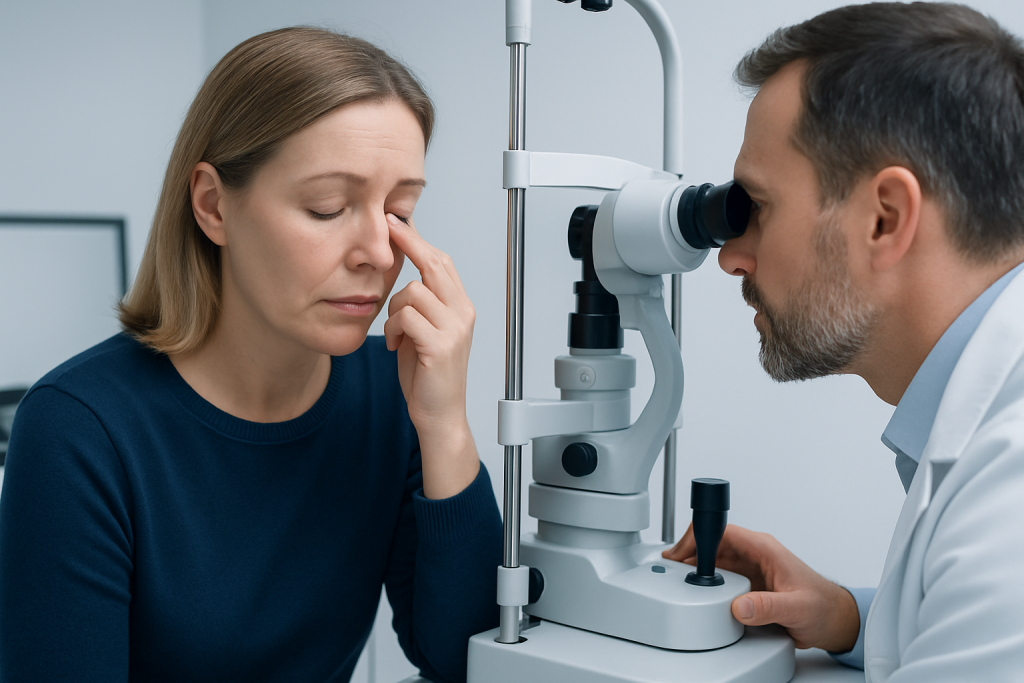
The feeling may be described as a scratchy, ticklish, burning, or “something is stuck there” sensation in the inner or outer corner of the eye. Some people notice it only when blinking, while others feel it more strongly when waking up, using contact lenses, or spending time outdoors.
Depending on the cause, the itching may appear with other signs. Common accompanying symptoms include watery eyes, mild redness, eyelid crusting, swelling of the lid margins, frequent tearing, or sticky discharge. Allergies often affect both eyes and may come with sneezing or a runny nose, while an irritated tear duct or eyelid problem may be more noticeable on one side.
It is useful to observe whether the discomfort is linked to specific triggers. Examples include makeup, new skin or eye products, smoke, pet dander, air conditioning, long hours of reading or screen time, or wearing contact lenses for too long. This kind of detail helps a clinician narrow down the cause more efficiently.
Causes & Risk Factors

Dry eye is a common reason the corners of the eyes itch. When the tear film is unstable, the exposed surface of the eye can feel irritated, especially near the inner corner where tears collect and drain. Dry air, dehydration, prolonged screen use, and some medications can make this more noticeable.
Allergies are another frequent cause. Seasonal pollen, dust mites, pet dander, mold, and certain eye cosmetics can trigger inflammation of the eye surface. Blepharitis, which involves inflammation along the eyelid margins, may also produce corner itching along with a gritty feeling and crusting on the lashes. In some people, a blocked tear duct or irritation around the tear duct opening can cause itching, tearing, and tenderness near the inner corner.
Other possible contributors include contact lens irritation, eye rubbing, skin conditions such as eczema around the eyelids, conjunctivitis, and debris trapped under the eyelid. Risk is higher when a person has allergies, uses eye makeup or contact lenses, works in dry or dusty environments, or has a history of chronic eye surface problems.
- Dry eye or tear film instability
- Allergic conjunctivitis or seasonal allergies
- Blepharitis or eyelid inflammation
- Contact lens irritation or poor lens hygiene
- Blocked or irritated tear drainage
- Skin irritation from cosmetics, soaps, or creams
Diagnosis
Diagnosis begins with a careful discussion of when the itching started, whether it affects one eye or both, and what makes it better or worse. A clinician may ask about allergies, contact lens habits, recent illness, exposure to smoke or dust, eye makeup, and any history of dry eye or eyelid problems.
An eye examination usually includes looking at the eyelids, lashes, conjunctiva, tear drainage area, and the surface of the eye. Depending on the findings, the clinician may use a slit lamp or special dyes to check for irritation, dryness, scratches, or signs of infection. If allergies are suspected, the overall pattern of symptoms may be enough to guide treatment, while recurrent or unusual symptoms can prompt a more detailed evaluation.
If one corner is persistently irritated, swollen, or draining, the doctor may consider problems involving the tear ducts or eyelid glands. In international-patient settings, this kind of assessment is often especially helpful because travel, climate changes, and unfamiliar environments can make symptoms harder to interpret without a structured exam.
Treatment Options
Treatment depends on the cause. For dry eye, preservative-free artificial tears, better screen habits, and avoiding dry air can reduce irritation. If allergies are the main issue, a clinician may recommend allergy-focused eye drops or oral allergy medicine, along with trigger avoidance. For blepharitis, eyelid hygiene is often central, because cleaning the lid margins can help reduce inflammation and buildup.
When an infection is present, treatment must match the type of infection. Some cases improve with supportive care, while others need prescription therapy after proper diagnosis. A blocked tear duct, recurrent styes, or ongoing eyelid inflammation may require targeted treatment from an eye specialist rather than repeated home remedies. Contact lens wearers may need to pause lens use until the eye surface settles.
Self-treatment should remain gentle. Rubbing can worsen irritation and may spread allergens or bacteria. People should avoid using leftover eye drops or someone else’s medication, because the cause of the itching may not be the same as a past episode. If a person is traveling for care, the treatment plan should be clear enough to continue safely at home, including follow-up instructions and warning signs to watch for.
Prevention & Self-care
Small habits can make a noticeable difference. Washing hands before touching the eyes, removing makeup thoroughly, and replacing old eye cosmetics can lower the chance of irritation. People with allergies may benefit from keeping windows closed on high-pollen days, using a clean pillowcase, and limiting exposure to known triggers when possible.
For dry or strained eyes, blinking more often, taking breaks from screens, and using a humidifier in very dry rooms may help. Artificial tears can be useful for temporary relief, especially when symptoms are linked to screen use or climate changes. Contact lens users should follow their lens-care routine carefully and avoid wearing lenses longer than recommended by their eye care professional.
Warm compresses may soothe some eyelid-related problems, while cool compresses can feel better when allergies are driving the itching. The right choice depends on the cause, which is one reason repeated symptoms should not be assumed to be “just irritation.” A short evaluation can prevent the wrong home approach from prolonging the problem.
When to See a Doctor
Medical assessment is advisable if the itching lasts more than a few days, keeps returning, or affects only one eye and does not improve with simple care. A doctor should also evaluate symptoms that come with discharge, swelling, crusting, light sensitivity, pain, or a visible lump near the corner of the eye.
Urgent attention is important if vision becomes blurred, the eye is very painful, the person cannot keep the eye open, or symptoms follow an injury or chemical exposure. Contact lens wearers with a painful or red eye should be assessed promptly because the cornea can be vulnerable. New or worsening symptoms in someone who recently had eye surgery also deserve a timely review.
For patients considering care away from home, clear communication matters: the cause of the itching, the expected recovery course, and the need for follow-up should all be explained before travel whenever possible. Acibadem Health Point’s multidisciplinary specialists and JCI-accredited hospitals diagnose and treat eye conditions for international patients with a coordinated, patient-centered approach.
Frequently asked questions
01What causes eye itching in the corner most often?
The most common causes are dry eye, allergies, blepharitis, and irritation from contact lenses or cosmetics. Sometimes the problem is near the tear drainage area, which can make the inner corner feel especially uncomfortable. A clinician can help determine the exact reason if the symptom persists.
02Is eye itching in the corner a sign of infection?
It can be, but not always. Allergies and dryness are more common causes, yet infection may be suspected if there is discharge, swelling, pain, or worsening redness. A proper exam is the best way to tell the difference.
03Can I use eye drops for relief?
Lubricating artificial tears may help when dryness or irritation is the issue, especially if they are preservative-free. It is better not to use medicated drops without guidance, because the wrong product may delay correct treatment. If symptoms continue, a doctor should assess the eye first.
04Why does only one corner of my eye itch?
One-sided itching can happen with a local irritation, a blocked tear duct, a stye, or a small eyelid problem. It is worth checking if the area is swollen, tender, or producing discharge. Persistent one-sided symptoms should not be ignored.
05Should I stop wearing contact lenses if the corner of my eye itches?
Yes, it is usually wise to pause contact lens use until the eye feels normal and the cause is clear. Lenses can worsen irritation and may hide early signs of a corneal problem. A clinician can advise when it is safe to resume wearing them.
06What can I do at home to reduce the itching?
Avoid rubbing the eye, wash hands before touching the face, and consider artificial tears if dryness is likely. Cool compresses may help if allergies are involved, while eyelid cleaning may help when the lid margins are irritated. If the symptom keeps returning, professional evaluation is recommended.
This article is for general information only and is not a substitute for professional medical advice. Please consult a qualified doctor about your individual situation.
Explore treatments in Turkey — costs, top hospitals & a free quote
JCI-accredited · board-certified surgeons · reply within 24h
Add us as a Preferred Source to see more of our trusted health content across Google Search, AI Overviews and Discover.