Blinking Light in Eye: What You Need to Know

Key Takeaways
- Flashes of light can come from benign causes, but sudden new symptoms should never be ignored.
- A retinal tear or detachment is an important cause to rule out, especially if flashes occur with new floaters or a shadow in vision.
- Eye examination with pupil dilation is the usual way doctors look for the source of flashing lights.
- Treatment depends on the cause and may range from observation to prompt eye procedures.
- Anyone with a sudden increase in flashes, floaters, or vision loss should seek urgent medical attention.
A blinking light in the eye is often described as seeing flashes, sparks, or lightning-like streaks. It can be harmless, but it may also signal a retinal tear or detachment, so the pattern and timing matter.
Overview
Seeing a blinking light in eye is usually described as a flash, flicker, spark, or brief streak of light that is not actually present in the room. The symptom can appear in one eye or both, and it may happen once, repeat from time to time, or continue for days. In many cases, the cause is related to the eye itself rather than to outside light.
The most important first step is not to guess. Some flashes are linked to harmless changes in the gel inside the eye, while others can be an early warning sign of a retinal tear or retinal detachment. Because sight-threatening causes can start subtly, the safest approach is to treat any sudden new flashing lights as a reason for prompt eye evaluation.
For international patients, this symptom can be especially confusing when it appears while traveling, adjusting to a new time zone, or reading after long flights. The symptom itself is what matters, not the setting. If the flashes are new, more frequent, or paired with other visual changes, an eye specialist should examine the eye as soon as possible.
Symptoms
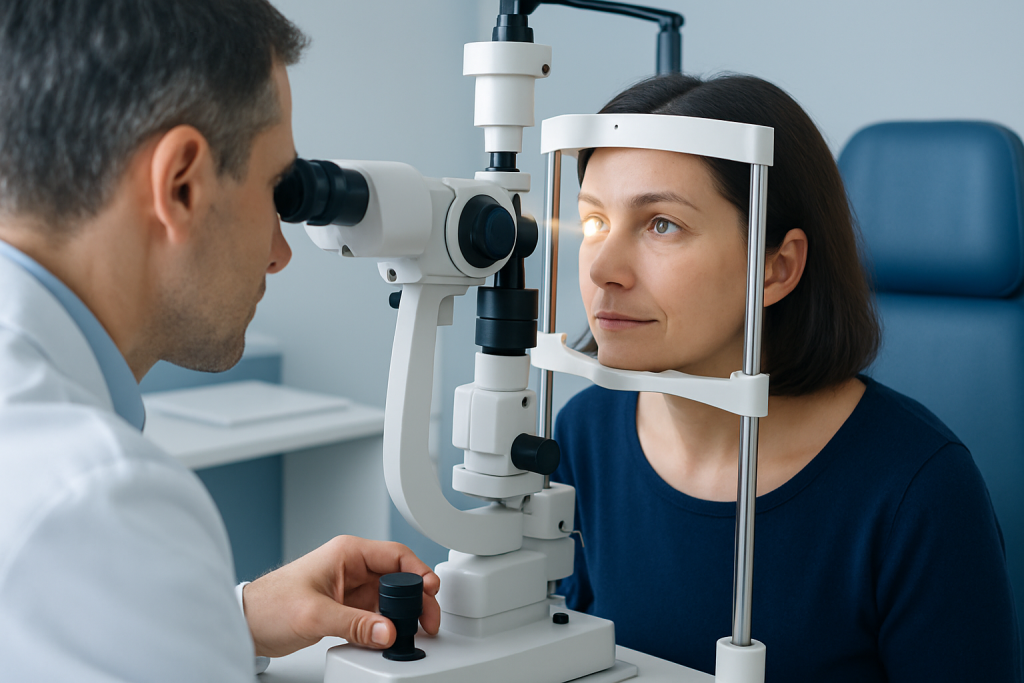
People describe flashes in different ways. Some notice brief lightning-like streaks in the side of vision, while others see a camera-flash effect, glittering points, or flickers after moving the eyes. The flashes may be more noticeable in dim light or when the eyes shift quickly.
Flashing lights are often accompanied by other symptoms that help narrow the cause. These can include new floaters, blurred vision, a dark curtain or shadow, reduced side vision, eye pain, headache, or a recent injury to the eye or head. A single symptom can still matter, but combinations of symptoms deserve faster attention.
It is also useful to notice whether the flashes are happening in one eye or both. One-sided flashes are more often related to the retina or vitreous inside the eye, while flashes in both eyes may sometimes point to a migraine aura or another neurologic cause. A careful history helps the doctor decide which path to investigate first.
Causes & Risk Factors

The most common cause of flashing lights in vision is traction on the retina from the vitreous, the gel that fills the eye. As people age, the vitreous can shrink and pull away from the retina, a process called posterior vitreous detachment. This is often harmless, but it can sometimes create a retinal tear.
A retinal tear is important because fluid can pass through the tear and lift the retina away from the back of the eye, causing retinal detachment. This is a medical emergency. Other causes of flashes include eye trauma, inflammation inside the eye, certain migraine patterns, and, less commonly, disorders affecting the optic nerve or brain.
Risk is higher in people who are very nearsighted, have had eye surgery such as cataract surgery, have a history of eye injury, or have had retinal problems before. Age also matters, since vitreous changes become more common over time. Still, flashes can occur at any age, so new symptoms should not be dismissed simply because a person is young or otherwise healthy.
Diagnosis
Doctors usually begin with questions about when the flashes started, whether they are new or changing, and whether floaters, pain, or vision loss are present. The pattern often gives useful clues. A sudden shower of floaters plus flashes is more concerning than a brief, isolated flicker that has been stable for months.
The key examination is a dilated eye exam, which allows the retina to be inspected carefully. Eye drops widen the pupil so the specialist can look for tears, detachment, bleeding, or signs of vitreous traction. In some cases, the doctor may also measure eye pressure, check visual acuity, or use imaging such as optical coherence tomography or ultrasound if the view of the retina is limited.
If the flashes seem more consistent with migraine aura or another neurologic issue, the doctor may ask about headache, speech changes, numbness, weakness, or previous migraine history. That broader assessment helps ensure the symptom is evaluated in the right clinical context rather than assumed to be an eye problem alone.
Treatment Options
Treatment depends entirely on the cause. If the flashes are due to a benign posterior vitreous detachment and the retina is intact, no procedure may be needed. In that situation, the doctor may recommend observation and follow-up to make sure no tear develops later.
If a retinal tear is found, it is often treated with laser therapy or cryotherapy to seal the tear and reduce the chance of detachment. If the retina has already detached, surgery is usually required. The exact procedure depends on the type and extent of the detachment, and the plan is individualized by a retina specialist.
When flashing lights are caused by migraine aura, treatment focuses on managing migraines rather than the eyes themselves. If inflammation, bleeding, or another eye condition is responsible, the doctor will address that specific problem. The best treatment is the one matched to the cause, which is why diagnosis should come before self-treatment.
Prevention & Self-care
Not every cause of flashing lights can be prevented, especially age-related vitreous changes. Even so, protective habits can lower risk from eye trauma and help preserve overall eye health. Wearing appropriate eye protection during sports, home projects, and certain occupations is one practical step.
People with high myopia, prior retinal problems, or a history of eye surgery should pay close attention to new visual symptoms and keep regular eye follow-up visits. It is also wise to manage conditions that affect blood vessel health, such as diabetes and high blood pressure, because broader eye health can influence how visual symptoms are evaluated.
Self-care mainly means careful observation, not waiting too long. If flashing lights are new, it helps to note whether they are increasing, whether floaters are appearing, and whether any shadow or missing area of vision develops. That information can be useful if the person needs to travel for care or see a specialist after returning home.
When to See a Doctor
Prompt medical attention is recommended for any sudden new flashing lights, especially if they are accompanied by new floaters, a dark curtain, blurred vision, or a loss of side vision. These combinations can indicate a retinal tear or detachment and should be treated urgently. In eye care, timing matters because earlier treatment can protect vision.
Seek urgent evaluation after eye trauma, even if the symptom seems mild at first. It is also important to speak with a doctor if the flashes are recurrent, worsening, or affecting daily activities such as reading or driving. If the symptom comes with headache and neurologic changes such as weakness, confusion, or difficulty speaking, emergency care is appropriate.
For people traveling internationally, it is reasonable to contact an eye clinic as soon as the symptom begins rather than waiting for a planned return date. Acibadem Health Point’s multidisciplinary specialists and JCI-accredited hospitals diagnose and treat eye conditions for international patients, including those who need coordinated evaluation and follow-up while away from home.
Frequently asked questions
01Is a blinking light in eye always serious?
Not always. Some flashes come from harmless vitreous changes or migraine aura. However, because flashes can also be the first sign of a retinal tear, new symptoms should be checked by an eye doctor promptly.
02What is the difference between eye flashes and floaters?
Flashes are brief streaks or flickers of light, while floaters are small spots, threads, or cobweb-like shapes drifting through vision. They can appear together when the vitreous changes inside the eye. New flashes plus a sudden increase in floaters deserves urgent attention.
03Can stress cause flashing lights in vision?
Stress does not usually directly cause flashes in the eye, but it can make migraine symptoms more noticeable in some people. If the symptom is new, it should still be evaluated rather than attributed to stress alone. A doctor can help determine whether the cause is ocular or neurologic.
04Do flashing lights mean retinal detachment?
Not always, but retinal detachment is one of the important conditions doctors look for. Flashes with new floaters, a shadow, or reduced side vision are more concerning for a retinal tear or detachment. That combination should be assessed urgently.
05Can flashing lights go away on their own?
Yes, some causes improve or become less noticeable over time, especially if they are related to benign vitreous changes or migraine aura. Even so, the first episode should be examined so a serious eye problem is not missed. Follow-up may still be needed if symptoms change.
06What should someone do before an eye appointment?
It helps to note when the flashes started, whether they are in one eye or both, and whether floaters, pain, or vision loss are present. If the person has had eye surgery, trauma, or severe nearsightedness, that should be mentioned. This information helps the doctor decide how urgently the eye needs to be examined.
This article is for general information only and is not a substitute for professional medical advice. Please consult a qualified doctor about your individual situation.
Explore treatments in Turkey — costs, top hospitals & a free quote
JCI-accredited · board-certified surgeons · reply within 24h
Add us as a Preferred Source to see more of our trusted health content across Google Search, AI Overviews and Discover.