Endoscopy vs Arthroscopy: Which Area Does Each Examine?
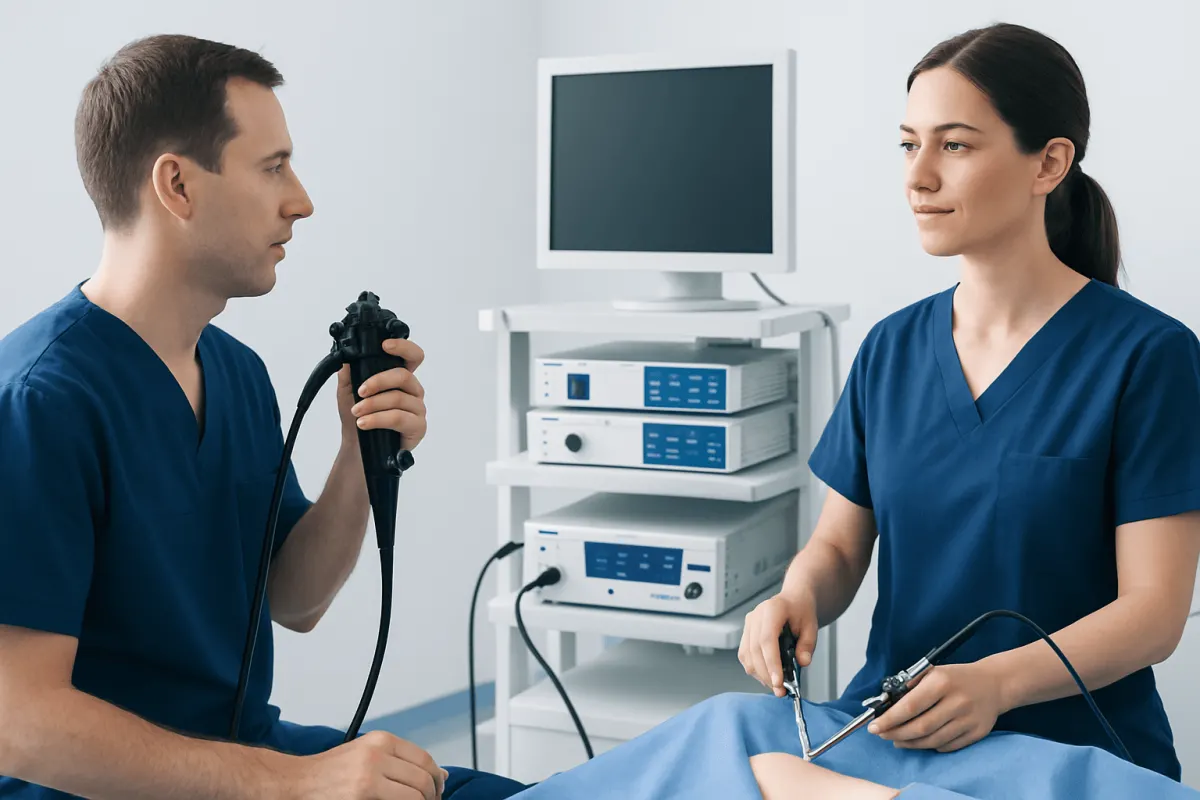
Endoscopy and arthroscopy are minimally invasive camera-based procedures, but they examine very different parts of the body. Endoscopy usually evaluates organs or passages such as the digestive tract, while arthroscopy is used inside a joint, most often the knee, shoulder, hip, ankle, wrist, or elbow.
Endoscopy vs Arthroscopy: Side-by-Side Comparison
Endoscopy vs arthroscopy is mainly a question of body location and purpose. Both procedures use a thin instrument with a light and camera to let a clinician see inside the body without a large surgical incision. However, endoscopy commonly examines hollow organs or natural passages, whereas arthroscopy is performed through small incisions to look inside a joint.
Endoscopy may be used to investigate symptoms such as persistent swallowing difficulty, abdominal pain, bleeding, or bowel changes. Arthroscopy is generally considered when joint symptoms such as pain, swelling, catching, instability, or reduced movement continue despite an assessment and, in many cases, non-surgical care.
- Area examined: Endoscopy examines organs or body passages; arthroscopy examines a joint.
- How the scope enters: Endoscopy often passes through a natural opening, such as the mouth or rectum; arthroscopy uses small skin incisions around the joint.
- Common uses: Endoscopy can inspect, biopsy, remove polyps, or treat bleeding; arthroscopy can diagnose and repair selected joint conditions.
- Specialists: Endoscopy is performed by clinicians such as gastroenterologists, pulmonologists, ENT specialists, or surgeons; arthroscopy is usually performed by orthopedic surgeons.
- Recovery: Many diagnostic endoscopies have a short recovery; arthroscopy recovery varies considerably with the procedure performed.
Neither procedure is automatically “better.” A clinician chooses the method that can most safely answer the clinical question and, when appropriate, provide treatment during the same procedure.
How a Clinician Tells Them Apart and Chooses the Right Test
The decision begins with the person’s symptoms, medical history, physical examination, and the part of the body thought to be involved. Digestive symptoms may lead to blood tests, stool tests, imaging, or an endoscopy. Joint symptoms are usually assessed with examination, X-rays, and sometimes ultrasound or MRI before arthroscopy is considered.
Endoscopy is an umbrella term. A gastroscopy views the esophagus, stomach, and first part of the small intestine; colonoscopy examines the large bowel; bronchoscopy examines the airways. Arthroscopy is a more specific procedure: it is an endoscopic technique for joints. It may be diagnostic, therapeutic, or both.
Clinicians also consider whether the result will change management. For example, a scope may be valuable if it can collect a tissue sample, stop bleeding, remove a lesion, repair damaged tissue, or confirm a diagnosis that cannot be established in a less invasive way. If imaging and symptoms already provide a clear answer, an invasive procedure may not be necessary.
What Is the Difference Between Arthroscopy and Endoscopy?
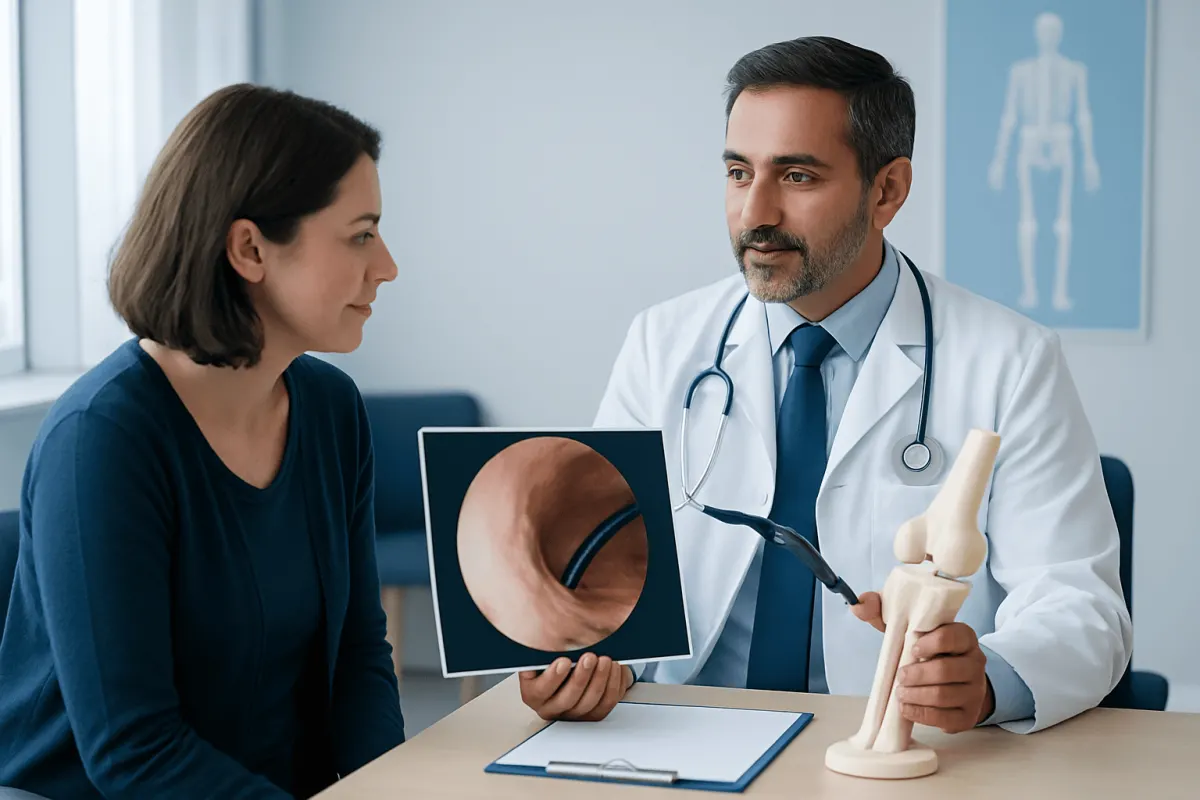
The difference between arthroscopy and endoscopy is that arthroscopy is a joint-focused form of endoscopy. “Endoscopy” describes viewing the inside of the body with a camera-equipped scope. “Arthroscopy” combines the Greek word for joint with the concept of viewing, so it specifically means looking inside a joint.
During a digestive endoscopy, the instrument is often guided through a natural body opening and may require sedation. During arthroscopy, an orthopedic surgeon creates small openings near the joint, inserts a camera, and fills the joint with sterile fluid to improve visibility. Additional small openings may be used for instruments if treatment is needed.
Arthroscopy may help manage conditions involving cartilage, ligaments, tendons, the joint lining, or loose fragments. Depending on the joint and diagnosis, it may be used in care for meniscus tears or other mechanical joint problems. The precise role of arthroscopy differs by condition, and not every abnormality seen on an MRI requires surgery.
What to Expect From Endoscopy and Arthroscopy
Preparation depends on the type of procedure. Some endoscopies require fasting, medication adjustments, or bowel preparation. Patients should tell the care team about all medicines, allergies, pregnancy, bleeding conditions, and implanted medical devices. Sedation may mean that a responsible adult is needed to accompany the patient home.
Arthroscopy commonly involves regional or general anesthesia, although the choice depends on the joint, planned treatment, health history, and local practice. The surgeon may examine the joint, smooth or remove damaged tissue, repair selected structures, or take samples. Afterward, dressings, ice, elevation, activity restrictions, pain relief, and rehabilitation may be recommended.
The practical next step is different for each concern. Persistent digestive or airway symptoms should be discussed with the appropriate medical specialist, who can determine whether an endoscopy is useful. Ongoing joint pain or instability should be assessed by an orthopedic clinician, who may recommend rehabilitation, imaging, injections in selected cases, or arthroscopic surgery when it is clinically appropriate.
Why Is Arthroscopy Not Recommended?
Arthroscopy is not recommended when its likely benefit is limited or when a safer, less invasive option is more appropriate. It is not simply a test for any painful joint; it is a procedure with anesthesia, recovery needs, and small but real risks. A careful clinical assessment is therefore important before proceeding.
For some degenerative joint conditions, especially osteoarthritis without a specific treatable mechanical problem, arthroscopy may not improve pain or function more than well-designed non-surgical treatment. Exercise therapy, weight management where relevant, activity modification, medicines recommended by a clinician, and targeted rehabilitation may provide greater value for many people.
It may also be delayed or avoided in the presence of an active skin or joint infection, uncontrolled medical conditions, a high anesthesia risk, or when imaging and examination do not suggest a problem that arthroscopy can address. The decision is individualized and should include discussion of alternatives, expected benefits, limitations, and recovery requirements.
What Are the Disadvantages of Endoscopy?
Endoscopy is generally well established and often very informative, but it has disadvantages. It can be uncomfortable, may require preparation or sedation, and does not always identify the cause of symptoms. A normal examination can still be reassuring and useful, but further assessment may sometimes be needed.
Potential complications vary by procedure and whether treatment is performed. They can include a reaction to sedation, bleeding after a biopsy or polyp removal, infection, and rarely a tear or perforation in the organ being examined. The risk is usually higher when a therapeutic intervention is done than when the procedure is only diagnostic.
Endoscopy may also find changes that need follow-up but are not necessarily dangerous, which can create uncertainty or lead to additional tests. Before the procedure, the clinician should explain its purpose, the expected preparation, alternatives, and the warning symptoms that require urgent contact afterward, such as severe worsening pain, fever, vomiting blood, black stools, or breathing difficulty.
How Long Does It Take to Fully Recover From an Arthroscopy?
Full recovery from arthroscopy depends on the joint, the underlying condition, and what was done during surgery. A simple diagnostic procedure or minor tissue trimming may allow a return to many everyday activities within days to a few weeks. A repair or reconstruction, however, often requires a structured rehabilitation program lasting several months.
For example, recovery after knee arthroscopy may be relatively quick after a minor procedure, while meniscus repair, cartilage restoration, or ligament reconstruction usually involves longer protection of the joint and a gradual return to sports or demanding work. Shoulder, hip, ankle, and wrist procedures also have different timelines. The operating surgeon and physiotherapist provide the most reliable plan for the individual case.
Recovery is not only about the incision healing. Strength, flexibility, balance, joint control, and confidence with movement all need to return. Following rehabilitation advice, attending follow-up appointments, and avoiding a premature return to high-impact activity can support safer recovery.
When to Seek Medical Care
Medical advice is appropriate for persistent or worsening digestive symptoms, unexplained bleeding, difficulty swallowing, ongoing vomiting, marked bowel changes, or unintentional weight loss. Urgent assessment is important for vomiting blood, black or bloody stools, severe abdominal pain, fainting, chest pain, or severe breathing difficulty.
For joints, an assessment is recommended after a significant injury, visible deformity, inability to bear weight, a hot swollen joint, fever with joint pain, repeated locking, or ongoing pain and instability that limits daily activities. These symptoms do not always mean arthroscopy is needed, but they deserve timely evaluation.
After either procedure, patients should follow their discharge instructions and seek prompt medical advice for increasing pain, fever, persistent vomiting, heavy bleeding, wound redness or drainage, new numbness, chest symptoms, or shortness of breath. Acıbadem Health Point’s multidisciplinary specialists and JCI-accredited hospitals can assess digestive and joint concerns and discuss suitable diagnostic or treatment options for international patients.
Frequently asked questions
01Is arthroscopy a type of endoscopy?
Yes. Arthroscopy is an endoscopic procedure that is specifically used to view and, in some cases, treat the inside of a joint. The term endoscopy is broader and includes procedures used in areas such as the digestive tract and airways.
02Does arthroscopy always lead to treatment during the procedure?
No. Arthroscopy can be diagnostic, therapeutic, or both. If the surgeon finds a treatable problem and this has been discussed in advance, treatment may be carried out through additional small incisions.
03Is endoscopy painful?
Many endoscopic procedures cause pressure, bloating, or temporary discomfort rather than pain. Sedation, local numbing medicines, or anesthesia may be used depending on the procedure, and the care team explains what to expect.
04Can an MRI replace arthroscopy?
MRI can provide detailed pictures of many joint structures and often helps avoid diagnostic arthroscopy. However, MRI cannot treat a problem, and arthroscopy may still be useful when symptoms, examination findings, and imaging suggest a repairable issue.
05What are the main risks after arthroscopy?
Possible risks include infection, bleeding, blood clots, nerve or blood vessel injury, stiffness, swelling, and persistent symptoms. Serious complications are uncommon, but the individual risk depends on the joint, procedure, and overall health.
06When can a person return to work after arthroscopy?
Return-to-work timing depends on the operation and the physical demands of the job. Desk-based work may be possible sooner than work requiring lifting, kneeling, climbing, prolonged standing, or sports-level activity, so guidance should come from the surgical and rehabilitation team.
This article is for general information only and is not a substitute for professional medical advice. Please consult a qualified doctor about your individual situation.
Persistent digestive symptoms? Get evaluated in Turkey
JCI-accredited · board-certified surgeons · reply within 24h
Add us as a Preferred Source to see more of our trusted health content across Google Search, AI Overviews and Discover.