Due Date From IVF: How Pregnancy Dating Works

A due date from IVF can usually be estimated more precisely than a naturally conceived pregnancy because the embryo transfer date and embryo age are known. The estimated date is still a guide rather than a deadline, and early ultrasound helps confirm that pregnancy development is on track.
Overview: why IVF pregnancy dating is different
A due date from IVF is based on information that is known during treatment: the date an embryo was transferred and how many days the embryo had developed before transfer. This allows the fertility and obstetric teams to estimate gestational age without relying on the first day of a menstrual period, which is the usual starting point for dating a spontaneous pregnancy.
In pregnancy care, gestational age is conventionally counted from a theoretical last menstrual period, even though conception happens about two weeks later. IVF calculations account for this convention by adding two weeks to the embryo’s age. The result is an estimated due date, often called an estimated date of delivery, rather than a guarantee of the exact day birth will occur.
Whether the embryo was transferred fresh or after freezing does not change the basic principle. A due date IVF frozen transfer calculation uses the transfer date and the age of the thawed embryo at transfer, not the date eggs were retrieved or the date the embryo was frozen.
How do I calculate my due date from my IVF transfer date?
The simplest calculation depends on embryo age at transfer. For a day-5 embryo transfer, add 261 days to the transfer date. For a day-3 embryo transfer, add 263 days to the transfer date. These calculations reflect a full-term pregnancy length of 280 days from the conventionally calculated menstrual starting point.
For example, if a day-5 embryo is transferred on 1 January, adding 261 days gives an estimated due date of 19 September of the same year. If a day-3 embryo is transferred on 1 January, adding 263 days gives 21 September. Clinics may use electronic calculators and the dates documented in the embryology record to avoid counting errors.
Another way to understand the calculation is to subtract the embryo age from 266 days, then add that number to the transfer date. Thus, 266 minus 5 equals 261 days for a blastocyst transfer. This is useful for a day-6 embryo as well: 260 days are added to the date of transfer.
- Day-3 embryo transfer: transfer date plus 263 days
- Day-5 embryo transfer: transfer date plus 261 days
- Day-6 embryo transfer: transfer date plus 260 days
People should use the embryo age provided by their fertility clinic rather than making assumptions from the calendar. The clinical team can confirm the official due date for in vitro fertilization and record it for prenatal care.
How do due dates work with IVF?

IVF due dates work by translating the known developmental age of the embryo into standard obstetric gestational age. At the time of a day-5 transfer, for example, the pregnancy is recorded as 2 weeks and 5 days gestational age. The added two weeks represent the time before ovulation that would be included when dating a pregnancy from a menstrual period.
Egg retrieval is not generally the date used for pregnancy dating. Similarly, the date of a positive pregnancy test does not determine the due date. These events are important parts of treatment and early monitoring, but embryo age and transfer date provide the most appropriate starting point for an IVF pregnancy.
The phrase due date from IVF implantation can be confusing. Implantation occurs after transfer and may not occur at exactly the same interval in every pregnancy. Because the actual implantation moment is not routinely known with certainty, it is not the standard basis for calculating a due date. Fertility teams use the clearly documented transfer information instead.
After pregnancy is confirmed, care typically moves from the fertility clinic to an obstetric provider at the appropriate time. The transfer record, medication plan, ultrasound findings and any pregnancy-specific risk factors should be shared to support continuous care.
How accurate is your due date with IVF?
An IVF due date is usually a highly reliable estimate of gestational age because fertilization and embryo development are closely documented. It may be more precise than dating based only on menstrual history, particularly for people with irregular periods, recent hormonal treatment, breastfeeding or uncertainty about ovulation timing.
Even with IVF, however, the due date does not predict the exact day of birth. Normal pregnancies vary in the timing of labor, and factors such as maternal health, fetal growth, placental function, multiple pregnancy and obstetric recommendations can affect when delivery occurs. The due date is best understood as a reference point for monitoring pregnancy milestones and planning care.
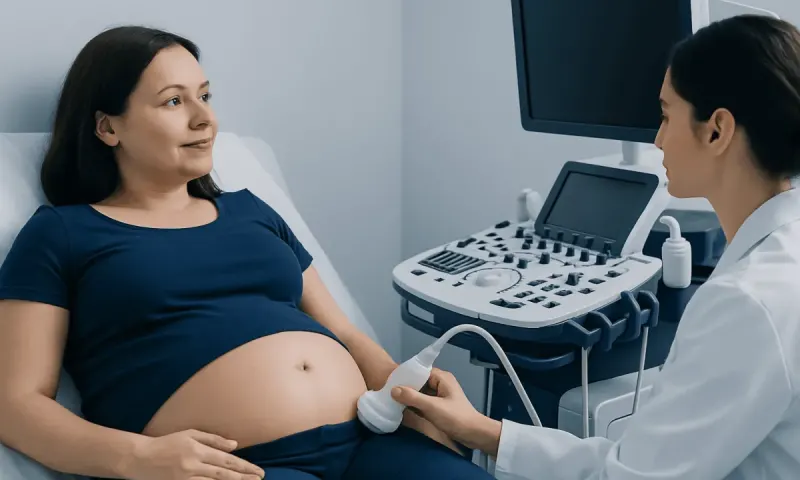
An early ultrasound is still important. It confirms that the pregnancy is located in the uterus, assesses early development and can help the care team identify whether the pregnancy is singleton or multiple. If measurements differ from expectations, the clinician considers the complete clinical picture rather than changing dates automatically.
Accurate dating is particularly valuable when discussing screening tests, assessing fetal growth, determining the timing of antenatal monitoring and making decisions near the end of pregnancy. Patients should keep their clinic’s official transfer details available for their obstetric appointments.
Fresh and frozen embryo transfers: does the calculation change?
The method is the same for fresh and frozen embryo transfer cycles. A due date IVF frozen transfer calculation begins on the date the embryo was transferred after thawing or warming, then uses the embryo’s developmental age. It does not depend on how long the embryo was stored.
For a fresh transfer, the embryo transfer date remains the key date even though egg retrieval and fertilization happened earlier in the cycle. For a frozen transfer, hormone medications and cycle monitoring may differ, but they do not alter the standard pregnancy-dating calculation once transfer has taken place.
Some transfers involve embryos that developed for a different number of days before freezing, such as day-5 or day-6 blastocysts. The laboratory report is therefore important. If there is uncertainty about the embryo age or transfer date, the fertility clinic should be asked to verify the record rather than relying on an online calculator alone.
IVF is one form of in vitro fertilization treatment, and care plans are individualized. People who conceived after donor egg, donor sperm or embryo donation follow the same embryo-age-based approach to pregnancy dating.
Can you go past your due date with IVF?
Yes. It is possible to remain pregnant beyond an IVF due date, just as it is with a spontaneous conception. The estimated due date marks 40 weeks of gestational age; it does not mean labor must begin on that day. However, an IVF pregnancy may receive closer planning near term because dating is generally well established and because individual pregnancy risks need careful assessment.
The obstetric team will discuss monitoring and delivery timing based on the pregnancy as a whole. Relevant considerations can include age, blood pressure, diabetes, fetal growth, amniotic fluid, placental findings, previous pregnancy history and whether the pregnancy involves twins or higher-order multiples. Recommendations can differ between uncomplicated singleton pregnancies and pregnancies with additional risks.
Patients should not attempt to induce labor at home using supplements, medications or unproven methods. If pregnancy continues close to or beyond the due date, the maternity team can explain the available monitoring and whether induction of labor or planned birth is advisable.
Routine prenatal visits, recommended scans and fetal assessments help clinicians make timely decisions. Clear communication with the obstetrician is especially important if the due date listed by different providers appears inconsistent.
When to seek medical care
Anyone who has had an embryo transfer should follow the fertility clinic’s instructions about pregnancy testing, medicines and scheduled scans. Contact the clinic or an obstetric professional promptly for vaginal bleeding, pelvic or abdominal pain, one-sided pain, dizziness, fainting, shoulder-tip pain, fever, severe vomiting or symptoms that feel concerning. These symptoms do not always mean there is a serious problem, but they need timely assessment.
After pregnancy has been confirmed, urgent medical assessment is needed for heavy bleeding, severe or persistent abdominal pain, severe headache, visual changes, chest pain, trouble breathing, sudden swelling, fluid leakage from the vagina, or later in pregnancy, a noticeable reduction in fetal movements. Local emergency services should be used for severe symptoms or an emergency.
Regular prenatal care is the safest way to confirm dating and monitor health throughout pregnancy. Acıbadem Health Point’s multidisciplinary specialists and JCI-accredited hospitals provide fertility and maternity care for Myomectomy Recovery for International Patients: The Usual Travel Timeline" class="ahp-ilk">international patients, with individual follow-up arranged according to clinical needs.
Frequently asked questions
01What is the due date formula for a day-5 IVF embryo transfer?
For a day-5 embryo transfer, the estimated due date is usually the transfer date plus 261 days. This reflects the embryo’s five days of development plus the standard two weeks included in obstetric gestational age. A fertility clinic can confirm the official date in the medical record.
02What is the due date formula for a day-3 IVF embryo transfer?
For a day-3 embryo transfer, add 263 days to the date of transfer. The difference from a day-5 transfer accounts for the embryo being two days younger at transfer. Using the documented embryo age is important for an accurate calculation.
03Is an IVF due date based on egg retrieval or embryo transfer?
It is generally based on embryo transfer date and embryo age, not egg retrieval date. This method matches the standard way gestational age is recorded in obstetric care. The fertility clinic’s embryology and transfer records provide the needed information.
04Does implantation date change an IVF due date?
No. Implantation timing can vary and is not usually known precisely enough to set a due date. IVF pregnancy dating is based on the known transfer date and the embryo’s developmental age at that transfer.
05Does a frozen embryo transfer have a different due date calculation?
No, the same principle applies to frozen and fresh transfers. The due date is calculated from the date the embryo was transferred and its age when it was transferred. The date the embryo was frozen does not determine pregnancy dating.
06Can an ultrasound change an IVF due date?
Early ultrasound helps confirm pregnancy location, viability and development, and clinicians review it alongside IVF treatment records. Because transfer timing is known, the IVF-based date is usually a strong reference. Any adjustment should be made by the treating obstetric team after considering all relevant findings.
This article is for general information only and is not a substitute for professional medical advice. Please consult a qualified doctor about your individual situation.
IVF & fertility treatment in Turkey — success rates and costs
JCI-accredited · board-certified surgeons · reply within 24h
Add us as a Preferred Source to see more of our trusted health content across Google Search, AI Overviews and Discover.