Digital Dentistry: How Scans and 3D Planning Improve Treatment
Digital dentistry uses advanced imaging, computer software, and sometimes 3D printing to plan and deliver dental care more precisely. For many patients, it can mean a more comfortable experience, better-fitting restorations, and clearer communication about treatment options.
Overview: What Digital Dentistry Means
Digital dentistry is an approach to dental care that uses modern technologies such as intraoral scanners, digital X-rays, cone beam computed tomography (CBCT), computer-aided design and manufacturing (CAD/CAM), and 3D planning software. These tools help dentists collect highly detailed information about the mouth and use it to plan treatment more accurately.
In traditional dentistry, impressions made with putty-like materials and two-dimensional images were often the standard starting point. Today, many clinics can create digital models of the teeth and gums within minutes. This allows the dental team to zoom in on specific areas, compare changes over time, and explain findings to the patient more clearly.
Digital dentistry is not a single treatment. Instead, it is a way of diagnosing, planning, and carrying out many kinds of care, from checkups and fillings to crowns, orthodontics, and implant surgery. It is commonly used in general dentistry, restorative procedures, and complex full-mouth rehabilitation.
How Scans Work in Modern Dental Care
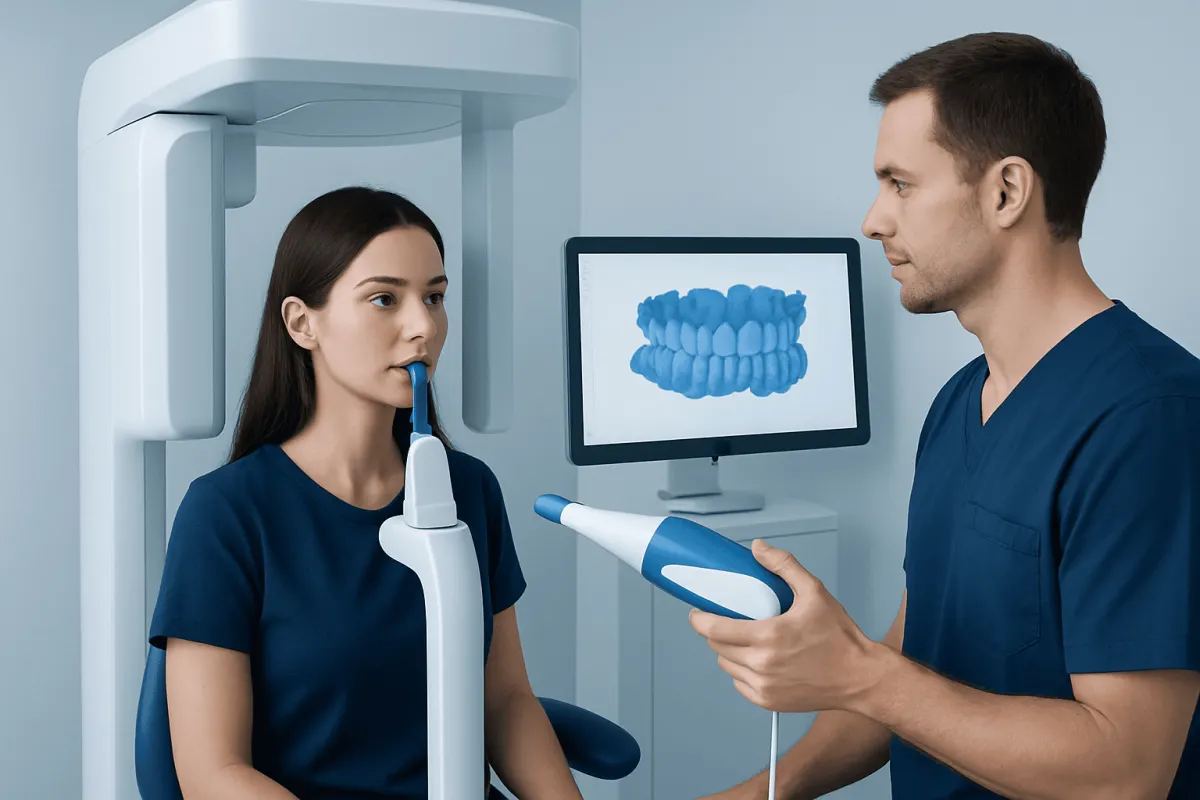
One of the best-known parts of digital dentistry is the intraoral scan. A small handheld scanner captures thousands of images inside the mouth and combines them into a detailed 3D model. This often feels easier for patients than traditional impressions, especially for those with a strong gag reflex or anxiety about dental procedures.
Digital scans can show the shape and position of the teeth, the bite relationship, and the contour of the gums. Dentists may also use digital photographs and X-rays to build a fuller picture. In some situations, CBCT imaging is added to view the jawbone, tooth roots, and nearby structures in three dimensions.
These scans are useful for many treatments. They can guide the design of crowns, bridges, retainers, aligners, and night guards. They are also valuable in planning dental implants, where understanding the amount and quality of bone is especially important.
Because the information is digital, it can often be stored, shared with dental laboratories, and compared over time. This supports continuity of care and may help the dentist monitor tooth wear, shifting teeth, gum recession, or changes after treatment.
How 3D Planning Improves Treatment

3D planning allows the dentist to simulate treatment before starting. Instead of relying only on visual examination and standard images, the dental team can work with a digital model of the patient’s mouth and, when needed, the jawbone. This helps them plan each step with greater confidence and explain the expected result more clearly.
For example, in implant dentistry, software can help identify the safest and most effective implant position based on bone shape, neighboring teeth, and nearby anatomical structures. In some cases, a surgical guide is created to help place the implant according to the plan. If bone support is limited, 3D imaging may also help determine whether bone grafting should be considered before or during treatment.
In restorative dentistry, 3D planning can improve how crowns, bridges, and veneers are designed. The dentist and laboratory can evaluate bite forces, spacing, and symmetry in a more detailed way. This may reduce the need for repeated adjustments and can support a more natural fit and appearance.
Digital planning is also useful for complex cases involving missing teeth, worn teeth, or bite problems. Some patients receiving full-arch rehabilitation, such as All-on-4 treatment, may benefit from this type of structured planning because it allows multiple specialists to coordinate treatment more efficiently.
Common Treatments That Benefit from Digital Dentistry
Many routine and advanced dental treatments can benefit from digital tools. Crowns and bridges are a common example. A digital scan can replace a physical impression, and CAD/CAM technology can help design a restoration that matches the patient’s bite and tooth shape more precisely.
Orthodontic care also uses digital dentistry extensively. Clear aligner treatment often starts with a 3D scan that maps tooth positions and helps predict how the teeth may move over time. This gives patients a clearer idea of the treatment plan and expected progress.
Root canal care can also be supported by digital diagnostics. Detailed imaging helps dentists assess root anatomy, hidden infection, or previous dental work. In selected cases, digital imaging contributes to more precise planning in endodontic treatment.
Other areas that may benefit include smile design, full-mouth reconstruction, occlusal analysis, and the monitoring of habits such as teeth grinding. Digital tools can also support communication between the dentist, dental technician, oral surgeon, and orthodontist when coordinated care is needed.
- Crowns, bridges, and inlays/onlays
- Clear aligners and retainers
- Implant placement and surgical guides
- Smile design and cosmetic planning
- Night guards and bite analysis
- Monitoring changes over time
Benefits for Patients: Comfort, Precision, and Communication
From a patient’s point of view, one of the biggest benefits of digital dentistry is comfort. Intraoral scanning is often quicker and more comfortable than traditional impressions. Many patients also appreciate being able to see a 3D image of their own teeth during the consultation, which can make treatment recommendations easier to understand.
Precision is another important advantage. Detailed digital records can help improve the fit of restorations and reduce guesswork during planning. While no dental procedure is perfect, digital workflows may lower the chance of remakes or repeated adjustments in some cases.
Digital tools can also make communication easier. The dentist can show areas of concern on screen, compare before-and-after images, and explain why a certain treatment is recommended. This can help patients make informed decisions and feel more involved in their care.
For international patients or those receiving multidisciplinary care, digital files can sometimes support smoother planning between teams. Near the end of the care journey, patients may also receive more consistent follow-up because digital records allow easy comparison with earlier scans and images.
Limitations and Safety Considerations
Although digital dentistry offers many advantages, it is not the right solution for every situation. Some patients still need traditional techniques, and some treatments depend more on the dentist’s clinical examination than on digital images alone. Good dentistry combines technology with professional skill, careful diagnosis, and clear communication.
Not every scan provides the same type of information. Intraoral scans show the visible surfaces of the teeth and gums, while X-rays and CBCT scans provide information about structures below the surface. The dentist chooses the most appropriate tool based on the patient’s needs and aims to avoid unnecessary imaging.
Radiation exposure is an understandable concern for many patients. Standard dental X-rays and CBCT imaging are used only when clinically justified, and modern equipment is designed to keep exposure as low as reasonably achievable. Patients should always feel comfortable asking why an image is needed and what information it will provide.
Cost and availability may also vary. Some digital services can increase convenience and precision, but they may not be available in every clinic. A dentist can explain whether a digital workflow is likely to improve the planned treatment in a meaningful way.
What to Expect During a Digital Dentistry Visit
A digital dentistry appointment usually begins much like a standard dental visit, with a medical history review, oral examination, and discussion of symptoms or goals. If a scan is needed, the dentist or dental assistant passes a small scanner over the teeth and gums. The images appear on a screen and are combined into a 3D model in real time.
If more information is needed, the dentist may recommend digital X-rays or a CBCT scan. These images help assess the roots, jawbone, and surrounding anatomy. The findings are then used to create a treatment plan, which may include digital mock-ups or a step-by-step explanation of the proposed procedure.
Depending on the treatment, the digital files may be sent to a dental laboratory or used in-office to design restorations or guides. Some procedures can be streamlined through this process, although timing still depends on the complexity of care. Follow-up visits may include repeat scans to check healing, fit, or treatment progress.
Patients considering advanced restorative, implant, or aesthetic care may benefit from choosing a center with experience in multidisciplinary digital workflows. Acıbadem Health Point’s multidisciplinary specialists and JCI-accredited hospitals diagnose and treat dental conditions for international patients using modern imaging and treatment planning when appropriate.
When to Ask a Dentist About Digital Options
Patients do not need to request digital dentistry for every checkup, but it can be helpful to ask about it when planning a crown, bridge, aligners, implants, or a more complex rehabilitation. It may also be useful for people who have difficulty tolerating conventional impressions or who want a clearer visual explanation of their treatment options.
Anyone with missing teeth, repeated problems with restorations, significant tooth wear, bite concerns, or a need for precise implant planning may especially benefit from a digital assessment. Patients with longstanding gum problems or signs of clenching and grinding may also need a broader evaluation of oral health and bite function.
Patients should seek dental advice promptly if they have pain, swelling, bleeding, trauma, a loose tooth, or signs of infection. These issues may require urgent evaluation, whether digital tools are used or not. Technology can support diagnosis, but timely professional care remains the most important step.
When discussing options, patients can ask what type of scan is recommended, whether it replaces traditional impressions, how the information will affect treatment, and whether there are alternatives. A well-informed conversation helps patients understand both the benefits and the limits of digital care.
Frequently asked questions
01What is digital dentistry?
Digital dentistry is the use of digital tools such as intraoral scanners, digital X-rays, 3D imaging, and planning software in dental care. These technologies help dentists diagnose conditions, plan treatment, and create restorations with greater detail.
02Are digital dental scans better than traditional impressions?
In many cases, digital scans are more comfortable and can provide very accurate information for treatment planning. However, traditional impressions may still be needed in certain situations, depending on the condition of the teeth, gums, and the planned procedure.
03Is digital dentistry safe?
Yes, digital dentistry is generally safe when used appropriately by qualified professionals. If imaging that uses radiation is needed, such as X-rays or CBCT, the dentist should recommend it only when the expected clinical benefit outweighs the risk.
04Which dental treatments use 3D planning?
3D planning is commonly used for implants, orthodontic treatment, crowns, bridges, full-mouth rehabilitation, and some surgical procedures. It helps dentists visualize anatomy and plan the best position, shape, and sequence of treatment.
05Can digital dentistry reduce treatment time?
It can reduce some steps and make planning more efficient, especially by avoiding repeat impressions or improving communication with the dental laboratory. Still, total treatment time depends on the complexity of the case and the healing process involved.
06Does digital dentistry mean the treatment will be pain-free?
Digital tools can improve comfort during scanning and may help procedures be more precise, but they do not automatically make treatment pain-free. Comfort also depends on the type of treatment, the patient’s oral condition, and the use of appropriate anesthesia or sedation when needed.
This article is for general information only and is not a substitute for professional medical advice. Please consult a qualified doctor about your individual situation.
Explore treatments in Turkey — costs, top hospitals & a free quote
JCI-accredited · board-certified surgeons · reply within 24h
Add us as a Preferred Source to see more of our trusted health content across Google Search, AI Overviews and Discover.