Derma Roller for Scalp: What You Need to Know

Key Takeaways
- A derma roller for scalp is a microneedling device, not a stand-alone cure for hair loss.
- It may be considered for some forms of thinning hair, especially when combined with medical treatment.
- Incorrect technique can irritate the scalp, worsen inflammation, or increase infection risk.
- People with active scalp disease, infection, or scarring conditions should get medical advice before trying microneedling.
- Consistent hygiene, gentle aftercare, and realistic expectations matter more than aggressive rolling.
- A dermatologist can help match the device, schedule, and treatment plan to the cause of hair loss.
A derma roller for scalp is a microneedling tool that creates tiny, controlled skin injuries to support the scalp’s healing response and may help certain hair loss treatments work better. It is not a cure for hair loss, but when used correctly and for the right condition, it can be part of a dermatologist-guided plan.
Overview
A derma roller for scalp is a handheld microneedling device covered with tiny needles that are moved across the scalp to create very small, controlled punctures in the skin. Those micro-injuries are intended to trigger the body’s repair response and, in some people, may support healthier conditions for hair growth when used as part of a broader treatment plan.
For patients looking into hair thinning, it helps to think of scalp microneedling as a tool rather than a treatment on its own. It may be used alongside therapies recommended by a dermatologist, especially for certain non-scarring hair loss patterns. It is less useful when the underlying cause has not been identified, because the best approach depends on whether the problem is hormonal, inflammatory, nutritional, autoimmune, or related to scarring.
International patients often ask whether this is something to try at home before seeking specialty care. The safest answer is that home use should only be considered after understanding the diagnosis, the device, and the skin’s current condition. A short consultation can prevent months of trial-and-error and help avoid using the wrong technique on the wrong type of hair loss.
How it may help the scalp and hair follicles
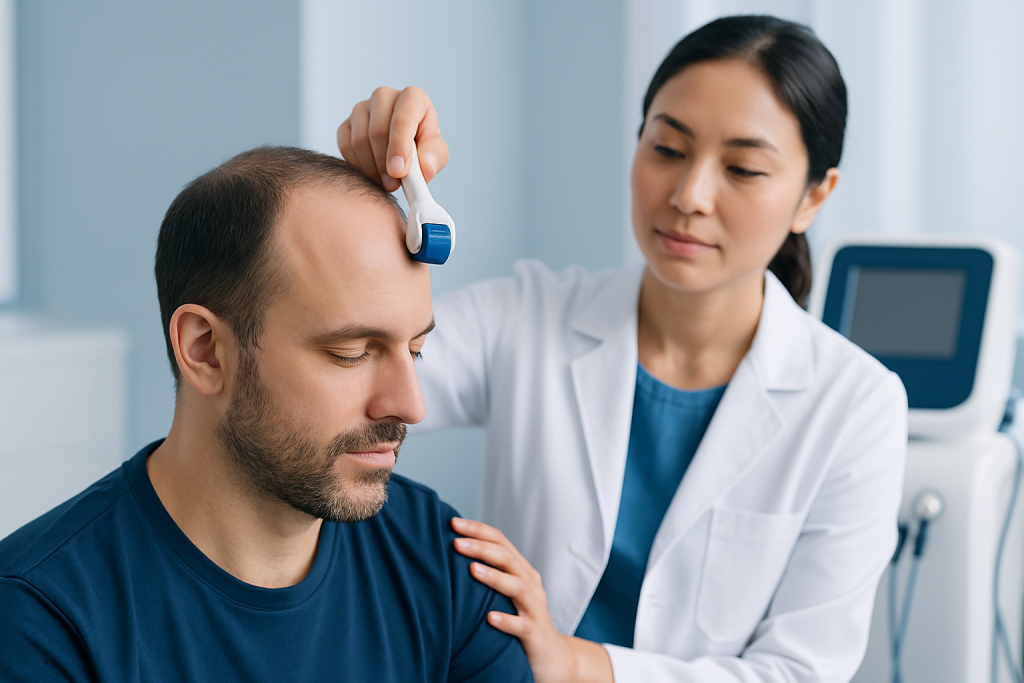
The basic idea behind microneedling is that the skin responds to tiny controlled injuries by increasing local repair activity. In the scalp, this may influence the environment around hair follicles in a way that supports growth, particularly when there is still functioning follicle tissue present. It is often discussed in the context of thinning hair rather than complete follicle loss.
Researchers and clinicians believe microneedling may also improve the delivery or response to certain topical treatments when it is used carefully and at the appropriate time. That is one reason it is often paired with other therapies rather than offered as a stand-alone solution. The benefit is usually gradual, not immediate, and it requires consistent follow-up.
It is important to separate realistic support from exaggerated claims. A derma roller for scalp may help some people with pattern hair thinning, but it does not restore hair where follicles have been replaced by scar tissue. It also does not address every cause of shedding, such as low iron, thyroid disease, or active inflammatory scalp disorders.
Symptoms and signs that may lead someone to consider it

People usually look into scalp microneedling because of visible thinning, widening part lines, reduced hair density, or a slower-than-usual return of fullness after shedding. In some cases, the scalp may also appear more visible around the temples or crown. These changes can affect self-image and prompt patients to explore options that feel less invasive than surgery.
However, the visible pattern matters. Hair loss that is patchy, rapidly progressive, painful, scaly, or associated with burning, redness, or pustules deserves medical assessment first. Those features may suggest an inflammatory condition, infection, or scarring alopecia, where home rolling could delay proper care.
Some patients are also drawn to derma rollers because they want an option that fits travel schedules or remote follow-up. Even then, the reason for hair loss should be clarified before starting, because the scalp is a sensitive area and not every thinning pattern should be treated the same way.
Causes and risk factors: who should be cautious
Derma rolling is generally discussed for hair loss patterns in which follicles are still present but underperforming, such as androgenetic alopecia. People with a family history of thinning hair may ask whether this technique can help preserve density or enhance a medical hair plan. It may be considered in that setting, but only after a clinician confirms the diagnosis.
Caution is especially important for anyone with active scalp eczema, psoriasis flares, folliculitis, open sores, sunburn, or a history of keloid formation. People using blood-thinning medicines, those with bleeding disorders, and patients with diabetes or immune suppression should seek individualized advice before starting any skin-penetrating procedure, even a minor one.
Scarring hair loss conditions deserve particular attention. When follicles are already damaged or destroyed, microneedling may offer little benefit and could add irritation. A dermatologist can usually distinguish between non-scarring thinning and conditions that need a different treatment path.
Diagnosis: why the cause of hair loss comes first
Before recommending a derma roller for scalp, a clinician typically starts by identifying the type of hair loss. This may include a medical history, scalp examination, review of medications, family history, and questions about shedding, stress, diet, hormonal changes, and recent illness. In some cases, dermoscopy or laboratory tests may be needed.
That diagnostic step is essential because hair loss is a symptom, not a diagnosis. A person who assumes they have “just thinning hair” may actually have thyroid imbalance, iron deficiency, traction hair loss, inflammatory scalp disease, or another problem that needs targeted treatment. Rolling the scalp without understanding the cause can waste time and cause avoidable irritation.
For patients traveling for care, a thorough first consultation is especially valuable. It allows the specialist to compare patterns carefully, discuss whether microneedling is appropriate, and decide whether in-clinic procedures, topical therapy, oral treatment, or a combination would be the best fit.
Treatment options: how microneedling fits into care
When it is appropriate, scalp microneedling is usually one part of a broader treatment plan. Dermatologists may combine it with evidence-based therapies for hair loss, depending on the patient’s diagnosis, goals, sex, age, medical history, and tolerance for treatment. The exact approach should be individualized rather than copied from online routines.
In practice, there are two broad settings for use: in-clinic microneedling performed by trained professionals, and carefully selected home use with guidance. In-clinic treatment offers more control over depth, hygiene, and scalp assessment. Home rollers may be less suitable for people with sensitive skin, significant hair shedding, or any history of scalp inflammation.
Common concerns with treatment planning include whether to continue topical products on the day of microneedling, how often sessions should occur, and what needle length is appropriate. These are not one-size-fits-all decisions. The safest route is to ask a dermatologist to set the plan, especially if hair loss has multiple possible causes.
- Use only a clean device and never share it.
- Do not roll over infected, inflamed, or broken skin.
- Avoid combining it with harsh scalp products unless a clinician approves.
- Stop and seek advice if the scalp becomes very sore, swollen, or oozes.
Prevention and self-care: protecting the scalp before and after rolling
Good scalp care matters whether microneedling is done in a clinic or at home. Before a session, the scalp should be clean and free of obvious irritation. Afterward, the skin usually needs a gentle approach: avoid picking, scratching, abrasive shampoos, strong chemical treatments, and heat styling right away if the scalp feels tender.
Hygiene is central to safety. A derma roller should be used according to the manufacturer’s instructions and replaced when worn. Because the device touches the skin directly, improper cleaning can raise the risk of infection. If there is any uncertainty about sterilization, it is safer not to use the device until a clinician has reviewed the method.
Self-care also includes patience. Hair changes are slow, and repeated aggressive rolling does not mean better results. Supporting overall hair health with adequate nutrition, stress management, and treatment of underlying medical issues often matters more than adding more procedures. For patients recovering after treatment abroad, it is wise to leave with clear aftercare instructions and a plan for follow-up once home.
When to see a doctor
A dermatologist or hair specialist should be consulted before starting a derma roller for scalp if the cause of hair loss is unclear, if shedding is sudden, or if the scalp looks inflamed. Medical advice is also important if there is scalp pain, scale, crusting, patchy baldness, or a personal history of scarring hair loss. These features change the treatment conversation significantly.
After microneedling, medical review is needed if redness does not settle as expected, if the scalp becomes warm or increasingly tender, or if there is drainage, fever, or spreading irritation. Those symptoms are uncommon but should not be ignored. It is better to pause treatment and ask for guidance than to continue rolling through a reaction.
Acibadem Health Point’s multidisciplinary specialists and JCI-accredited hospitals can help international patients diagnose and treat hair and scalp conditions in a coordinated way, with follow-up that fits cross-border care. A structured consultation can clarify whether microneedling belongs in the plan or whether another treatment would be more appropriate.
Frequently asked questions
01What is a derma roller for scalp used for?
It is used to create tiny controlled punctures in the scalp, usually as part of a plan for certain types of hair thinning. The goal is to support the scalp environment and, in some cases, improve the effect of other hair loss treatments. It is not a cure for all forms of hair loss.
02Can a derma roller for scalp regrow hair on its own?
Sometimes it may help, but it is usually not relied on as a stand-alone treatment. Results are more likely when the underlying cause is identified and the roller is used with a clinician-recommended plan. Expectations should remain gradual and realistic.
03Who should not use scalp microneedling at home?
People with active scalp infection, open skin, significant inflammation, scarring hair loss, or a tendency to form keloids should avoid starting without medical advice. Caution is also important for those with bleeding problems, immune suppression, or diabetes. A doctor can help decide whether home use is appropriate.
04Does microneedling on the scalp hurt?
It may cause mild discomfort, stinging, or temporary tenderness, depending on the device and technique. The sensation should not be severe, and the scalp should not be traumatized. If pain is marked or lasting, the treatment should be stopped and reviewed.
05How often should a derma roller be used on the scalp?
That depends on the device, needle length, scalp condition, and the treatment plan. More frequent use is not always better and can irritate the skin. A dermatologist should set the schedule rather than relying on online routines.
06Can a derma roller be used with hair loss medications?
It may be combined with certain treatments, but timing and product choice matter. Some topical products may sting or irritate if applied too soon after microneedling. A doctor should give specific guidance for the person’s plan.
This article is for general information only and is not a substitute for professional medical advice. Please consult a qualified doctor about your individual situation.
Hair transplant in Turkey — costs, graft counts & a free assessment
JCI-accredited · board-certified surgeons · reply within 24h
Add us as a Preferred Source to see more of our trusted health content across Google Search, AI Overviews and Discover.