Derma Roller Needle Size for Hair Growth: What You Need to Know

Key Takeaways
- The most commonly discussed derma roller needle size for hair growth is often in the 0.5 mm to 1.5 mm range, depending on the goal and setting.
- Microneedling is not a stand-alone cure for hair loss; it may be used as part of a broader treatment plan.
- A dermatologist can help identify the cause of thinning hair before recommending any device or home routine.
- Technique matters as much as size: pressure, cleanliness, and frequency affect both safety and results.
- People with active scalp disease, infection, or certain skin conditions should avoid rolling until they have medical advice.
The right derma roller needle size for hair growth is usually chosen with safety, scalp sensitivity, and the cause of hair loss in mind. Microneedling may support hair treatments for some people, but it works best when guided by a qualified clinician and paired with a clear diagnosis.
Overview
For people comparing home microneedling devices, the short answer is this: the derma roller needle size for hair growth is often discussed in the 0.5 mm to 1.5 mm range, but the best choice depends on scalp tolerance, the pattern of hair loss, and whether the treatment is being done at home or in a clinic. Smaller sizes are generally associated with lighter stimulation and easier home use, while larger sizes are more likely to be used under professional supervision.
Derma rolling, also called microneedling, uses tiny needles to create controlled micro-injuries in the skin. On the scalp, that process may help trigger healing signals and improve the way certain topical treatments are absorbed. It is not designed to replace a diagnosis, because thinning hair can come from androgenetic alopecia, telogen effluvium, traction, inflammatory scalp disease, nutritional problems, or hormonal changes.
Because hair loss is often personal and emotionally sensitive, many people want a practical answer before committing to care. The safest approach is to match the needle size to the person’s scalp condition and treatment plan rather than choosing the largest size in hopes of faster regrowth.
How microneedling may support hair growth
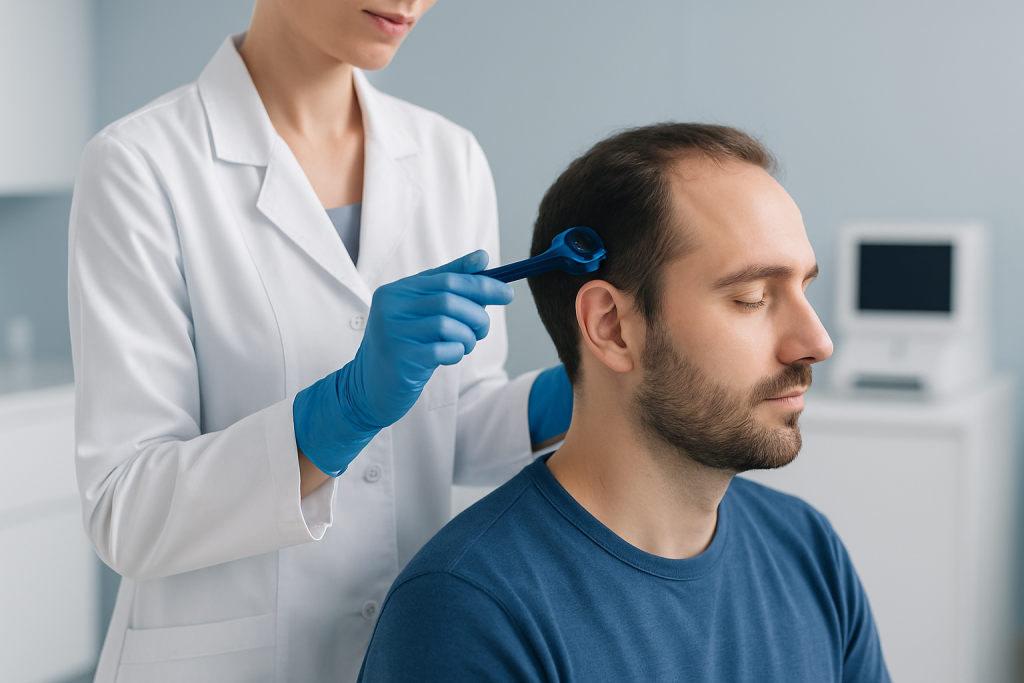
Microneedling works by creating tiny channels in the scalp that prompt a wound-healing response. That response may increase growth-factor activity and improve circulation in the treated area. In some people, it may also help topical therapies reach the hair follicles more effectively, especially when the scalp has become less responsive over time.
It is important to keep expectations realistic. Microneedling is usually considered an adjunct treatment, meaning it is used alongside other medical options rather than by itself. Results vary depending on the type of hair loss, how long it has been present, and whether the follicles are still active.
For international patients planning care from abroad, this is where a structured consultation matters. A specialist can determine whether the scalp is suitable for microneedling, whether imaging or lab tests are needed, and whether the treatment should be combined with medication, nutrition support, or another therapy.
Which needle sizes are commonly used

When people ask about the best derma roller needle size for hair growth, they are usually comparing three commonly discussed ranges. 0.25 mm to 0.5 mm is often considered a gentler range, mainly for product absorption and minimal stimulation. 0.5 mm to 1.0 mm is commonly discussed for home use when a person has been cleared by a clinician. 1.0 mm to 1.5 mm is more often associated with professional treatment because it can create a stronger response and may also increase discomfort or irritation.
Choosing a longer needle does not automatically mean better outcomes. The scalp is a sensitive area, and more aggressive treatment can lead to redness, bleeding, inflammation, or worsening of underlying scalp conditions. For many people, especially those new to microneedling, a conservative approach is safer and easier to maintain.
Device quality also matters. Needles should be intact, evenly spaced, and designed for scalp use. A poorly made roller can tug hair, scratch the skin unevenly, or increase the risk of contamination if it is hard to clean properly.
- 0.25–0.5 mm: gentler, often used for superficial stimulation
- 0.5–1.0 mm: commonly considered for cautious home use
- 1.0–1.5 mm: typically better suited to clinic-based care
Who should be cautious before using a derma roller
Not every form of hair thinning is a good candidate for microneedling. People with active scalp psoriasis, eczema flares, infections, open sores, or severe dandruff with inflammation should avoid rolling until a clinician has assessed the scalp. The same caution applies to those with a history of keloid scarring or poor wound healing.
People who take blood thinners, have uncontrolled diabetes, or have immune system disorders should seek medical advice before using any needle-based device. Pregnant patients and those with uncertain hair loss patterns should also be evaluated first, since treatment choices may change depending on the cause.
If shedding is sudden, patchy, or associated with pain, scaling, or eyebrow loss, the issue may not be routine pattern hair loss. In that situation, self-treatment can delay the right diagnosis. A dermatologist can distinguish between cosmetic thinning and conditions that need targeted medical care.
How doctors diagnose hair loss before recommending treatment
A proper evaluation usually begins with a detailed history: when the hair loss started, whether it is shedding or thinning, what medications are being taken, and whether there have been stressors such as illness, surgery, weight change, or childbirth. The scalp and hair are examined for patterns, breakage, inflammation, and signs of scarring.
Depending on the case, a doctor may order blood tests to look for iron deficiency, thyroid imbalance, vitamin issues, or other underlying concerns. Trichoscopy, a magnified scalp examination, may help identify follicle changes that are not visible to the naked eye. In selected cases, a biopsy is needed to confirm inflammatory or scarring conditions.
This step is especially valuable for patients traveling for treatment. A clear diagnosis helps avoid unnecessary procedures and allows the care team to design a plan that is realistic, coordinated, and easier to continue after returning home.
Treatment options beyond the roller
Microneedling is just one part of the conversation about hair restoration. Depending on the diagnosis, treatment may include topical therapies, oral medications, lifestyle adjustments, correction of nutritional deficiencies, or procedures such as platelet-rich plasma in selected patients. The right plan depends on whether follicles are still viable and whether the hair loss is temporary or chronic.
For androgenetic alopecia, microneedling may be used alongside established treatments. For telogen effluvium, the focus is usually on identifying and correcting the trigger rather than using a device alone. For inflammatory scalp disease, treating the underlying inflammation comes first, because rolling over irritated skin can make symptoms worse.
Some people hope that a single tool will solve thinning hair quickly. In practice, the most useful results often come from a layered plan built around diagnosis, scalp health, and consistency. That plan may be started locally and then refined through specialist follow-up, including telemedicine when appropriate.
Prevention and self-care
Good scalp care makes any microneedling routine safer. The device should be used only on clean skin, never shared, and replaced according to manufacturer guidance or clinician advice. The scalp should not be rolled over acne-like bumps, scratches, sunburn, or signs of infection. Gentle handling is important, because too much pressure can cause unnecessary irritation.
Aftercare usually focuses on simplicity. The scalp may need time to settle before styling products, harsh shampoos, or heat are used again. People should follow clinician instructions about when to resume topical medications, since timing can matter for both comfort and absorption. Sun protection for the scalp may also be helpful if the area is exposed.
From a broader hair-health perspective, balanced nutrition, stress management, and avoidance of tight hairstyles all matter. Traction from braids, extensions, or constant pulling can continue to damage follicles even if microneedling is used. Self-care works best when it supports the treatment plan rather than competing with it.
When to see a doctor
Medical advice is sensible before starting microneedling if the person is unsure why the hair is thinning, has sensitive skin, or has not had a scalp examination before. This is especially true when hair loss is progressing quickly, the scalp hurts, or there are visible patches of loss. A doctor can help decide whether a derma roller is appropriate and which needle size, if any, fits the situation.
Prompt evaluation is also important if the scalp becomes more red, swollen, crusted, or painful after rolling. Those symptoms may indicate irritation, infection, or an underlying scalp disorder that needs treatment. Even when microneedling is used correctly, the scalp should not be forced to tolerate repeated injury.
Acibadem Health Point’s multidisciplinary specialists and JCI-accredited hospitals diagnose and treat hair and scalp conditions for international patients, with care plans designed around safety, diagnosis, and follow-up. That kind of structured assessment can be especially helpful when a person is choosing between home devices and clinic-based treatment.
Frequently asked questions
01What derma roller needle size is usually used for hair growth?
The sizes most often discussed for hair growth are between 0.5 mm and 1.5 mm. Smaller sizes are generally gentler, while larger sizes are more likely to be used in clinical settings. The safest choice depends on the scalp condition and the advice of a dermatologist.
02Is a longer needle always better for hair growth?
No. A longer needle can create more irritation and does not automatically produce better results. In many cases, a cautious size used correctly is preferable to a larger size used too aggressively.
03Can a derma roller regrow hair on its own?
Microneedling may help support hair treatments, but it usually does not replace medical therapy on its own. It tends to be most useful when the underlying cause of hair loss has been identified and treated as well.
04How often should a derma roller be used on the scalp?
Frequency depends on the needle size, scalp sensitivity, and professional guidance. More frequent use is not necessarily better, and the scalp needs time to recover between sessions. A clinician can recommend a schedule that is safer for the individual.
05Who should avoid using a derma roller for the scalp?
People with active scalp infection, open wounds, inflammatory skin disease, or a history of poor wound healing should avoid rolling until they are medically assessed. Caution is also important for people taking blood thinners or those with uncontrolled medical conditions.
06Should minoxidil or other topical treatments be used with microneedling?
Sometimes microneedling is combined with topical therapy, but timing matters because the scalp may be more sensitive after rolling. A doctor should advise when to apply products so the routine is both effective and comfortable.
This article is for general information only and is not a substitute for professional medical advice. Please consult a qualified doctor about your individual situation.
Hair transplant in Turkey — costs, graft counts & a free assessment
JCI-accredited · board-certified surgeons · reply within 24h
Add us as a Preferred Source to see more of our trusted health content across Google Search, AI Overviews and Discover.