Choledocholithiasis: Symptoms, Causes and Treatment

Key Takeaways
- Choledocholithiasis is the presence of one or more stones in the common bile duct, often after gallstones migrate from the gallbladder.
- Symptoms can include upper abdominal pain, jaundice, dark urine, pale stools, nausea, and fever if infection develops.
- Diagnosis often uses blood tests and imaging, with ERCP used both to confirm and to remove stones in many cases.
- Treatment usually involves removing the blockage and addressing the gallbladder if it remains the source of stones.
- People with severe pain, fever, jaundice, or confusion should seek urgent medical assessment.
- Follow-up matters, especially for patients traveling from abroad, because recovery may include repeat testing and planned gallbladder treatment.
Choledocholithiasis means a stone has moved into the common bile duct, where it can block bile flow and cause pain, jaundice, or infection. Prompt diagnosis and treatment help prevent complications and usually relieve symptoms effectively.
Overview
Choledocholithiasis is the medical term for a stone in the common bile duct, the channel that carries bile from the liver and gallbladder into the small intestine. When a stone becomes lodged there, bile cannot drain normally, which may lead to pain, jaundice, inflammation, or infection.
For many people, the story begins with gallstones. A stone may form in the gallbladder and later move into the bile duct. Others may be surprised to learn that bile duct stones can also remain silent for a time, discovered only when blood tests or imaging are performed for another reason.
Because the bile duct sits near the pancreas and liver, a blocked duct can affect more than digestion. That is why doctors usually take symptoms seriously, even when they seem to come and go. Early evaluation helps distinguish a temporary blockage from a problem that needs urgent treatment.
Symptoms

The most familiar symptom is pain in the upper right side of the abdomen or the center of the upper abdomen. The pain may be steady, may spread to the back or right shoulder, and can be accompanied by nausea or vomiting. Some people notice that the discomfort worsens after eating, while others feel unwell without a clear pattern.
Jaundice is another important sign. It causes yellowing of the skin and eyes and may be paired with dark urine and pale or clay-colored stools. These changes suggest that bile is not reaching the intestine normally.
If a blocked duct leads to infection, symptoms can become more pronounced. A person may develop fever, chills, increasing pain, or a general feeling of being ill. In more severe cases, confusion or low blood pressure can occur and requires urgent care.
- Upper abdominal pain
- Nausea or vomiting
- Yellowing of the skin or eyes
- Dark urine
- Pale stools
- Fever or chills if infection is present
Causes & Risk Factors
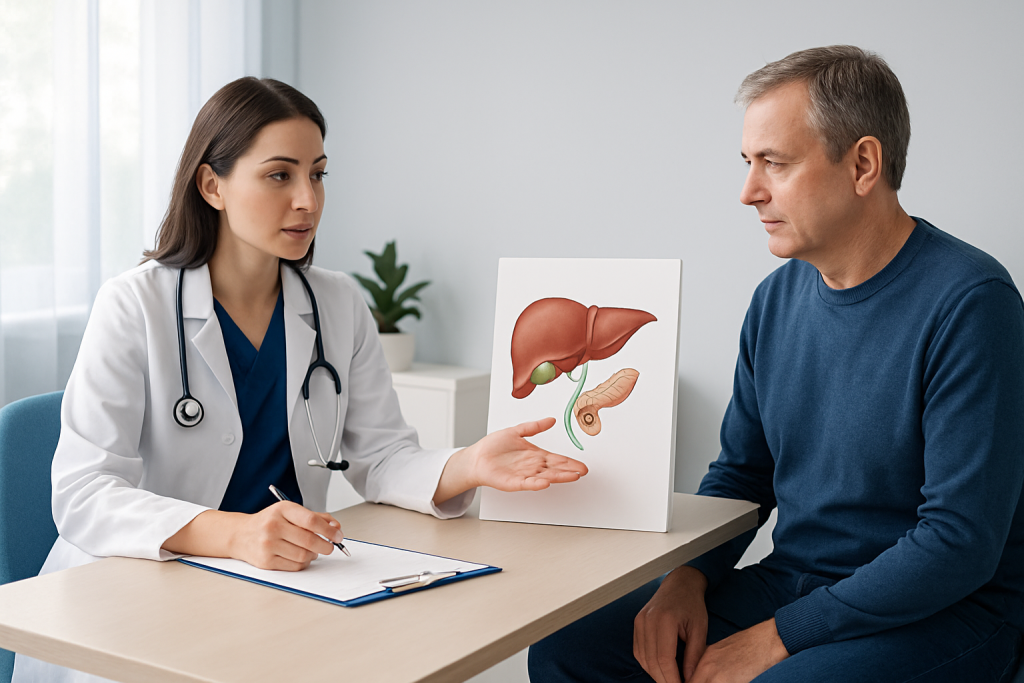
Most common bile duct stones are gallstones that have traveled out of the gallbladder. Less often, stones form directly within the bile ducts, especially when bile flow is sluggish or infection is present. A stone can be small and still cause a major blockage if it lodges in a narrow part of the duct.
Risk is higher in people who already have gallstones, a history of gallbladder inflammation, or previous episodes of biliary pain. Age can also play a role, and certain inherited or metabolic factors may make stone formation more likely. After gallbladder surgery, stones can still occasionally appear in the bile duct if small stones were missed or formed later.
Some international patients are diagnosed only after seeking care for a “stomach problem” that has lingered during travel. Persistent indigestion, recurrent upper abdominal pain, or jaundice after a trip should not be dismissed as jet lag or diet-related discomfort, especially if the person has a known history of gallstones.
Diagnosis
Diagnosis starts with a careful history and physical examination, followed by blood tests that look at liver function, bilirubin, and signs of inflammation. These tests help doctors see whether bile is likely backing up and whether infection or pancreatitis may also be present.
Imaging is often needed to confirm the location of the problem. Ultrasound is commonly used first because it can show gallstones and sometimes a widened bile duct. Depending on the situation, doctors may recommend MRCP, a noninvasive MRI-based test that maps the bile ducts, or endoscopic ultrasound for a closer look.
ERCP deserves special mention because it can do two jobs at once: it can identify the obstruction and remove the stone during the same procedure. Not everyone needs ERCP immediately, but when a stone is strongly suspected or confirmed, it is often the most direct path to treatment.
Treatment Options
Treatment is aimed at clearing the blockage and preventing complications. If infection is present, doctors may begin antibiotics and supportive care right away. Fluids, pain relief, and temporary fasting may be used while the care team prepares the next step.
ERCP is the most common procedure for removing stones from the common bile duct. During ERCP, a doctor passes a flexible scope through the mouth into the small intestine and uses specialized tools to open the duct and retrieve the stone. In some cases, a temporary stent is placed to keep bile flowing until the duct is fully cleared or swelling settles.
After the duct is treated, the gallbladder may also need attention if it is the source of stones. Many patients are advised to discuss gallbladder removal, because leaving the gallbladder in place can allow new stones to form and travel again. When surgery is needed, it is usually planned once the acute episode has been controlled and the person is stable.
For patients traveling from abroad, treatment planning often includes timing, recovery needs, and whether follow-up can be done locally or with the treating team after return home. Clear discharge instructions and a written summary are especially useful when care continues across borders.
Prevention & Self-care
Not every case of choledocholithiasis can be prevented, but people with gallstones can lower risk by following medical advice and addressing recurring biliary symptoms early. Because stones often begin in the gallbladder, preventing repeated attacks usually means taking the overall gallstone problem seriously rather than waiting for a more dramatic episode.
Self-care after treatment focuses on recovery and watchfulness. Rest, gradual return to normal meals, and following diet guidance from the care team can help the digestive system settle. If a procedure was performed, the person should know which symptoms are expected during recovery and which ones need prompt review.
- Attend follow-up visits and recommended blood tests or imaging.
- Report fever, worsening pain, or new jaundice without delay.
- Follow dietary guidance after procedures and surgery.
- Keep a record of prior stones, procedures, and discharge documents when traveling.
- Discuss whether gallbladder treatment is advised to reduce recurrence.
When to See a Doctor
Medical review is important whenever upper abdominal pain is paired with jaundice, fever, or vomiting. These symptoms may indicate a blocked duct or infection, both of which require evaluation rather than home treatment. Even if the pain improves temporarily, the underlying stone may still be present.
Urgent assessment is especially important if the person feels faint, confused, very weak, or has a high fever. These can be signs that infection is spreading or that the body is under significant stress. Emergency care is the safer choice in those situations.
People who have recently had gallbladder disease, been told they have gallstones, or undergone abdominal procedures should mention that history early in the visit. That context helps the care team choose the right tests quickly and decide whether endoscopic treatment is needed.
Acibadem Health Point’s multidisciplinary specialists and JCI-accredited hospitals diagnose and treat choledocholithiasis for international patients, with coordinated care that supports evaluation, procedure planning, and follow-up.
Frequently asked questions
01Is choledocholithiasis the same as gallstones?
Not exactly. Gallstones form in the gallbladder, while choledocholithiasis means a stone is in the common bile duct. A gallstone can travel into the duct and cause a blockage there.
02Can choledocholithiasis go away on its own?
A very small stone may sometimes pass, but it is not safe to assume that will happen. Because blockage can lead to infection or pancreatitis, doctors usually assess the situation rather than waiting at home.
03Why does jaundice happen with bile duct stones?
Jaundice occurs when bile cannot drain into the intestine and bilirubin builds up in the blood. This can yellow the skin and eyes and may also darken urine and lighten stool color.
04What is ERCP used for?
ERCP is a procedure that lets doctors examine the bile ducts from inside the digestive tract. It is often used to remove stones and restore bile flow, sometimes during the same session in which the problem is identified.
05Do all patients need surgery after a bile duct stone is removed?
Not always, but many people are advised to discuss gallbladder surgery if the gallbladder is the source of stones. Removing the gallbladder can lower the chance of another stone traveling into the bile duct.
06How should an international patient plan for recovery?
It helps to leave with a clear procedure summary, medication list, and follow-up plan before traveling. If symptoms return after going home, the patient should contact a doctor promptly and share the treatment records.
This article is for general information only and is not a substitute for professional medical advice. Please consult a qualified doctor about your individual situation.
Persistent digestive symptoms? Get evaluated in Turkey
JCI-accredited · board-certified surgeons · reply within 24h
Add us as a Preferred Source to see more of our trusted health content across Google Search, AI Overviews and Discover.