Cheap Hair Transplants in Turkey: Cost and Safety
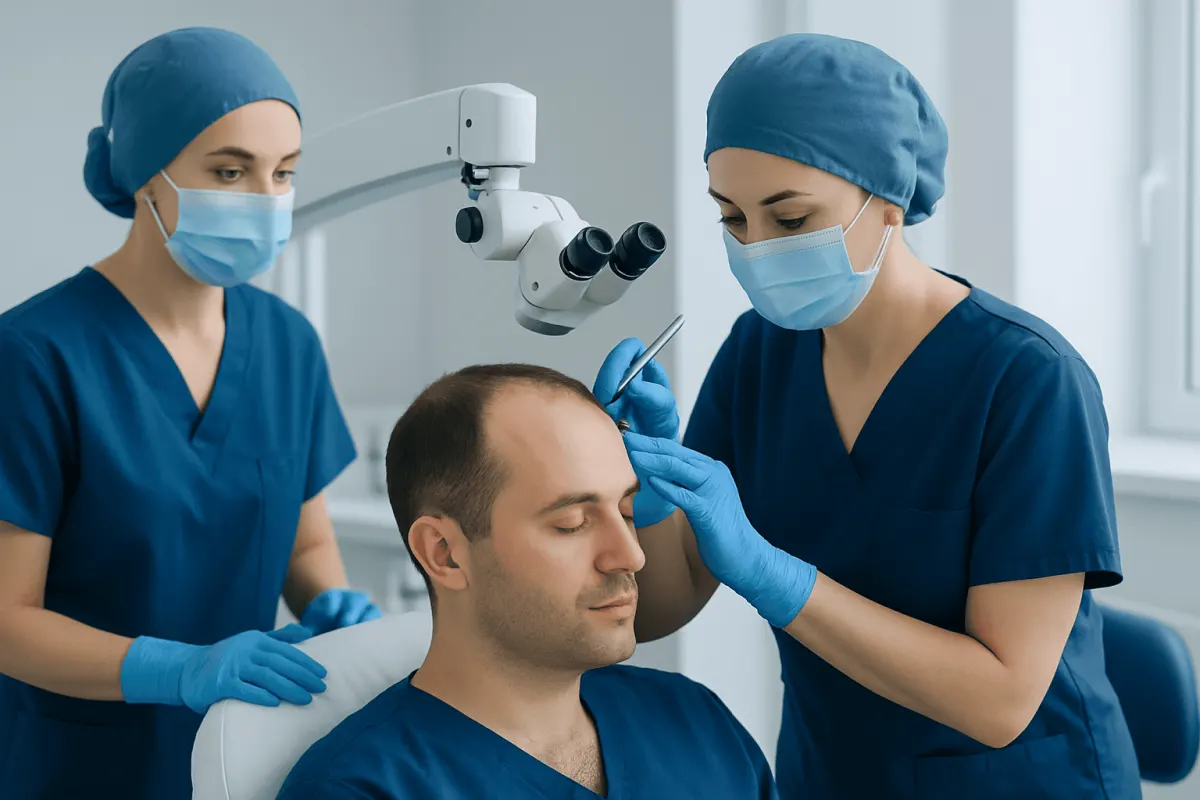
A cheap hair transplant in Turkey may appear attractive, but the meaningful cost includes clinical assessment, surgeon involvement, graft planning, aftercare and safety standards—not simply a package price. Patients should choose a licensed, medically supervised service based on suitability and quality of care rather than the lowest advertised figure.
Cheap Hair Transplant Turkey: What Patients Really Pay
A cheap hair transplant in Turkey does not have one standard price because each procedure is planned around the person’s pattern of hair loss, donor-hair density, hair characteristics, technique, clinical team and aftercare needs. Rather than relying on an advertised package or a cost per graft, patients benefit from asking what medical assessment, surgeon involvement, medications, follow-up and complication support are included.
Turkey is a well-known destination for hair restoration, partly because clinics may have high procedure volumes and different operating costs from those in some other countries. However, affordability should not be confused with quality. A hair transplant is a medical procedure, and its long-term result depends on careful diagnosis, ethical graft planning, infection control and realistic expectations.
For people considering treatment abroad, travel planning should include enough time for an in-person examination, the procedure itself and early postoperative review. It is also important to identify who will provide advice if concerns develop after returning home.
How Hair Transplantation Works
Hair transplantation redistributes permanent, healthy hair follicles from an area that is less affected by thinning—usually the back and sides of the scalp—to areas with reduced density. The transplanted follicles retain many of their original growth characteristics. It is most commonly used for androgenetic alopecia, also called male- or female-pattern hair loss.
In follicular unit extraction (FUE), individual naturally occurring follicular units are removed from the donor area and placed into tiny recipient sites. In direct hair implantation (DHI), extracted follicles are implanted using a specialized implanter. The most suitable method depends on hair characteristics, the donor area, the treatment plan and the clinician’s experience, rather than marketing labels alone.
The goal is typically improved coverage and a natural-looking hairline, not unlimited density. The donor supply is finite, so an ethical plan preserves follicles for possible future hair loss. Patients can learn more about hair transplant treatment options as part of a medically supervised consultation.
Candidacy, Assessment and Planning

Good candidates generally have a stable or reasonably predictable pattern of hair loss, sufficient donor-hair density and realistic expectations about coverage. Age alone does not determine candidacy. In younger people, clinicians are especially careful because hair loss may continue and an overly low or dense hairline can be difficult to maintain over time.
Before recommending surgery, a clinician should examine the scalp and hair, review medical history and ask about medicines, family history, nutrition and prior treatments. Some causes of shedding are temporary or treatable without transplantation. Scalp conditions, autoimmune hair loss, iron deficiency, thyroid disease and certain medications may need assessment first.
Hair transplantation may not be appropriate when donor hair is limited, hair loss is actively progressing without a long-term plan, or a scalp disease is untreated. Medical therapy may help some people slow further pattern hair loss and protect native hair around the transplant. Individual advice should come from a qualified dermatologist or hair-restoration clinician.
What Happens During the Procedure and Recovery
After the consultation and design of the hairline, the donor and recipient areas are prepared. Local anesthetic is usually used. The clinical team extracts follicular units, keeps them protected during preparation, then creates or prepares recipient sites at carefully planned angles and directions before implantation. The length of the session depends on the planned number of grafts and the technique used.
Following the procedure, small crusts, redness, swelling or tenderness can occur temporarily. Patients receive instructions on washing, sleeping position, activity restrictions and protecting the grafts. They should avoid scratching or rubbing the area and follow their clinician’s advice about exercise, headwear, sun exposure and prescribed medicines.
Transplanted hairs often shed in the first weeks; this is a normal part of the growth cycle and does not necessarily mean the follicles have been lost. New growth commonly starts gradually after several months, with maturation continuing for up to a year or longer. Recovery timelines vary according to the individual procedure and healing response.
Benefits, Risks and How to Compare Clinics
A successful transplant can improve visible hair coverage and may support confidence for people whose hair loss causes distress. It is a long-term redistribution of follicles, but it does not stop ongoing thinning in non-transplanted hair. Some people may therefore need medical treatment or a future procedure as their pattern of hair loss evolves.
Possible risks include temporary swelling, bleeding, infection, discomfort, numbness, folliculitis, shock loss of existing hair, poor graft growth, uneven density, scarring and an unnatural-looking hairline. Risk is reduced, but not eliminated, by appropriate patient selection, sterile practice, medically trained staff, careful technique and reliable follow-up.
When comparing clinics, patients should ask who performs the consultation, hairline design, extraction and implantation; whether a physician is present and accountable; how the donor area is assessed; what happens if a complication develops; and whether the quote clearly lists all included services. Before-and-after photographs should be interpreted cautiously, as lighting, styling and timing can affect appearance.
- Request a written, individualized treatment plan.
- Ask whether graft numbers are clinically justified and whether the donor area will be protected.
- Confirm infection-control standards, professional credentials and postoperative contact arrangements.
- Avoid pressure to book quickly or promises of guaranteed density.
Common Cost Questions About Hair Transplants in Turkey
How much do 3,000 hair grafts cost in Turkey? There is no reliable single answer for 3,000 grafts because clinics may price by package, session, technique, medical staffing or other inclusions rather than by graft count. A safe comparison should clarify whether the figure includes consultation, laboratory tests if needed, anesthesia, the procedure, medications, aftercare, accommodation, transfers and follow-up. The number of grafts should be based on donor capacity and clinical need, not on a preselected package.
Are hair transplants in Turkey better or just cheaper? A country alone does not determine the quality of a hair transplant. Turkey has experienced providers and established services, but outcomes differ substantially among clinics. A procedure can be more affordable because of operating costs or package structures, while quality depends on the treating team’s qualifications, supervision, patient selection, planning, safety systems and follow-up.
Where can I find the cheapest hair transplant in Turkey? Searching only for the cheapest option can increase the chance of overlooking important medical safeguards. Rather than choosing a clinic by the lowest price, patients should compare licensed providers, transparent treatment plans, surgeon participation, sterile standards and accessible aftercare. A quote that seems unusually low should prompt clear questions about who performs each step and what support is available if problems occur.
What did Elon Musk use to regrow hair? There is no confirmed public medical record describing any hair-loss treatment used by Elon Musk. Photographs and online speculation cannot establish whether someone has had a transplant, used medication, changed styling or benefited from another intervention. Personal treatment decisions should be based on an individual medical assessment, not on assumptions about a public figure.
When to Seek Medical Care
People should arrange a medical assessment before pursuing a transplant, particularly if hair loss is new, rapidly progressing or emotionally distressing. A clinician can identify whether the pattern is consistent with androgenetic alopecia or whether another cause needs treatment first. Early advice may help preserve existing hair in some cases.
Prompt medical care is especially important for sudden patchy hair loss, scalp pain, itching, scaling, pus, marked redness, scarring, fever or hair loss accompanied by other symptoms such as fatigue or weight change. These features can point to inflammatory, infectious, autoimmune or systemic conditions that require diagnosis.
After a transplant, patients should contact their treating team urgently for increasing pain, spreading redness, fever, discharge, significant bleeding or swelling that is worsening rather than improving. Acıbadem Health Point’s multidisciplinary specialists and JCI-accredited hospitals diagnose and treat hair-loss concerns for international patients, with care tailored to clinical findings and individual goals.
Long-Term Self-Care and Expectations
Protecting the scalp and maintaining general health can support hair and skin wellbeing, although lifestyle measures cannot always reverse genetic hair loss. A balanced diet with adequate protein and essential nutrients, avoidance of smoking, stress management and gentle hair-care practices are reasonable foundations. Supplements should not be used as a substitute for investigating a suspected deficiency.
Patients with pattern hair loss may be offered evidence-based medical treatments to help slow progression, depending on their sex, health history, plans for pregnancy and risk profile. Such treatment should be discussed with a qualified clinician, as suitability and side effects vary. Transplanted hair and existing hair should both be included in the long-term plan.
A realistic expectation is gradual improvement rather than an immediate transformation. Regular follow-up allows the team to assess healing, growth and continued hair loss, and to discuss whether ongoing medical treatment or future planning is appropriate.
Frequently asked questions
01Is a hair transplant permanent?
Transplanted follicles are commonly taken from areas that are more resistant to pattern hair loss, so they can continue growing for many years. However, a transplant does not prevent thinning of the person’s remaining native hair. Long-term planning may include medical treatment and follow-up.
02How many grafts are needed for a hair transplant?
The required number depends on the size of the thinning area, donor density, hair thickness, curl pattern, contrast between hair and skin, and the desired degree of coverage. A clinician should determine graft requirements after examining the scalp. More grafts are not automatically better because the donor area must be protected.
03Does an FUE hair transplant leave scars?
FUE creates many tiny extraction sites in the donor area, which usually heal as small, less noticeable marks. Scarring can still occur and may be more visible in some people or if healing is complicated. Hair length, skin type and technique can affect scar visibility.
04How long does it take to see results after a hair transplant?
Initial shedding of transplanted hairs is common in the first weeks. New hair growth often becomes noticeable over subsequent months, then continues to thicken and mature over roughly a year or sometimes longer. Individual timelines vary.
05Can women have hair transplants?
Some women are suitable candidates, especially when they have stable, localized hair loss and adequate donor hair. Because diffuse thinning and other causes of hair loss are relatively common, a careful diagnostic assessment is important before surgery. Treatment should be individualized.
06Can a person travel after a hair transplant in Turkey?
Travel plans should be discussed with the treating clinic before booking. Patients need time for immediate postoperative instructions and should be able to protect the scalp from pressure, injury and excessive sun exposure. They should also know how to obtain medical advice after returning home.
This article is for general information only and is not a substitute for professional medical advice. Please consult a qualified doctor about your individual situation.
Hair transplant in Turkey — costs, graft counts & a free assessment
JCI-accredited · board-certified surgeons · reply within 24h
Add us as a Preferred Source to see more of our trusted health content across Google Search, AI Overviews and Discover.