Cancer Lymph Nodes in Neck: Diagnosis and Outlook
Cancer lymph nodes in the neck means cancer has been found in one or more cervical lymph nodes. It may be lymphoma that began in the lymphatic system or cancer that has spread from a nearby or distant site, and the diagnosis, treatment, and outlook depend on the exact cancer type and extent.
Overview: what cancer lymph nodes in the neck means
Cancer lymph nodes in neck refers to cancer involving lymph nodes in the neck, also called cervical lymph nodes. These small, bean-shaped structures are part of the immune system and help filter lymph fluid. Cancer in a neck lymph node can arise from lymphoma, a cancer of lymphocytes, or it can represent cancer that has spread to the node from another part of the body.
In adults, cancer found in neck lymph nodes commonly comes from cancers of the mouth, throat, voice box, thyroid gland, skin, or salivary glands. Less commonly, it may originate in the lung, digestive system, breast, or another organ. Finding cancer in a lymph node does not by itself identify where it began, so careful testing is essential before treatment decisions are made.
Not every neck lump is cancer. Viral illnesses, throat infections, dental problems, and inflammatory conditions can all cause swollen lymph nodes. However, a lump that persists, enlarges, feels firm, or is accompanied by concerning symptoms deserves prompt medical assessment.
Symptoms and signs that may need assessment
The most common sign is a lump or swelling in the side of the neck, under the jaw, above the collarbone, or behind the ear. Cancer-related nodes may be painless, firm, and gradually enlarging, but these features are not enough to make a diagnosis. Some people have no symptoms beyond a noticeable lump.
Symptoms can also point toward the possible original cancer. These may include persistent sore throat, difficulty or pain with swallowing, a change in voice, mouth sores that do not heal, ear pain on one side, nasal blockage, coughing, or an unexplained change in weight. If lymphoma is present, some people experience fever without an obvious infection, drenching night sweats, itching, or unintentional weight loss.
Symptoms vary considerably. A tender node that appears during a cold may settle as the infection improves, while a lump that remains after recovery should be checked. It is best not to repeatedly press or massage a swollen node, as this can make the area more irritated and difficult to monitor.
Causes and risk factors

There are two main pathways for cancer involving neck lymph nodes. The first is lymphoma, in which cancer starts in immune cells that may collect in lymph nodes. The second is metastasis, meaning cancer cells have traveled from a primary tumor to nearby lymph nodes. Head and neck cancers are a particularly important cause of metastatic neck nodes.
Risk factors depend on the underlying cancer. Tobacco use and heavy alcohol use increase the risk of several mouth and throat cancers. Infection with certain strains of human papillomavirus, especially HPV-related oropharyngeal cancer, is another important risk factor. Sun exposure can raise the risk of skin cancers that may spread to neck nodes, while previous radiation exposure and some inherited or immune-related conditions may be relevant in selected cases.
Many people diagnosed with lymphoma or metastatic cancer do not have an obvious risk factor. A clinician will consider age, symptoms, medical history, examination findings, and the location of the involved node when deciding which tests are appropriate.
How cancer in neck lymph nodes is diagnosed
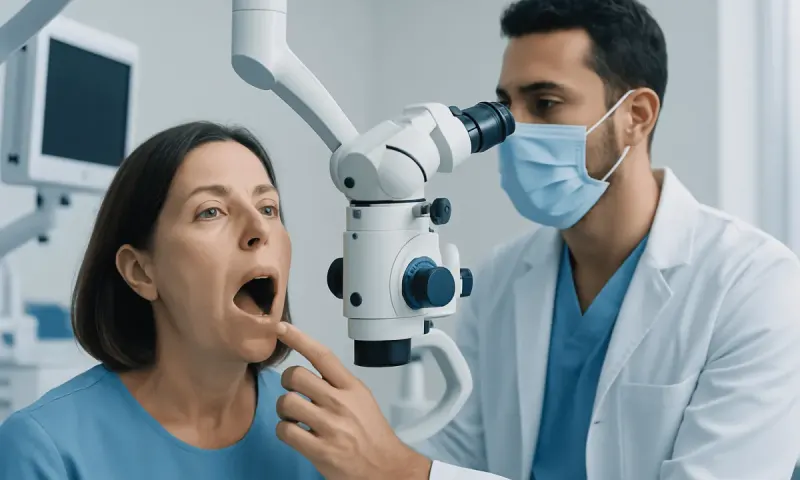
Assessment usually begins with a medical history and examination of the neck, mouth, throat, skin, thyroid, and other relevant areas. The clinician may use a small flexible camera through the nose to inspect the throat and voice box. Blood tests can provide supporting information, although they cannot diagnose most cancers in lymph nodes on their own.
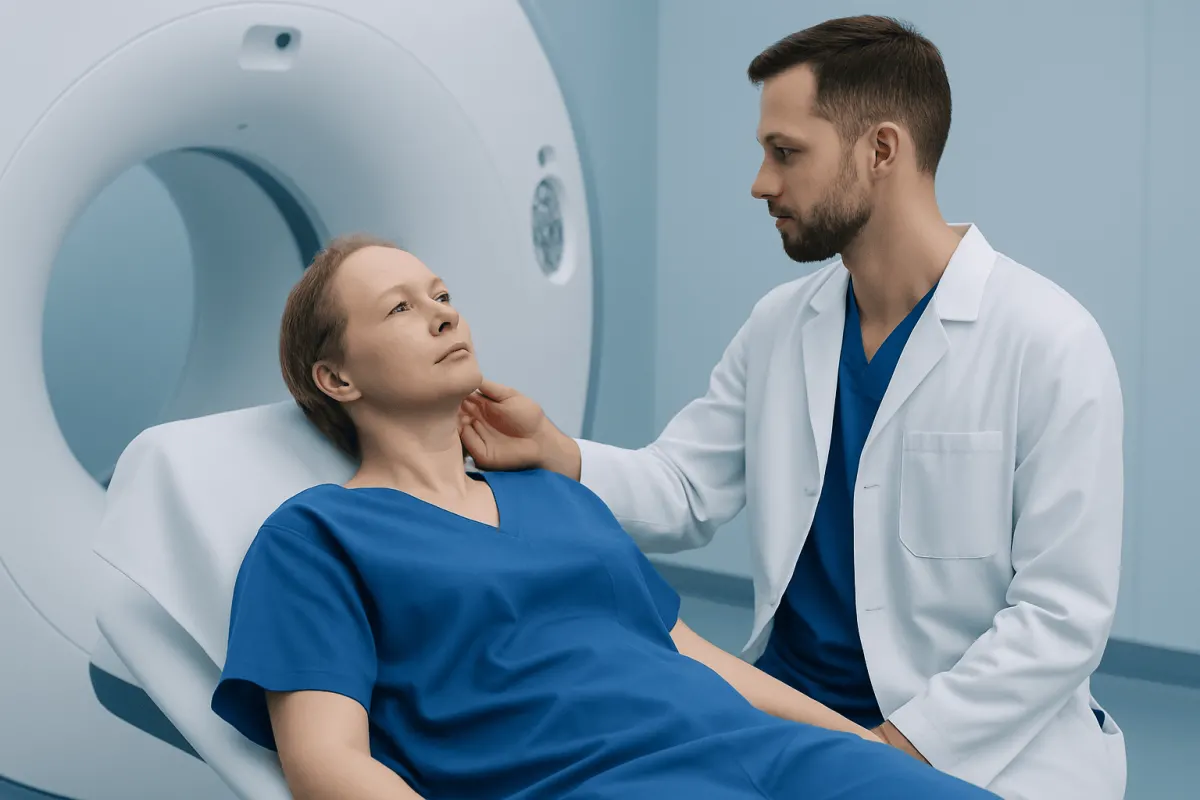
Ultrasound is often useful for examining a neck mass and guiding a needle biopsy. Depending on the situation, CT, MRI, or PET-CT imaging may help show the number and location of affected lymph nodes, look for a primary tumor, and assess whether disease is present elsewhere. Imaging findings can raise or lower concern but do not replace tissue testing.
A fine-needle aspiration, core needle biopsy, or surgical biopsy may be needed. The sample is examined by a pathologist, who can determine whether cancer is present and perform specialized testing to distinguish lymphoma from metastatic cancer and identify features that guide therapy. For suspected head and neck cancer, testing of the tumor for HPV-related changes may be relevant.
After diagnosis, a multidisciplinary team determines the stage. Staging describes the size and location of the original cancer, the lymph nodes involved, and whether cancer has spread to distant organs. It helps clinicians discuss treatment options and likely outcomes in an individualized way.
Modern treatment approaches for cancer lymph nodes in neck
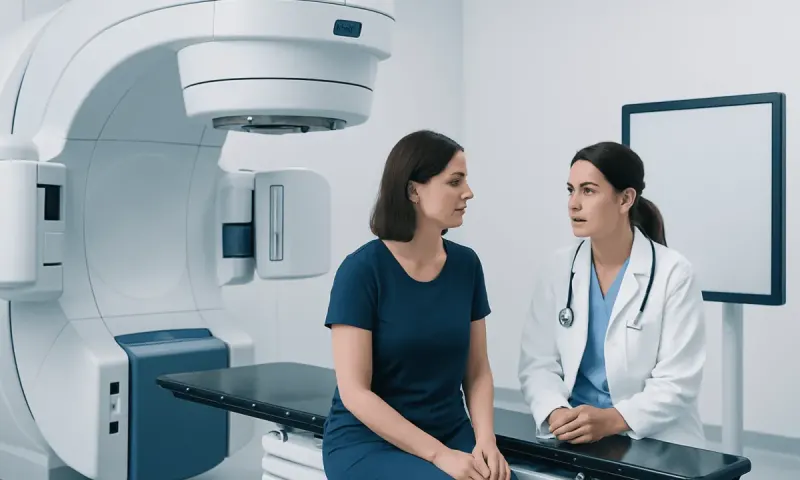
Treatment is tailored to the primary diagnosis rather than to the lymph node alone. For metastatic head and neck cancer, treatment may include surgery to remove the primary tumor and affected lymph nodes, often called a neck dissection. Radiation therapy may be used after surgery or as a primary treatment, sometimes combined with chemotherapy or other systemic treatment.
Lymphoma is treated differently. Depending on the lymphoma subtype and stage, options can include observation for selected slow-growing forms, chemotherapy, immunotherapy, targeted medicines, radiation therapy, cellular therapies, or stem cell transplant in specific circumstances. A precise pathology diagnosis is especially important because lymphoma includes many distinct diseases.
Supportive care is an important part of treatment. It may address swallowing, speech, nutrition, dental care, pain, fatigue, emotional wellbeing, and side effects from therapy. For carefully selected people, access to specialist oncology care helps coordinate pathology review, imaging, treatment planning, and follow-up.
At Acıbadem Health Point, multidisciplinary specialists in JCI-accredited hospitals diagnose and treat cancers involving neck lymph nodes for international patients, with plans based on the individual cancer type and clinical findings.
How long do people with cancer in lymph nodes in the neck typically live?
There is no single life-expectancy figure for people with cancer in lymph nodes in the neck. Some cancers are highly treatable and may be cured, while others require long-term management or have a more limited outlook. The answer depends mainly on whether the diagnosis is lymphoma or metastatic cancer, where the primary cancer began, the stage, tumor biology, response to treatment, and the person’s overall health.
For example, some early or locally advanced head and neck cancers can be treated with curative intent even when nearby lymph nodes are involved. Many lymphomas are also treatable, and several types can be cured. In other circumstances, treatment may focus on controlling cancer, relieving symptoms, and maintaining quality of life for as long as possible.
The treating team is best placed to discuss prognosis after biopsy results, imaging, and staging are complete. Asking about the treatment goal, factors affecting prognosis, and what follow-up will involve can help a person and their family understand the situation without relying on general estimates.
Can lymph node cancer in the neck be cured?
Yes, lymph node cancer in the neck can sometimes be cured. Curability depends on the precise diagnosis and how far the cancer has spread. Cancer confined to the neck or nearby structures may often be treated with curative intent using surgery, radiation therapy, systemic treatment, or a combination of these approaches.
Many cases of Hodgkin lymphoma and some non-Hodgkin lymphomas can be cured, particularly when they respond well to initial treatment. Metastatic cancer in neck nodes may also be curable when it comes from a head and neck primary tumor and has not spread to distant parts of the body. The involved lymph nodes are included in treatment planning rather than viewed as an isolated problem.
When cure is not likely, effective treatment may still slow cancer growth, shrink involved nodes, reduce symptoms, and support daily functioning. Regular follow-up is important because it allows clinicians to monitor response, manage side effects, and identify any recurrence or progression early.
What is the survival rate for cancer in lymph nodes in the neck?
A single survival rate cannot accurately describe cancer in lymph nodes in the neck because this phrase includes many different cancers. Survival statistics are generally grouped by cancer type, stage, age, and other clinical factors. They describe outcomes in large groups of people treated in the past and cannot predict what will happen to one individual.
Lymph node involvement may affect stage and prognosis, but it is only one part of the picture. The number and location of nodes, whether there is disease outside the neck, the cancer’s molecular features, and the effectiveness of treatment all matter. Improvements in surgery, radiation techniques, imaging, chemotherapy, immunotherapy, and targeted treatment have also changed outcomes for many cancers over time.
A doctor can provide the most meaningful discussion of outlook once the pathology report and staging results are available. It can be helpful to ask which prognostic factors apply personally and whether the planned treatment is intended to cure, control, or relieve symptoms.
How serious is malignant lymphoma?
Malignant lymphoma is a serious diagnosis, but its severity varies greatly. Lymphoma is not one disease: it includes Hodgkin lymphoma and many types of non-Hodgkin lymphoma. Some grow quickly and need prompt treatment, while others grow slowly and may be monitored for a time before treatment is needed.
Many lymphoma types respond very well to treatment, and some are curable. Others may behave more like long-term conditions, with periods of treatment and remission. The subtype, stage, genetic features of the lymphoma cells, symptoms, age, general health, and treatment response all influence outlook.
Accurate classification through biopsy and specialist pathology review is central to safe care. People with suspected or confirmed lymphoma may benefit from discussing the diagnosis with a hematology-oncology team familiar with the relevant subtype.
When to seek medical care
Medical assessment is advisable for any unexplained neck lump that lasts longer than a few weeks, grows, feels hard or fixed, or returns after seeming to improve. Adults should particularly seek review for a new persistent neck mass, because a prompt diagnosis can make treatment planning more effective when cancer is found.
Earlier evaluation is important if swelling occurs with trouble breathing or swallowing, coughing up blood, a persistent change in voice, severe or worsening pain, unexplained weight loss, drenching night sweats, or fever without a clear cause. Emergency care is appropriate for sudden breathing difficulty, rapidly increasing neck swelling, or inability to swallow fluids.
A primary care clinician, ear, nose and throat specialist, dentist, hematologist, or oncologist may be involved depending on the symptoms and test findings. Avoid self-diagnosis from the feel of a lump alone; a physical examination and, when necessary, imaging and biopsy provide the answers needed for appropriate care.
Frequently asked questions
01Can an infection cause swollen lymph nodes in the neck?
Yes. Upper respiratory infections, tonsillitis, dental infections, and some viral illnesses commonly cause temporary neck lymph node swelling. A node that does not improve after the infection has resolved, enlarges, or has concerning features should be evaluated by a clinician.
02Does a neck lymph node biopsy spread cancer?
Needle and surgical biopsies are standard diagnostic procedures and are not generally considered to cause cancer to spread. The medical team chooses the safest biopsy method that can provide enough tissue for an accurate diagnosis.
03Can cancer be present in a neck lymph node when no primary tumor is found?
Yes. This is sometimes called cancer of unknown primary, and it can happen when the original tumor is very small or hidden. Further imaging, examination, and pathology testing can often help identify the likely source and guide treatment.
04Are painful neck lymph nodes more likely to be cancer?
Painful nodes are often linked to infection or inflammation, but pain alone cannot rule cancer in or out. Any persistent, enlarging, or unexplained neck lump should be assessed, especially in adults.
05What doctor treats cancer in neck lymph nodes?
Care may involve an ear, nose and throat surgeon, medical oncologist, radiation oncologist, hematologist, radiologist, pathologist, and supportive-care specialists. The most appropriate team depends on whether the diagnosis is lymphoma or cancer that has spread from another site.
06Can lifestyle changes treat cancer in neck lymph nodes?
Lifestyle changes cannot replace cancer treatment. Avoiding tobacco, limiting alcohol, maintaining nutrition, staying as active as medically appropriate, and attending follow-up appointments can support overall health during and after treatment.
This article is for general information only and is not a substitute for professional medical advice. Please consult a qualified doctor about your individual situation.
Oncology care in Turkey — second opinion and treatment plan
JCI-accredited · board-certified surgeons · reply within 24h
Add us as a Preferred Source to see more of our trusted health content across Google Search, AI Overviews and Discover.